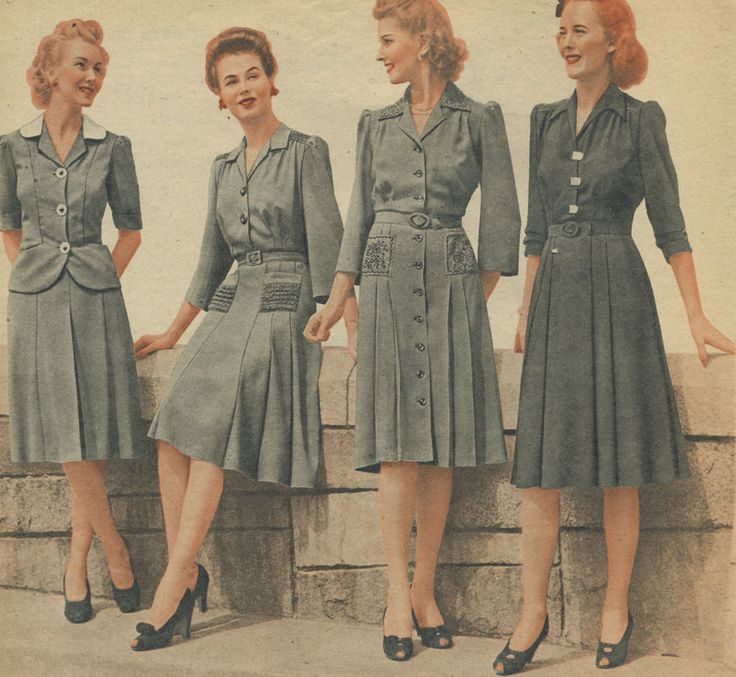
The era plunges into a world war. Men disappeared from the streets due to the war, and women began to work outside as labor force instead. In the early years, many of the designs were tight-fitting, reminiscent of men's suits, but after the war in the mid-1940s, elegant outfits such as flared skirts became popular, perhaps as a reaction to the war.
Prewar Fashion
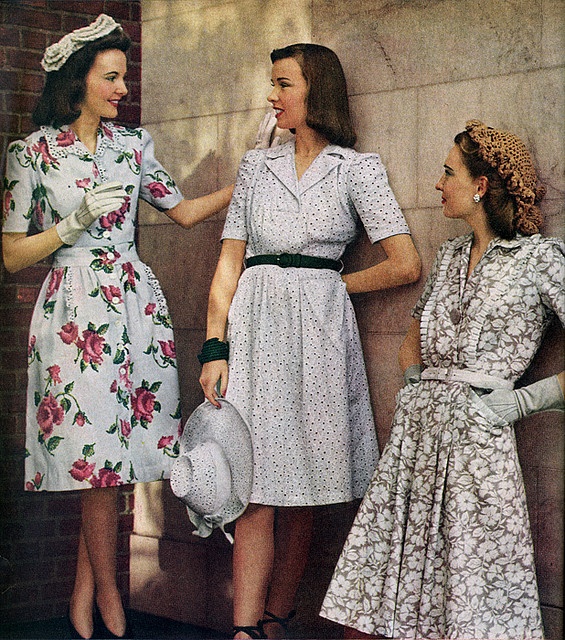
1943. It was fashionable to wear caps made of knitwear.
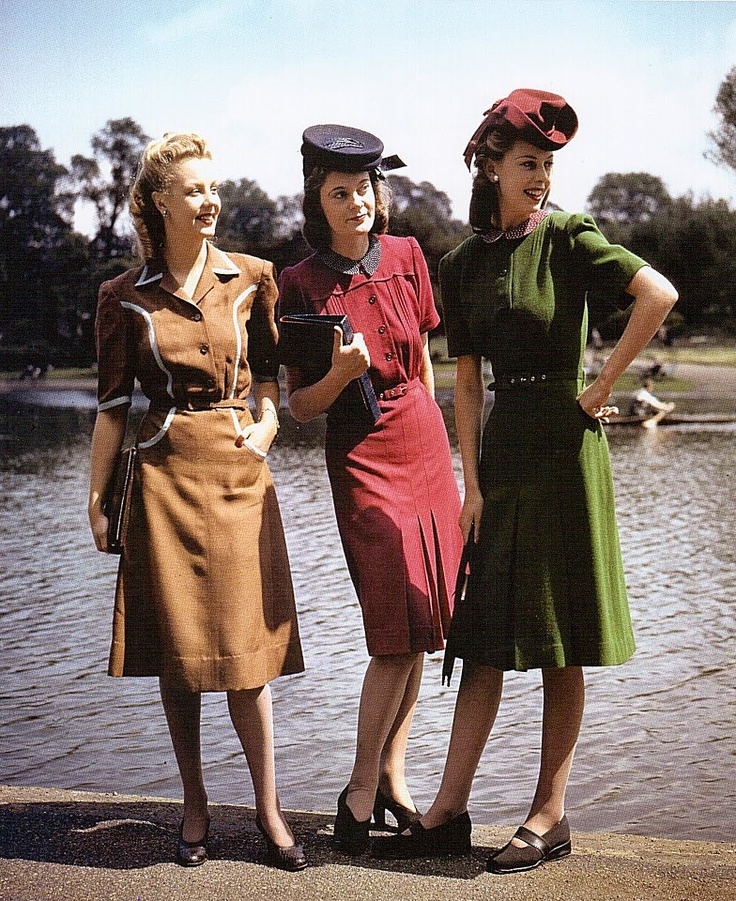
1940. Hat with distinctive design.
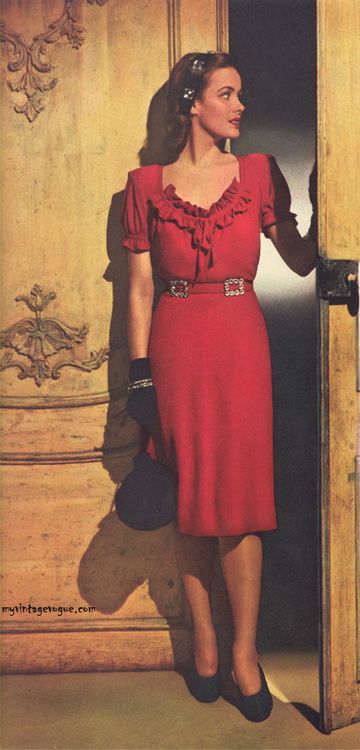
1943.
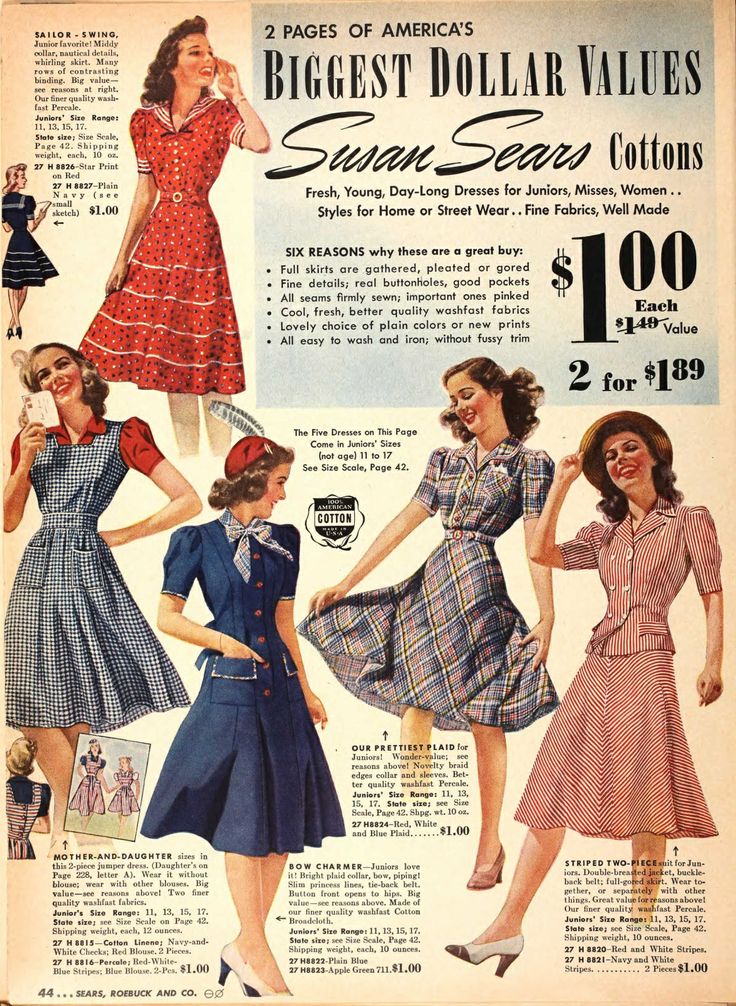
Fashion catalog from the 1940s. The shoulders are a bit icky.
Mail order services (mail order sales) were widely used, especially in the U.S., a country with a large land area.
and was a common service by this time.
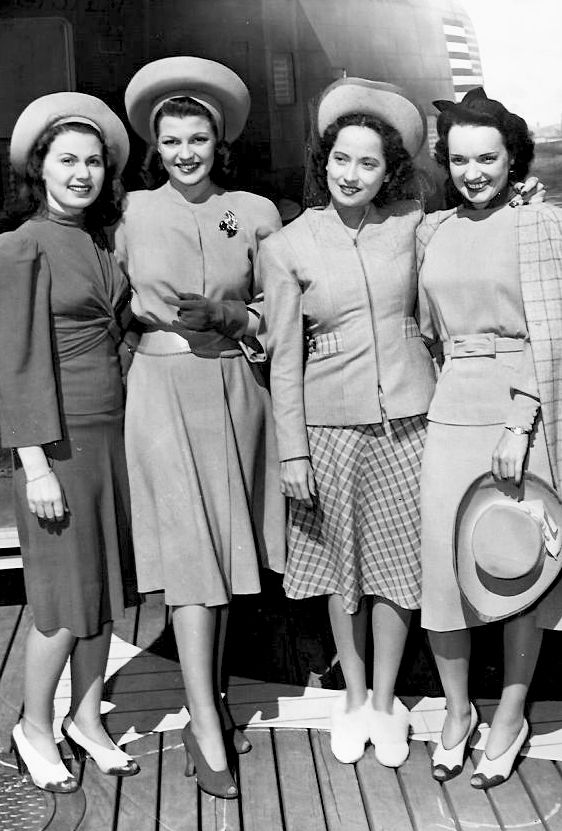
1941. It is a crisp fashion for a working woman.
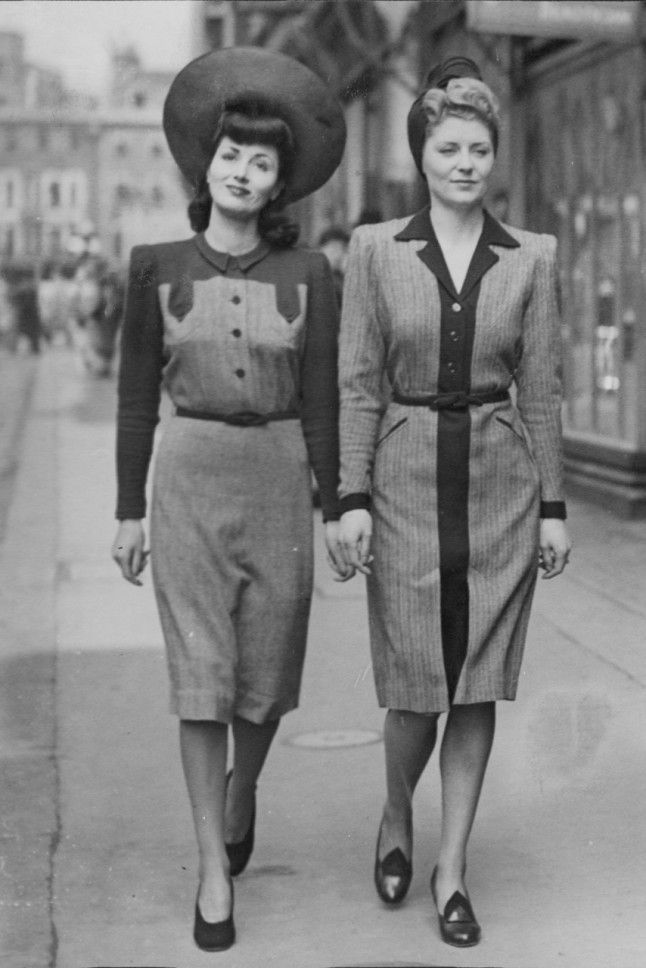
Suit-like dress from 1942. The skirt was narrow. With a distinctive hat,
as well as distinctive hats, it was also fashionable to wear a turban around the head, as the woman on the right does.
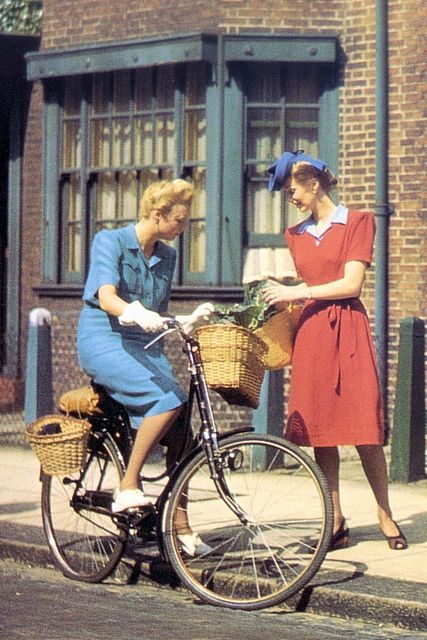
1943.
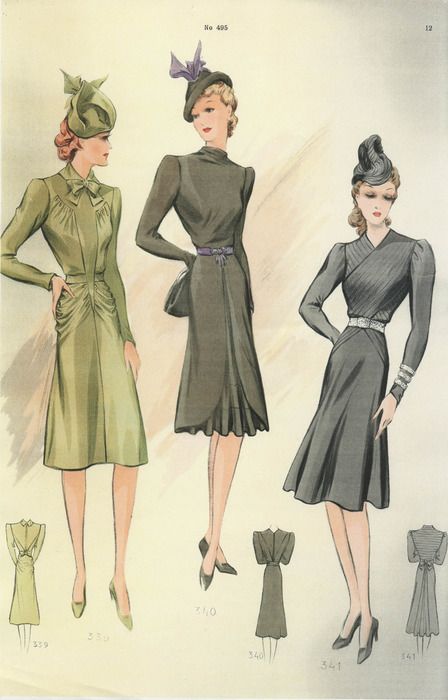
The dress is of subdued color, perhaps reflecting the fact that it is wartime.
Postwar Fashion
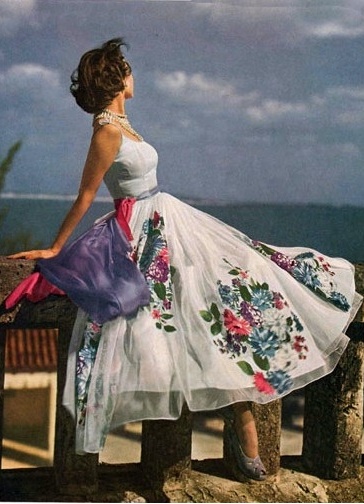
In the postwar period, women's fashion became more feminine.
Skirts became more flouncy and fashionable, as it became possible to use a lot of fabric.
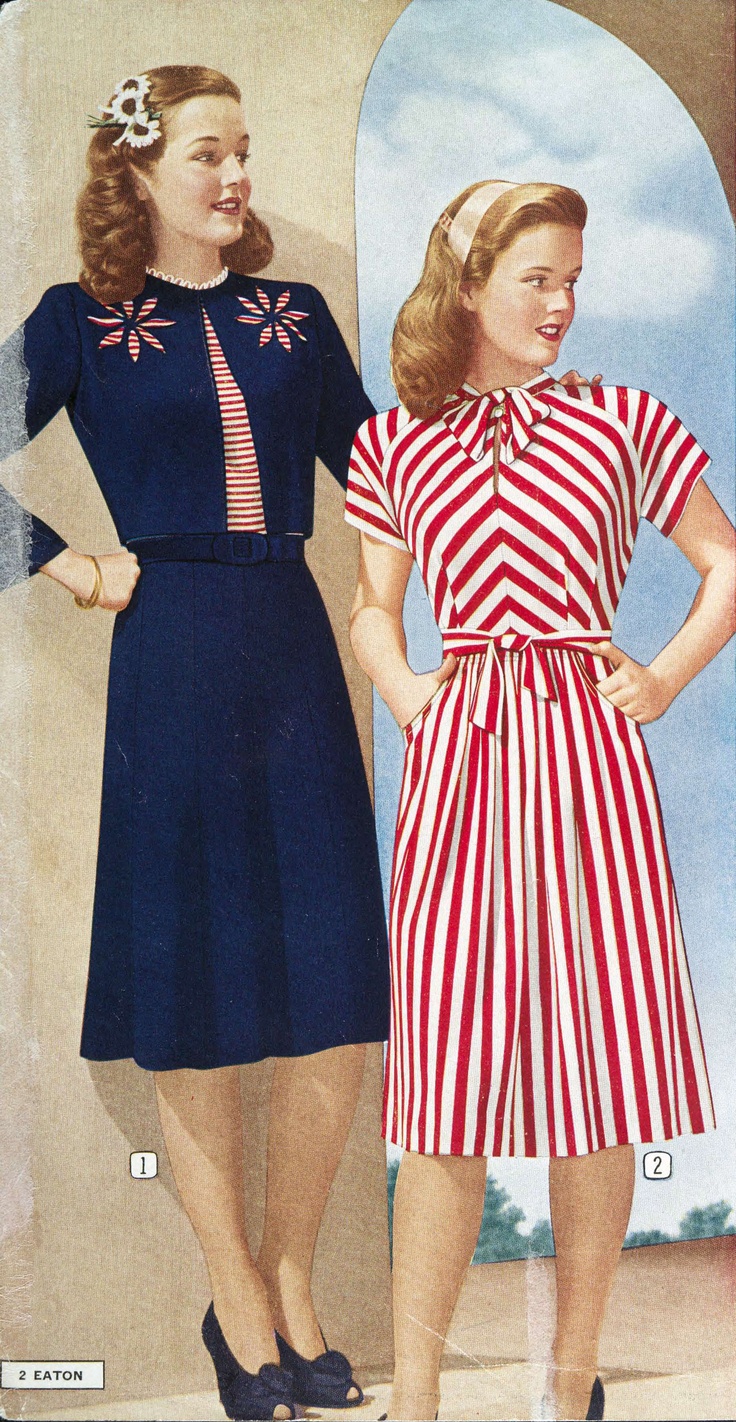
Fashion catalog from 1945. The bold stripes show a glimpse of the openness after the war.
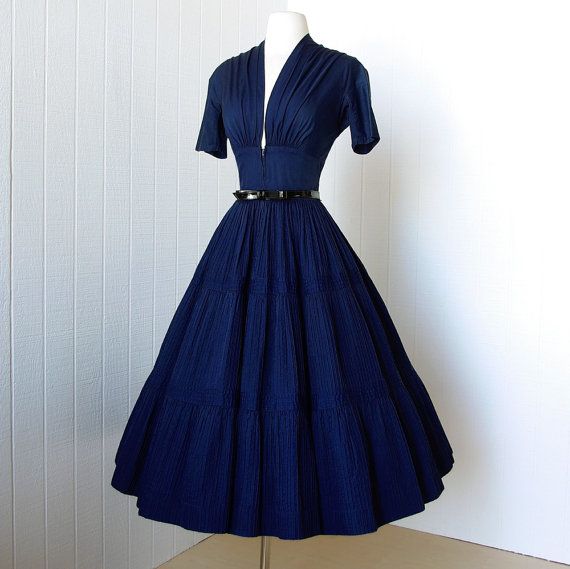
After the war, fluffy, flared skirts were in their heyday, influenced by the fashion of movie stars.
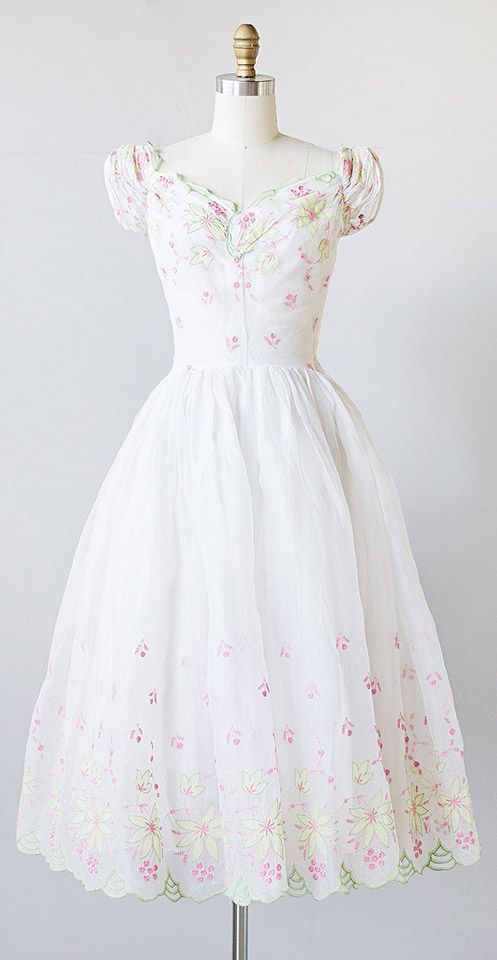
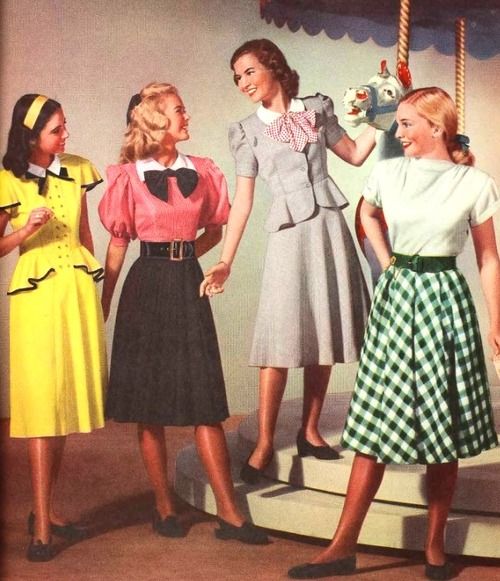
1948
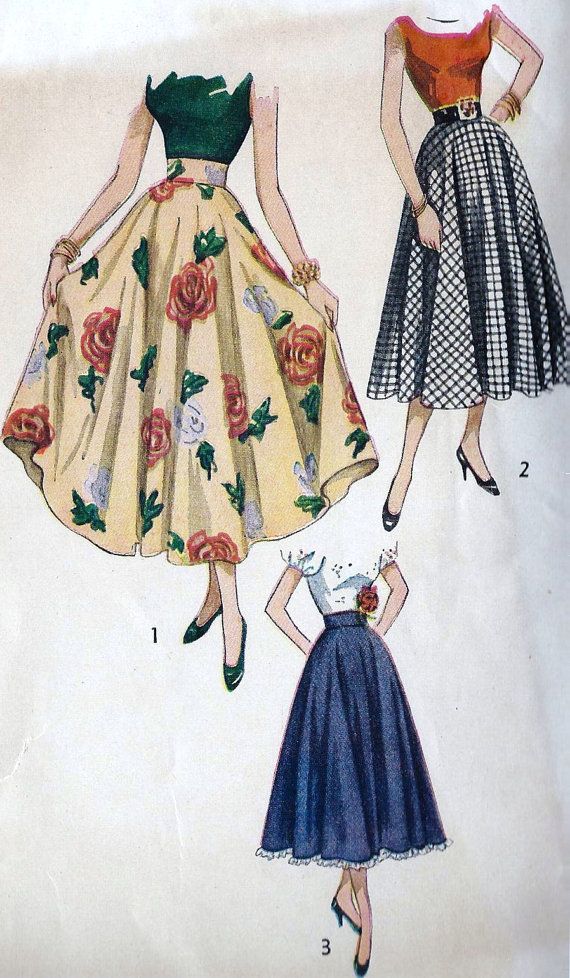
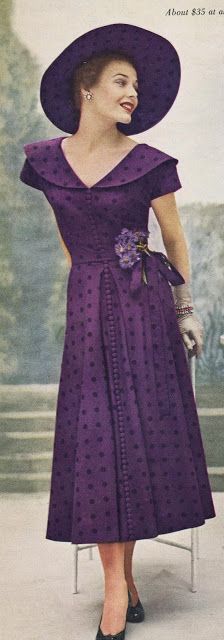
1949.In the late 40s, the spread of skirts calmed down a bit.