
This section presents a collection of terrifying urban legends related to anime, from famous anime that everyone knows, such as "Crayon Shinchan," "Detective Conan," and "Anpanman," to hidden anime masterpieces known only to those in the know.
Tara's sister.
Tara had a younger sister named Hitode-chan.
She appeared several times in the original story, but since time did not progress in the anime version, there was no longer any point in having her appear.
Why Ikura Chan Can't Speak Words
Ikura-chan is the only son of the Namino family, but his parents, Taiko and Norisuke, were not his birth parents to begin with.
In other words, he was adopted.
His birth parents were there, but they were murdered in front of him and he saw it with his own eyes, and the mental shock left him unable to speak.
I guess it's just a matter of age...
[Final Episode] Family Breakup
What is shown on TV is a recollection of a time when the Isono family was happy, and the actual story is that the Isono family has been separated from the rest of the family.
Katsuo was sent to a reformatory for juvenile delinquency, Wakame was arrested for prostitution, Fune committed adultery, Nampei suffered a myocardial infarction from stress and died, Tarachan died in a car accident, and Masuo committed suicide due to the shock of his death.
Tara-chan dies in a car accident, and Masuo commits suicide. Sazae is unable to accept this reality and begins to abuse methamphetamine...
[Final] Everything Goes Back to the Sea
One day, Katsuo wins a trip to Hawaii, the first prize, in a lucky draw using shopping coupons from the shopping arcade.
The Isono family, elated by their good fortune, immediately set off on their trip to Hawaii.
However, the plane carrying the family crashed into the ocean en route.
The Isonos were thrown into the sea and returned to the sea in the forms of their namesake sea creatures: turban shells became turban shells, bonito became bonito fish, and so on.
[Final Episode] Tamatebako
One afternoon, a package arrived at the Isono household.
Katsuo tries to open the box, but Turban says that he will open it after his father returns home.
Having been given a pass on the package, Katsuo went out to play baseball.
That night, Nampei comes home.
Nampei comes home and the whole family gathers in the living room for the usual scene.
Nampei has no idea who sent the package. When he opened it, he found a blue jade box with instructions to place it in the center of a closed room and fill it with a glass of water.
When the water was poured in according to the instructions, white smoke instantly spread throughout the room.
Everyone inhaled the smoke and fainted.
Before long, the white smoke disappeared and it was morning.
The first one to notice was Katsuo.
He was stunned by the scene before him.
Wakame and Tara were nowhere to be seen, and there were two white-boned corpses lying on the floor.
They were not those of a child, but of an adult, judging from their size.
Katsuo ran to the washroom as if suddenly seized with an idea.
In the mirror was Masuo's reflection.
It was Katsuo, who had grown up to be an adult like Masuo, a few years older.
Understanding the meaning of the white smoke, Katsuo returned to the tea room.
There was Tarachan, who had grown up to look like Katsuo, Wakame, who had grown up to look like Sazae, Masuo, who had grown up to look like Nampei, and Sazae, who had grown up to look like Hune.
The two skeletonized corpses were Nampei and Fune, who had aged beyond their lifespan and become skeletonized.
But they are too old to be waking up to reality, aren't they?
That was the moment when Katsuo wondered.
Ding-dong.
"Hello, TA-Q-BIN!
The next package arrived.
Sazae-san syndrome / Sazae-san syndrome
Sazae-san is a popular anime program that airs every Sunday from 6:30 to 7:00 p.m., and because of this, it is often said that many Japanese people suffer from the Sazae-san syndrome.
Have you ever watched Sazae-san and thought to yourself, "Oh, tomorrow is Monday...I'm so lazy..."? I'm so lazy..." Have you ever thought of this?
This is exactly the symptom, but since Sazae-san is a program that marks the end of Sunday, you may feel tired because tomorrow is work or school, and in severe cases, you may even stay indoors at the beginning of the week.
Are you suffering from Sazae-san Syndrome?
Final Rock-paper-scissors
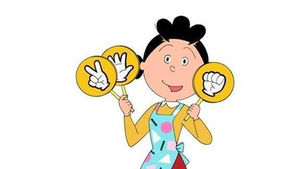
At the end of the broadcast, Sazae-san plays a game of rock-paper-scissors, and it is rumored that if you can win the game, you will be happy.
However, there is a "rule" to this game of rock-paper-scissors.
In fact, it is said that the hand that plays repeats goo, choki, and par, week after week.
Therefore, you can predict that the player who played goo this week will play choki next week.
Source: girlschannel.net
Pretty Cure Series
Originally produced as a Sunday morning 8:30 a.m. animation on ABC, the series began with the huge success of "Futari wa Pretty Cure," which aired in 2004 as a follow-up to "Naja of Tomorrow" on the TV Asahi network, and has continued for over a decade since. Since then, the series has continued for more than 10 years. As a series for girls, Toei Animation has created a new style of animation since the "Bishoujo Senshi Sailor Moon" series.
Source: zattya.hatenablog.jp
The existence of Itsuki
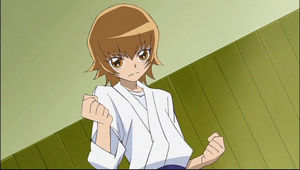
Heart Catch Pretty Cure! is actually a man. It is said that she is actually a man.
Certainly, it is problematic that she wears the school run for boys even though she is the student council president, and it is also somewhat unnatural that she has mastered martial arts in place of her sickly older brother.
In fact, she is rumored to have gender identity disorder, a mind-body mismatch in which her body is male and her mind is female.
Before the transformation, she is male in appearance, but after the transformation she is female.
Her voice is also different before and after the transformation: male before the transformation and female after the transformation.
The first person's name is also changed, from "I" before the transformation to "I" after the transformation. The most significant change is the voice she uses when transforming: "Pretty Cure! Open My Heart! which seems to mean that she is releasing her feelings of being a woman in her heart.
Source: prcm.jp
Sunday Janken War
Smile Precure," which aired from 2012 to 2013. . In this work, when Cure Peace transforms, she plays rock-paper-scissors, but you may not be able to imagine it at first, so please refer to this video.
Cure Piece Transformation Scene HD 60 fps
Choki is shown in this video.
She's so cute. (Nosebleeds)

Related Articles
In-depth description and discussion of The Doraemon's (Dora's Dora 7)
The Doraemons" is the story of Doraemon and seven other feline robots who have pledged their eternal friendship to each other. The story is sometimes touching, sometimes acrobatic, and sometimes slapstick comedy. These adventures are sometimes solved by the special abilities of the members, sometimes by their resourcefulness, and most of all, by the friendship among the seven, symbolized by their special secret tool, the "best friend telecard".
Read Article
An ordinary kid becomes a hero. Perman"
Fujiko F. Fujio's (hereinafter referred to as "Mr. F") works include "Doraemon," which is famous for its pattern of "a peculiar being staying at home," and "peculiar short stories" reminiscent of "Se Ni ni Bizarre Monogatari" (Strange Stories). Among them, Perman may be a little special.
Read Article
Spoiler commentary and discussion of Doraemon (manga and anime)
A manga, anime, and video game series by Fujiko F. Fujio that has been serialized since 1969 in Shogakukan's learning magazines ("Good Boy," "Kindergarten," "First Grader" to "Fourth Grader"). It depicts the uproar caused by Doraemon, a robot who comes from the future in the 22nd century to help Nobita Nobi, who has led a miserable life and left debts to his grandchildren, and by the secret tools of the future that Doraemon brings with him. The work was discontinued in 1996 with the death of Fujiko F. Fujio.
Read Article
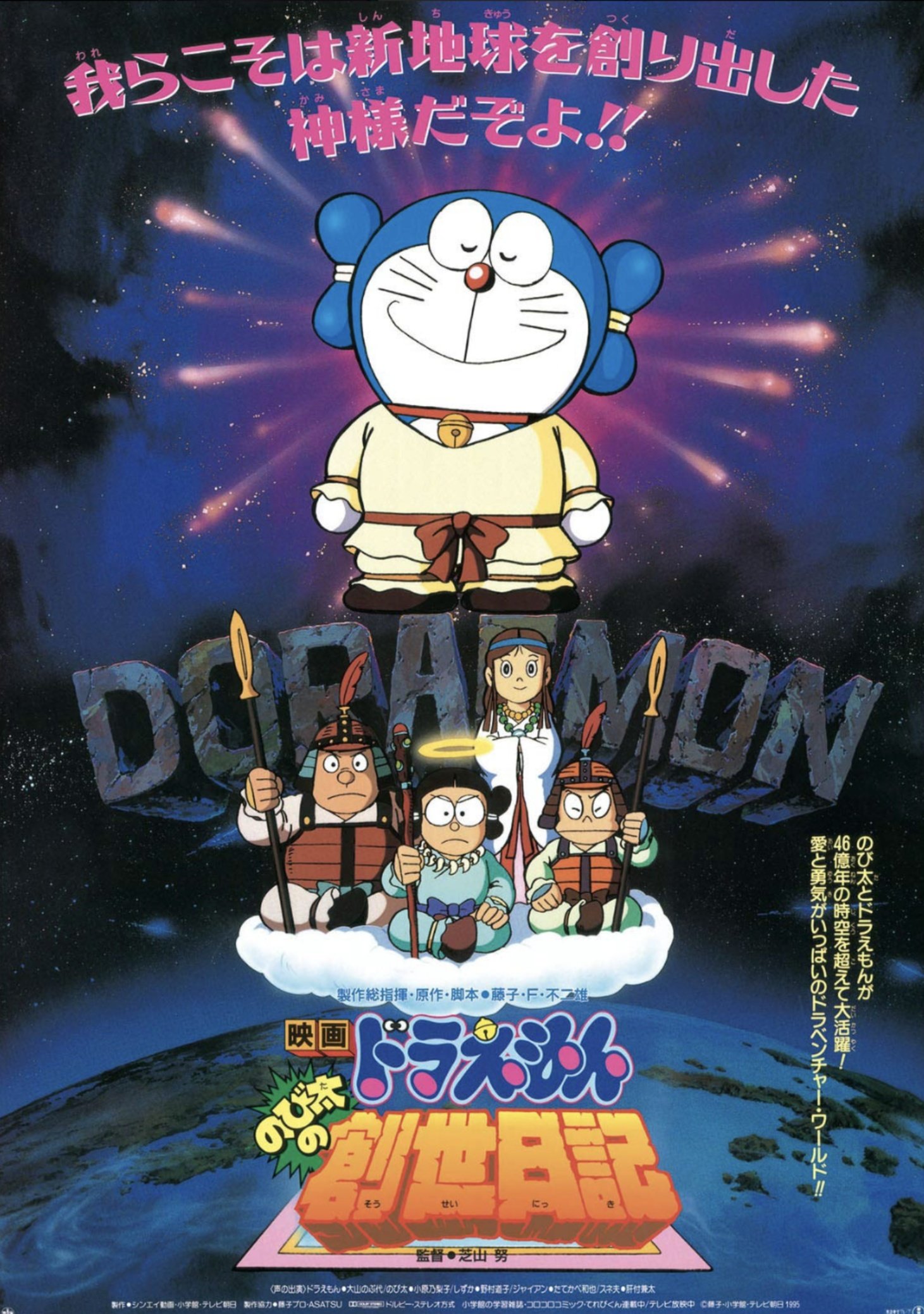
Spoiler commentary and discussion of Doraemon: Nobita's Genesis Diary (film).
Doraemon: Nobita's Diary of Creation" is the 16th animation film in the series, released in 1995. Nobita Nobi, a fifth grader, creates a new universe using the Genesis Set that Doraemon, a cat-shaped robot, purchased at a department store in the 22nd century future, and begins to write an observational picture diary as his free study during summer vacation. In the new earth that exists in that universe, new creatures and human beings are born. This is the definitive work on the theme of "Genesis" by Fujiko F. Fujio, the author of "Doraemon. The film recorded box-office revenues of 1.3 billion yen and won high acclaim for touching on the birth of the universe and life.
Read Article
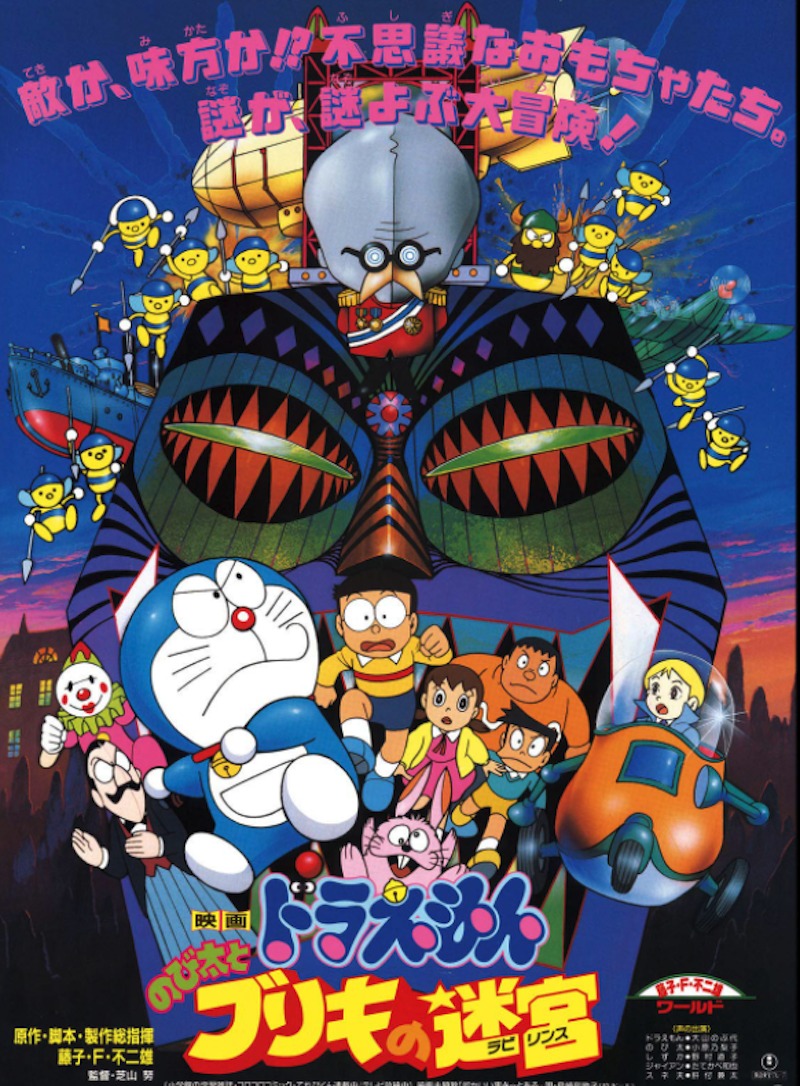
Doraemon: Nobita and the Tin Labyrinth (film) Spoiler Commentary and Discussion Summary
Doraemon: Nobita and the Tin Labyrinth" is the 14th animation film in the series, released in 1993. Nobita Nobi, a fifth grader in elementary school, receives a trunk that opens a gate to Tin-Tin Island, an island of toys made of tin. Nobita and Doraemon enjoy their time on Tin Island, but suddenly Doraemon is kidnapped by tin soldiers. The film is unique in that Doraemon, the main character, breaks down and is absent during the middle of the film, leaving Nobita and his friends to fend for themselves.
Read Article
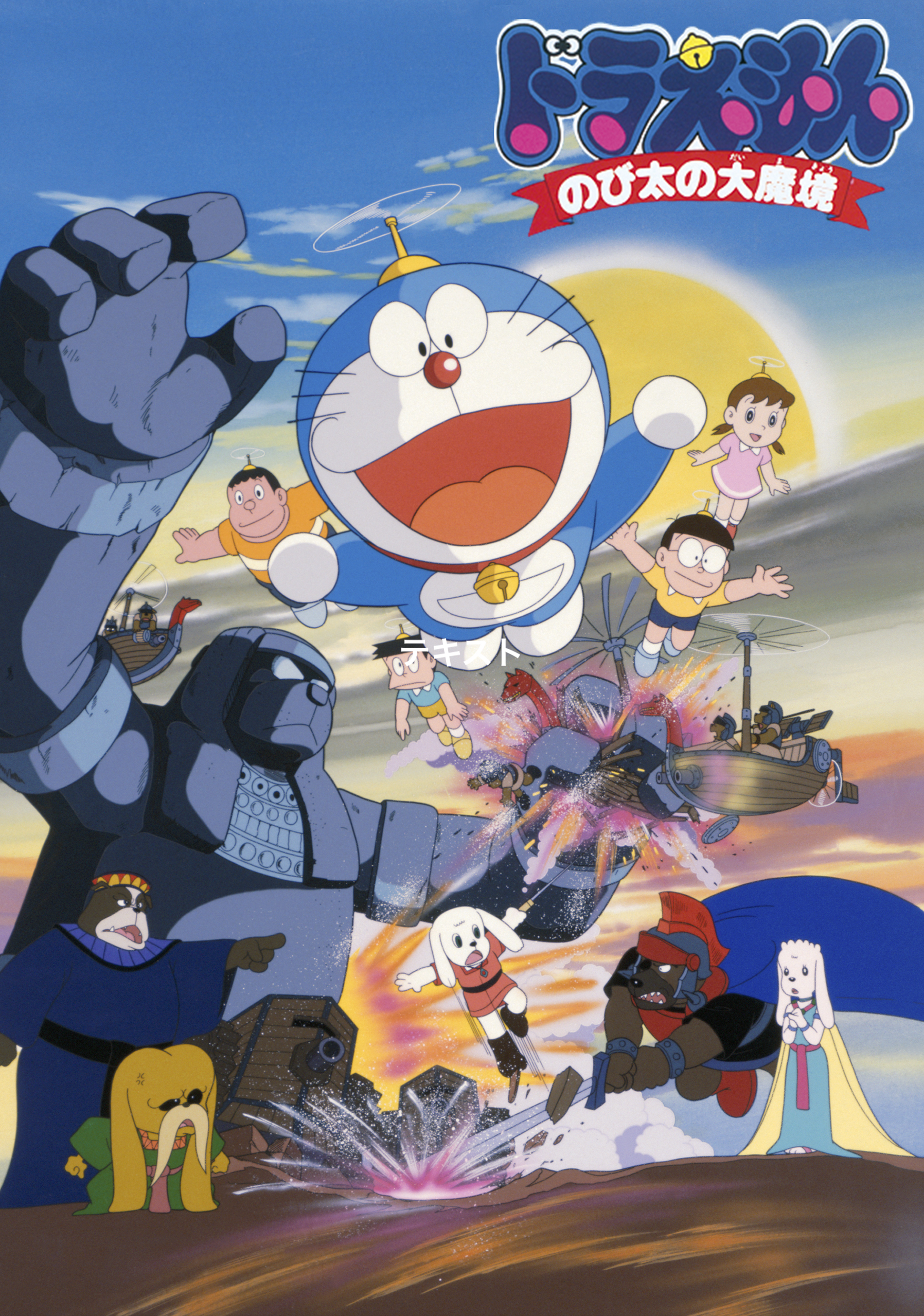
Doraemon: Nobita's Daimakyo (The Movie) Spoilers and Discussion Summary
Doraemon: Nobita's Demon Kingdom" is the third feature-length animated film based on Fujiko F. Fujio's "Doraemon," released in March 1982. This work is set in the Bauwanko Kingdom, a dog kingdom under a dictatorship, and features interactions and battles between the dog inhabitants there and Doraemon and his friends. The opening song "Doraemon's Song" was used in this work, and the style of the story, in which Gian goes from being a bully to cooperating with Doraemon, Nobita, and others in their adventures, became a standard feature.
Read Article
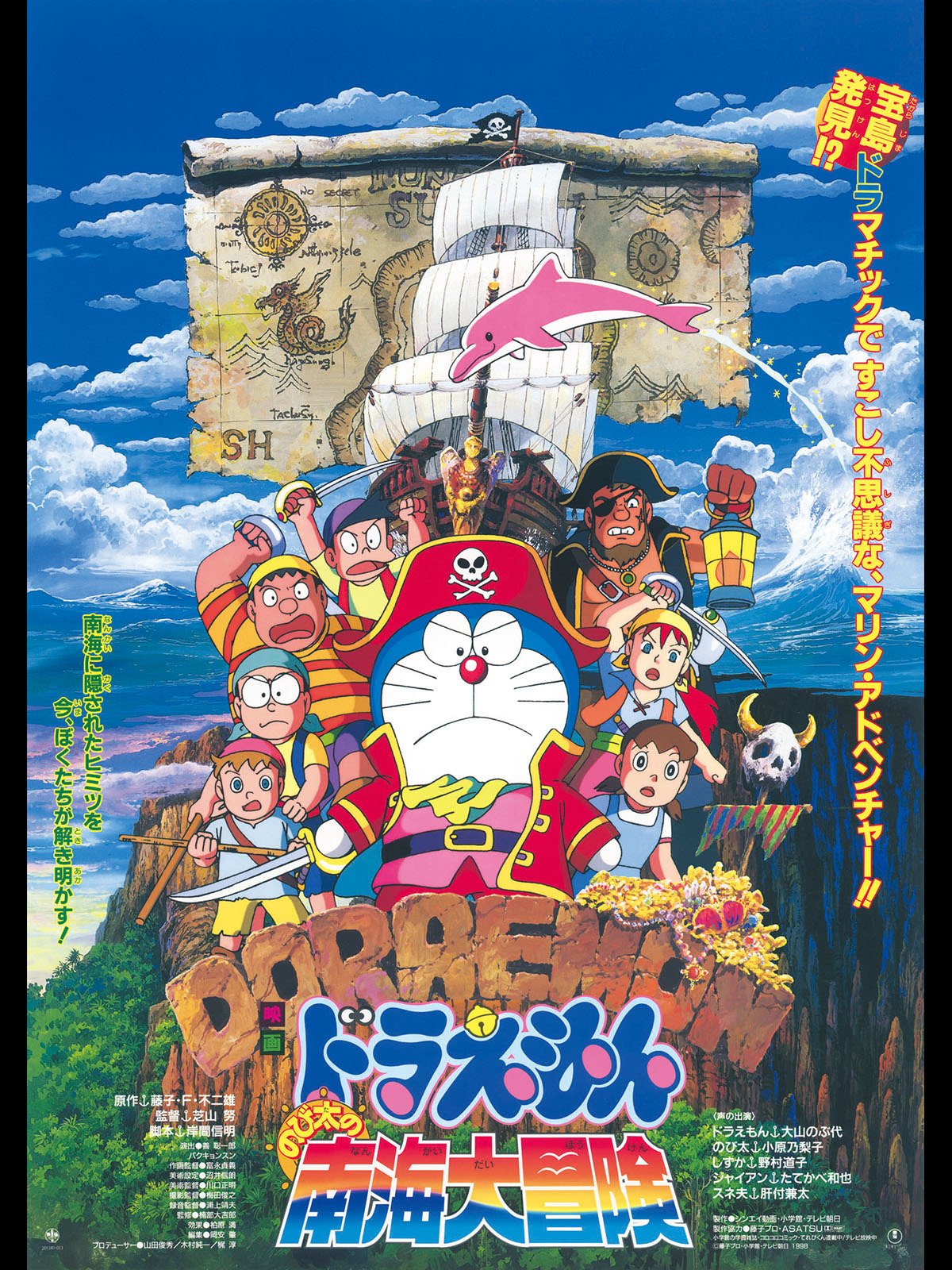
Doraemon: Nobita's Great Adventure in the South Seas (movie) spoiler commentary and discussion.
Doraemon: Nobita's Great Adventure in the South Seas" is an animated film released in 1998. Doraemon and Nobita, accompanied by Gian and his friends, head off on a sea adventure to Treasure Island. Along the way, they are transported back in time to the Caribbean Sea in the 17th century due to a change in space-time. Doraemon and Nobita get separated from Doraemon and his friends. Doraemon and his friends meet real pirates and join them. Nobita washes ashore on an island, where he meets a boy named Jack. This is the 19th film in the series, and its distribution revenue exceeded that of the previous film, "Nobita's Adventures in Twisted City," becoming the highest-grossing film of all time at the time of its release in 1998.
Read Article
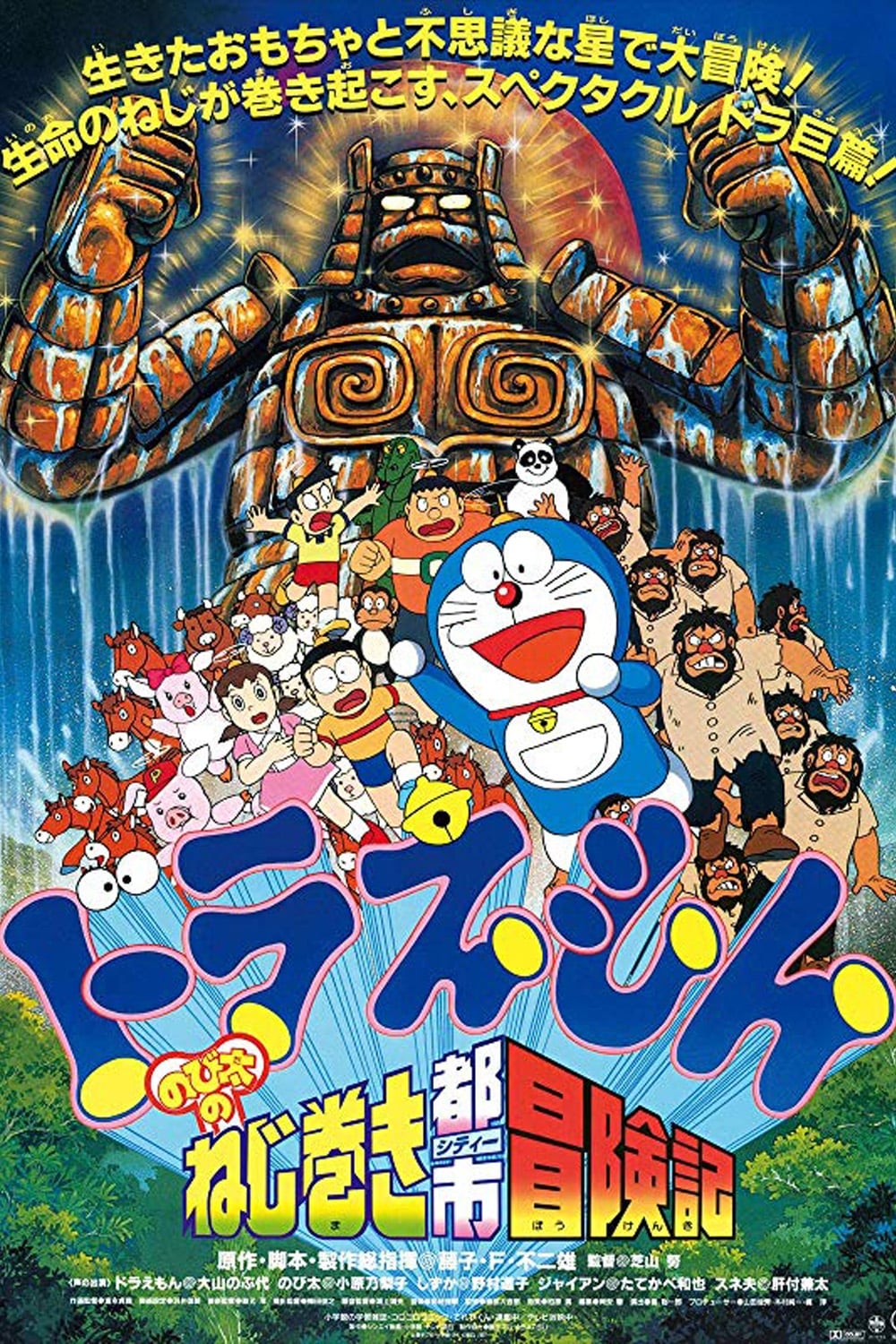
Spoiler commentary and discussion of Doraemon: Nobita's Adventures in Twisted City (movie).
Doraemon: Nobita's Adventures in Twisted City" is an animated film released in 1997. Doraemon gets a voucher for an asteroid from a lucky draw in the 22nd century, and Nobita accidentally finds a vast planet. He invites Suneo and Gian to join him and attempts to develop a city on the planet, but unexpected trouble arises. This is the last film by Fujiko F. Fujio, the author of the original "Doraemon". It is also a memorable film in that the people who live on the same planet as Nobita and his friends appear as villains and environmental issues are discussed.
Read Article
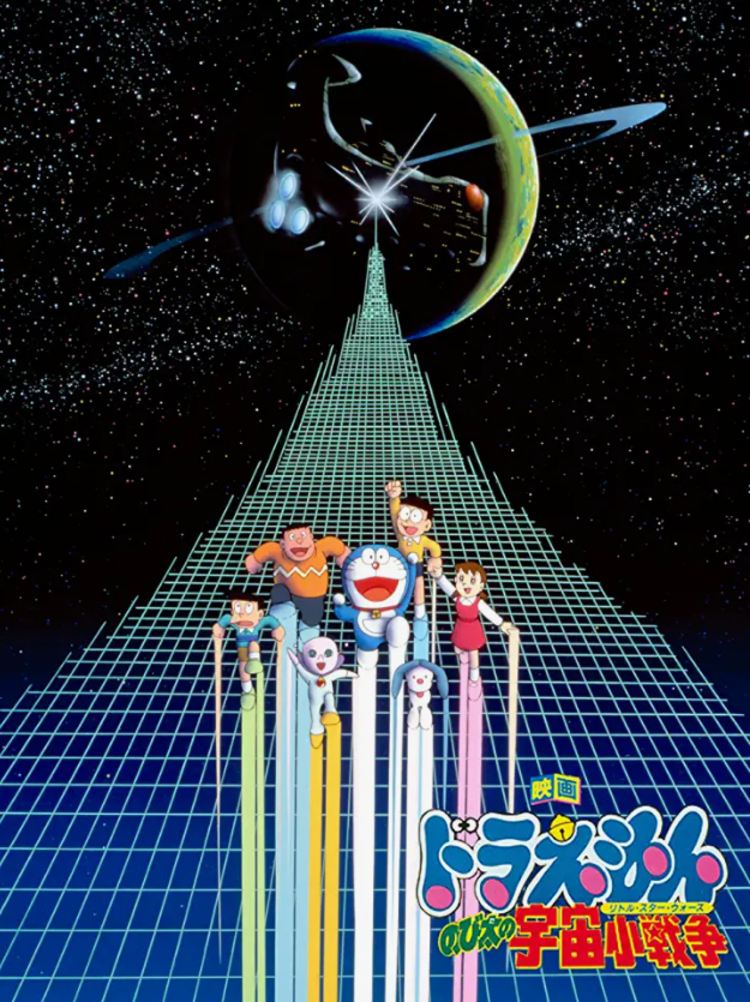
Spoiler commentary and discussion of Doraemon: Nobita's Space Wars (movie)
Doraemon: Nobita's Space Wars" is the sixth feature-length animated film based on the manga "Doraemon" by Fujiko F. Fujio. Nobita Nobi, a fifth grader, Doraemon, a cat-shaped robot, and his friends meet Papi, a small alien. Doraemon and his friends learn that the planet Pirika, where Papi lives, is ruled by a dictatorship, and they set off into space to save it. This work is inspired by the novel "The Gulliver's Travels" and the science fiction movie "Star Wars.
Read Article
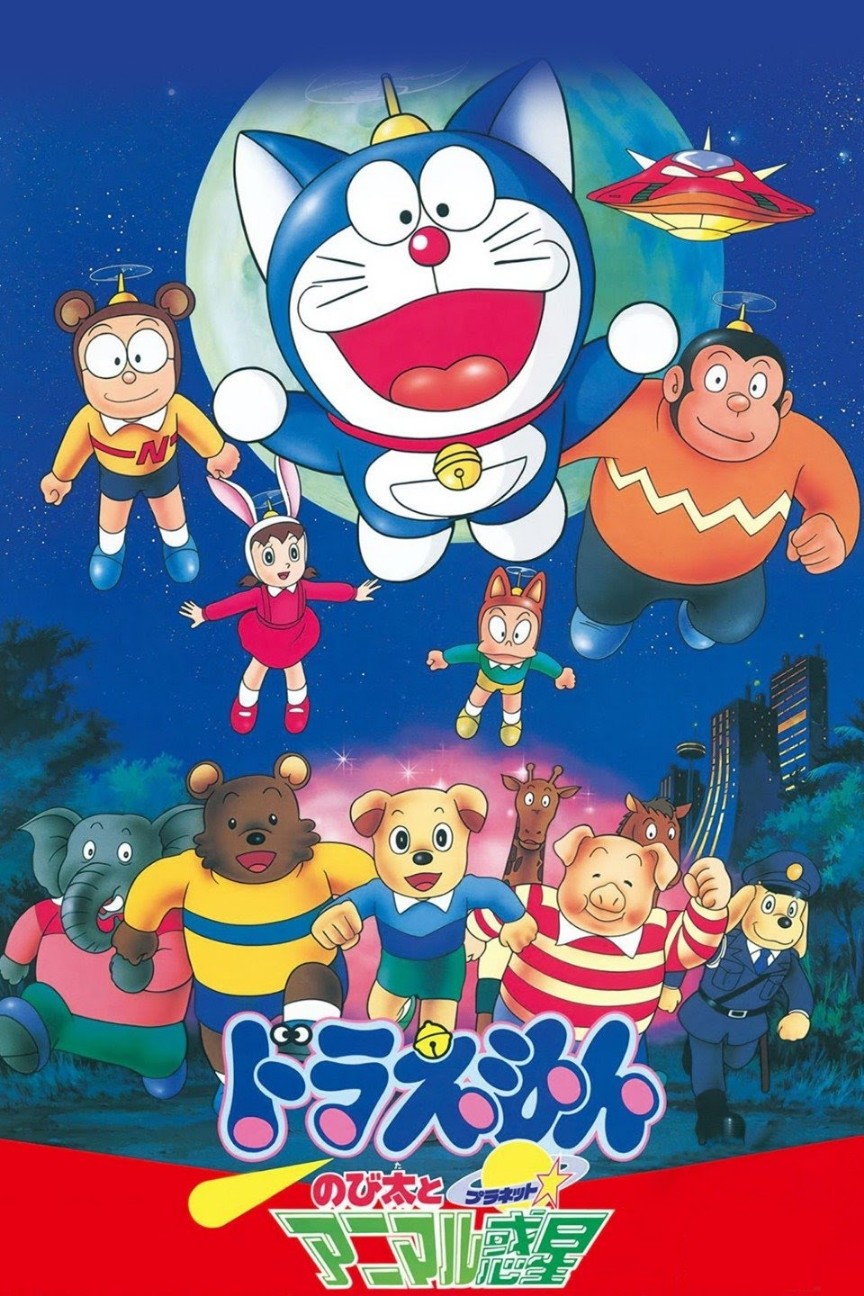
Doraemon: Nobita and the Planet of the Animals (film) Spoiler Commentary and Discussion Summary
Doraemon: Nobita and the Animal Planet" is the 11th animation film in the series, released in 1990, and based on the manga written by Fujiko F. Fujio. Nobita Nobi (Nobita Nobita), a fifth grader in elementary school, Doraemon, a cat-shaped robot, and his friends pass through a mysterious pink mist and arrive at the Animal Planet, where animals live. Doraemon and his friends stand up to save Animal Planet from the evil forces of invasion. This work depicts the battle between Doraemon and the Nimuge, a group of animals invading Animal Planet, but it also depicts real-life social issues such as environmental destruction.
Read Article
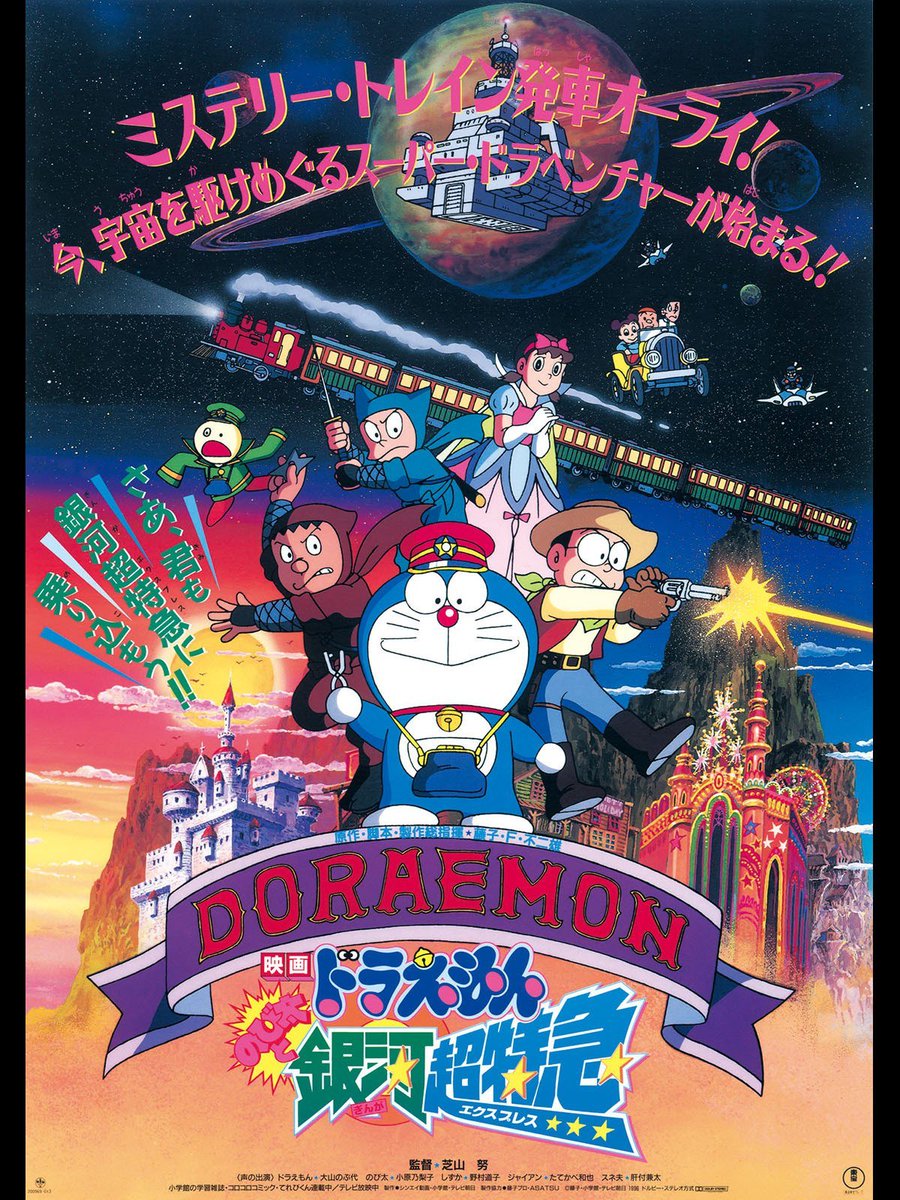
Doraemon: Nobita and the Galactic Super Express (movie) spoiler commentary and discussion.
Doraemon: Nobita and the Galactic Express" is the 17th animation film in the series, released in 1996. Nobita invites his classmate Takeshi Goda and others to join him on a space trip. However, unexpected happenings occur on the space trip, and they are also attacked by a mysterious life form. This was the last film that Fujiko F. Fujio, the author of the original "Doraemon," wrote and saw through to the screening of this film.
Read Article
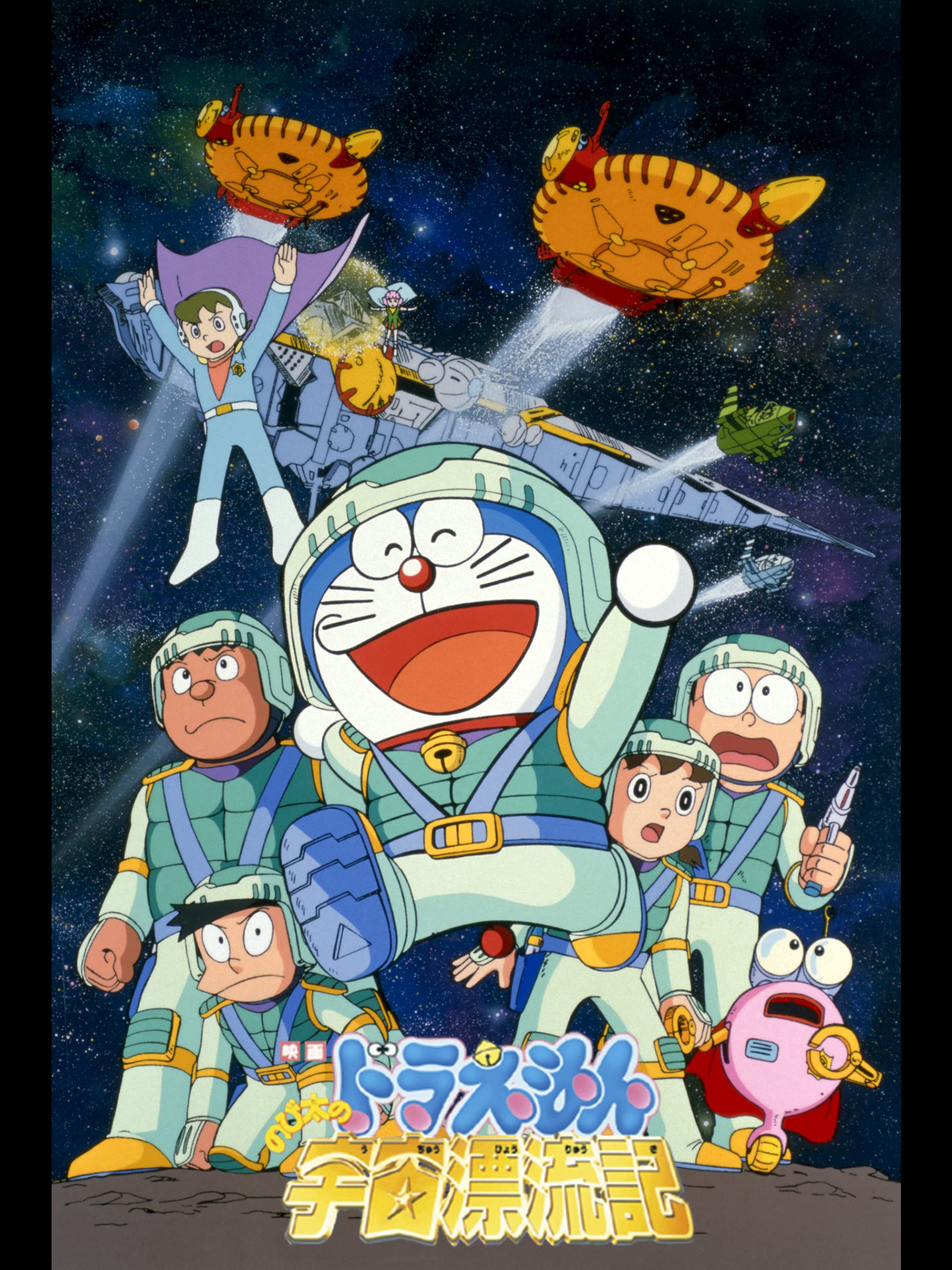
Spoiler commentary and discussion of Doraemon: Nobita's Space Drift (film).
Doraemon: Nobita's Space Drift" is an animated film released in 1999. Nobita and his friends enjoy playing Doraemon's secret tool, the space exploration game, but Suneo and Gian are trapped in the game world, and the game box is taken away by a mysterious spaceship. In order to save Suneo and his friends, Nobita and his friends go out into space and confront an invasion force that aims to invade the earth. The staff for this film includes Kazutaka Miyatake, mechanical designer of the sci-fi robot animation "Macross" series, and Studio Nue. In addition, no celebrity entertainers were used as guest characters, but only voice actors.
Read Article
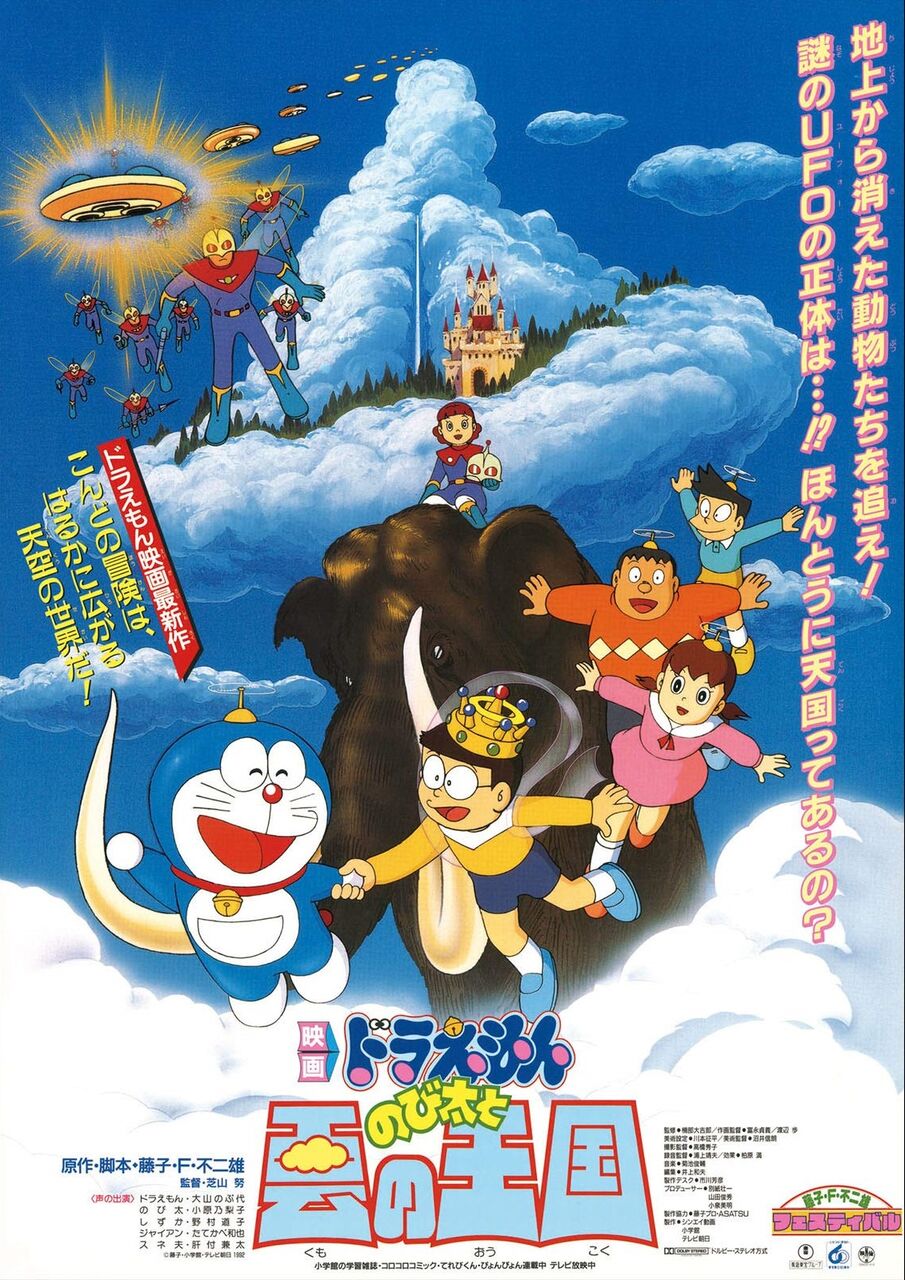
Doraemon: Nobita and the Kingdom of the Clouds (film) Spoiler Commentary and Discussion Summary
Doraemon: Nobita and the Kingdom of Clouds" is the 13th animation film in the series, released in 1992, and based on the manga written by Fujiko F. Fujio. Fifth grader Nobita Nobi (Nobita Nobita) believes that there is a heaven above the clouds, while Doraemon, a cat-shaped robot, creates a cloud kingdom for Nobita with the tools of his four-dimensional pocket. However, a heavenly world already exists above the clouds. This film is unusual in that it is the first film version in which Doraemon breaks down and a great flood destroys the human race.
Read Article
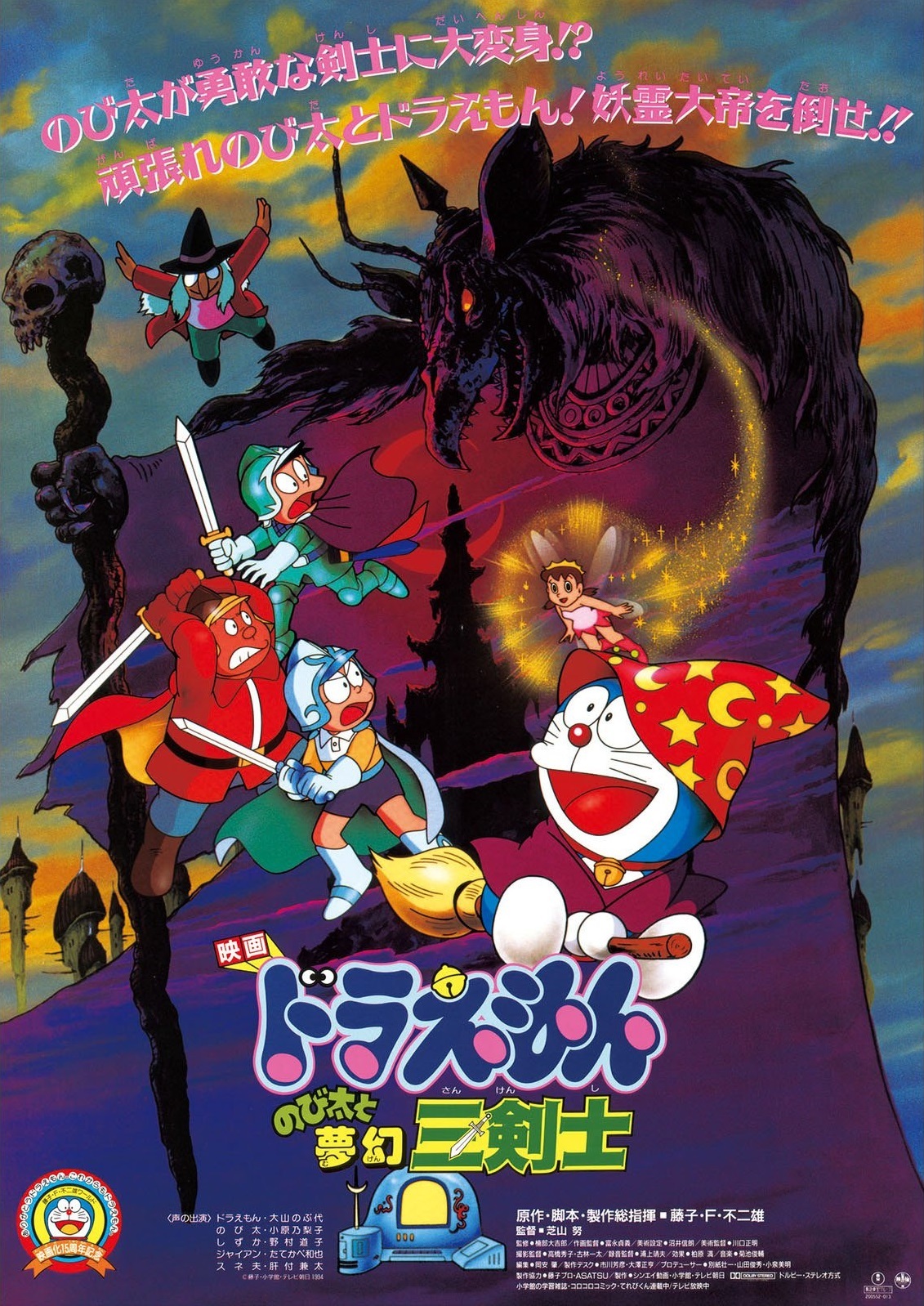
Doraemon: Nobita and the Three Dreamy Swordsmen (film) Spoiler Commentary and Discussion Summary
Doraemon: Nobita and the Dreamy Three Swordsmen" is the 15th animation film in the series, released in 1994. Nobita Nobi, a fifth grader in elementary school, experiences various dreams on a dreaming machine imported from the 22nd century by Doraemon, a cat-shaped robot. Eventually, he takes on the dream world of the "Three Swordsmen of Dreaming," ruled by the spectral giant Odrome. This is a unique work in which characters other than Doraemon and Nobita are treated as guests.
Read Article
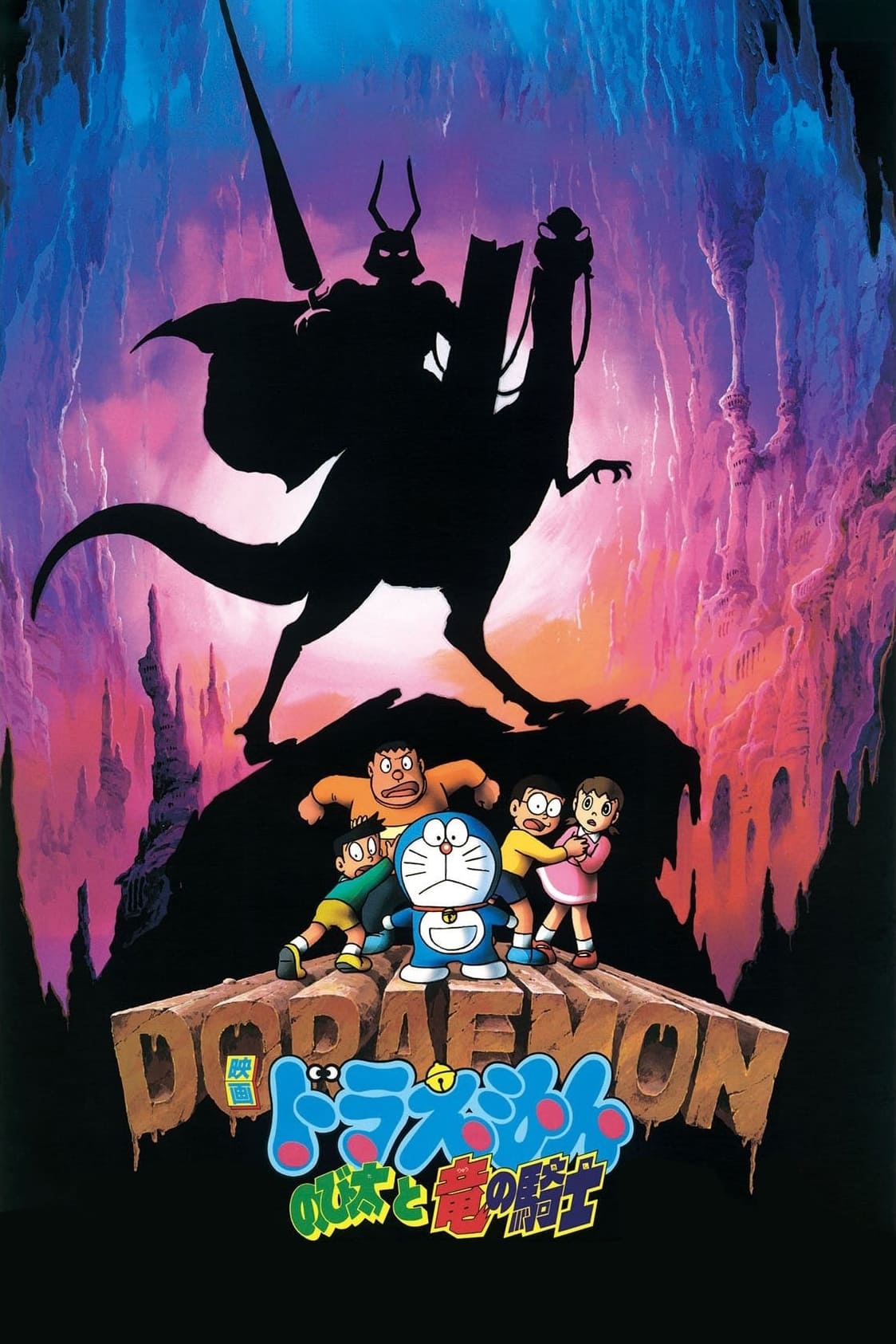
ドラえもん のび太と竜の騎士(映画)のネタバレ解説・考察まとめ
『ドラえもん のび太と竜の騎士』とは、藤子・F・不二雄が手掛けた漫画『ドラえもん』の劇場版長編アニメ第9作目作品である。 小学5年生の野比のび太や同級生達がネコ型ロボットのドラえもんが出したどこでもホールで地下の広い洞窟を作り楽しむが、その洞窟から恐竜や恐竜人達が住む地底国へと繋がっていたという物語展開となっている。 大の恐竜好きである藤子・F・不二雄が『ドラえもん のびたの恐竜』(1980年)に続き、地底世界の恐竜や恐竜人の姿を手掛けた長編大作。
Read Article
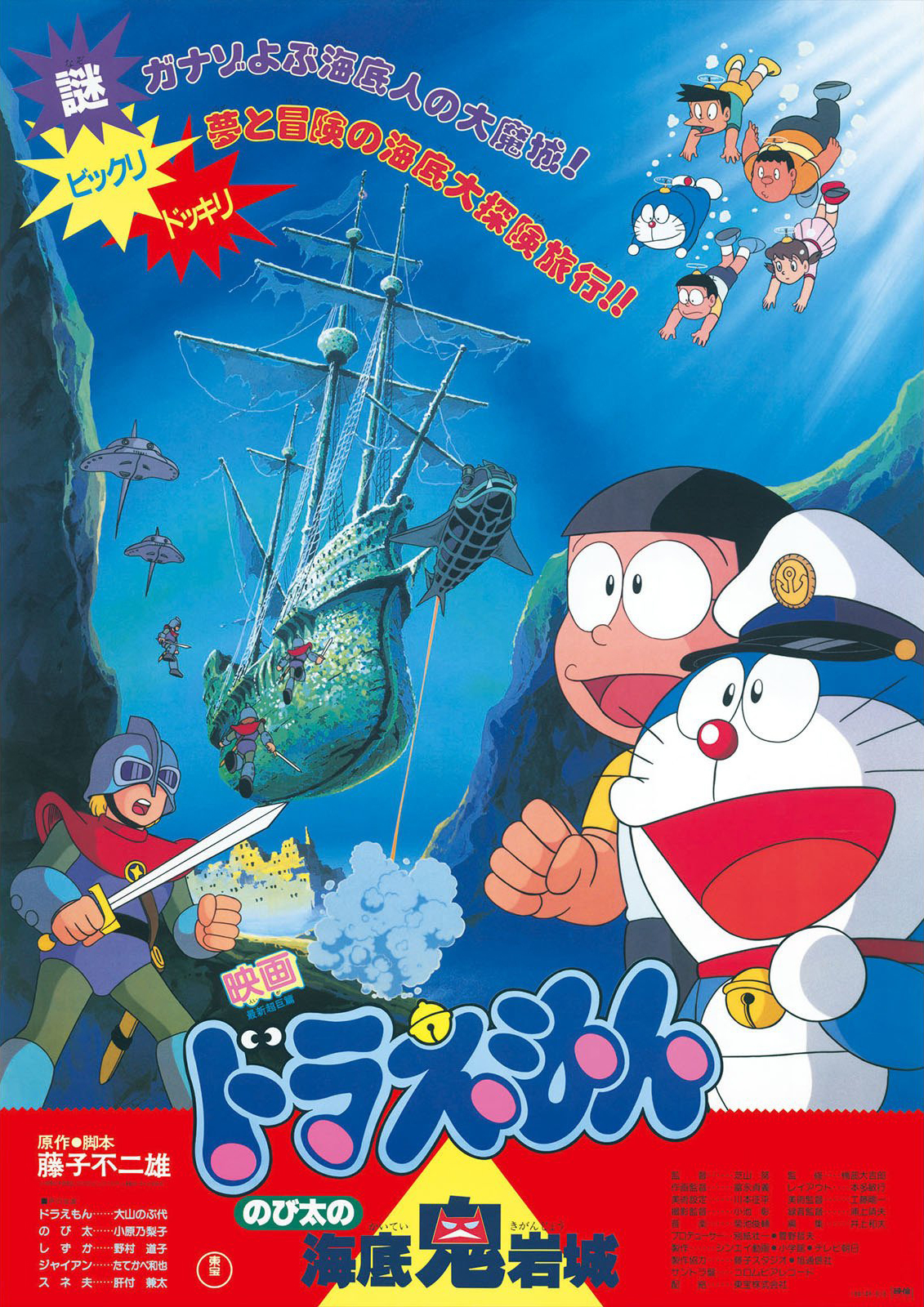
Doraemon: Nobita's Undersea Oniwashiro (The Movie) Spoilers and Discussion Summary
Doraemon: Nobita's Undersea Oniwashiro is the fourth feature-length animated film based on the manga "Doraemon" by Fujiko F. Fujio, and was released on March 12, 1983. Nobi Nobita (Nobi Nobita), a fifth grader in elementary school, goes to an undersea camp with some of his classmates during their summer vacation with the help of Doraemon, a cat-shaped robot, and enjoys exploring deep-sea fish. Just then, they encounter the Mu Federation, an undersea subterranean nation, and the story takes a major turn. While knowledge about the deep sea and the seafloor is conveyed through the story, the film also depicts the ruthlessness of the Mu Federation, the self-destruction of ATVs, and other serious developments.
Read Article
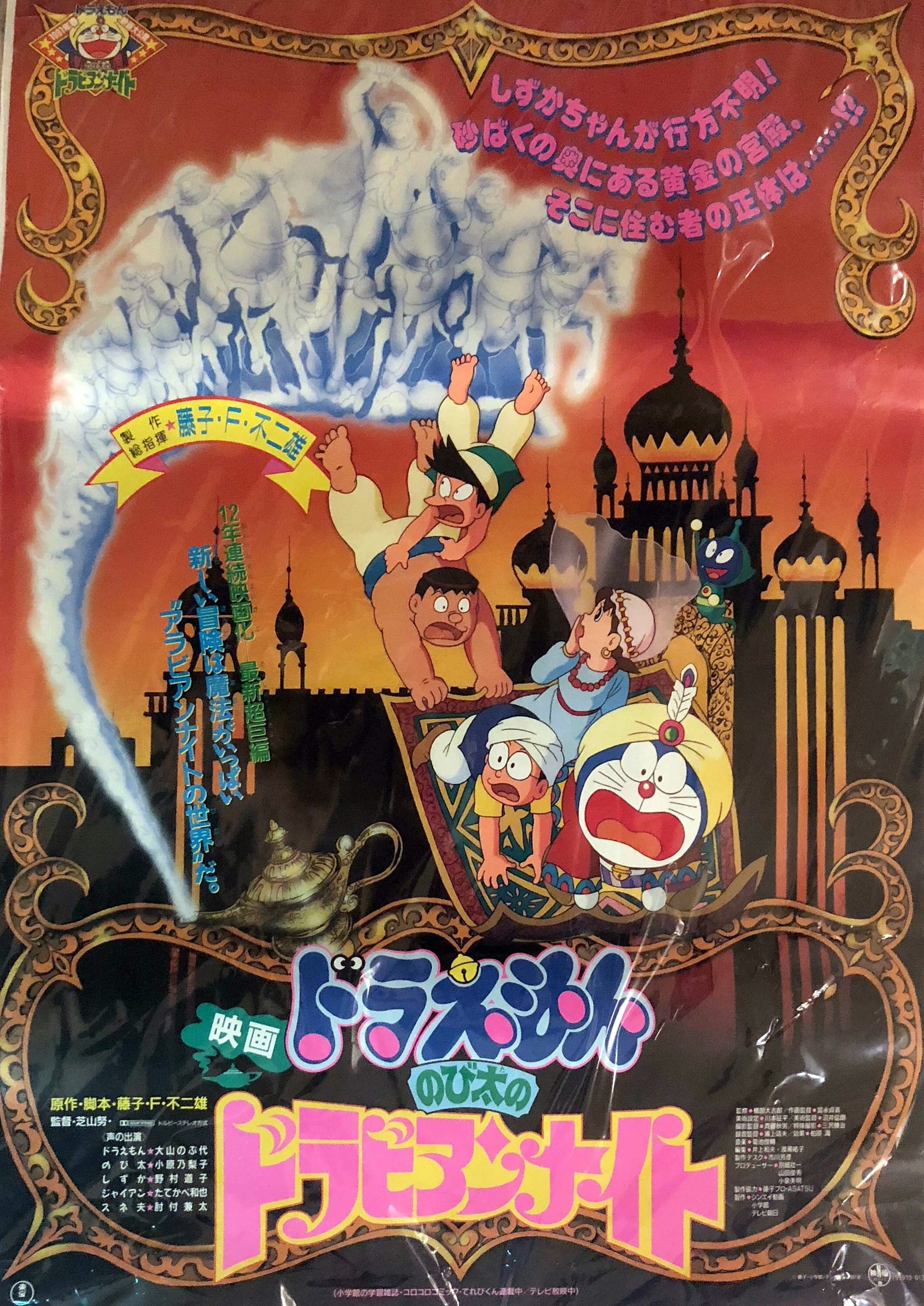
Spoiler commentary and discussion of Doraemon: Nobita's Drabian Nights (movie).
Doraemon: Nobita's Drabian Nights" is the 12th animated film in the series, released in 1991, and based on a manga written by Fujiko F. Fujio. Nobita Nobi, a fifth grader, enters the world of picture books using the tools in the four-dimensional pocket of Doraemon, a cat-shaped robot. However, Shizuka Minamoto, who was also enjoying the picture book world, goes missing. The film is set in Baghdad in the year 794 and is inspired by the picture book "Arabian Nights.
Read Article
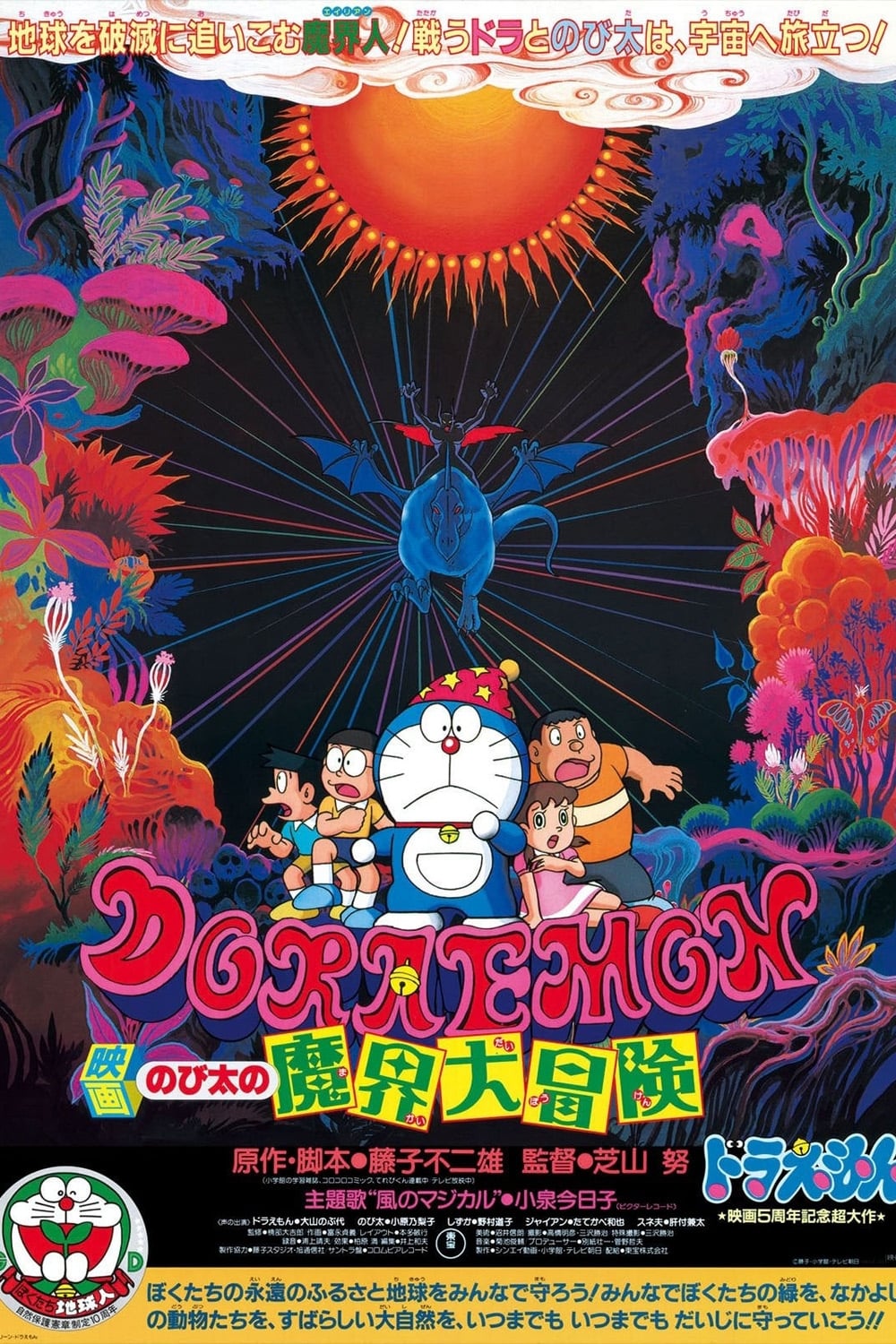
Spoiler commentary and discussion of Doraemon Nobita no Makai Daiboken (The Great Adventure of Nobita in the Magic World) (movie).
Doraemon: Nobita's Magical World Adventure" is the fifth feature-length animated adaptation of Fujiko F. Fujio's manga "Doraemon" and was released on March 17, 1984. Nobita Nobi, a fifth grader in elementary school who yearns for magic, uses the tools of Doraemon, a cat-shaped robot, to bring about a magical world. However, it is not the ideal Nobita had in mind at all, but a magical world ruled by demons. This work depicts a parallel world where the real world and the magical world created by Doraemon's tool, Moshi Moshi Box, intersect.
Read Article
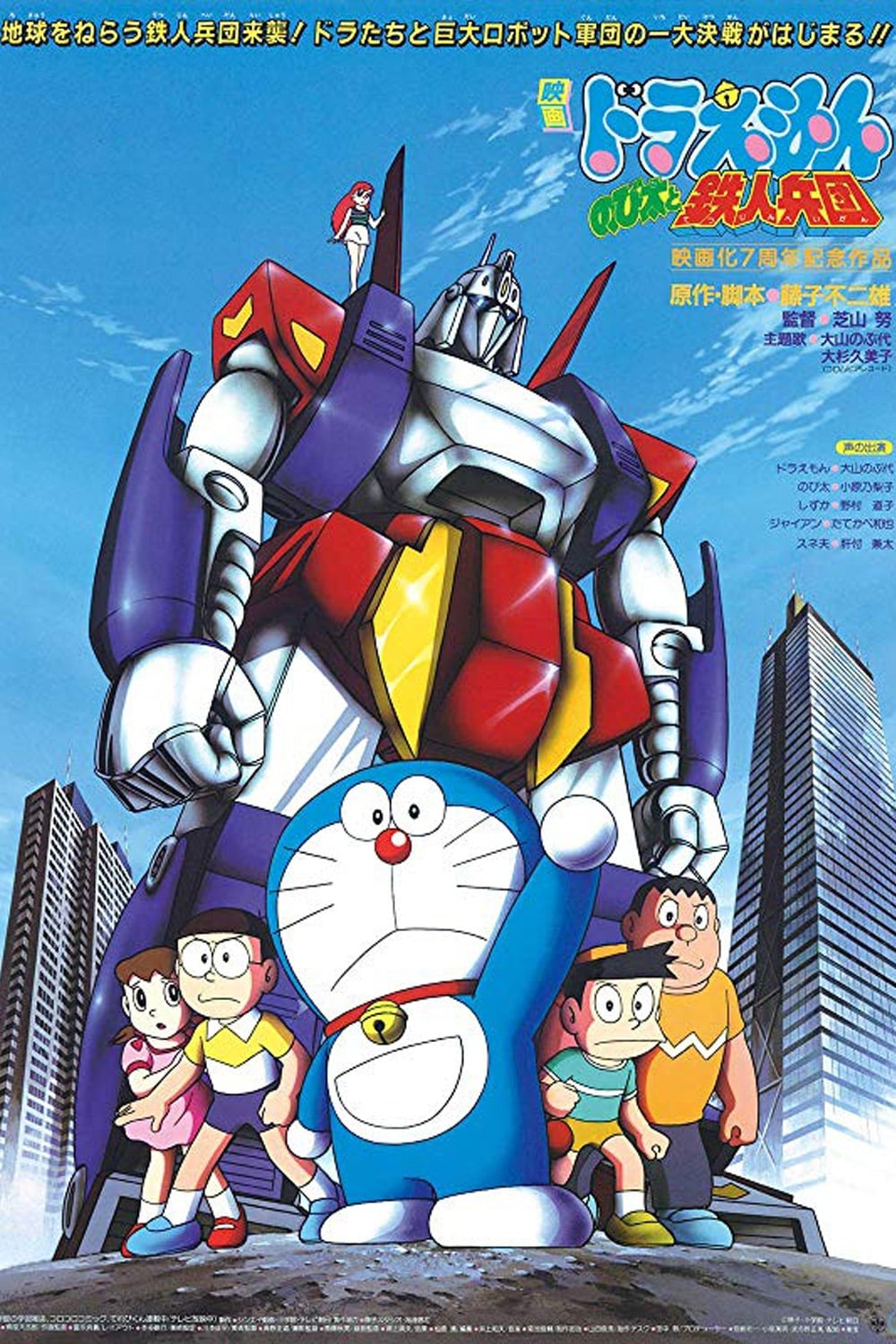
ドラえもん のび太と鉄人兵団(映画)のネタバレ解説・考察まとめ
『ドラえもん のび太と鉄人兵団』とは、藤子・F・不二雄が手掛けた漫画『ドラえもん』の長編アニメ第7作目作品である。小学5年生の野比のび太(のびのびた)は巨大ロボットが手に入れ喜ぶが、それは地球侵略を企む鉄人兵団の兵器だった。それからネコ型ロボットのドラえもんやのび太達は、ロボット惑星のメカトピアから地球侵略に来た鉄人兵団との戦いが展開する。地球人の総奴隷化という熾烈な目的を持つ鉄人兵団を、ドラえもん原作者の藤子・F・不二雄は「ドラえもん映画史上最強の敵」だと語った。
Read Article
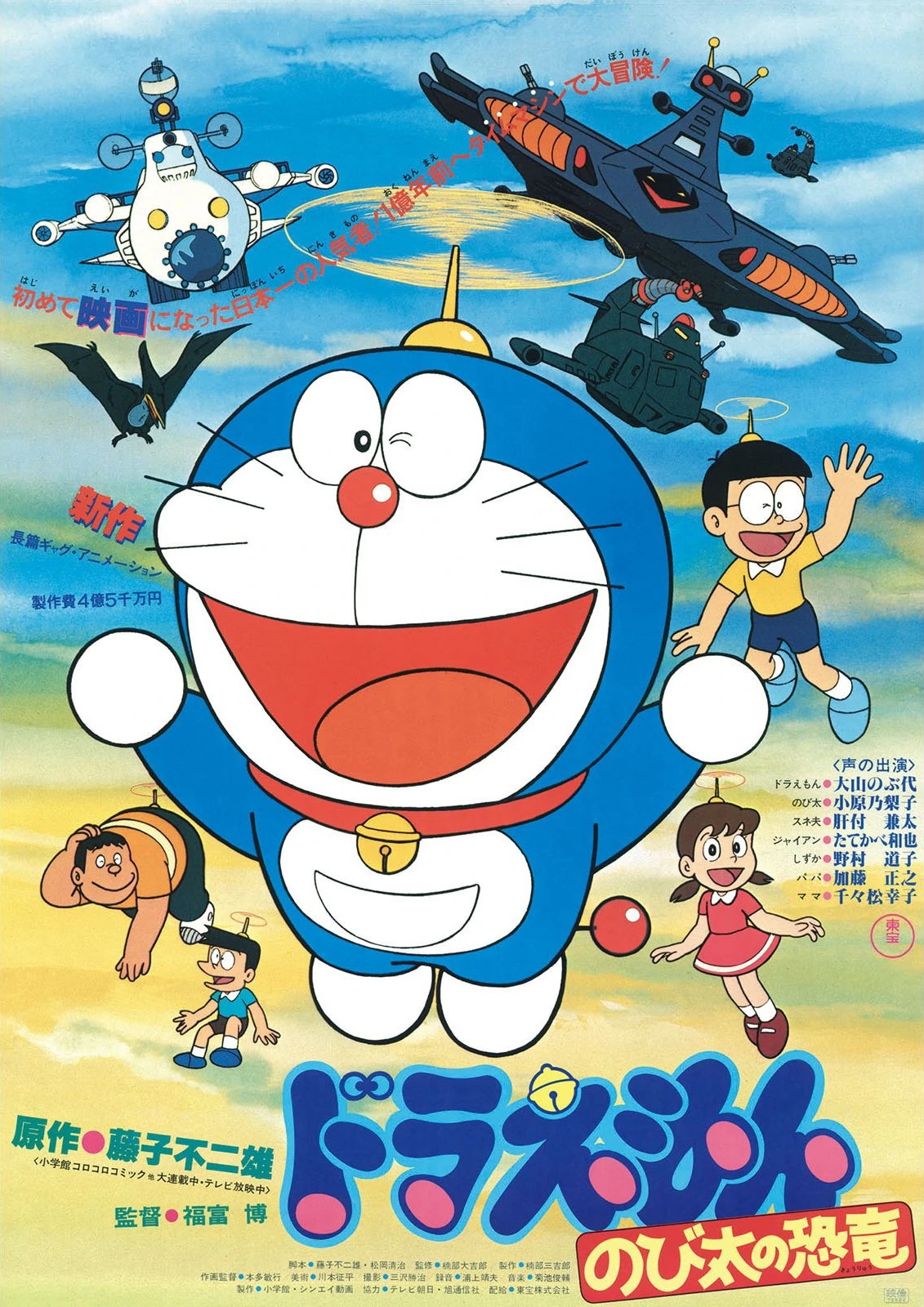
Spoiler commentary and discussion of Doraemon: Nobita's Dinosaurs (1980 film).
Doraemon: Nobita's Dinosaur" is a "Doraemon" film released on March 15, 1980. Nobita Nobi, a fifth grader, promises his classmates, including Suneo Konekawa (Hone Kaseo), that he will find a dinosaur fossil, and discovers what looks like a dinosaur egg under a cliff. With the help of Doraemon, a cat-shaped robot, he gives birth to a dinosaur named Pisuke from the egg and raises him, but this is the beginning of a series of turbulent events. This is the first "Doraemon" movie commemorating the highly acclaimed "Doraemon" musical stage version and remake movie.
Read Article
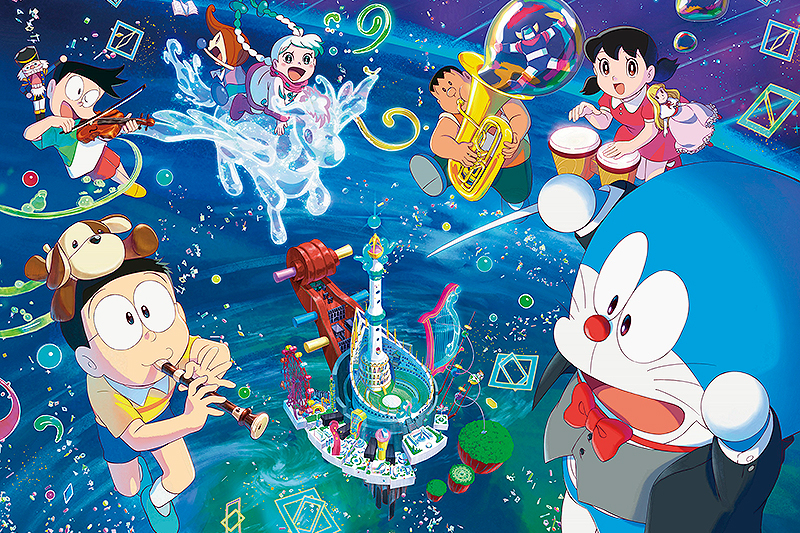
Doraemon the Movie: Nobita's Earth Symphony Spoiler Commentary and Discussion Summary
Doraemon the Movie: Nobita's Earth Symphony is a film based on Fujiko F. Fujio's manga "Doraemon," which was released in March 2024. It is the 43rd film in the "Doraemon the Movie" series. Nobita and his friends meet a girl named Mikka, who has a beautiful singing voice, before a music concert. Micka is a survivor of the planet Musica, where music once flourished. The creature that destroyed Musica was a space creature called Noise. Nobita and his friends fight using music to save the planet from being targeted by Noise.
Read Article
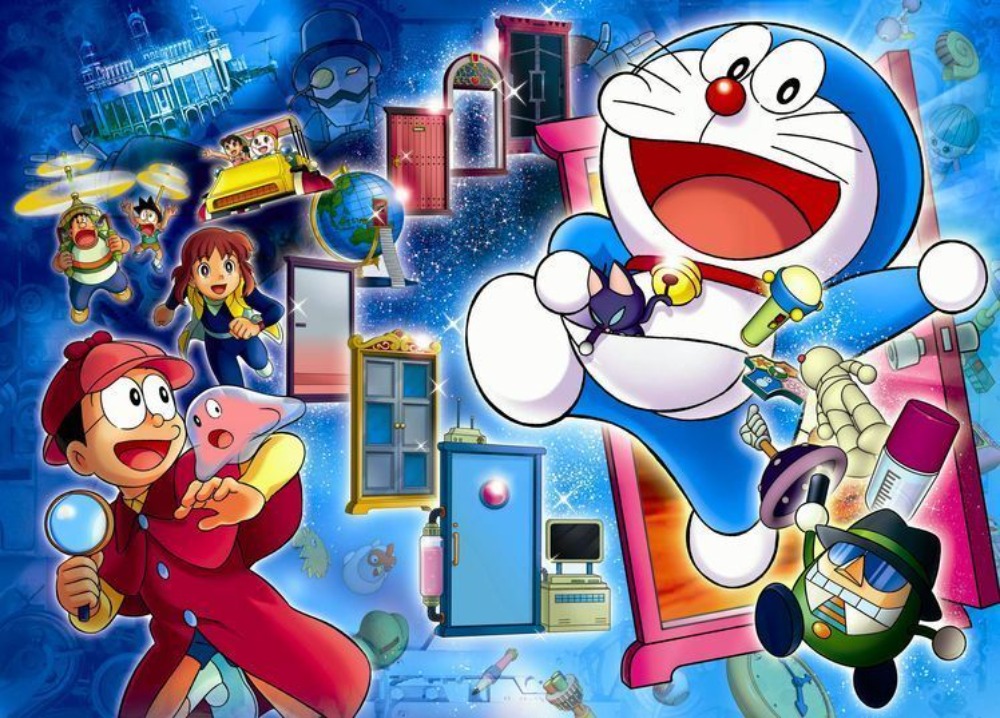
Summary of Doraemon's Secret Tools
Doraemon" is a manga and animated film by Fujiko F. Fujio, based on the manga, in which Doraemon, a cat-shaped robot created in the 22nd century, helps Nobi Nobita, the ancestor of his owner, Sewashi, with a mysterious tool. Since its TV animation in 1979, it has become a popular work in Japan. The "secret tools" are items that Doraemon pulls out of his four-dimensional pocket to help Nobita, and they are the centerpiece of the work. The Secret Tools also play an important role in the annual theatrical film "Doraemon the Movie".
Read Article
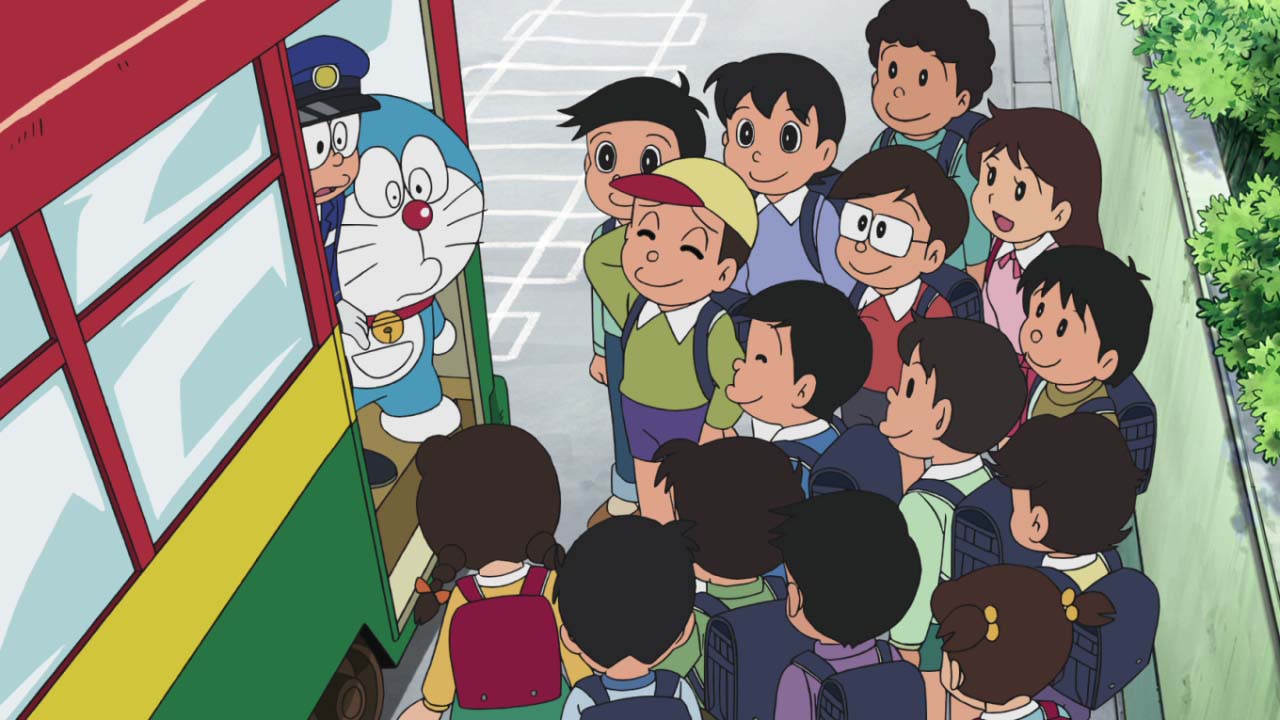
Summary of Nobita Nobi's classmates and classmates
Nobi Nobita is a character in the science fiction gag manga "Doraemon" by Fujiko F. Fujio. He is the secondary character in "Doraemon" and is an elementary school student who lives a S (little) F (mysterious) life with the main character, Doraemon. He belongs to the 5th grade 3 class at school (4th grade in the manga), where he spends his days studying and playing with his classmates and classmates. In addition to characters such as Shizuka Minamoto, Takeshi Gouda (a.k.a. Gian), and Suneo Konekawa, with whom he always acts together, he has many classmates in the manga.
Read Article
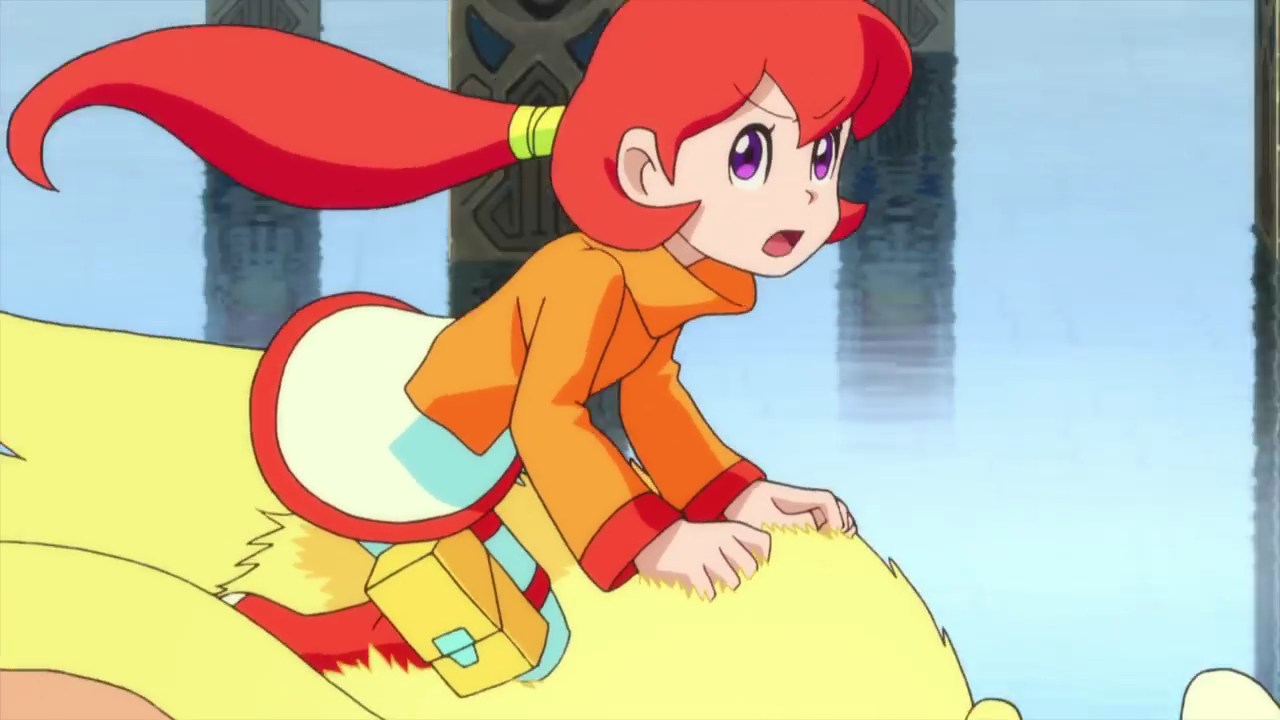
Summary of guest heroines of Doraemon
The science fiction gag manga "Doraemon" by Fujiko F. Fujio is one of Japan's most popular manga, boasting national popularity." Despite its "children's" nature, it is loved by men and women of all ages, not only in Japan, but around the world. The TV and movie versions of "Doraemon" sometimes include guest characters who do not usually appear in the series. Among them, those with a heroine (female) guest character sometimes include an element of romantic comedy, which is different and more interesting than those with a male guest character who focuses on friendship.
Read Article
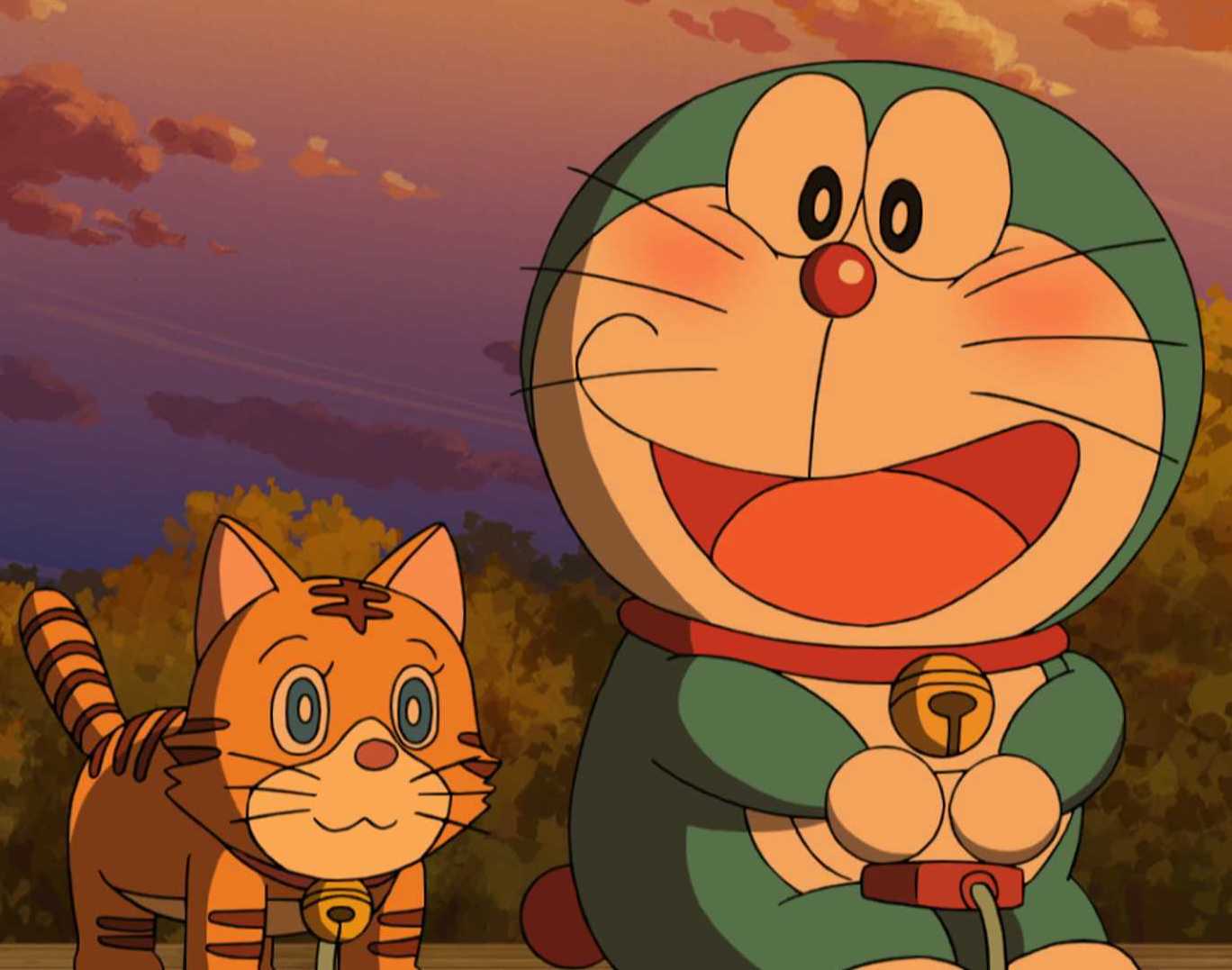
Summary of Doraemon's girlfriends and lovers
Doraemon, the main character in Fujiko F. Fujio's children's science fiction manga "Doraemon," is a cat-shaped robot from the 22nd century who one day comes to Nobi Nobita, an elementary school student living in the 20th century. Nobita's descendant, who lives in the 22nd century, told him to come here in order to make Nobita, who is not good at studying, sports, or anything else, into a respectable person. Doraemon lives with Nobita in his house and together they lead a peaceful life. Doraemon's friendships expand and he is sometimes depicted going out on dates with his girlfriend.
Read Article
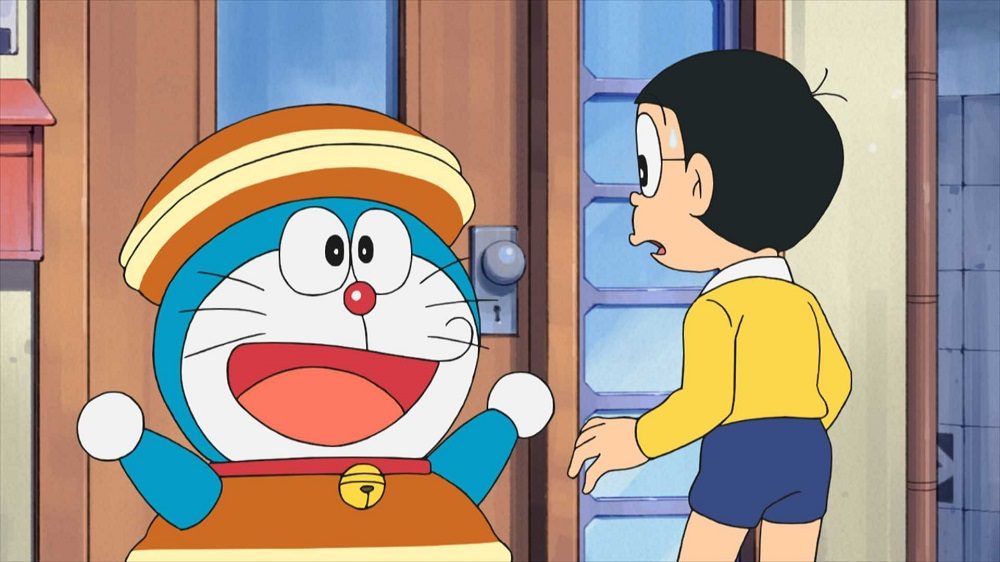
Summary of Doraemon's cooking, meals, food, snacks, and drinks
Doraemon" is a manga by Fujiko F. Fujio and an anime/movie based on it, which began serialization in the children's manga magazine Shogakukan in 1969 and is known as a national work. It is a gag manga about the daily life of Doraemon, a cat-shaped robot, and Nobita Nobi, an elementary school student who is not good at sports and studies. The main story is that Doraemon solves Nobita's mishaps with secret tools that he takes out of his belly pocket. In addition to Doraemon's favorite food, dorayaki, many foods and drinks appear in the secret tools.
Read Article
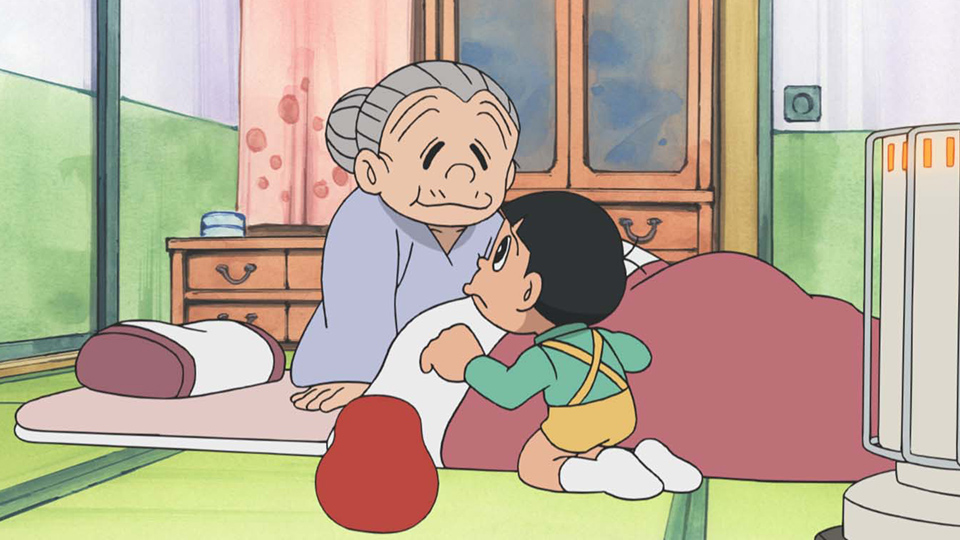
Summary of Nobita Nobi's (Doraemon) grandmother's appearances
Nobita's grandmother is a character in the science fiction gag manga "Doraemon" by Fujiko F. Fujio. She is the blood grandmother of Nobita, the secondary character in "Doraemon," and mostly refers to Nobita's father Nobisuke's mother (paternal grandmother). His mother Tamako's mother (maternal grandmother) rarely appears. Nicknamed Nobita's grandmother, "Grandma's Memories," an episode of Nobita and Nobita's grandmother, is known as one of the most moving episodes in the "Doraemon" series.
Read Article

A collection of little-known Doraemon backstories and urban legends
Everyone is familiar with Fujiko F. Fujio's masterpiece "Doraemon. This time, we have collected such little-known back stories, small stories, back settings, and urban legends of Doraemon. Are there any episodes you know?
Read Article
STAND BY ME Doraemon (Stand By Me) Spoiler Commentary and Discussion Summary
Doraemon is a national animated cartoon. Created by manga artist Fujiko F. Fujio, the manga series began in 1969, and the first animated TV series was broadcast in 1973; the first movie was made in 1980, and 37 films have been released to date. The movie "STAND BY ME Doraemon" was created in 3D for the first time and was released in 2014, and the storyline features seven different episodes of the original story, including the encounter between Doraemon and Nobita and the fantastic final episode.
Read Article
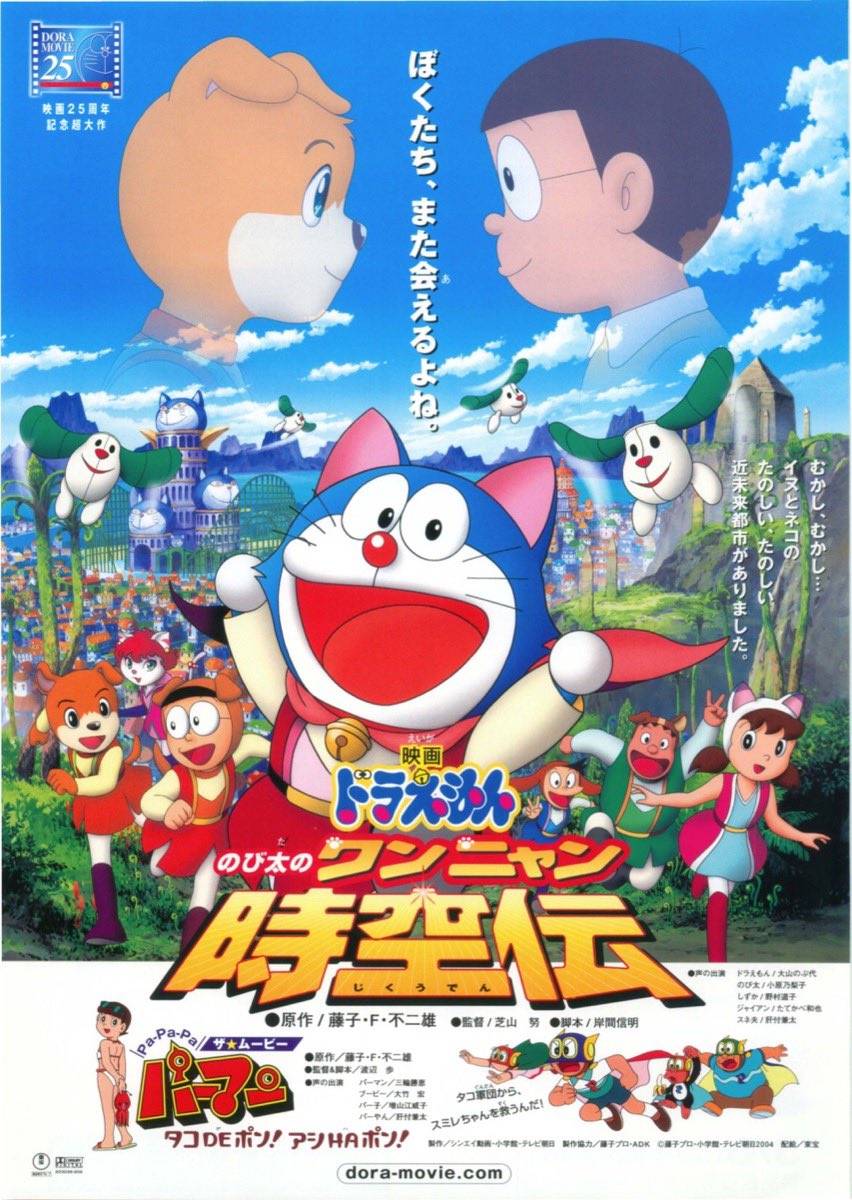
Spoiler commentary and discussion of Doraemon: Nobita no Wannyan Jikkouden (The Movie).
Doraemon: Nobita no Wannyan Jikkouden" is a film adaptation of the manga and anime "Doraemon" that was released on March 6, 2004. Doraemon, Nobita and his friends try to take Ichi, a puppy they found in a river, and many abandoned dogs and cats to a world 300 million years ago, before living things existed. This is the 25th theatrical version of the film, and also the last film in which Nobuyo Oyama and the other voice actors who have played the characters of Doraemon and other characters for many years act in the film.
Read Article
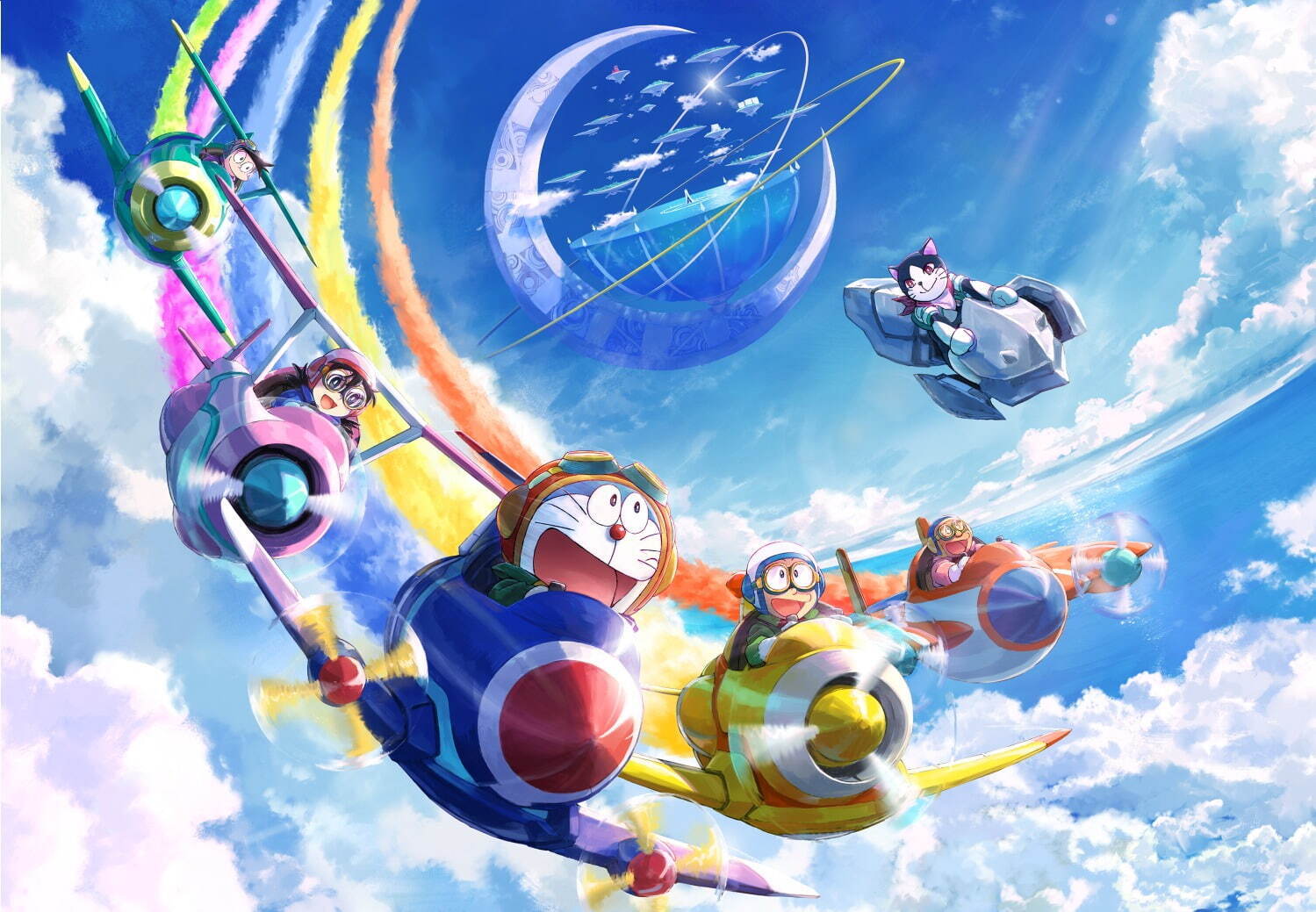
Doraemon the Movie: Nobita and the Sky Utopia Spoilers
Doraemon the Movie: Nobita and the Utopia in the Sky" is a feature film based on Fujiko F. Fujio's manga "Doraemon", which was released in March 2023. It is the 42nd film in the "Doraemon the Movie" series. Nobita, the main character, longs for a utopia (an ideal world) and sees a crescent-shaped island floating in the sky. However, the island soon disappears. Nobita believes that the island is the utopia, and sets off on a journey through time and space in the flying boat "Time Zeppelin" with Doraemon and his friends to search for the utopia.
Read Article
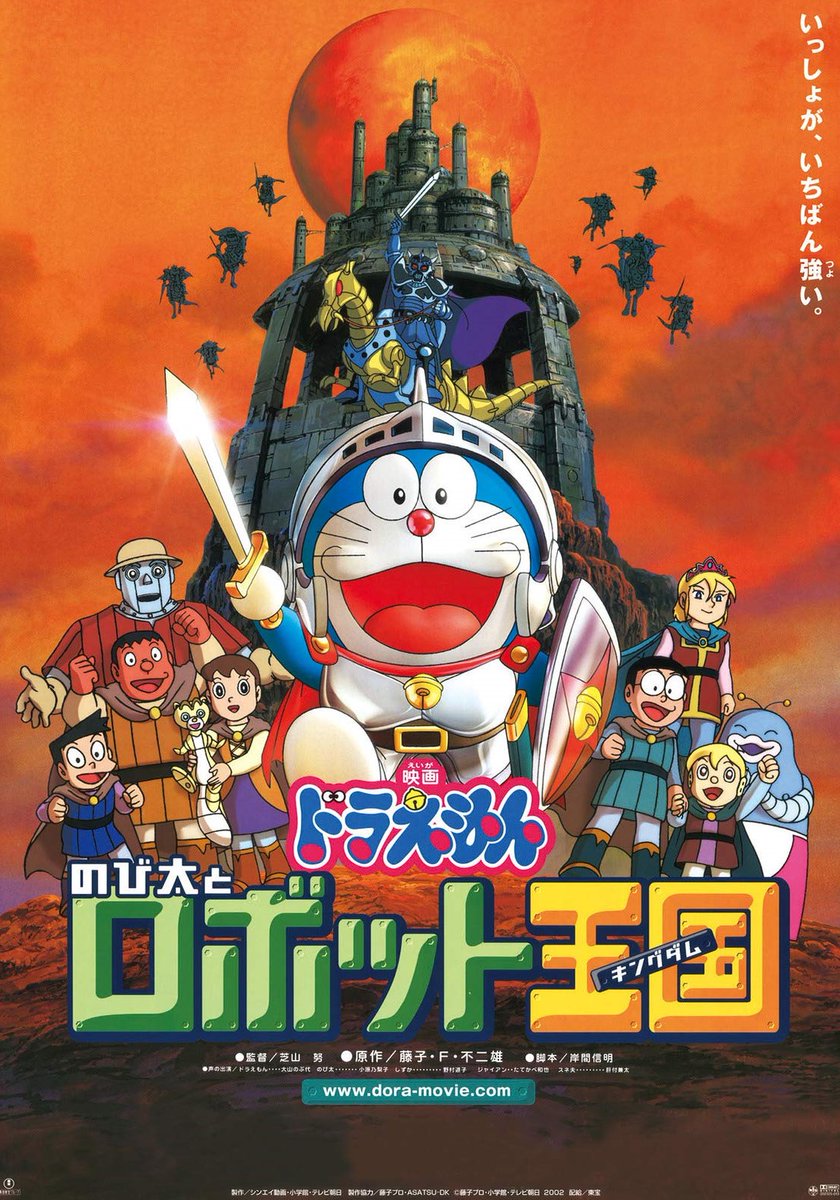
Spoiler commentary and discussion of Doraemon: Nobita and the Robot Kingdom (movie).
Doraemon: Nobita and the Robot Kingdom" is an animated film released on March 9, 2002. Doraemon, Nobita and his friends encounter a boy robot, Poco. Doraemon and his friends go to a planet ruled by robots to save Poco. The coexistence of humans and robots, and the depiction from the robot's point of view, make the relationship between humans and robots a theme of the work. There are also some changes in production, such as digital processing in some scenes and the last production of celluloid pictures.
Read Article
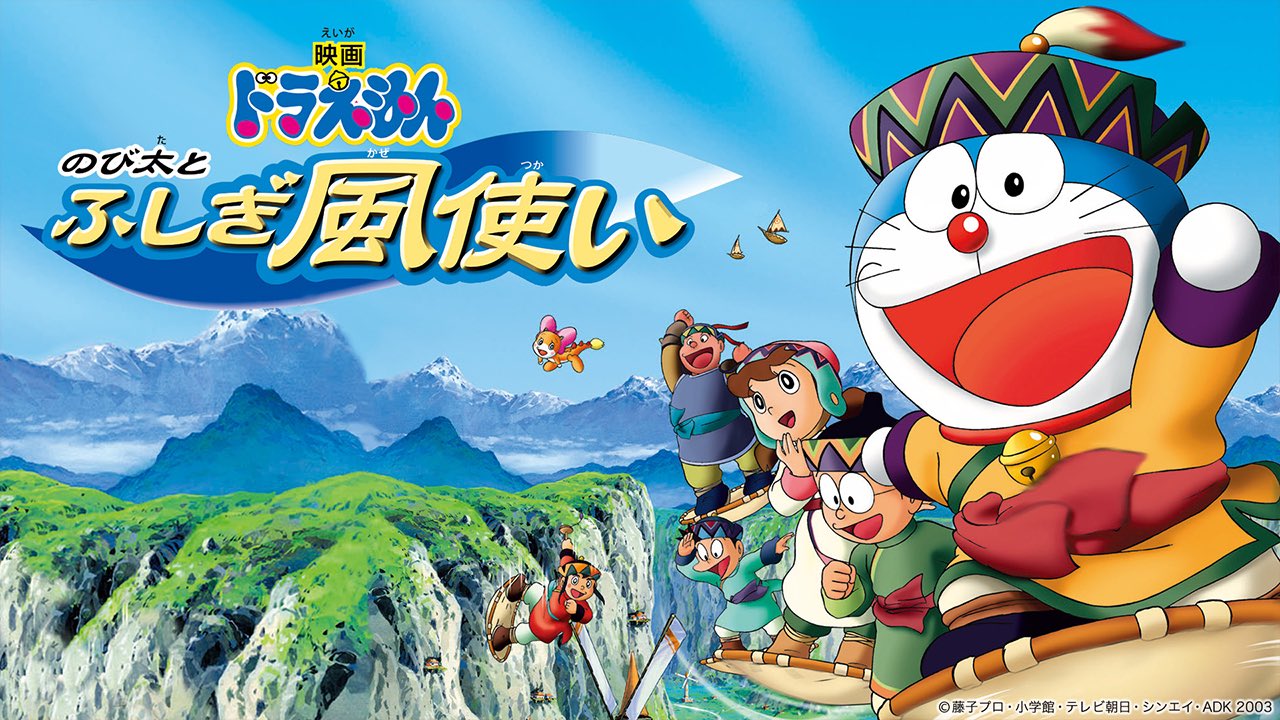
Doraemon: Nobita and the Mysterious Windman (film) Spoilers and Discussion Summary
Doraemon: Nobita and the Mysterious Windman" is a Doraemon movie released in 2003. One day, Nobita, Doraemon and his friends encounter Fuuko, a child of the wind. They try to take Fuuko to a big place, but they end up in a grassy area called the village of the wind people. Although the story is based on a short story that appeared in the sixth volume of Tentomushi Comics' "Doraemon," the setting of this work is completely original. In addition, the storyboards were digitized and computer graphics were used in this work, and the movement of the characters and backgrounds became smoother.
Read Article
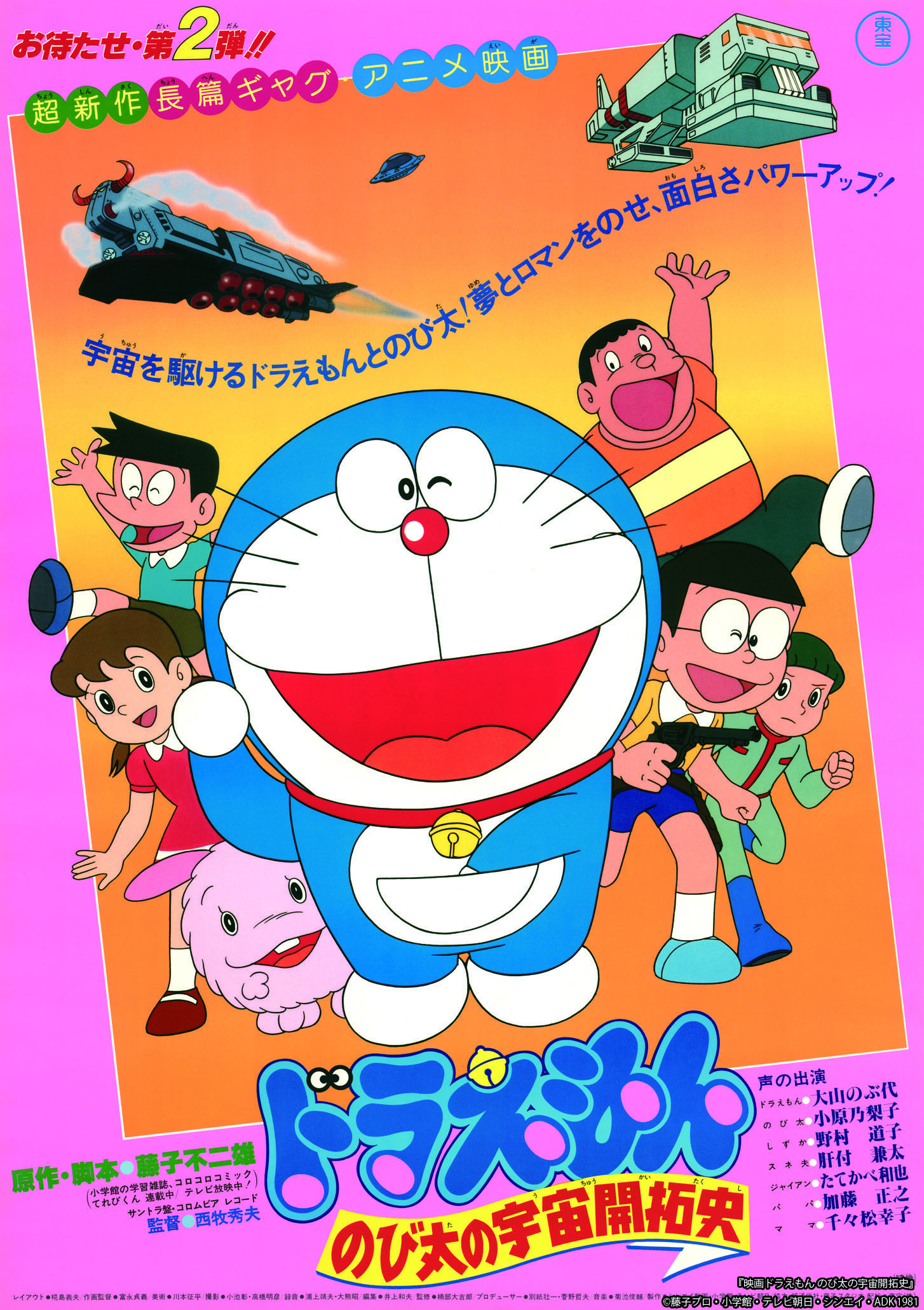
Spoiler commentary and discussion of Doraemon: The History of Nobita's Spaceblazer (film).
Doraemon: The History of Nobita's Spaceblazer" is the second feature-length animated film based on Fujiko F. Fujio's "Doraemon," which was released in March 1981. The adventure begins when the room of Nobita Nobi (Nobita Nobita), a fifth grader, and Doraemon, a cat-shaped robot who lives with him, are connected to the planet Koya Koya, where the pioneer immigrants Ropple and Chummy live. The film is known for its veteran voice actors playing guest characters, and a remake, "Doraemon the Movie: The New Record of Nobita's Spaceblazer," was released in 2009.
Read Article
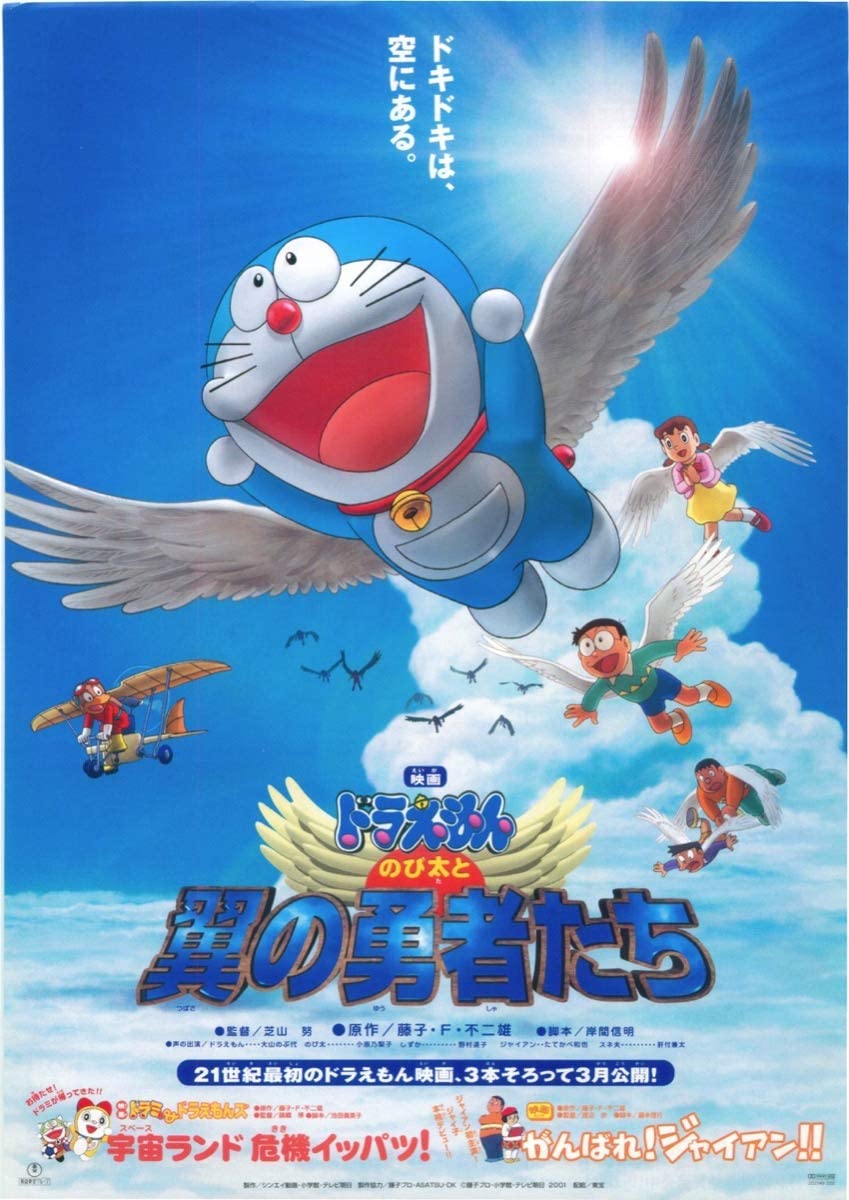
Doraemon: Nobita and the Winged Heroes (movie) spoiler commentary and discussion.
Doraemon Nobita to Tsubasa no Yushatachi" is an animated film released on March 10, 2001. Doraemon, Nobita and his friends meet a bird boy, Gousuke, and head for Birdpia, where he lives. Birdopia is in great danger, and Doraemon and his friends stand up to save Gousuke and the bird people. Inspired by legends about bird people, such as the story of Icarus in Greek mythology, the film shows the ambitious side of Nobita, who yearns to become a bird person and tries to fly by himself without relying on Doraemon's tools. The film also depicts the complex psychology of Nobita's friendship with Gusuke and his friends and his dealing with his emotional pain.
Read Article
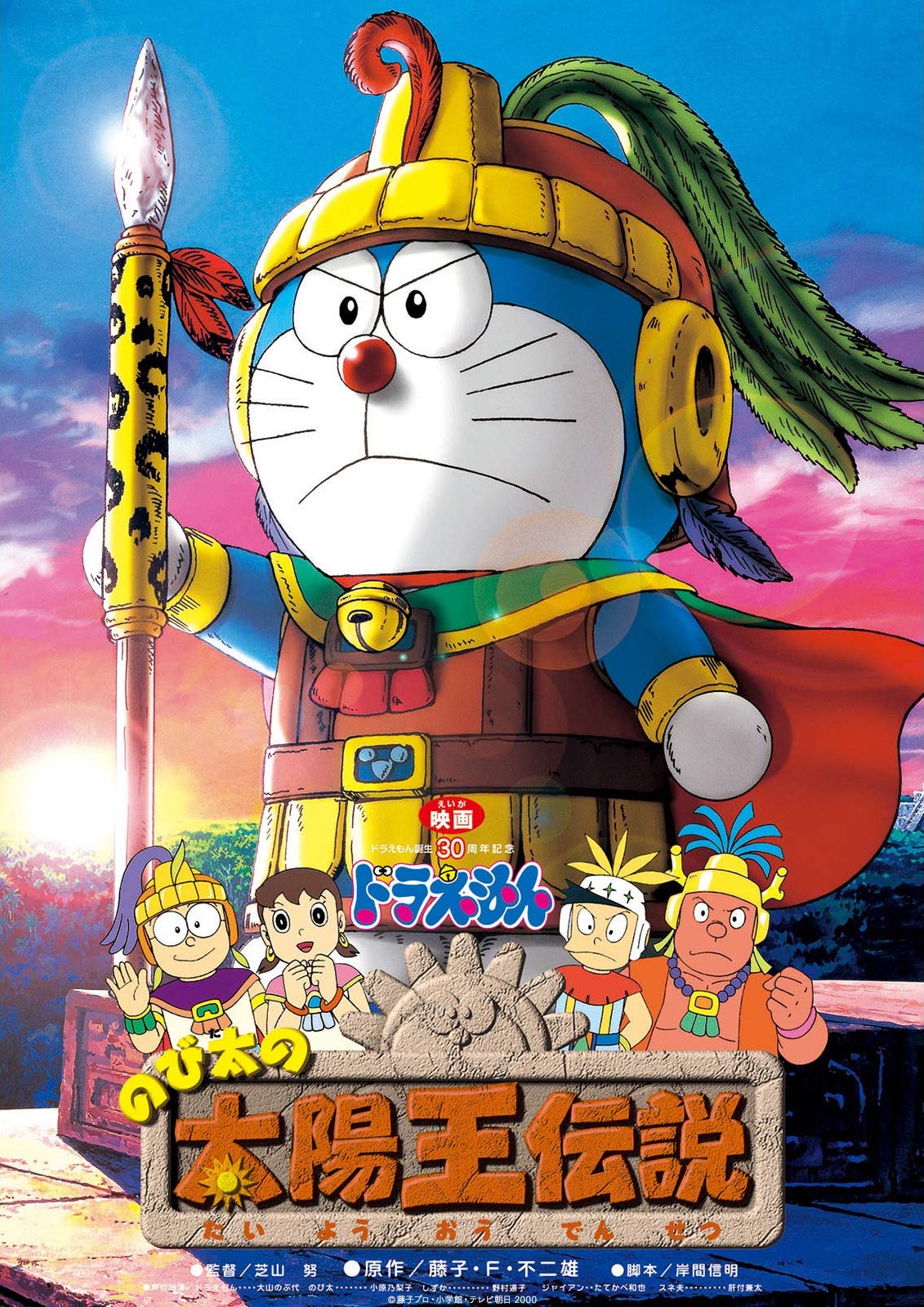
Spoiler commentary and discussion of Doraemon: The Legend of Nobita the Sun King (movie).
Doraemon: Nobita's Legend of the Sun King" is an animated film released on March 11, 2000. A time hole, a tool in Doraemon's four-dimensional pocket, malfunctions, causing a disturbance in space-time that leads to the ancient kingdom of Mayana. Doraemon and his friends meet Tio, the prince of Mayana, and confront the conspiracy of the Queen, Tio's mother, and the witch Redina, who torments the people of Mayana. This film is about Doraemon, Nobita, and his encounter with Tio, a boy who is a duplicate of him, and is depicted as the theme of his other self.
Read Article
Contents
- Table of Contents
- The Legend of the Most Fearsome City
- Doraemon (dwarf planet)
- I have to go.
- Talent
- A story that does not become a book
- Jaiko's real name
- Sneo's younger brother
- Mysterious figure in the first episode
- Mysterious Voices on Animal Planet
- SEWASHI-KUN'S TRUE IDENTITY
- Runaway problem
- The principle of the door anywhere/two days later...don't use it!
- Screw-Up City Adventure and Teacher's Thoughts
- [Final] Nobita is in a vegetative state.
- The Theory of Death
- [Final] Time Paradox
- Soreike! Anpanman
- Episode 0
- Identity of the enemy's mastermind
- Identity of Baikinman
- バタコ'S IDENTITY
- Cheese is Baikinman's pawn.
- The second reason is the opening song "Anpanman March."
- Character shaped by God
- Crayon Shin-chan
- Times Predicting the Future
- PHANTOM CHAPTER 25
- The author's last painting
- Bo's real name.
- Shinnosuke's death theory
- Shinko-chan no Nazo
- sazae-san
- Episode 0
- Why ED's lyrics are number two and three
- Big money moving behind the scenes
- Floor plan model
- Tara's sister.
- Why Ikura Chan Can't Speak Words
- [Final Episode] Family Breakup
- [Final] Everything Goes Back to the Sea
- [Final Episode] Tamatebako
- Sazae-san syndrome / Sazae-san syndrome
- Final Rock-paper-scissors
- Pretty Cure Series
- The existence of Itsuki
- Sunday Janken War
- Detective Conan
- Conan himself is a criminal.
- Shinichi Kudo is under surveillance.
- Identity of the mastermind
- The True Nature of the Mastermind
- Lupin III
- Real face
- Unexpected relationship with Zenigata
- Lupin the Eighth
- Episode 0
- pocket monster (internationally popular cartoon series, originally a video game)
- An incident triggered a nationwide setting
- Extinction of life, prediction of the future
- Youkai Watch (Japanese horror movie)
- Why Jibanyan Wears Stomach Band
- Identity of Robonyan
- Suspected jibanyan Robbery
- Chibi Maruko-chan (Japanese cartoon series)
- Settings that differ from reality
- Phantom character
- [Final Episode] Tomozo's Legacy
- Dragon Ball
- The Great Kamehameha is angry.
- Reason why the show was canceled in France
- Why did lunch disappear?
- Akira Toriyama Road
- Meaning of GT
- Animal Crossing
- Model of the story
- Sailor Moon
- Sailor Venus is the rejection of Sailor Moon?
- Was the ending of season 1 made by force?
- Kochira Katsushika-ku Kameari Koen-mae Hashutsujo
- The police station in front of Kameari Park doesn't exist.
- There is always a stock at Shueisha
- Modified Content
- snot
- [Final] What is a True Good Deed?
- Miffy
- The shape of the mouth is the reason for X.
- Miffy's always looking straight ahead.
- Nintama Rantaro
- Episode 0 ~ Anime Edition ~
- Episode 0 ~ Character Edition ~
- Kunoichi no Tsudoi
- NARUTO
- Naruto is a failure.
- Chakra Color
- Effects of the death of weasels
- Tom and Jerry
- Episode 0
- [Final] Really Important Things
- Kin-niku Man
- Episode 0
- blackjack
- Times Predicting Disasters
- Works not included in the book
- Jojo's Bizarre Adventure
- 9.11 Prediction of the Terrorist Attacks in the United States
- The Titans of Progress
- Meaning of the lyrics of the anime OP "Koren no Yumiya"
- Origin of the character's name
- The original story was real.
- Ellen Yeager is a resident outside the Wall.
- "Code" on the cover
- silver spirit
- Prediction of Sorachi
- Magical Princess Minky Momo
- When Minkimomo is broadcast, an earthquake occurs.
- Search for Wally!
- They won't put it in the library.
- Existing models
- Makoto (Japanese children's game)
- Why did I start making comedy cartoons?
- Osomatsu-kun, Osomatsu-san
- Works depicting the world after death?
- Legend of the original author Fujio Akatsuka
- Bakabon Genius
- Trauma Episode: "Strange Friends"
- Astro Boy
- Episode 0
- A theory produced under a conspiracy
- Final episode of the original
- Very much! Lucky Man
- Author who is too surprising
- Gamou Empire
- DEATH NOTE
- The war of the brain was established 30 years ago.
- Impact of this work
- Gegege no Kitaro (The Bearded Taro of Gegege)
- Rat Man's real name
- obake no Qtaro
- Origin of the Obake-no Q-taro
- city hunter
- Relationship with a certain religious organization
- Jungle Empire
- Why is Leo white?
- Mobile Suit Gundam
- Talking Gundam
- Why the Red Comet "Char Only Zaku" is Pink
- Neon Genesis Evangelion
- Identity of the Apostle
- Strange relationship with the secret society Freemason
- parman
- Episode 0
- Yu Yu Hakusho
- Origin and direction of the name of Kazuma Kuwabara
- ONE PIECE
- Left-hand rule
- Tenth Mate
- Strange relationship between Bonnie and Ace
- Luffy's patching theory
- Moonrace theory, the successor of D's will.
- Moomin
- Why the anime version of Moomin is banned outside Japan
- Moomin Valley in Yamagata
- The end of the world, the prediction of the future
- ↓ Here you are!