
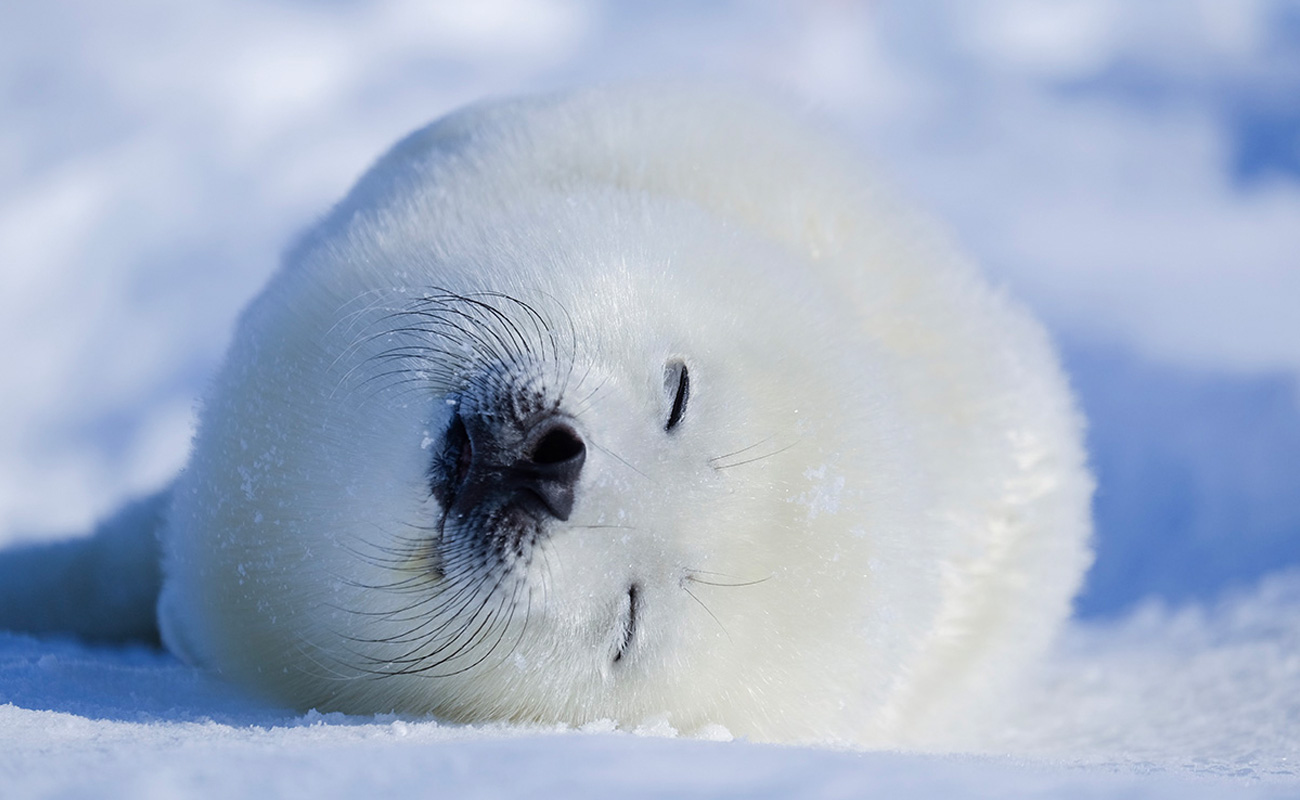
Even animals that everyone knows are actually full of mysterious ecology. Here is a collection of interesting trivia about such animals that are not well known. We hope you will be healed by the trivia about cute animals.
Source: woman.mynavi.jp
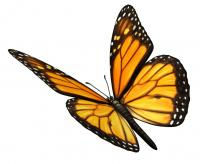
90% of lion hunting is done by female.
Source: www.amanosaizo.com
There is no octopus smelt even though there is squid smelt because octopus smelt is not sticky and is silky and smooth.
Source: eniguma.blog85.fc2.com
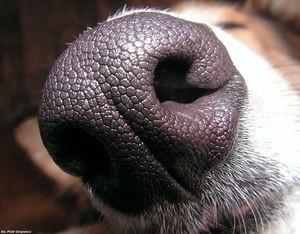
Humans have fingerprints, but dogs have nose prints, and every single dog is different.
Source: ja.wikipedia.org
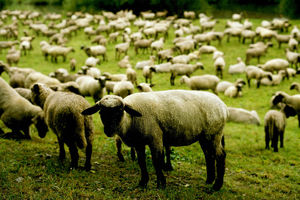
There are more sheep than people in New Zealand
Source: blog.livedoor.jp
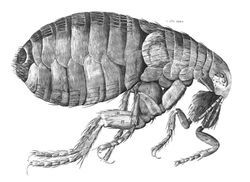
Fleas can fly up to 130 times their own body length.
Source: ja.wikipedia.org
Applied to humans, this would be equivalent to a 180 cm person flying 2.73 km.
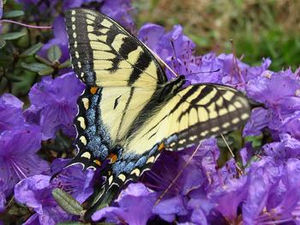
As for the butterfly there is taste in the leg
Source: blog.livedoor.jp
Geckos can walk on walls and ceilings because of molecular bonding adhesion
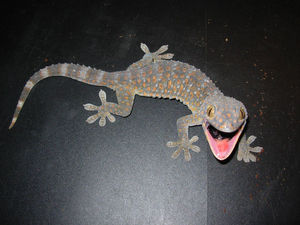
Geckos are members of the reptilian lizard family and are unique in that they can move around on vertical walls and even windowpanes, sticking snugly to them. However, geckos do not have suckers on their feet like octopuses, nor do they produce mucus like snails. So how does a gecko stay stuck to a vertical wall without falling off?
Actually, there is an organ on the sole of the gecko's foot called the shikakuban. The surface of this organ is covered with micrometer (1/1000th of a millimeter) sized bristles, which in turn are composed of a collection of even finer nanometer (1/1000th of a micrometer) sized bristles. These very fine bristles interlock with the irregularities in the surface of the wall, creating a "weak force".
This force is called "Van der Waals force," and it works inversely proportional to the sixth power of the distance between atoms or molecules, so the closer the distance, the stronger the pull. In other words, the force reaches shorter distances and is very weak.
It is said that the unique structure of the gecko's limbs may strengthen the physical adsorption force (i.e., this van der Waals force) that allows it to walk on walls and ceilings with all four limbs.
Goliath Grouper, a giant fish with high-speed predation
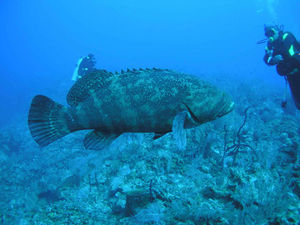
The goliath grouper is a different species of tamakai. It is a member of the grouper family that grows as large as the tamakai.
It is neither the most ferocious nor the fastest swimmer in the coral reef sea. It has neither poisonous thorns nor magnificent fangs.
However, as the name "Goliath" (a giant in the Old Testament) suggests, they grow to an astonishing size.
When grown, they are about the size of a refrigerator. It is about one size smaller than a dolphin.
Ultimate Goliath Grouper Compilation || Best of BlacktipH
This video shows the goliath grouper's unique vacuum cleaner-like sucking and predation.
How does it become so large despite its slow movement? In fact, the secret lies in their predation method.
Goliath groupers create a "vacuum" in their mouths by spitting out water from their gills all at once when they feed. At the same time, the goliath grouper sucks in water, and the food comes into its mouth from the goliath grouper's mouth.
The technology to create a "vacuum" in the mouth is amazing. It is truly a marvel of biological evolution.
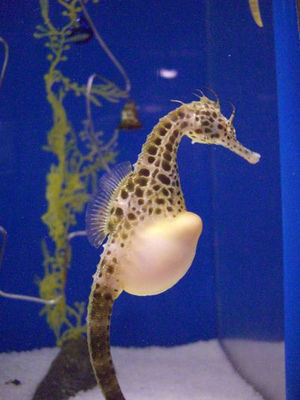
Male seahorse giving birth

Contents
- An elephant's nose is powerful enough to grab a small needle.
- Giraffes sleep for about 20 minutes a day, but only one or two minutes of that time are spent completely resting their bodies and brains.
- Cows eat their rice facing north or south
- Armadillo spends 80% of his life sleeping.
- The dolphin sleeps with half open eye
- It is generally known that a squid has 10 legs, but to be exact, a squid does not have legs.
- Squid can transform and change color freely
- The scientific name of the gorilla is "gorilla gorilla". The lowland gorilla is "gorilla gorilla gorilla".
- Ants don't sleep in their lifetime.
- As for the snake there is no hearing
- There is almost no difference in body color between Ceratotherium simum and Diceros bicornis.
- The blood of the lobster is blue
- The eye of the ostrich is larger than the brain of the ostrich
- About 90% of Japanese cats have blood type A and none have type O.
- The sweat of the hippopotamus is pink
- A camel's hump is fat, and when it's a baby, it doesn't have a hump.
- Tarantulas can live without eating for more than two years
- Cows are color blind, they don't get excited by red, they pounce on anything in their way that's in front of them.
- Hedgehogs have hearts that beat 300 times per minute.
- Tigers have stripes not only on their fur but also on their skin.
- There is no biological difference between whales and dolphins
- Humans and slugs share 70% of their DNA
- The reason the dog's nose is wet is to keep the sense of smell sensitive.
- A single mole can dig about 100m of soil in just one night.
- Although king crab is called "crab," it is not a crab but a hermit crab
- The deep-water goblin shark is a mythical fish that has been seen only 50 times since it was discovered in 1897.
- Pigeons used in magic tricks stay still because they have a habit of becoming docile when placed on their backs.
- The parasitic tapeworm survives for up to 32 years
- Giraffes also sing "mo"
- Bears don't hibernate, they hibernate.
- Unlike fish like sweetfish, which can only live in clean water, loach cannot live long in clean water.
- Giraffes have the same number of neck bones as humans.
- Beavers can hold their breath underwater for 45 minutes
- Sharks grow new teeth in just one week.
- hammerhead shark
- The ostrich egg in Africa weighs 13 kilograms and is so strong that a 90-kilogram person can ride on it and not be scared off.
- They say, "Legs as thin as antelope," but antelope legs are thicker.
- Cockroaches have lived on Earth for 280 million years, dragonflies for 320 million years.
- When you roll up the body of a tiger prawn, the stripes look like wheels.
- Horses are classified as light vehicles under the Road Traffic Law.
- Penguin eyes are extremely short-sighted on land due to their structure suitable for underwater
- Kangaroos are less than 3 cm in length at birth
- Crab miso is not crab brain, but liver and pancreas
- Pigs are domesticated wild boars
- A sea turtle cannot retract its limbs or head or tail into its shell
- The sunfish lays the most eggs on earth (about 300 million per spawn), but only two or three of them become adults.
- Japanese cats like to eat fish, but Western cats don't often eat fish.
- The mosquito has 47 teeth
- One elephant gives birth at a time and the gestation period is about 2 years.
- Hummingbirds are the only birds that can move backwards
- Crocodiles are the largest reptiles in the world
- Horses can only breathe through their noses.
- The penguin could fly in the nul long ago
- The lion, when the boss changes, kills all of his children.
- Dolphins breathe through their lungs and can drown.
- A cat's sweat glands are only in its paw pads.
- Goldfish are ornamental versions of crucian carp.
- Dairy cows do not produce milk unless they have children
- The only mammal that lays eggs, the platypus is the only poisonous mammal
- Polar bear's fur is transparent, not white, and appears white when light reflects off it.
- The background of the polar bear is actually black.
- Gorillas have a grip of more than 400 kilos.
- Girgiraffe's legs are powerful enough to smash the jaws of a lion
- The scientific name for the crested ibis is "Nipponia Nippon," which means "Peach Blossom Bird" in Chinese characters.
- The flock is Bovidae.
- Rattlesnakes copulate in about 22 hours and 55 minutes.
- Salmon (salmon) is easy to lose its meat.
- Butterflies are counted as' one' or' two'
- 90% of lion hunting is done by female.
- There is no octopus smelt even though there is squid smelt because octopus smelt is not sticky and is silky and smooth.
- Humans have fingerprints, but dogs have nose prints, and every single dog is different.
- There are more sheep than people in New Zealand
- Fleas can fly up to 130 times their own body length.
- As for the butterfly there is taste in the leg
- Geckos can walk on walls and ceilings because of molecular bonding adhesion
- Goliath Grouper, a giant fish with high-speed predation
- Male seahorse giving birth