

We have compiled a collection of constructivist works that recognize and create space rather than natural scenery. Even if the explanations are a little difficult to follow, I am sure you will think the corner relief works are cool. I am sure you will think it is cool if you see the corner relief works.
What is constructivism?
〘Mind〙 An epistemology that holds that what is considered truth is something created by human beings in their minds. The basic epistemology of family therapy.
Source: www.weblio.jp
The art movement that developed in the Soviet Union from before the Russian Revolution through the 1920s, which began in 1913 when V. Tatlin, under the influence of P. Picasso and Suprematism, called reliefs made of iron plates and pieces of wood "compositions," was revolutionary in that they were the first completely abstract sculptures in the history of sculpture and that they expressed space, not mass. It was revolutionary in that it was the first completely abstract sculpture in the history of sculpture and that it was a sculpture that expressed space rather than mass.
Source: artscape.jp
How was it really revolutionary?
About Suprematism
In contrast to the "hot abstraction" of Kandinsky and others, which expresses interiority and spirituality, it is sometimes called "cold abstraction. Malevich is a representative artist. Absolutism.
Source: kotobank.jp
It's kind of a difficult story.
Malevich Works
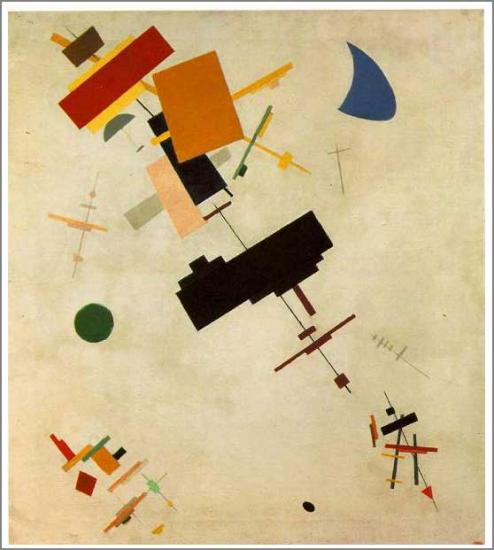
It certainly seems like constructivism, or the need to think about screen composition.
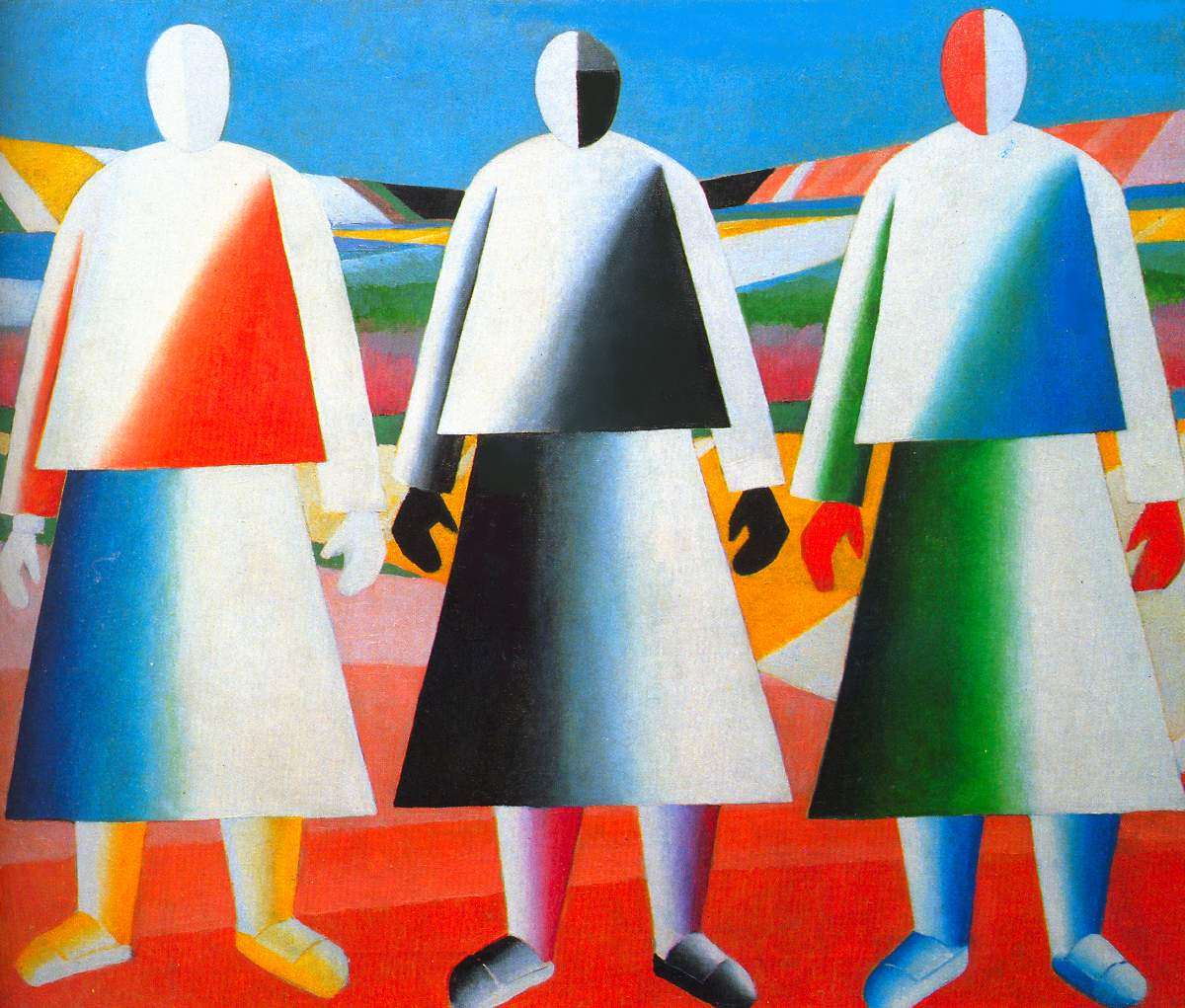
I see that you are working on this kind of work. You said it's not only figures.
Malevich insisted that the painting should be composed solely of geometric elements - squares, circles, triangles, and crosses - and produced a work of white squares on a white background.
This text is a partial description of the source.
Source: kotobank.jp
What has been said makes sense when you look at this.
I wanted to search for V. Tatlin's work, which was influenced by Malevich, but unfortunately it doesn't seem to be clearly available here in Japan.
Tatlin is regarded as one of the original creators of Constructivism, and this corner relief is a concrete manifestation of his work. Tatlin was struck by Picasso's assemblage works in Paris in 1913, and began creating relief works in Moscow.
Source: artscape.jp
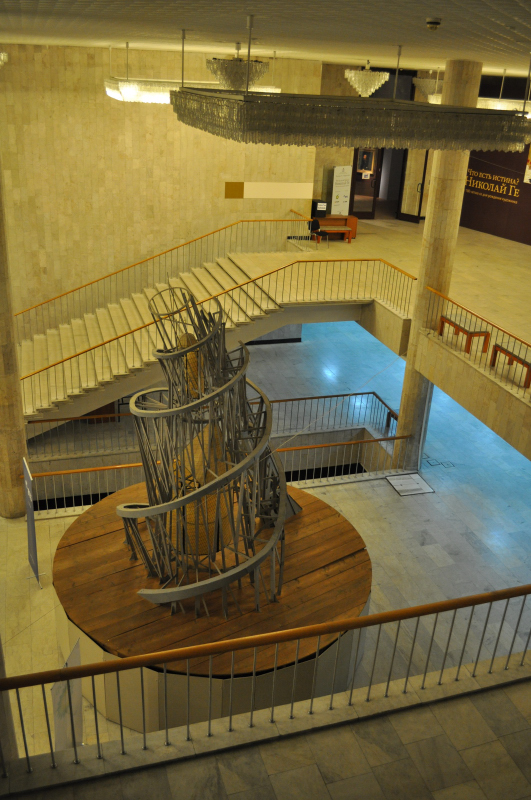
Corner relief is cool.
But what is its epistemology?
Suppose there is a red banana in front of you.
In order for you to notice that the red banana "exists", you must first see (perceive) it.
Then you recognize that it is a banana. To recognize it as a banana, you must have seen a banana before (experience).
Source: detail.chiebukuro.yahoo.co.jp
Malevich created objectless paintings that had nothing to do with natural forms and were the product of pure sensation, which he called Suprematism (absolutism), and together with Constructivism were the twin pillars of the Russian Avant-garde (avant-garde).
Source: kotobank.jp
In this case, it might be called constructivism to recognize and create space.
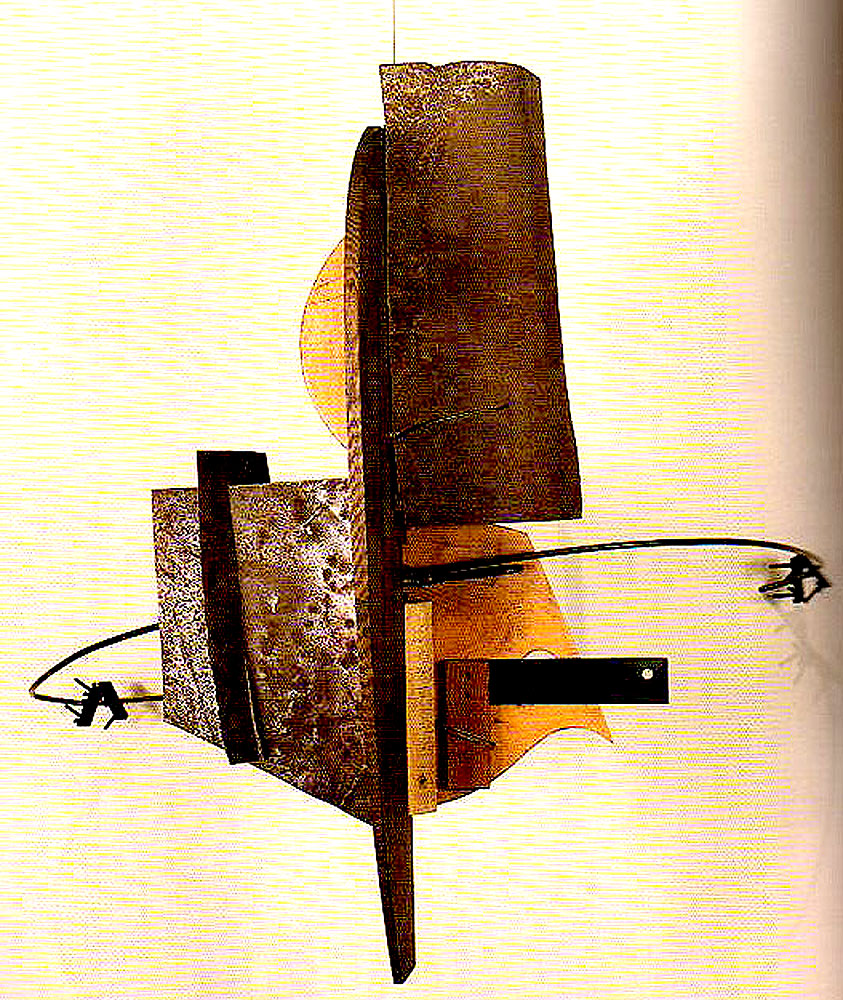
Once again, the corner relief works give the viewer a sense of presence beyond that created as a spatial awareness.
I think the corner relief works are cool to see now, but as an idea of constructivism, I felt that they are neither original nor innovative in this day and age. I think it is because nowadays there are many works of art, like contemporary art, that are not so clear. I think the constructivism movement stood out because it was common in the past to create realism and concrete works. and
