
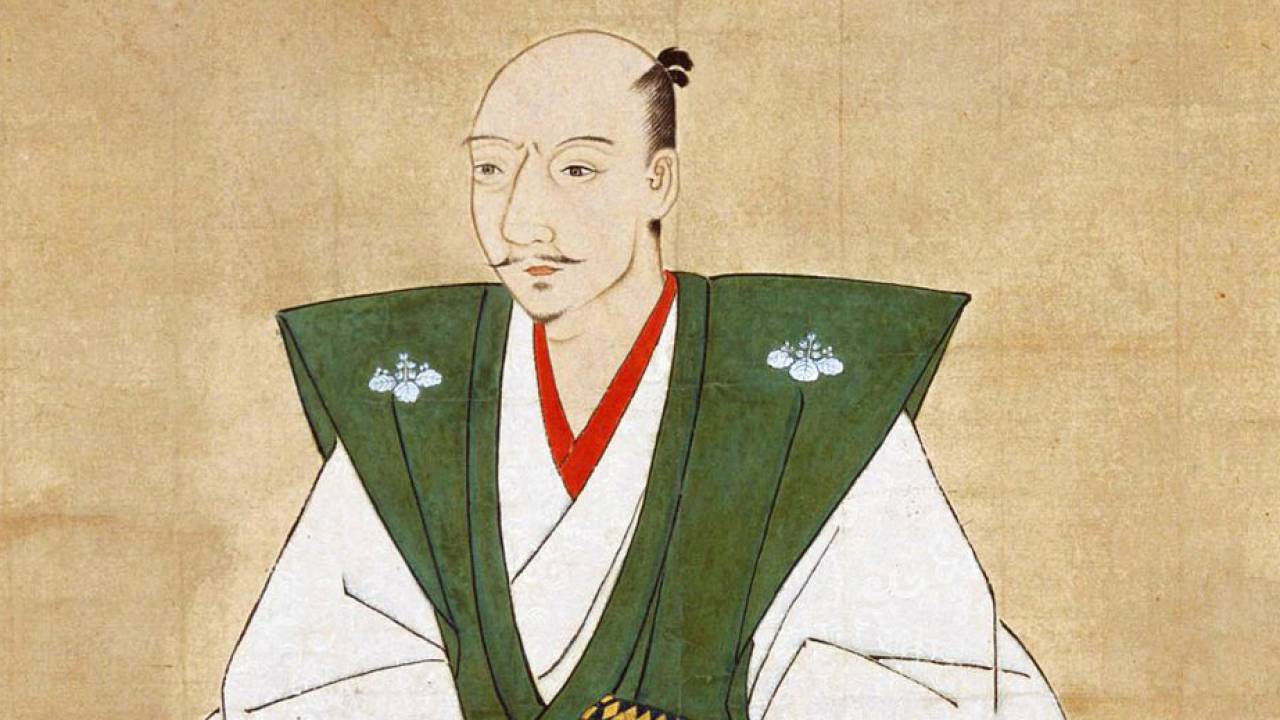
Everyone is familiar with historical figures such as Nobunaga Oda and Ieyasu Tokugawa. Some of them are rumored to be "gay" who love men. In addition to the two mentioned at the beginning of this article, Kukai, Ihara Saikaku, and Matsuo Basho are probably the most famous. There are many others, and I have summarized them in this article. It seems that homosexuality was far more tolerated in the past than it is today. A bit surprising.
Kukai
Kobo Daishi, the founder of the Japanese way of life, is said to have brought it to Japan from the Tang Dynasty. In his essay "Tsurezuregusa" (Essays in Idleness), written at the end of the Kamakura period, he was depicted as' a Buddhist priest who lured the children of Omuro' in Section 54.
Source: ameblo.jp
Fujiwara no Yorinaga
He was Sadaijin (Minister of the Left) during the period of the Heian insei (rule by the retired Emperor of the Heian period). In his diary' Daiki,' he wrote about his feelings about his sexual relations with men and about the episodes of sodomy between the Retired Emperor Shirakawa and the Retired Emperor Toba. He recorded that aristocrats at that time were busy with sodomy.
Source: ameblo.jp
Cloistered Emperor Goshirakawa
His favorites are FUJIWARA no Nobuyori and Fujiwara no Narichika.
Source: hagakurecafe.gozaru.jp
Emperor Gotoba
I love to play.
I like the craziness.
AND HAD A LOT OF GOOD-LOOKING GIRLS NEARBY.
FUJIWARA no Teika went so far as to say,' I got tired of the Hadaka Odori.'
His favorites are MINAMOTO no Michimitsu and Fujiwara no Hideyoshi.
Source: hagakurecafe.gozaru.jp
Yoshimitsu Ashikaga
The elegant shogun of the Azuchi-Momoyama period loved the Noh actor Zeami all his life, and Zeami responded to his love.
Source: ameblo.jp
Oda Nobunaga
His relationship with a pageboy, Mori Ranmaru, is so famous that it is a historical fact favored by many. Toshiie MAEDA was also Nobunaga's treasured possession when he was a boy, but he was abandoned by Nobunaga when he grew up.
Source: ameblo.jp
Takeda Shingen
According to' Tokoyo Gunkan' (Record of the Military of Tokoyo) and other sources, during the first few years after the succession to the position of family head, Shingen became so addicted to sodomy that his vassals asked him to work. As a reliable historical material, there is a love letter dated July 5, which is estimated to be the 15th year of the Tenbun era, addressed to Gensuke KASUGA (' 史徴 墨宝') saying,' I don't sleep with him, only you.' in which he swore,' I won't sleep with Yashichiro any more.'
Source: ameblo.jp
Uesugi Kenshin
Kenshin has the image of a brave warrior who sends salt to his enemies. He vowed never to be a woman offender in his life and never married a wife. However, he always had a beautiful pageboy as his partner. Naoe Kanetsugu is famous as his partner.
Source: ameblo.jp
Date Masamune
Masamune, who was distraught about the suspicion of Sakujuro, his favorite girl, having an affair, saw a blood seal from Sakujuro saying, "I didn't have an affair!" and sent a "Gomen ne Letter" saying, "I'm sorry I doubted you the other day. There was alcohol in it, and I didn't expect you to get so angry. If I had been with Sakujuro when he was about to bleed, I think I would have stopped him. I'm sorry. Everyone's eyes are on me, so I'll send you a letter secretly."
Source: ameblo.jp
Tokugawa Ieyasu
In the midst of falconry, Ii Naomasa, who was a very beautiful boy, and Hommebore
It was useful as a pageboy.
At a young age, he became one of the Four Heavenly Kings of Tokugawa.
Source: hagakurecafe.gozaru.jp
Tokugawa Iemitsu
Iemitsu loves a beautiful boy's dance called Furyu-odori.
Date Masamune chose himself and this beautiful boy and had them dance in front of Iemitsu.
Iemitsu is quite pleased.
Source: hagakurecafe.gozaru.jp
Was Iemitsu, the Third Generation of the Tokugawa Family,? Evidence Summary - RENOTE [リノート]
renote.net
Speaking of the third shogun of the Tokugawa family, you all know Tokugawa Iemitsu. There is a rumor that he was actually a homosexual. Is this true? This article summarizes the evidence. According to the research, it seems that in the past in Japan, it was common for men to love men younger than them. Iemitsu was especially famous as a "man lover." As a result, he was married to a woman and left an heir, but if this had not happened, Japanese history might have changed a lot.
