

Mamoru Samurakouchi was known as "a composer who is deaf in both ears." However, in 2014, it was revealed that someone else had composed the music, and Takashi Aragaki, who was the ghostwriter, caused a major stir when he revealed that Samurakouchi was hearing. Subsequent re-examinations revealed that Samuragochi was diagnosed with "sensorineural hearing loss," not "total deafness. In this article, we summarize the symptoms of sensorineural hearing loss and the difference from "total deafness.
What is the newly diagnosed "sensorineural hearing loss" of Mr. Samuragochi?
Source: welcome-to-gettyimages.jp
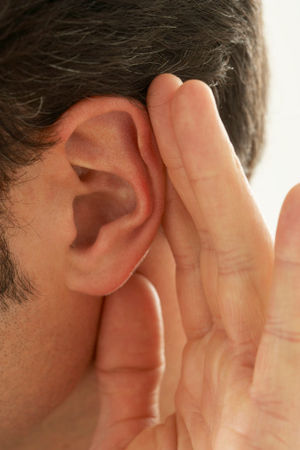
When there is dysfunction in the sensorineural part (inner ear and auditory nerve), it is called sensorineural hearing loss
Source: home.att.ne.jp
Hearing loss caused by damage from the inner ear to the brain center is called sensorineural hearing loss
Source: ha-service.jp
Hearing loss caused by damage to the process by which transmitted vibrations stimulate sensory cells in the inner ear, which are then transmitted to the auditory nerve and recognized as sound in the cerebrum.
Source: dictionary.goo.ne.jp
It is estimated that there are about 35,000 people per year nationwide who suffer from sensorineural hearing loss
Source: www.hejichuanqifabu.info
What is the difference between this and the "total deafness" that Mr. Samuragochi was once said to have?
Source: welcome-to-gettyimages.jp
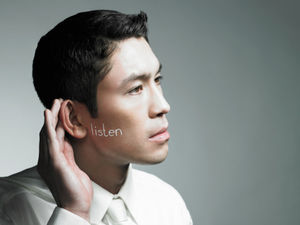
Mr. Samuragochi's hearing is 48.8 dB on the right and 51.3 dB on the left, so he has moderate hearing loss, but he is not totally deaf.
The degree of hearing impairment is medically classified in decibels (dB). A decibel is a unit of sound pressure level, and the louder the sound, the higher the value
Source: ja.wikipedia.org
The average hearing level up to 20 dB (decibel) is considered normal hearing, up to 40 dB is considered mild hearing loss, up to 70 dB is considered moderate hearing loss, and over 70 dB is considered severe hearing loss.
Source: dictionary.goo.ne.jp
If the level exceeds 70 dB in both ears, a physical disability certificate is issued; if the level exceeds around 40 dB, the level is "somewhat inconvenient to speak".
Source: ja.wikipedia.org
How well do you hear when you have "sensorineural hearing loss"?

Source: welcome-to-gettyimages.jp
It is difficult to hear sounds, depending on the degree, but not completely inaudible.
The words "inaudible" and "inaudible" sound similar, but there is a subtle difference.
Source: home.att.ne.jp
A sensorineural hearing loss can cause difficulty in hearing sounds, or the ability to hear sounds but not be able to distinguish them clearly.
Source: www.kusano-jibika.com
In some cases, the symptoms are that you can hear the volume normally but have no idea what the words are saying.
Source: home.att.ne.jp
I can hear sounds faintly. My disability is that I hear sounds distorted. So if someone says something in my ear at 60 decibels or higher, I can understand the sound, but the words are mixed up or twisted.
Source: sankei.jp.msn.com
This "sensorineural hearing loss" is said to be difficult to treat.

Source: welcome-to-gettyimages.jp
Sensorineural hearing loss" is said to be difficult to cure once you have it.
Most hearing loss caused by damage to the inner ear or auditory nerve (sensorineural hearing loss) cannot be cured at this time.
Source: kotobank.jp
This case is characterized by the fact that it is difficult to treat, difficult to recover from, and does not improve with the use of hearing aids.
Source: www.1residences.com
Causes are many and varied, and once hearing loss occurs, it is often not curable except in some cases
Source: ha-service.jp
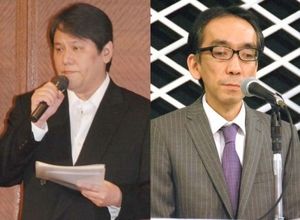
He also claims that under these circumstances, Samuragochi is suing Niigaki, who was his ghostwriter, for defamation of character.
Source: contents.oricon.co.jp
Samuragochi says he will sue about Niigaki, who was the ghostwriter for the ear case testimony, etc.

Tags
Contents
- Mamoru Samurakouchi, known as "the composer who is deaf in both ears," became a topic of conversation due to the ghostwriter issue.
- The riot also raised suspicions that Mr. Samuragochi may have been deaf. In addition, there are allegations that Mr. Samurakawachi may have been deaf.
- Amidst all this, Samuragochi finally holds an apology press conference.
- In this press conference, Mr. Samuragochi revealed that he had a "sensorineural hearing loss," not an ear disorder.
- What is the newly diagnosed "sensorineural hearing loss" of Mr. Samuragochi?
- What is the difference between this and the "total deafness" that Mr. Samuragochi was once said to have?
- How well do you hear when you have "sensorineural hearing loss"?
- This "sensorineural hearing loss" is said to be difficult to treat.
- He also claims that under these circumstances, Samuragochi is suing Niigaki, who was his ghostwriter, for defamation of character.
- Related Summary