
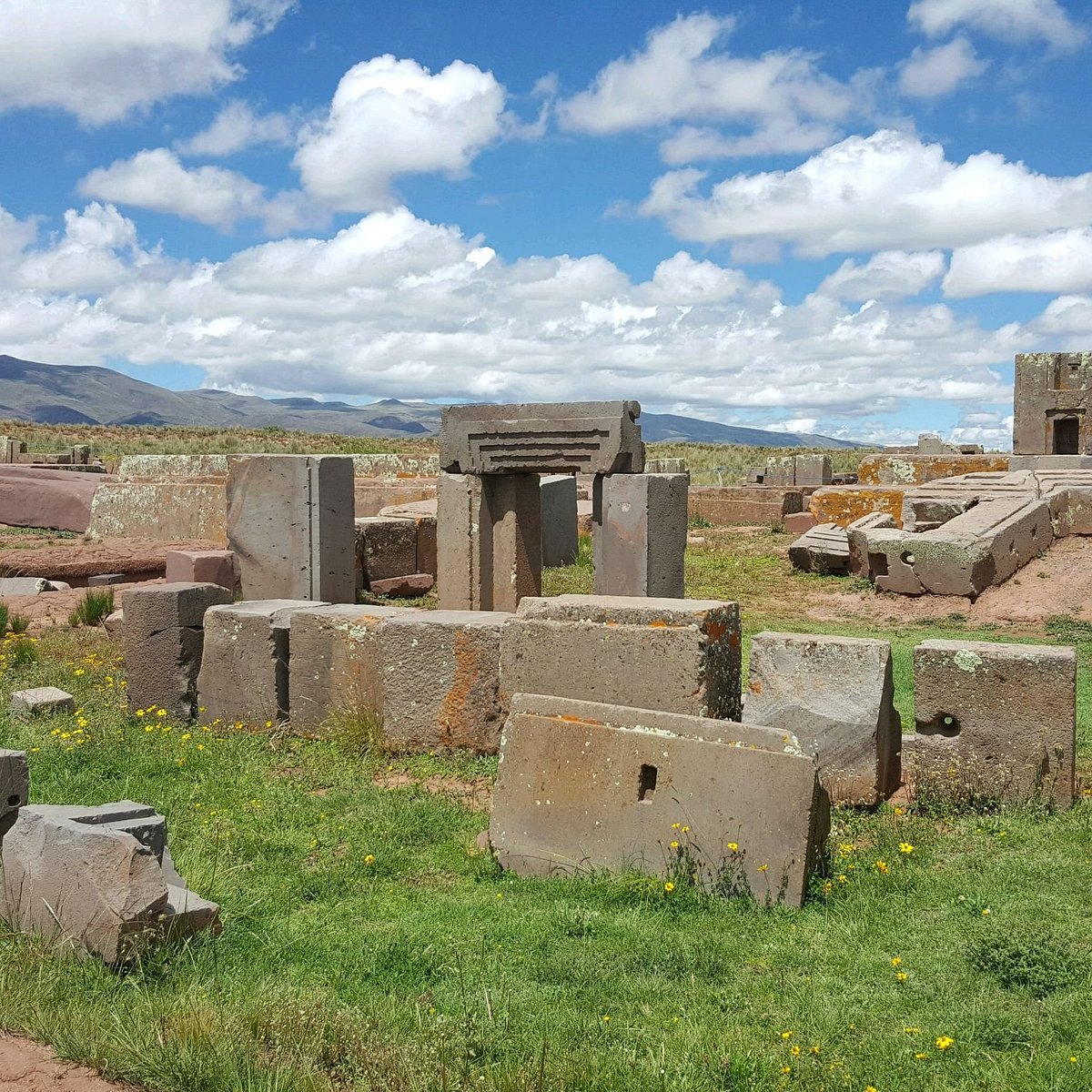
The Puma Punku ruins in Bolivia, South America, are said to be the only "alien-built" ruins on earth. Here, with images, we explain why such a theory has been whispered. Also included are the pyramids of Egypt, whose construction methods have been revealed through research. We will explore the mysteries of these ancient ruins, which show technology that could never have been built by human beings.
There are many archaeological sites around the world, many of which do not appear to have been built by humans. However, research has revealed how they were built. Even the pyramids in Egypt are now known how they were built.
How the Great Pyramid was built.

Source: welcome-to-gettyimages.jp
internal tunnel theory
The theory, proposed by French architect Jean-Pierre Oudin, is that the passageway was built inside rather than spiraling outward.
Research has produced evidence to support this, making it more realistic.

Source: blog-imgs-42.fc2.com
This is an image from the past.
It looks a little different from this kind of construction method.
This is how the pyramids were built 1/5
Reference video.
Other ruins have evidence of human construction, and some construction methods are now known. However, there are ruins on earth that are said to be impossible for humans to build.
These ruins are located in Bolivia, South America.
▼ Puma Punku Ruins
Remnants of Pumapunku, one of the largest megalithic sites on earth, are scattered in Tiwanaku, Bolivia.
Source: ameblo.jp
Puma Punku is a pyramid-like structure located outside the center of the ruins, and although it is in a tremendously destroyed state, parts of its architecture, made of monolithic rock weighing several tons, still remain. Its stoneworking techniques are so outstanding that the rectangular stone faces were cut out in a wonderfully flat manner, and no iron was used in the process.
Source: gigazine.net
Source: img5.blogs.yahoo.co.jp
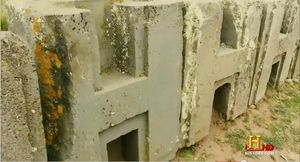
Pumapunku has many elaborate H-shaped blocks of the same type, as if they were made in a factory. However, each block weighs more than 100 tons, making it difficult to build even in a modern factory.
Source: ameblo.jp
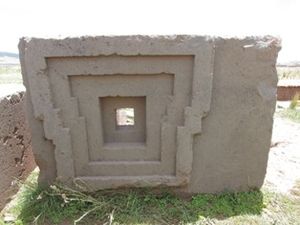
Source: kyuni29.web.fc2.com
The surface is not quartzified and does not appear to be heat-treated, but rather a group of megalithic blocks manufactured by a method unknown to us because the particles are finer than diamond processing.
Source: blogs.yahoo.co.jp
Source: yaplog.jp
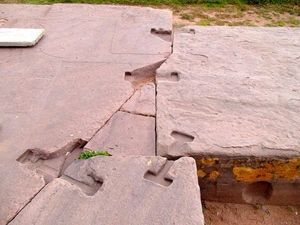
The stones were scattered, but they were apparently connected by a metal haze like this.
Source: yaplog.jp
It is not known how the 100-ton per block boulders were transported to Tiwanaku, which is 3800 meters above sea level.
Source: ameblo.jp
Around 3800m elevation is near the forest limit, and no trees grow in this area to slide over the top and carry stones.
▼ Made by aliens!
Was Puma Punku created by aliens? The truth is not clear, but there may be a clue in the nearby Tiwanaku ruins.
The Tiwanaku site is an old archaeological site located not far from Lake Titicaca. It has been designated a UNESCO World Heritage Site. They date back to before 800 A.D., so they are even older than the famous Machu Picchu in Peru.
Source: bolivia.siniaryoko.com
Source: stat.ameba.jp
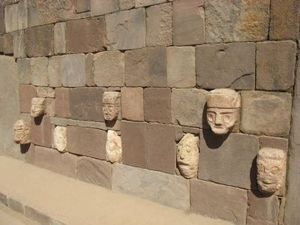
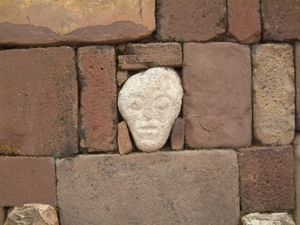
The walls of the temple are made of stones assembled like this. The faces sticking out in places are faces. There are many of them.
Source: bolivia.siniaryoko.com
Source: bolivia.siniaryoko.com
Who in the world could have built these ruins?
In the city of Tiahuanaco, Bolivia, there are ruins of a megalithic city that could not have been built with human technology at the time, but which is said to have a calendar that describes the moon's arrival in its modern orbit about 12,000 years ago, and is filled with structures called "moon temples" and "moon houses.
Source: ja.wikipedia.org
