
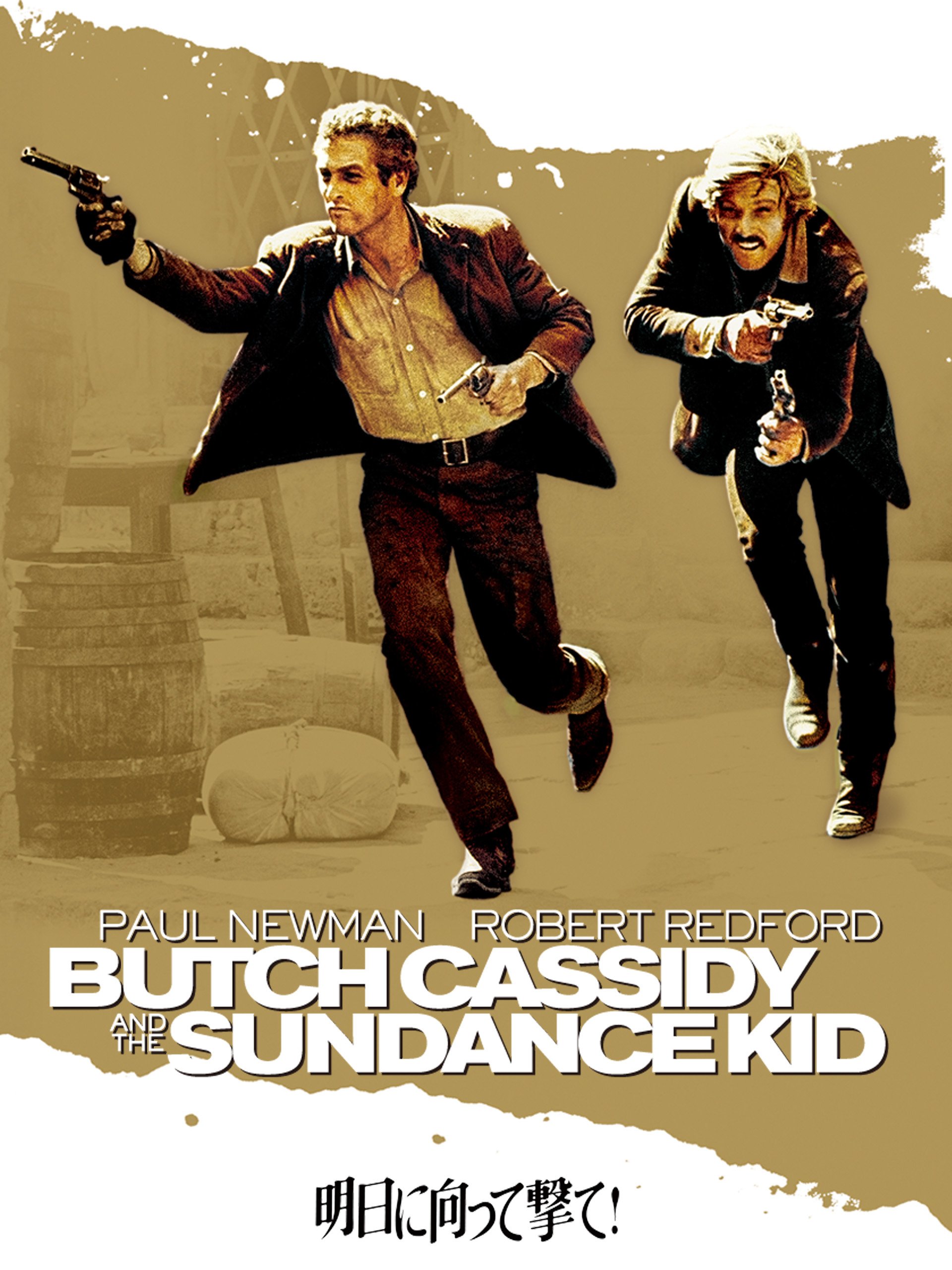
Shoot for Tomorrow! is a 1969 Western film produced and released in the United States, based on the real-life escapades of 19th century bank robbers Butch Cassidy and the Sundance Kid. The film was nominated for an Academy Award in 1969, and B.J. Thomas' song "Wet in the Rain" won the Academy Award for Best Theme Song and became a worldwide hit. It was a big hit around the world.
"Hole in the Wall" gang
A group of robbers formed in the 1890s in what is called the "hole in the wall" in Wyoming, in the western United States.
The leader was Butch Cassidy, with members including Sundance Kid, Harvey Logan, NewsCarver, and Flat Nose Carly.
It was a famous group of robbers who often robbed banks and trains and was featured in newspapers.
Bolivia
Located in the center of South America, says it has many gold, silver, and tin mines, making it an ideal country for robbers.
Words, Remarks / Scenes, and Scenes of "Shoot Towards Tomorrow!"
Sundance Kid "If I tell you to stay, I'll get out."

An unperturbed Sundance Kid whose gambling partner is about to pull a gun
This is the line that Sundance, who was told by his gambling partner, "Leave the money and leave."
"If you invite us to stick around, we'll go."
As a man of the West, I can't be proud to leave when I'm told to do so. It's also a provocative line from Sundance, who has confidence in his gun skills.
A gambler who realizes he is a fast-shooting Sundance Kid apologizes, saying, "I'm sorry, forget about it," but Sundance does not raise his head until he is told to stay.
"Sorry, I have to go," he said, leaving with no expression on his face.
Scene of and Etta cycling
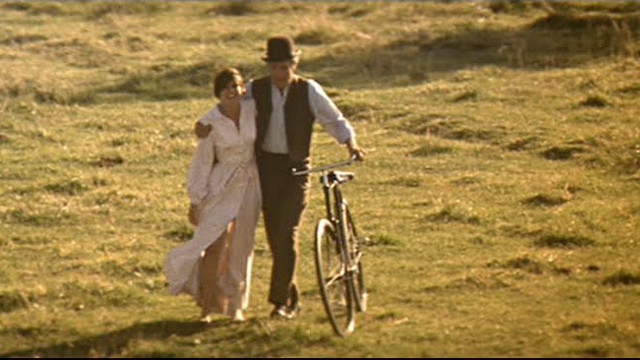
(right) and Etta (left) enjoy walking in the meadow
One of the most famous scenes in the movie.
This is the only calm scene in the film where and Etta's affection for each other can be seen through the screen. A peaceful and peaceful time is depicted along with the bright melody of the theme song "Raindrops Keep Fallin' on my Head" played in the background.
Etta does not hide that she is also in love with. She knows that she is Sundance's lover, and she says a kind word of love to Etta. Sundance does not try to break the relationship between and Etta. This is a wonderful scene that shows the relationship of trust and affection between the three.
Sheriff Breadsaw. "Your days are over."

Sheriff Bledsoe (right) uttering harsh words to (left)
And Sundance flee from their pursuers by visiting their old friend, Sheriff Bledsoe, to be recommended by the army.
"Your time is over and you're gonna die bloody, and all you can do is choose where." he said bitterly to the two men, who were totally indifferent to the crimes they had committed.
Breadsaw had deserted them, and couldn't plan any more, so they had to run away from the pursuers.
Two Western Heroes
In response to, who urged Sundance to jump from the cliff into the river in order to shake off the pursuers, Sundance answered with a half smile.
"I can't swim!"
The line emphasizes that and Sundance are not invincible heroes, but ordinary men with weaknesses.
In the latter half of the play, when they are surrounded by bandits, confesses,' I never shot anyone before.'
In classical Western movies, the story is about good and evil, and the protagonist is depicted as a hero of justice who defeats the bad, but and Sundance are depicted as non-hero characters who run around in fear of pursuers.
Last scene in film history
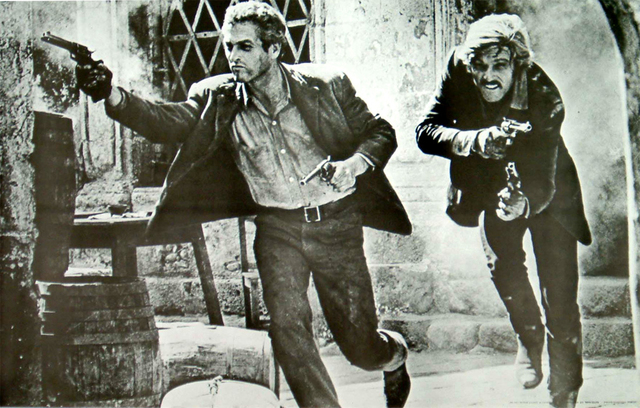
(left) and Sundance (right) jumping into a bullet
The screen is gradually turning sepia.
In this scene of the two people jumping out, the movie becomes a stop motion, and only hundreds of gunshots are heard. No matter how many bullets you get, the two people who jumped out will not collapse. With the hope that they will get through this and go to Australia in their hearts, they stay as they jumped out. Then, the color of the screen gradually fades, and the movie ends with a sepia color screen.
This stop motion and the effect of changing from color to monochrome and sepia is famous as the last scene in the history of movies.
Behind the Scenes, Trivia, and Small Stories / Episodes and Anecdotes of "Shoot Towards Tomorrow!"
A story based on a true story
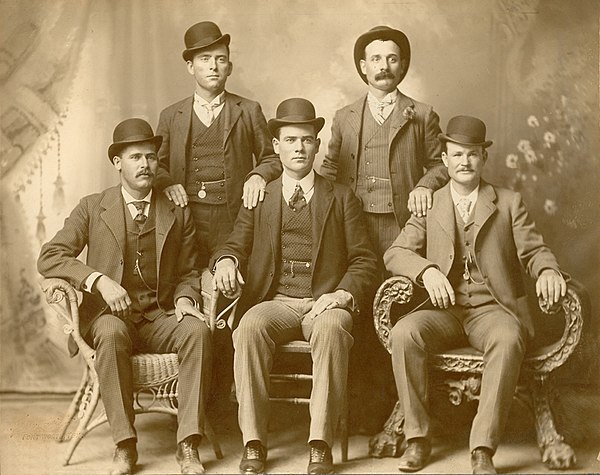
Sundance Kid on the left and Butch Cassidy on the right in the front row
At the beginning of the movie, it is credited as' a story based on a true story,' and the main characters and incidents are almost as if they were historical facts.
Butch Cassidy (born Robert LeRoy Parker, 1866 - 1908) and Sundance Kid (born Harry Longbaud, 1867 - 1908) are said to have been shot dead by police in 1911 after repeatedly robbing banks and trains in the west and moving to Bolivia.
The Origin of the Name of the "Hole in the Wall" Robbery Group

Related Articles
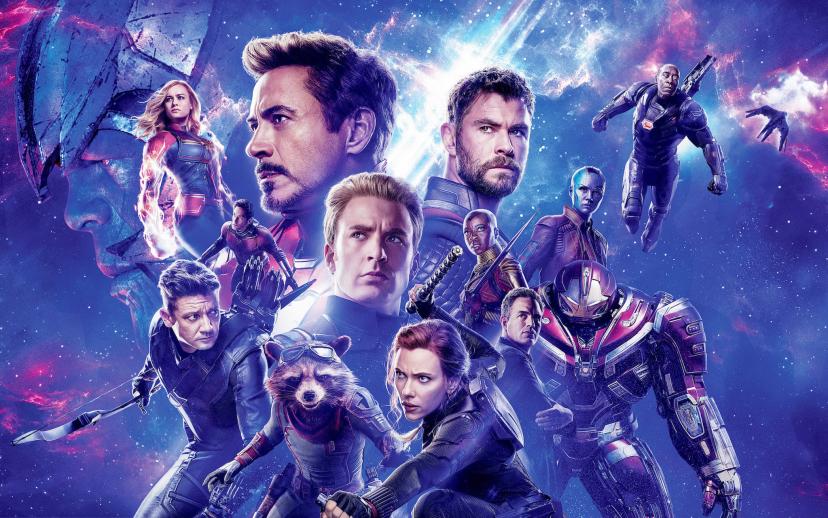
Avengers: Endgame (MCU) Spoiler Commentary and Discussion Summary
Avengers: Endgame is the sequel to Disney's and Marvel's Avengers: Infinity War, which was released in 2019. The film begins with Thanos collecting six Infinity Stones, the most powerful stones in the universe, and annihilating half of all life in the universe, including the members of the Avengers. In order to protect mankind, the mightiest heroes, led by Captain America and Iron Man, rise up once again to strike back at Thanos, the deadliest enemy in history.
Read Article
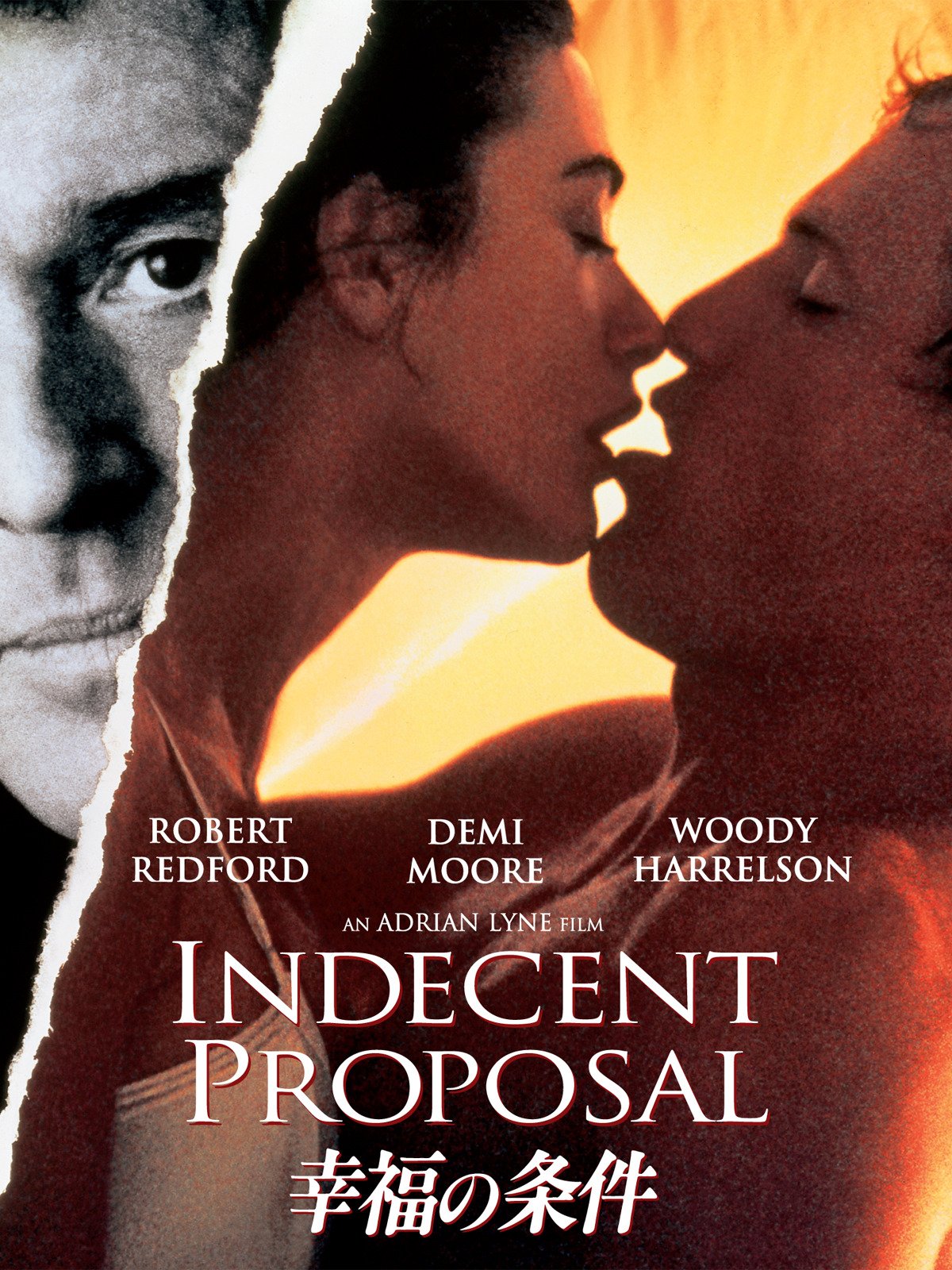
Spoiler alerts and discussion of The Conditions of Happiness (film).
The Condition of Happiness" is a 1993 romantic film produced in the United States. A young couple in financial distress due to the sudden economic downturn is faced with the ultimate choice: a millionaire appears before them and asks them to spend one night with his wife in exchange for one million dollars. This shocking film depicts a couple who are shaken by the offer. The film co-stars Demi Moore (Ghosts of New York) and Robert Redford (The Chasing), and was directed by Adrian Lyne, the director of "Dangerous Liaisons" and "The Fate of Women".
Read Article
![MCU] Images of the Avengers cast showing how close they are [Marvel Comics].](https://renote.net/files/blobs/proxy/eyJfcmFpbHMiOnsiZGF0YSI6ODU0MjAyMSwicHVyIjoiYmxvYl9pZCJ9fQ==--ee38a46ba76214d7f9e9ac6c53d43ba95db8ca57/9bec3c72a11ccc37d98cc5eb92fd27a873456636_xlarge.jpg)
MCU] Images of the Avengers cast showing how close they are [Marvel Comics].
The "Avengers" series has taken the world by storm with the release of "Avengers: Endgame" in 2019, which marks the end of the heroes' story. Here, we have collected group photos of Robert Downey Jr. and Scarlett Johansson, as well as other members of the film's superb cast. We will introduce behind-the-scenes footage of the filming and rare off-shoots.
Read Article
Tags
Contents
- Overview of "Shoot for Tomorrow!"
- Outline and story of "Shoot for Tomorrow!"
- "Hole in the Wall" gang
- Rest for a while
- Tracker
- To Bolivia
- Shoot me tomorrow!
- Characters in "Shoot for Tomorrow!"
- Main character
- Butch Cassidy (played by Paul Newton)
- Sundance Kid (played by Robert Redford)
- Etta Place (played by Katharine Ross)
- "Hole in the Wall" gang
- Harvey Logan (played by Ted Cassidy)
- News Carver, played by Timothy Scott
- Flat Nose Carly (played by Charles Dierkop)
- Other people
- Woodcock (played by George Furth)
- Sheriff Bledsoe, played by Jeff Corey.
- Percy ギャリス (played by Strother Martin)
- Term "Shoot for Tomorrow!"
- American New Cinema
- "Hole in the Wall" gang
- Bolivia
- Words, Remarks / Scenes, and Scenes of "Shoot Towards Tomorrow!"
- Sundance Kid "If I tell you to stay, I'll get out."
- Scene of and Etta cycling
- Sheriff Breadsaw. "Your days are over."
- Two Western Heroes
- Last scene in film history
- Behind the Scenes, Trivia, and Small Stories / Episodes and Anecdotes of "Shoot Towards Tomorrow!"
- A story based on a true story
- The Origin of the Name of the "Hole in the Wall" Robbery Group
- "New Shoot for Tomorrow!"
- Theme song and insert song of "Shoot towards tomorrow!"
- Insert: B. J. Thomas, "Raindrops Keep Falling on My Head"