

Many of the best horror films are based on "real-life psychic phenomena. Here, we introduce the original stories of "The Exorcist," "Prayer Without a Stain," "Lord of Salem," "The Enfield Incident," "The House of the Devil," "Emily Rose," and "Child's Play," among others.
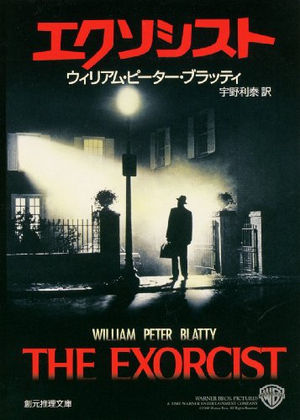
"Exorcist."
Source: www.amazon.co.jp
"The Exorcist" is a 1973 American horror movie.
It is one of the best-known occult films about a fight between a demon possessed by a young girl and a priest. In 1973, it ranked first in terms of entertainment revenue in its home country. It won the Best Adaptation and Best Sound awards at the 46th Academy Awards (see below).
The word exorcist in the title means "exorcist (exorcist of the Catholic Church)" in English.
Source: ja.wikipedia.org
Story
Father Merrin (Max von Sydow), who is excavating ruins in the northern part of the country, discovers a statue of the evil spirit Pazu. He has a hunch that "the day will soon come when we will confront this evil enemy again."
Actress Chris McNeil (Ellen Burstyn) rented a house in Georgetown near Washington, D.C. to shoot a movie and stayed there with her only daughter Riggan (Linda Blair).
Father Demian Carras (Jason Miller), a Georgetown resident, sometimes visits his mother in New York City, a Greek immigrant who listens to Greek music on the radio.
Source: ja.wikipedia.org
Soon, Kris notices that his only daughter, Riggan, is acting strangely. Her voice sounds evil and her face suddenly changes to something strange. Her violent words and actions become more violent day by day. Soon after, she is given up by her doctors. Her friend, film director Burke デニングズ, is murdered. The body is found on a staircase near Kris's house. Lieutenant Kinderman (Lee J. Cobb) sets out to investigate. The devil makes Riggan masturbate on the cross and uses Burke's voice to ridicule Kris.
When he learns that his daughter has been possessed by a demon, Chris asks Father Crow to exorcise her. The Raven, who is negative about demonizing her, goes on an investigation and discovers a message of salvation from Regan himself. The Raven decides to perform the ritual of exorcism and asks permission from the Archbishop. Meline, who has experience in exorcism, is chosen as the chief. Meline and the Crow Godfather perform a ritual to exorcise the demon from the girl Regan, and the demon leaves Regan and transfers to Father Crow. The crow immediately throws himself through the window and hits his whole body, killing himself. Rigan and his mother move out of the city.
Source: ja.wikipedia.org
The original author is William Peter Blatty.
The Exorcist is based on a novel written by writer William Peter Blatty about a bizarre incident he found in a newspaper article.
He was born to Lebanese parents in New York in 1928. His father left home when he was three years old. He grew up with a mother who was a devout Catholic and received a scholarship to study at a private school run by the Jesuit order of the Catholic Church. He graduated from this school in 1946 and went on to study at Georgetown University, a Jesuit university in Washington, DC. While at Georgetown University, he learned about the Maryland demon-possession incident that led to the film exorcism. After graduating from Georgetown University, he received a master's degree in English literature from George Washington University, also in Washington, DC.
Source: ja.wikipedia.org
He made his debut as a playwright in the 1960s, working on comedies such as "The Biggest Escape on Earth" and "Darkest Surprise" (the second film in the Pink Panther series).
In 1971, he published "The Exorcist," a novel based on the Maryland demon-possession case. It became a bestseller. As the film rights were sold around the same time, he started to make scripts. In 1973, he released the film "The Exorcist." In 1980, he made his directorial debut (and wrote the screenplay) with the film "Twinkle Kisogawa Bridge Twinkle Kisogawa Bridge Killer Khan," which won the Golden Globe Award for Best Screenplay. In 1990, he also worked as a producer, writer, and director of "The Exorcist 3."
Source: ja.wikipedia.org
In 1948, the "Washington Post" published an article on the "Maryland Demon-Possession Incident." Twenty years later, Bratti still couldn't forget this article. He learned that the exorcist's assistant had left a diary about the exorcism. It is said that he obtained the diary after much hardship and completed the original work for the movie "The Exorcist" in 1971.
The story of the Maryland Demon-Possession case is also featured in the book "Manifestation: The True Story of the Exorcism" by Thomas B. Allen, the author who chronicled the diary.
* The Maryland demon-possession case
The incident began with the death of the aunt of a boy who lived in Cottage City, Maryland. The boy was an only child and loved his aunt very much. He often played the Ouija board (Western version of Cockly) and tarot. The boy was so shocked by his aunt's death that he tried to contact his deceased aunt with the Ouija board.
As a result of this incident, the boy was attacked by a mysterious disease. Furthermore, after his grandmother's death, the boy's personality suddenly changed, and letters and faces such as "Help!" and "I'm trapped" appeared on his body, and the poltergeist phenomenon began to occur frequently around him.
The boy's parents are so distressed that they take him to a hospital, but his condition does not improve. So they turn to the Protestant Reverend Schultz for help. The pastor concludes that his strange illness is demonic and performs an exorcism ritual, which fails. Reverend Schultz then asks the Catholic Church to perform an exorcism. The Church sends two exorcists, Father Hugh and Father Bowden. The two exorcists successfully perform the exorcism after more than 30 exorcism rituals over a period of more than two months. It is said that the boy has since recovered his tranquility and lived happily ever after. It is also said that the place where the last exorcism was performed has been sealed and is still off-limits.
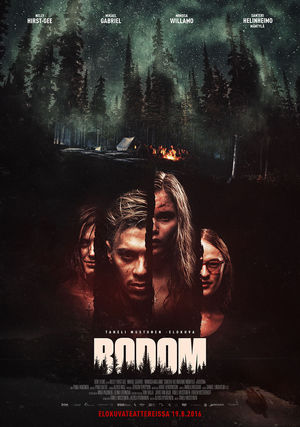
"Lake Bodom murder case"
Source: ord.yahoo.co.jp
Bodom: Yahoo! Films
movies.yahoo.co.jp
Check out Bodom's reviews, stories and trailers! Also check out the screening times and photo gallery.
Every camper's worst nightmare came true at Lake Bodom in 1960 when four teenagers were stabbed to death while sleeping in their tent.
The worst nightmare of any camper came true in Lake Bodom in 1960 when four teenagers were stabbed to death while staying in their tents.
Director:
Director: Taneli Mustonn
Taneli Mustonen
Writers:
Author: Aleksi Hyvärinen, Taneli Mustonn
Aleksi Hyvärinen, Taneli Mustonen
Source: honyaku.yahoo.co.jp
* Unsolved murders in Finland in 1960
The incident took place in Lake Bodom, near Espoo, about 22 kilometres west of the capital Helsinki. In the early morning of 5 June 1960 (from 4 to 6 a.m.), four young people camping by the lake were attacked by unknown persons with knives and blunt weapons, three killed and one seriously injured.
The only survivor, a man, was beaten in the face and his jaw and facial bones were broken.
* Mysterious suicide 12 years later
Twelve years later, without knowing the truth, a man committed suicide after leaving a suicide note stating that he was the perpetrator of the Lake Bodom murder. The man was selling drinks near the campsite where the murder took place. This man was known to have always been uncomfortable with the young people who came to the campsite. However, the police denied that he was the perpetrator (his family and acquaintances testified that he had been at home on the night of the murder).
* Is the real culprit a KGB agent?
In 2003, Jorma Palo, who was working as a doctor in a hospital near the time of the incident, published a book in which he testified that he had treated a very suspicious man on the day of the incident. According to the book, the man was Hans Assmann, a KGB agent from Germany who claimed that he was the real culprit, but that he had been silenced because he was a KGB agent. However, the police claimed that Assmann had an alibi.
* And 45 years after the incident, he was arrested for …

Tags
Contents
- "Exorcist."
- Story
- The original author is William Peter Blatty.
- * The Maryland demon-possession case
- "Lake Bodom murder case"
- * Unsolved murders in Finland in 1960
- * Mysterious suicide 12 years later
- * Is the real culprit a KGB agent?
- * And 45 years after the incident, he was arrested for …
- * Acquittal
- "Sacramento Paradise of Death."
- * Outline
- * Mass suicides by cultists
- * Mass migration to Guyana
- * Mass suicides after attacks on lawmakers
- "Silent House"
- Silent House Plot
- "Unsullied Prayer"
- Romanian Orthodox Church
- Ex-Romanian Monk Jailed for 14 Years for Killing of Nun in Exorcism Ritual
- Romanian Orthodox Church Expels Priest for Abusing Nuns
- "Salem's Witch Hunt."
- The whole village became suspicious of the witch trial
- "The Devil's House"
- "Shiryo-kan"
- The world's longest running Poltergeistenfield incident
- "Rudin's Demon Possession."
- "Emily Rose."
- Death of Anneliese Michel in Germany
- "Child Play"
- The Cursed Doll "Anabel"
- Is it the girl's spirit that's possessed?
- Psycho.
- Ed Gein: The Killer of American Crime
- Ed Gein and her mother's education
- Other Ed Gein films
- Ed Gein's House Called the House of the Devil
- "Maiden's Prayer"
- In 1954, his best friend Pauline Yvonne Parker, aged 15, and Parker's mother, Honora Reaper of Rieper, Honorah, were murdered.
- The following is from Pauline's diary.