
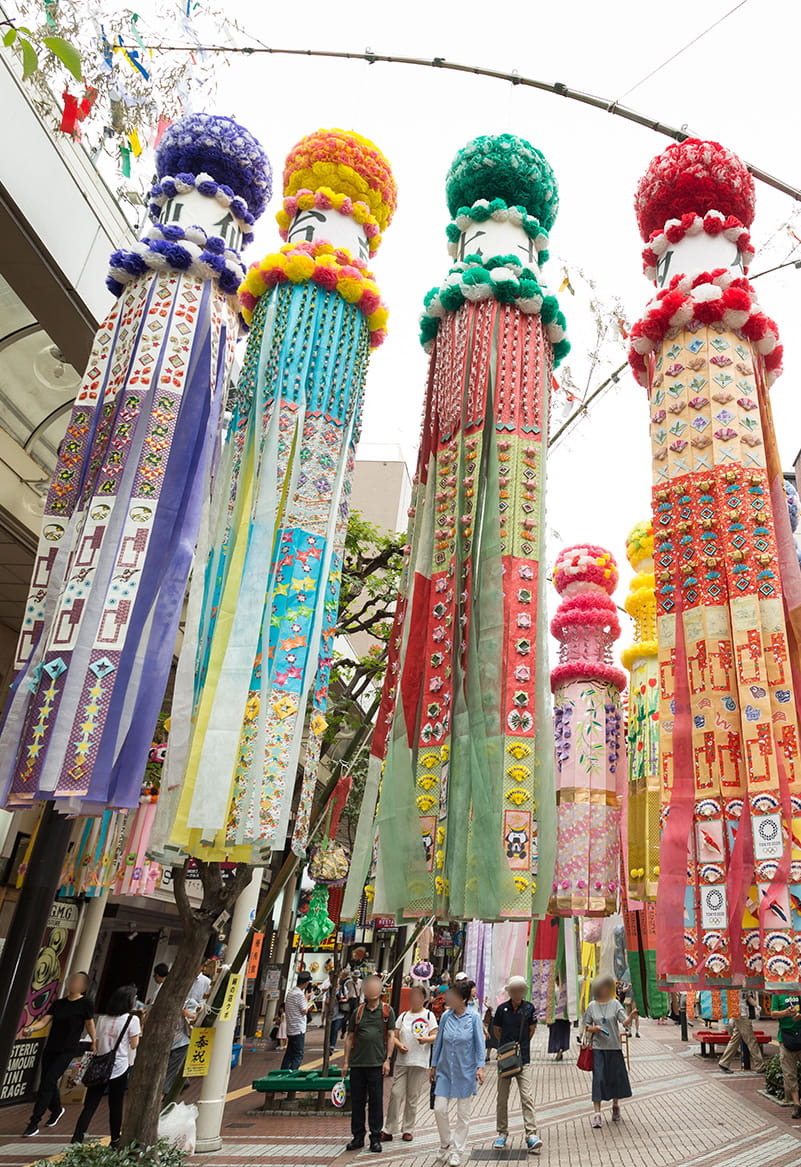
Urban legends, ghosts, and scary folklore from the Hokkaido and Tohoku regions. It includes various stories from Hokkaido, such as the man-eating sword rock (Epetamushma), and the urban legend that it always rains during the Tanabata Festival in Sendai every year. We will introduce a number of interesting stories that you will not be able to stop reading once you start.
Hokkaido Cannibal Sword Rock (Epetum shuma)
Source: xn--9oqx67ab2fnkbmy2he6h.com
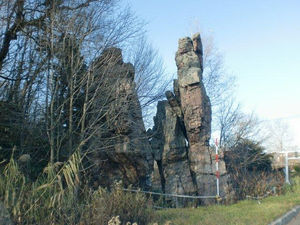
Man-eating sword rock (Epetum shuma)
Man-eating sword rock (Epetum shuma)
エペタムは現存していないが、伝承で登場する祈りを捧げた巨石は現在の旭川にあり、エペタムシュマ(人食い刀岩)と呼ばれている。
— あいまい (@u_n0v0) February 13, 2015
【神居村の人食刀岩(エペタムシュマ)】 ある老人が2振のエペタムを持っていた。物を食べさせないと騒ぐので、刀の函の中に石を6本入れると「キリキリ」と音を発てて食べた。このままでは自分も食われると思って底無し沼に納めると、沼の脇に2本の刀形の岩が水底から立つようになった #エペタム
— 霹靂火 雷公@羅盤舎BOOTH店 (@HEKIREKIKA_R) November 21, 2011
The Ainu, the indigenous people of Hokkaido
have passed down various legends.
One of them is the legend of "Man-eating Sword Rock (Epetamushma)
is one of the legends.
Once upon a time, in the house of an Ainu chief
an old package containing a sword was hanging in the house of an Ainu chief.
It was believed that this package must never be opened,
and the family members kept it for generations.
One day, however, an intense light burst forth from the package,
Every night, the light would follow its tail toward the villages
and attacked the people of the village.
It is said that everyone who was attacked died a horrible death, as if they had been cut by a sharp knife.
as if they had been cut by a sharp blade.
The village headman, astonished that this could not be an ordinary occurrence, took the dreaded package deep into the mountains and threw it away,
took the dreadful package deep into the mountains and threw it away.
However, when the chief returned home, he found that the package he had thrown away had returned.
the package that was supposed to be thrown away had returned.
Source: xn--9oqx67ab2fnkbmy2he6h.com
Read more
https://xn--9oqx67ab2fnkbmy2he6h.com/?p=2399
Hokkaido: The Legend of Ryujin-numa
Source: xn--9oqx67ab2fnkbmy2he6h.com
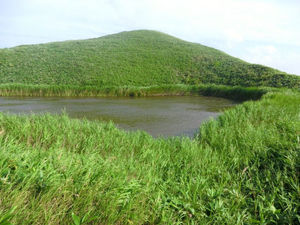
The Legend of Ryujin Marsh
The Legend of Ryujin Marsh
龍神沼の伝説…懐かしい
— よりより(´ω`っ )3ここみん (@yori_yori_0222) April 11, 2017
『坂ノ下神社』
— KJ (@cool_japan1016) May 1, 2016
海岸の真横なのに、崖の上に沼があります(沼の横に社殿)。地形的に不自然な感じが神秘的。ここは神社が建つ前から、先住民によって神聖視されていた場所かも知れません。下山してから気付いたが「伝説ノ龍神沼」とありました。 pic.twitter.com/EOFRNh6DJZ
Ryujin-numa is located in Wakkanai, Hokkaido.
It is said to be a bottomless swamp among the locals.
Around the 1960s, several Buddhist monks
chanting a Buddhist prayer while circling the swamp.
a dragon-like creature appeared out of the swamp.
This is the origin of the name of the swamp.
Ryujin-numa is a bottomless swamp
It is connected to Hime-numa on Rishiri Island, about 30 km away from Wakkanai.
Rishiri Island, 30 kilometers from Wakkanai.
Rishiri Island, 30 kilometers from Wakkanai.
But there was an event that made the name of this bottomless swamp known throughout Japan,
But there was an event that made its name known throughout the country.
In the corner of the popular program "Trivia no Izumi" broadcast on Fuji Television
on the popular TV program "Trivia no Izumi" (The Fountain of Trivia)
a viewer asked, "Does the bottomless swamp really have no bottom?
a viewer asked, "Does a bottomless swamp really have no bottom?
the show decided to conduct an experiment to determine the depth of the water in Ryujinuma Swamp.
Source: xn--9oqx67ab2fnkbmy2he6h.com
Read more
https://xn--9oqx67ab2fnkbmy2he6h.com/?p=2428
Hokkaido: "Ratashikeb," a dish that eats the soil.
Source: gendai.ismedia.jp
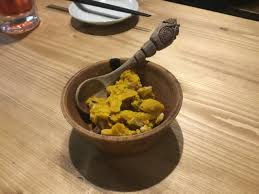
Latashkeb, a dish that eats the soil
Latashkeb, a dish that eats the soil
もちろんアイヌの伝統食にカボチャ料理はあります。
— shing (@shingTWIT) June 26, 2019
農文協が出版している「聞き書 アイヌの食事 (日本の食生活全集48巻)」に作り方が掲載されています。カボチャのラタシケブ(シとブは拗音)。えんどう豆やトウモロコシも使います。マッシュポテトみたいな料理です。
お弁当『イランカラプテ』を召し上がった方、「ラタシケブ(根菜類の混ぜ物…南瓜と豆の煮物)」に使われてるハーブ?にお心当たりがあれば、ご一報頂きたく…ローズマリー?かと思ったのですが、ちょっとアクセントがあってツボり、再現を模索しています。
— ちゃこりーな (@chica_0731) May 3, 2018
Heard about a French restaurant that serves soil as an ingredient,
I was surprised to hear about a French restaurant that serves soil as an ingredient,
I was surprised to hear about a French restaurant that served soil as an ingredient, and was surprised to hear that they had gone that far in their quest for food,
I am relieved and a little disappointed at the same time.
I found out that there is actually a custom of using soil as an ingredient,
In the southern part of the U.S., heat-treated soil is sold.
In Japan, pregnant women eat soil from mud walls and the ground,
In Japan, there have long been cases of pregnant women developing "soil-eating disease," in which they eat soil from walls and the ground.
This is thought to be caused by a lack of zinc and iron in the mother's body due to pregnancy,
This is thought to be due to taste disorder caused by a lack of zinc and iron in the mother's body due to pregnancy.
The connection between pregnancy and soil-eating disease has led to the development of soil-eating disease on Pempa Island in Tanzania,
women on Pempa Island in Tanzania are pleased when they start eating soil, as it is a sign of pregnancy.
The custom of earth-eating is also found among the Ainu in Japan,
In Japan, the Ainu are known to have had a dish called "ratashikebu," which was made from soil.
Ratashikeb" is a dish similar to simmered or dressed dishes,
There are many different combinations of ingredients,
One of them was "ratashikeb," which used soil as a seasoning.
The recipe for "Ratashkeb" is...
Source: xn--9oqx67ab2fnkbmy2he6h.com
Read more
https://xn--9oqx67ab2fnkbmy2he6h.com/?p=1034
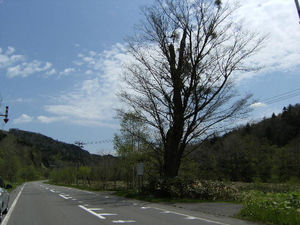
Hokkaido: The Legend of the Hee Hee Crying "Crying Tree
Source: xn--9oqx67ab2fnkbmy2he6h.com
Legend of the "Crying Tree" that cries hee-hee
Legend of the "Crying Tree" that cries hee-hee
[「泣く木」の概要]工事の障害となるため作業員が鋸で挽くと木は「キューキュー」「ヒーヒー」と「泣き声」を上げると同時に、鋸が折れて使い物にならなくなった。別の作業員が斧で切り込んだところ柄が折れ、刃先が腹に刺さって死亡など。 pic.twitter.com/tleBOyui1Z
— 都市伝説・超常現象アーカイブ (@mystery_guide) June 28, 2017
In 1932, near the Yubari River
A plan to expand and improve National Route 234 was launched,
In order to make the road straight, a saw was used to cut down trees in the way.
When the saw was inserted to cut down the trees in the way to straighten the road, it made a sound as if the trees were crying,
When the saw was inserted to cut down a tree in the way to straighten the road, it made a sound as if the tree was crying.
The saw broke and became useless,
When he used an axe, the handle broke and the tip of the blade pierced the worker's stomach, killing him.
If cutting is not possible, they try to make the horse pull it down,
The rope breaks and the horse puller becomes trapped under the falling horse.
No one is able to fell the tree,
Eventually the road will have to avoid this tree.
The road will be curved to avoid the tree.
From this incident,
The tree is more than 300 years old and is called the "weeping tree,
The tree is now called "The Tree that Cries".
This was around the time of the Meiji Era, when there was a lot of development in the area,
There is a lot of work to be done, but not enough people to do it.
So, they put prisoners to work as labor force,
But because they were overworked in poor working conditions, many of them ended up dying.
Their corpses were found near the work site,
It would later be called the Weeping Tree,
The bodies are said to have been buried under a large elm tree near the work site, which later became known as the Weeping Tree.
Source: xn--9oqx67ab2fnkbmy2he6h.com
Read more
https://xn--9oqx67ab2fnkbmy2he6h.com/?p=897
Lake Kussharo, Hokkaido, Japan

Contents
- Hokkaido Cannibal Sword Rock (Epetum shuma)
- Hokkaido: The Legend of Ryujin-numa
- Hokkaido: "Ratashikeb," a dish that eats the soil.
- Hokkaido: The Legend of the Hee Hee Crying "Crying Tree
- Lake Kussharo, Hokkaido, Japan
- Hokkaido - Japanese Halloween! Candle Lover
- Kamuikotan, Hokkaido Mystery Spot
- Hokkaido Monster Teke-Teke
- Farewell Boat" at Nakajima Park, Hokkaido
- Parents and children appear on the last train of the Namboku Subway Line, Sapporo, Hokkaido.
- Hokkaido: The Curse of the Colopokkuru
- Matsumae Castle, Hokkaido, Japan "Well of the Dark Night" that will not be filled no matter how much earth and sand is poured into it.
- Hokkaido UFO Graveyard
- Miyagi Prefecture - It always rains every year! Sendai Tanabata Festival
- Miyagi Mikama Shrine Discoloration of water in the cooking stove is an omen of good or bad luck
- Lord of Yobeinuma, Miyagi Prefecture
- Miyagi Prefecture, Sendai City, "The Date Family Conspiracy"
- Miyagi Prefecture "Sendai Shiro," god of good fortune
- Legend of Japan's three biggest uglies (Mito, Sendai, Nagoya)
- Sendai City, Miyagi Prefecture boundary
- Yamagata Prefecture "Mukasari Ema," a proof of posthumous marriage
- Yamagata Prefecture "Cassowary" where water is mercilessly poured on the birds.
- Iwate Prefecture, esoteric "Hidden Nembutsu".
- Uncle Walkie Talkie" in Morioka, Iwate Prefecture
- Fukui Prefecture "Oshima" where you have to go around the island "leftward".
- Fukushima Prefecture Lore of Asthma Cured by Tree Frogs
- Legend of the three most beautiful women in Japan (Akita, Kyoto, Hakata)
- Akita Prefecture: Excluding the inside of the bottle will cause death within a year [Spiritual medicine, monkey wine].
- Akita Prefecture: Mt. Kuromata is a pyramid
- The Legend of Princess Tatsuko, Lake Tazawa, Akita Prefecture
- Aomori Prefecture Traces of Ancient Civilization "Dokonomori Carved Stones
- Aomori Prefecture "Nanbujin and Tsugarujin" do not get along well with each other.
- Tomb of Christ" in Torai, Shingo Village, Aomori Prefecture
- Monko, a ghost from a lullaby, Aomori
- Aomori Junior High School "Fukushi's Curse" in Aomori City, Aomori Prefecture
- We also recommend this summary