
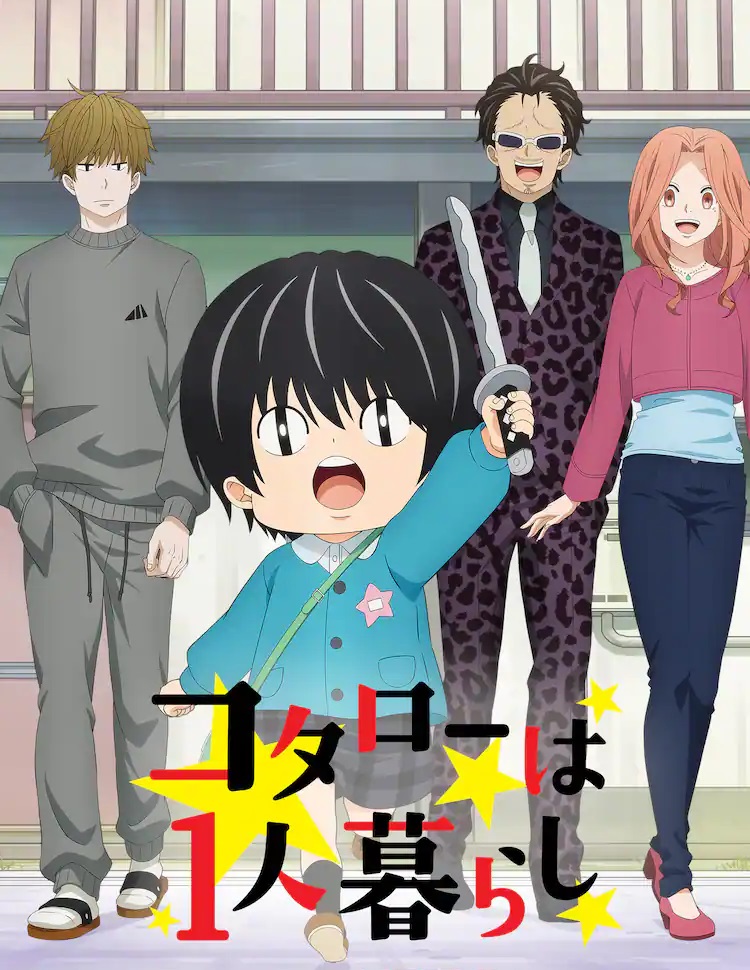
Kotaro Lives Alone" is a story about a 4-year-old boy, Satou Kotaro, who begins to live alone in an apartment, and his interactions with the people around him. Based on the manga by Tsumura Mami, the series has been used in a variety of media, including TV dramas and animations.
One day, a four-year-old boy named Satou Kotaro moves into the apartment where manga artist Susumu Kano lives. When Kano notices that Kotaro is living alone, he can't leave him alone and starts to watch over him. The residents of the apartment join in, and the strange and warm daily life of Kotaro and others continues.
Ayano KOBAYASHI
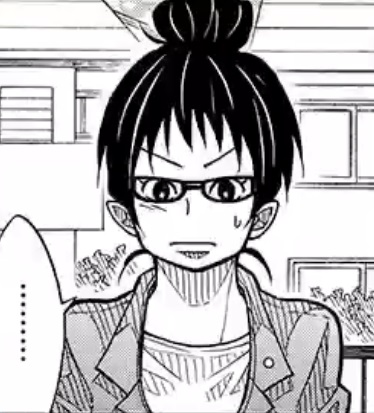
CV: Yumiri Hanamori
Actor: Kanako Momota
A serious new lawyer who works at a law office close to "Apartment No Shimizu". He is 27 years old in the manga and anime versions, but 28 years old in the drama version.
At first, he was embarrassed by his senior attorney's insistence that he be "in charge of delivering weekly' benevolent donations' to Kotaro," but when he learned about Kotaro's situation, he suddenly became sympathetic. After that, he not only delivered part of his mother's insurance money to Kotaro as a' benevolent donation,' but also went directly to his room to talk with him, check if he had any problems, and take good care of him.
He is sensitive to alcohol and has a bad habit of drinking. Once he gets drunk, he becomes cheerful like another person. At that time, he always performs Hara-odori (belly dance). He often turns over and falls asleep in the room of Kotaro. For this reason, he is thought by Kotaro to be a' kind but troublesome person.'
Words, Lines, Scenes and Scenes of "Kotaro wa Hitori Kurashi" (The Life of a Child)
Kotaro doesn't like pictures.
Kotaro came to a picnic with Kano and Mizuki. In the midst of a pleasant time, Mizuki tries to take a picture with his smartphone as a memory for today. Seeing this, Kotaro quickly moves to the blind spot so that his image does not remain in the picture. Kano tilts his head at Kotaro's behavior, which is so sudden and so strange that he takes out his smartphone and holds it up, but Kotaro also hurriedly hides from the camera.
Kotaro, who had been in a nursing home for a period of time, had received a sudden visit from her father, who had determined from a few photographs that her son was here. She shouted, "Give me back my son!" and slammed the door. While the staff were desperately trying to turn her away, Kotaro was shaking alone under the desk. The fear at that time had instilled in Kotaro the thought that if her image remained in a picture or picture, her father would come to her again.
Set in a modern Japanese setting, it's a daily comedy about a four year-old living alone in a rented apartment. But Kotaro, who is supposed to be an extraordinary being, is forced to live alone with big problems that children can't handle, and in this scene, you can see and hide its hideous and hideous scales.
When a "four year-old living alone" who appears to be an extraordinary mass is confronted with the fact that there is a remote and cruel past from the real world, the reader becomes unable to take his eyes off this story. It is a shocking scene with a huge gap with the scene of peace itself called a picnic.
Kotaro: "Even if he betrays me, I will believe in Yu-dono. No, I want to believe you.
Tasuku, an older boy in the nursing home where Kotaro spent his time, became an orphan after becoming independent, and became unable to turn his head due to debt. After learning from his friends in the nursing home that Kotaro received a certain amount of living expenses on a regular basis, Tasuku plans to trick him into taking advantage of his words.
After being suspected by Kano and Kobayashi, Yu tries to get away with it, but in fact Kotaro already knows that Yu is lying to her and taking money away from her. When Yu asks how she knew that and still gave her the money, Kotaro brings up the fact that he tried to protect her from false accusations when he was in a nursing home, and says the words in the headline.
For a four year-old, the character of Kotaro is too solid, but it is based on the sad events he has experienced in his short life and the experiences he has encouraged himself not to be defeated by them. He even said to the task, "I don't mind being deceived by Yu," which is a line that shows his strength and kindness.
Knowing the strong trust that Kotaro placed in him, Yu was ashamed of what he had done and quit his host to start afresh. This is a very refreshing episode, including the last scene.
Kano: "Let's meet."
When Kano goes to the grave of his mother's family with Kotaro, he realizes that his mother's name is engraved on the grave. Without knowing it, he reports to his ancestors, and after looking at Kotaro, who asks anxiously, "Even if it's hard now, if I keep working like this, will I be able to see my mother again someday?", Kano says a cruel and gentle adult lie, knowing that he will hate him someday when he knows the truth.
In front of Kotaro who is moved innocently saying, "Kano does not lie, if Kano says so, it must be so", the figure of Kano who just stands there so that he can not see the side of the gravestone engraved with his mother's name is sad and precious.
This is the last episode of an animated version that vividly depicts a young Kotaro who is struggling to survive under the influence of her parents. The image of Kano, who becomes a liar because of Kotaro, is full of adult meanness and tenderness.
One day, when Kotaro finds out the truth, I can't help but hope that our friendship will remain the same. This is a wonderful scene.
Backstory, trivia, small stories/episodes, anecdotes from "Kotaro Lives Alone
Animated ED images that will be different every week
The ED of the anime version is elaborate, with a different illustration drawn each week.
The contents are mainly compiled from the episodes that were in that episode, so do not think that "just watching the main story is enough," but watch it slowly and you will discover a variety of discoveries. This is a point that fans should not miss.
Theme song and insert song of "Kotaro wa Hitori Seikatsu" (Life is Alone)
OP (opening): Kocho "Hoshi no Runway"
ED (Ending): Kotoringo "Small Palm".
Poem inserted: "Tonosa Manno" by Enri Yamada


Contents
- Overview of "Kotaro is Alone"
- Outline and story of "Kotaro wa Hitori Seikatsu"
- My neighbor's a four year-old.
- Kotaro's family situation
- New Encounters and Separations
- A cruel and gentle adult lie
- List of characters in "Kotaro wa Hitori Seikatsu"
- Sugar Kotaro
- Susumu KANO
- 秋友 Mizuki (Akito is also from Mizuki)
- Isamu Tamaru
- Ayano KOBAYASHI
- Words, Lines, Scenes and Scenes of "Kotaro wa Hitori Kurashi" (The Life of a Child)
- Kotaro doesn't like pictures.
- Kotaro: "Even if he betrays me, I will believe in Yu-dono. No, I want to believe you.
- Kano: "Let's meet."
- Backstory, trivia, small stories/episodes, anecdotes from "Kotaro Lives Alone
- Animated ED images that will be different every week
- Theme song and insert song of "Kotaro wa Hitori Seikatsu" (Life is Alone)
- OP (opening): Kocho "Hoshi no Runway"
- ED (Ending): Kotoringo "Small Palm".
- Poem inserted: "Tonosa Manno" by Enri Yamada