
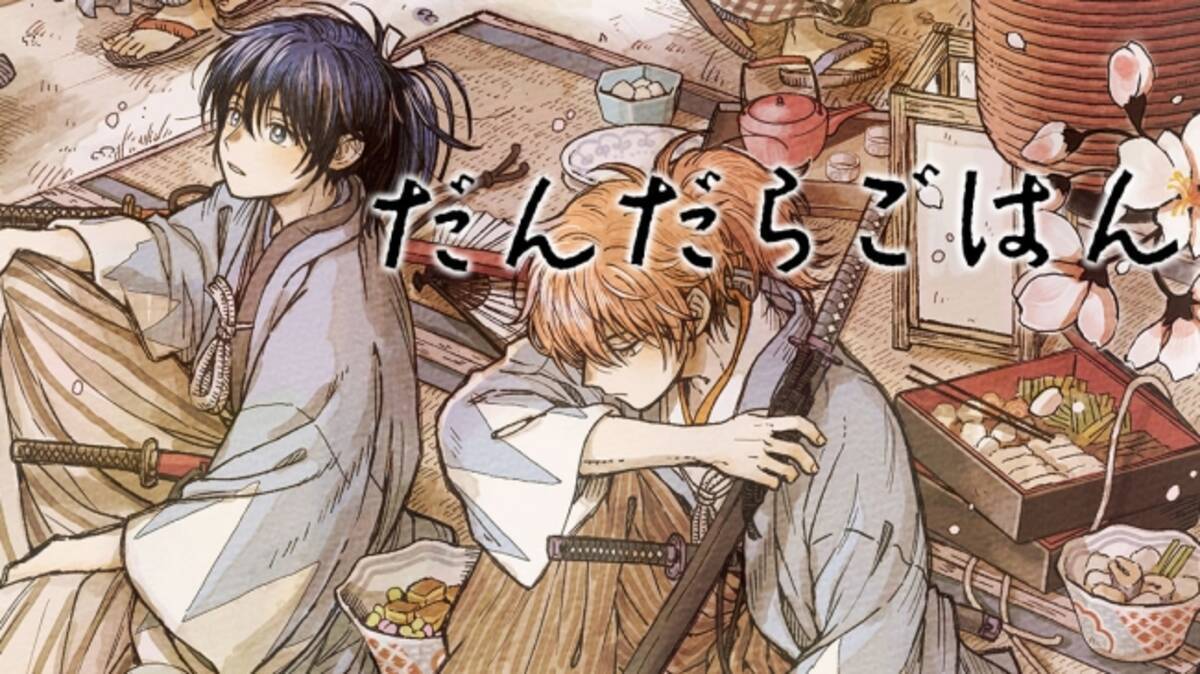
Dandaragohan" is a coming-of-age story manga by Miyuki Tonogaya that has been serialized in "pixiv comic x Kodansha ARIA" since 2015.
It depicts the life-sized adolescence of the Shinsengumi troopers, centered on the history of the Shinsengumi, which actually existed during the Edo period. The work depicts the Shinsengumi, who lived through turbulent times, from a new perspective of the food culture of the time.
The story focuses on Saito Hajime and Okita Soji, and takes its time to depict their encounters and the situation before the formation of the Shinsengumi.
Today's tsumire, eaten in Edo but rarely seen in Kyoto or Osaka.
When Saito and Okita received flatfish from townspeople in Kyoto, they made tsumi-ire soup with people from Shieikan. Nagakura was in charge of dinner on that day, but since he was not good at cooking, Harada was in charge of most of the cooking process.
Ju
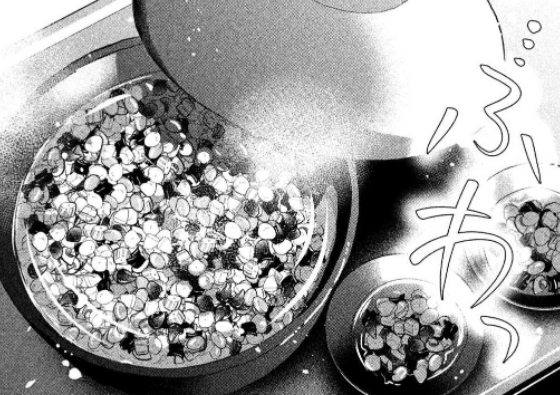
It is a representative local dish of Aizu--what we call "Kozuyu" today. It is a dish in which ingredients such as dried scallops, taro, dried wood ear mushrooms, dried shiitake mushrooms cut into small pieces and boiled in a pot.
It is a must-have treat for special occasions, and it was served after the roshi-gumi performed their swordplay in front of the Aizu clan.
Seed Potato (Karashi Potato)
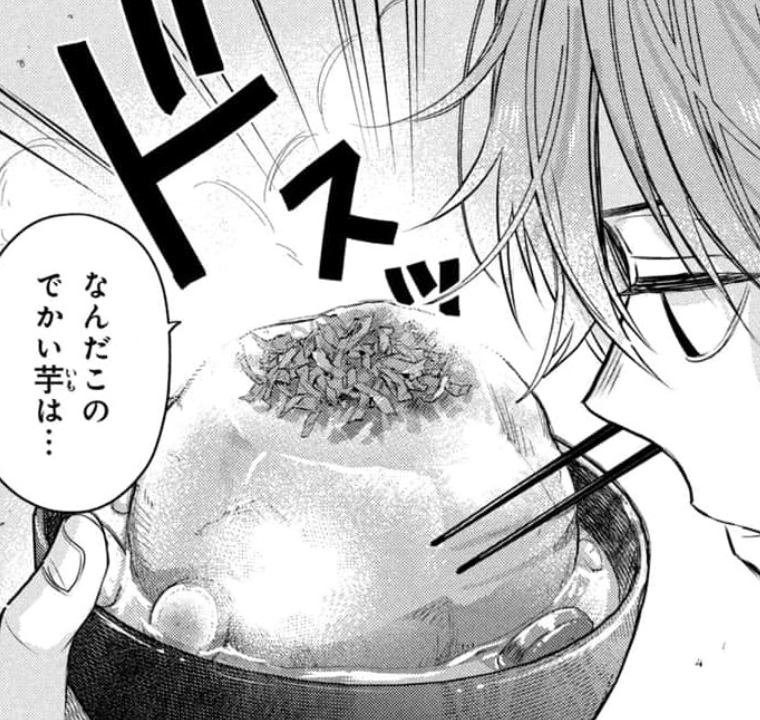
The parent taro of a taro, a lucky charm eaten only on New Year's Day. In Kyoto's zoni, the main stream was to put it in the bowl of the head of the family and the eldest son with a wish to become a person's head.
In the story, Seed Potato was added to zoni for all the Shinsengumi Taishi members in order to prevent a fight.
Deep-fried Strawberries
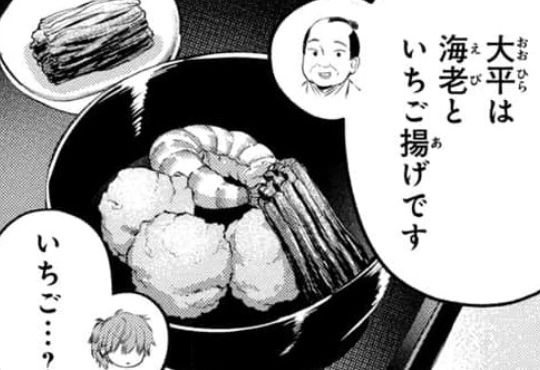
Grated yamaimo (Japanese yam) and Arrowhead are rolled up with the tip of a chopstick to the size of a wild strawberry and deep-fried with sesame seed oil. In the Edo period,' ichigo' generally refers to a wild strawberry that is a collection of grains. There were several dishes named after the ingredients of wild strawberries other than fried strawberries.
A dish served at a dinner with the participation of Hijikata, Sannan and Saito.
Other
Twisted Musubi (knot)
A type of hairstyle worn by women around the end of the Edo period, this term was used to describe the hairstyle worn by ordinary women casually after taking a bath.
This hairstyle was worn by Teru when he visited Asakusa.
Hohatsu
Yomogi refers to hair that is unnaturally stretched and disordered like yomogi (mugwort).
The hairstyle was originally not that of a person of high status, but in the story, Matsudaira, the lord of the Aizu Domain, was walking around the town wearing a high-class kimono and bangs, and from the strange feeling between his hairstyle and kimono, he guessed that Saito, who did not know Matsudaira's status when he first met him, was not an ordinary person.
Mushiken (Insect Fist)
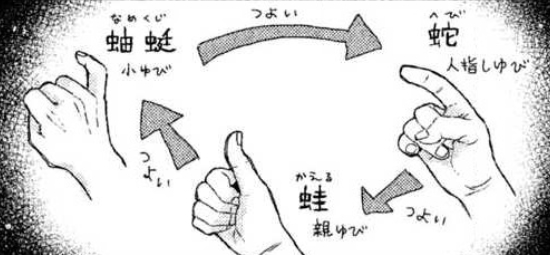
A form of hand play, similar to janken, in which people form snakes, frogs, and namekuji with their fingers and compete against each other. It was used by the members of the Shieikan to decide the room arrangement at the inn.
Susuharai no Hi
Since December 13th was the day of the Susuharai at Edo-jo Castle, it gradually became the day for the common people to do the housecleaning along with it, and it is said that there was also a mysterious custom of doage the master and those around him after the Susuharai.
After the Serizawa faction was purged, Shinsen-gumi, led by Tamesaburo, cooperated with the Yagi family in cleaning up on this day. After that, it depicts the scene where the master of the Yagi family and Kondo are thrown up in the air.
Words, lines, scenes and scenes of "Dandara Gohan"
Toshizo HIJIKATA: "Tell me that I have a will, not that I have no prospect."
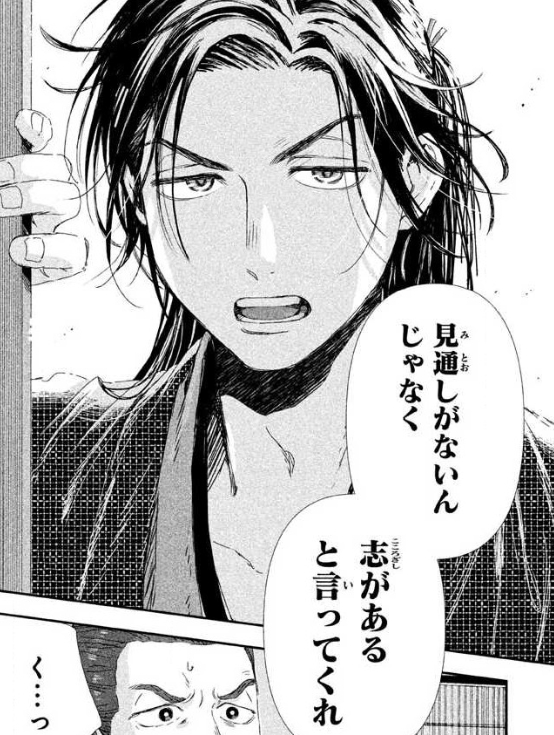
HIJIKATA's words when he broke away from KIYOKAWA, who was returning to Edo, and expressed his determination to remain in Kyoto. KIYOKAWA criticized the attitude of HIJIKATA, who remained in Kyoto to fulfill the purpose of protecting the Shogun, as "outdated giri with no prospect." HIJIKATA, on the other hand, dismissed HIJIKATA as "shut up" and expressed that "there is a will, not no prospect."
While understanding that the tendency of Sonno Joi (Revere the Emperor, Expel the Barbarians) is becoming stronger, the words give a glimpse of HIJIKATA's obstinacy and strong sense of duty to protect his master whom he believed in.


Tags
Contents
- Overview of "Dandara Gohan"
- The plot and story of "Dandara Gohan"
- Encounter and Departure
- Formation of the Roshigumi
- Shinsen-gumi and Serizawa Kamo
- Conflict between two lieutenants
- Characters in "Dandara Gohan"
- Shinsen-gumi
- Hajime Saito
- Soji OKITA
- Toshizo HIJIKATA
- Isami Kondo
- Sanosuke HARADA
- Shinpachi NAGAKURA
- Heisuke TODO
- Keisuke YAMANAMI
- Genzaburo INOUE
- Serizawa Kamo
- Kai SHIMADA
- Yamazaki Susumu
- Choshu Domain officials
- Kogoro KATSURA
- Shunta Futtaka
- Other
- Teru
- Kiyokawa Hachiro
- Katamori MATSUDAIRA
- Yoshio TONOUCHI
- Tamesaburo YAGI
- The term "dandara gohan"
- Food-related
- Niuriya
- Fluffy Egg (Fluffy Egg)
- Monjiyaki (literally burning letters)
- Koshino Yuki
- Dandara
- Squid Dressed with Kapitan (Squid Dressed with Kapitan)
- Kakekake
- Tsumire
- Ju
- Seed Potato (Karashi Potato)
- Deep-fried Strawberries
- Other
- Twisted Musubi (knot)
- Hohatsu
- Mushiken (Insect Fist)
- Susuharai no Hi
- Words, lines, scenes and scenes of "Dandara Gohan"
- Toshizo HIJIKATA: "Tell me that I have a will, not that I have no prospect."
- Okita Soji: "I want to fight to protect this place and everyone, because I love everyone here."
- Saito Hajime: "I have people who say they need me, and they say that to you. I can't do my best. I hate myself more. So I'm going to fight for myself and for you."
- Okita Soji: "No matter what happens, jiruko is oshiruko. No matter what happens, it doesn't change."
- Keisuke Yamanami "I want to decide when it's over, too."
- Behind the Scenes, Trivia, Small Stories / Episodes and Anecdotes of "Dandara Gohan"
- There are various theories about the age of Okita Soji.
- An extra edition with a parody manga
- Relationship with Shinsen-gum-related facilities