
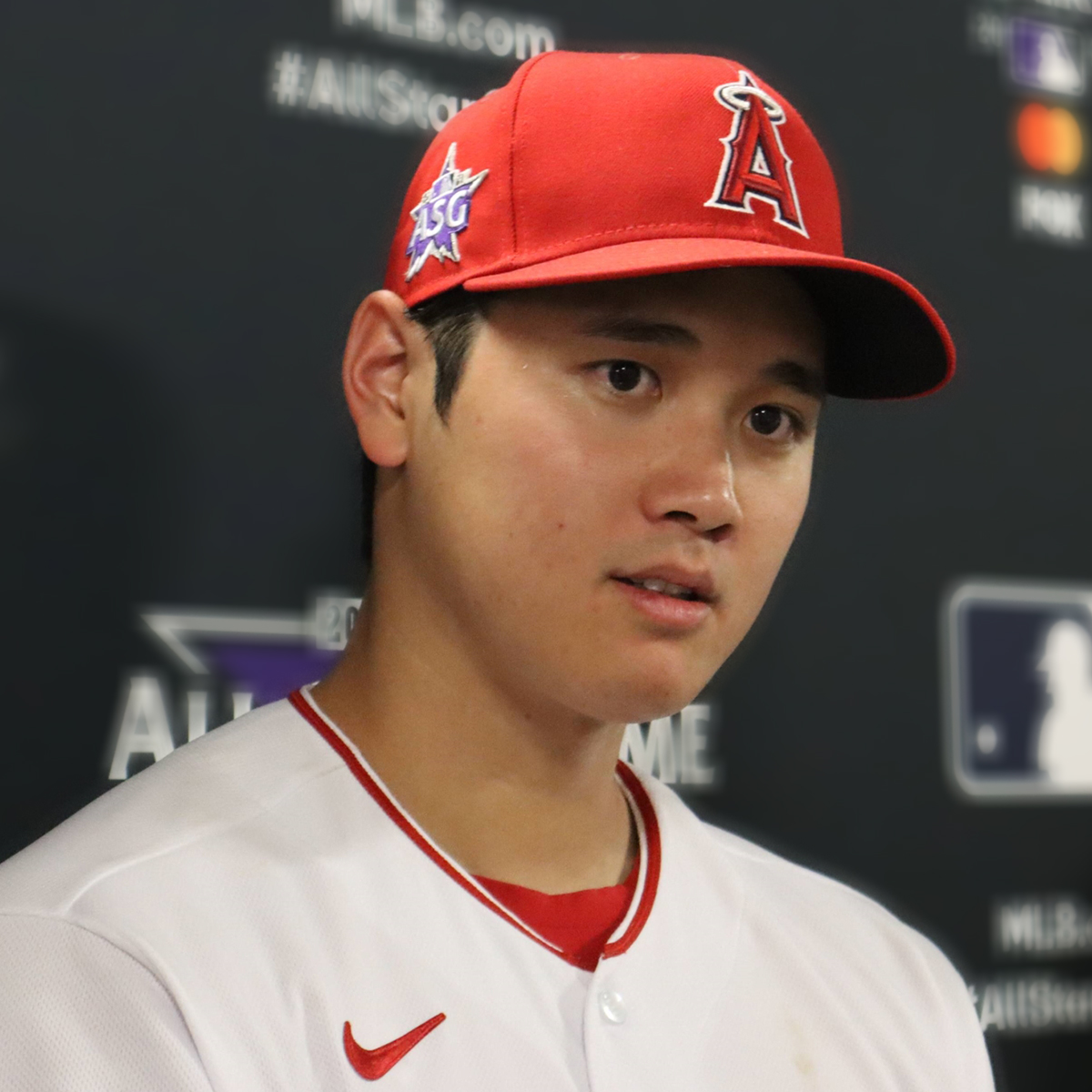
We have compiled a list of the amazing Shohei Ohtani, who continues to impact the baseball world in Japan and the United States. Here we introduce Shohei's career from his high school days, including the 18U World Baseball Championships, to his entry into the professional ranks, and his success after moving to the major leagues. We are amazed not only by the topic of his two-faced style of baseball, but also by the results he continues to produce.
Catcher Ohno, who is in his second year as president of the Nippon Ham Fighters, has ordered Otani to win 15 games.
"I want him to win 15 games. That guy (Ohtani) will be the pillar of our pitching staff," he said. Ohtani wore a mask in 21 of the 24 games in which he took the mound last season. In order to improve on his 11 wins last season, Ohtani said, "I understand that you want to speed up your pitches, but you're still hitting the bat. It's important how you can distribute the balls without hitting them." He cited the accuracy of his breaking balls as an issue.
Source: www.sponichi.co.jp
The key to winning over the loose is the 0th day in the middle.
For Nippon Ham's Otani, the key to outdoing the loose is the third year. Last season, there was at least a two day interval before the start of the game, and at least a one day interval after the start, but Nippon Ham's manager Kuriyama suggested that he might try the zero day game once for the third year.
Last season, Ohtani started only 53 games as a fielder, including interleague games, but if he plays more games, he should be able to hit more than 11 home runs. Ohtani said confidently about his appearance as a fielder the day after he took the mound, "The tension [of my body] has nothing to do with my swing. I feel the most sluggish on the second day, so I don't think there will be a problem [on the 0th day]."
Source: www.sponichi.co.jp
■ Otani "0 Day Middle School" Confident in two sword Style "Tension has nothing to do with Swing"
Nippon Ham's Otani showed his confidence in manager Kuriyama's "zero day two sword plan."
In the past two seasons, there has always been a rest day before and after the start date. However, the commander hinted at the possibility of playing as a fielder before and after the start date next season, saying, "I may try once somewhere on the 0th day. I may be able to play next year." Regarding his appearance the day after the start date, Otani said calmly, "(My body) tension has nothing to do with my swing. I feel the most sluggish on the second day (after the start date), so (the 0th day) does not matter that much."
On this day, he went on a three and-a-half-hour self-training course at the second team facility in Kamagaya, Chiba Prefecture, where he played catch and machine hitting. He is going to play in the "0 day of middle school" that is close to the true two sword style, and he will bully his body even in the off season.
Source: www.sponichi.co.jp
■ "Day 0 in Middle" Opening Up of Nito-Ryu
Shohei Ohtani, 20, of the Nippon Ham Fighters, will start as a fielder the day before and the day after he starts as a pitcher next season, which is the third year of the "Nito-ryu" style. Manager Hideki Kuriyama, 53, said on March 20 that he may use Ohtani as a fielder for "zero days in the middle." This is the first time in two years that Ohtani has used Ohtani as a fielder. It is the first time in three years that Ohtani has used Ohtani as a pitcher.
This is how Otani will be used for the next season, which is in its third year. Manager Kuriyama, who attended a wedding reception for team officials in Fukuoka Prefecture, said, "I will wait until I fully understand the condition of my body," and presented a full-fledged two sword plan for the ace and the main hitter.
Source: www.sponichi.co.jp
Over the past two years, however, he has gained weight from 86 kg to 93 kg through body-centered muscle training, and his body has grown so much that he can no longer wear the suit he was given when he joined the team. He is now 162 kg, the fastest for a pitcher, and as a batter, he can no longer bend the knees of his left leg when he catches the ball. Manager Kuriyama expects that next season's batter Ohtani will hit 25-30 home runs even if he does not play in the box. He cites Hideki Matsui as his ideal model. Although his number of home runs in his second year was less than Matsui's 20, Ohtani needed about 23 at-bats for a home run while Matsui needed about 28 at-bats.
Source: www.sponichi.co.jp
"There are various ways of thinking about it, such as trying it out as a training during the training camp, or trying it out when it is in good condition during the season," said the commander. Of course, considering the burden on the Wakamusya, it is not a method that can be used many times during the season. "The image is the Japan Series. It's whether [Ohtani] can play in all seven games." Basically, it is the "Ultra C" that is the deciding battle for the team. However, the more Ohtani works at full capacity by pitching and hitting next season, the more the existing baseball view will be overturned.
Source: www.sponichi.co.jp
"This year, I took two days off after two days of playing (as a fielder). I might try it once somewhere on the 0th day. I couldn't do it even once this season, but I might be able to do it next year."
This season, Ohtani became the first player in the history of Japanese professional baseball to achieve a double-digit win and a double-digit homerun in the same season. If he is allowed to play as a fielder before or after starting, it will be a tremendous asset.
This season, Ohtani has made it a rule to concentrate on preparing himself as a pitcher since two days before he started. As a fielder, he appeared on the mound just one day after his appearance in the postseason. There was never a game in which a fielder was replaced by a pitcher. The reverse was also the case. There were 10 games in which a pitcher was replaced by a fielder, including pinch hitters, but the commanding officer also prohibited him from playing on the first day. In the sixth game of the CS Final against Softbank, in which Ohtani was to advance to the Japan Series with just one more win, Ohtani, who started in the fifth game, was not allowed to appear. This was all in order to prevent Ohtani from breaking down due to overwork in the extraordinary "two sword style."
Source: www.sponichi.co.jp
■ Giving up the New Year's holiday: "I'll be moving anyway" at the end of the year and the beginning of the year
Nippon Ham's Ohtani, who is training at a second team facility in Kamagaya, Chiba Prefecture, will continue his training throughout the New Year holidays. Although he was off the previous day, he sweated on his stationary bike. "Even if I take a day off, I'll still be moving, so I don't think I'll have a day off," he said.
On the same day, he spent about five hours on a menu that included playing catch and hitting machines. He revealed that he was reading a novel and watching TV while riding an aerobike, saying, "It would be a waste of time if I just did one thing."
Source: www.sponichi.co.jp
■ Otani: "I'm not eating based on the standard of delicious food"
Shohei Ohtani, a 20-year-old pitcher for the Nippon Ham Fighters, revealed on March 13 the "three rules" he has imposed on himself in order to increase his weight during the off-season. He has made it a rule to eat "low-fat, high-protein" meals in the dorm, and has continued to get up on time. He has also avoided eating his favorite sweets at night, showing his greed to improve his performance. "Mr. Stoic," who recently revealed that he spends less than 10,000 yen a month, has become even more ascetic.
It was not only "ball speed" that sought "limit". "I'm not eating anything delicious right now. I want to increase my muscle mass without increasing my fat," said Otani, who is aiming for a physical makeover for the off-season, revealing his surprising stoic lifestyle.
Source: www.sponichi.co.jp
(1) Wake-up on time
"I get up at 7:45 a.m. every morning." In his first year off last year, he was advised by a nutritionist of the Nippon Ham Group that it would be good for him to recover from fatigue if he got up at a fixed time in the morning. He continues to stay off now. "I sleep for seven hours," he said. He has also secured enough time to sleep. He has created an environment in which he can concentrate on training. Otani knows better than anyone else that he has to practice more than other players because of his two sword pitching and hitting style.
(2) Low lipid, high protein
At a dorm in Kamagaya, Chiba Prefecture, where the center of voluntary training is now located, tonkatsu and fried chicken are served for meals. "I take all the batter off before I eat it," he said. "As long as I gain weight, I think I can eat as much as I want. However, it's important to be low in fat and high in protein," he continued. He tries to avoid taking in fat, which increases body fat, as much as possible, in order to gain weight purely by increasing muscle mass.
Source: www.sponichi.co.jp
(3) Be patient with your favorite food
"I don't eat chocolate at night. I think about the timing [when I eat it]," she said. To avoid the risk of being stored as fat in the body while sleeping, she wrestles with sweet temptations every day. She just recently revealed that she spends "less than 10,000 yen a month," and her frugality seems to be improving.
As a pitcher this season, he won nine games (one loss) in the first half, but won two games (three losses) in nine games in the second half. I realized that I lacked stamina due to accumulated fatigue. I built up a strong body through thorough diet management and muscle training. This is all to improve my performance and lead the team to the Japanese championship next season. My current weight is 93 kilograms. When asked about a specific target for weight gain, he said, "I won't say it because it will become a headline." But his insatiable desire to improve his baseball skills is also an extraordinary factor.
Source: www.sponichi.co.jp
■ All-day self-training Nichi-Ham Ohtani's off-season is on par with the majors
"I'm amazed at how conscious he is."
The front desk of Nippon Ham is also said to be rolling its tongue like this.
On Jan. 10, Shohei Ohtani, 20, of Nichi-Ham, had his body measured at the company's sports engineering laboratory.
Otani, who analyzed the shape and muscle mass of his feet, as well as his pitching form and batting motion, said with a smile, "This is the first time I've done this, so I'm glad you did it."
Source: www.nikkan-gendai.com
Still, Ohtani is on a busy off-season. He is not only inundated with news coverage from the media, including TV and sports papers, but also attends events every day. He is not even interested in golf, which many baseball players like, saying, "I don't have the energy to practice."
Even so, she has been working hard on her own training without taking a day off, says a former Nichi-Ham employee.
"The reason why Otani is different from other players is that he always practices by himself during the self-training. For example, if other players are doing the weight, he runs. The time when other players are doing the running is like the weight. Maybe that's because he can concentrate more. Most of the self-training during the off-season is done by thinking and thinking. You can't concentrate if you are in harmony with other players. There is no hard training, so it's natural that there are no holidays. Rather, I think it's strange for players to make days when they don't practice during this season."
Source: www.nikkan-gendai.com
Most major leaguers take a week or two off after finishing the entire schedule and continue to move until the camp. Otani is considering a transfer to the United States in the future, but it is not too much to say that he has already spent his off-season on par with the majors.
Source: www.nikkan-gendai.com
■ "Nito-ryu" Nichi-Ham Otani "Annual Salary of 100 Million Yen" Assessment Details
On June 5, Shohei Ohtani (20) of the Nippon Ham Fighters renewed his contract with an annual salary of 100 million yen, an increase of 70 million yen from 30 million yen. "I was told that I wanted him to be a force for the championship next year, and he gave me a very high evaluation," Otani said with a smile. I am curious about the breakdown of the evaluation.
The Nichi-Ham assessed the salaries of Ohtani as a pitcher and Ohtani as a fielder separately, and raised the combined salaries of the two pitchers and fielders by 70 million yen. What is the amount of each?
Source: www.nikkan-gendai.com
The figures for Darvish (now the Rangers) are instructive. His salary for his second year as a high school graduate is 30 million yen, which is the same as Otani's so far. In 06, he recorded 12 wins and 5 losses with an ERA of 2.89, an increase of 42 million yen.
Source: www.nikkan-gendai.com
Ohtani had a similar record as a pitcher, with 11 wins and four losses and an ERA of 2.61. His 179 strikeouts were higher than Darvish's 115, but the Nichi-Ham ranked third this season. In 06, Ohtani became the Japanese national champion for the first time in 44 years. Considering his team and individual performance, Ohtani's increase will be about 40 million yen.
As a fielder, he has a batting average of. 274, 10 home runs, and 31 RBIs in 87 games. Considering that Nishikawa, Ohtani's main player, has a batting average of. 265, eight home runs, and 57 RBIs in 143 games, up 27 million yen, Ohtani is expected to increase 20 million yen at the most. The remaining 10 million yen is believed to be a popularity evaluation that takes into account media exposure and merchandise sales.
Source: www.nikkan-gendai.com

Contents
- 【 MLB 】 Otani Wins 14th Run, 2nd Run in Final Game of 1st Half! The Signboard in the Middle Left is Hit Directly, Causing Disturbance in the Enemy
- Shohei Ohtani Hits Double-Digit Home Runs for 2nd Straight Year; Fifth Japanese to Hit Double in 9 Games
- Japan's First Cycle Hit! In the First At-BAt, Kim Byung-hyun Hits 3 Runs, 2 Doubles, 3 Triple-Doubles, and 1 Single to Become 7th Batter in the Korean League
- 【 MLB 】 Otani effect is amazing? The Angels surpasses the Yankees in the number of spectators of the league No. 1.
- Otani's Technique: 2-Hit, Shift-Breaking Double, and Hit-to-First Hit
- Ohtani's three base hit was also fast.
- OTANI "TOO GOOD" 2-GAME SERIES: FIRST HOME BASE DEBUT FOR A NEW TEAM, 2-GAME SERIES
- 2 consecutive home runs! Cy Young Award last year, tied from right arm, 2 runs
- ■ Otani wins his first major league game! He gives up three runs in six innings. It is the first time in 99 years since Ruth that he has become a historical white star with two swords.
- "I'd be happy to be with you" in the first showdown with "Yearning" Ichi on the 18th.
- ■ Otani MLB's 1st Camp Start: 7 free hits over the fence
- Otani contract fee was 262 million yen, and Ham received a transfer fee of 2.26 billion yen.
- ■ Cheers from more than 1,000 people
- Otani The uniform number has been decided to be "17". The Angels published the uniform on Twitter.
- ■ Otani and the Angels agree on a statement by the agent, "I felt a strong connection."
- Only 30 Teams to Play in the "Otani Derby"
- ■ Otani Scramble "Strict" Start to Enforce New Posting Rules
- Otani: Focus on the five teams, including the Yankees and the Padres
- GM Says It's Top Priority Right Now
- Otani's transfer transfer fee is limited to $ 20 million, with an annual salary of less than $ 100,000.
- "Favorite Team": The Yankees to Win Otani, Contract Money Limit Increased, Two Young Players Released
- Will he be transferred to the Yankees? Major League official website forecast
- "I haven't decided yet," says Jeter
- ■ Shohei Ohtani's 11-in-a-row press conference was a coincidence "Sorry" for catching a cold
- ■ At 11:00 a.m. on November 11, I will hold a press conference where I will talk about my thoughts on the major league challenge.
- Shohei Ohtani's Challenge to the Major Leagues to Apply for Posting System
- ■ The Dodgers, Otani Nitoryu "OK" Santoryu Keikaku!
- ■ The decision maker of the agent is the same intention. The transfer destination is more focused on the method of employment and the environment than the amount of money.
- ■ Otani, who is going to the Major League, declares for the first time in his own words
- ■ Otani "Beyond Dal" No. 1 in Attention Already Sweeping the United States "Most Attractive"
- ■ 15 "World's Player of the Year" Baseball Soft League announced
- ■ Right ankle surgery successful, 3 months until full play, MLB Spring C will be fine
- ■ Determination to operate on right ankle "in perfect condition"
- Director Kuriyama: Five Years with Oya: "If It Helps Him Even a Little."
- ■ Otani's decision to end this season has not been made
- ■ Even the big-name agents are having a hard time in the negotiations to acquire Otani?
- ■ The Rangers' first announcement of winning Otani … Manager Bannister accepts "Nito-ryu"
- ■ Coach Kuriyama's Hootani's last game in Japan: "I was so scared."
- ■ Two days after taking the mound with a 130 m extra-large V, "I feel a little dull physically."
- ■ Even at the fastest speed of 162 km, "There were almost no good places"
- Otani to have right ankle surgery next spring
- ■ Otani, with his perfect body, will challenge the off-major now! Right foot heel surgery next month
- ■ Now off to the Major League
- ■ Team wins 10 consecutive wins with RBIs and keeps good batting in September
- Nippon Ham's Otani starts for the first time in 50 days with 160 km in the fourth inning, but is replaced by Fukuda with a three run homer.
- ■ Lots of inquiries from the Major League for starting on the 31st, and a large number of inspections
- ■ Ohtani RBI wins 9 out of 9 Hams and is expected to start on 31st as a pitcher
- ■ Otani's "No Loss" Contribution to Victory: Major League Scouts Gather Behind the Net
- ■ Two hits and two RBIs! Advancing to the first ever "MVP"
- ■ 3rd V shot of this season: "Don't let it slip to the quick"
- ■ Otani: 3 hits, all timely hits Kamihara: "Because the tempo was bad"
- ■ Ohtani, V-Hitter, 快答 Dodger 8 serious visitors including Hershheiser
- Otani tied the game in the 7th inning and won the 3rd consecutive victory in the 11th inning.
- ■ After returning to his first RBI in the 4th hole, he won the First Hard Hit Award: "It's gradually going up."
- ■ Otani: For the time being, No. 4 will be continued. Coach Kuriyama says, "The balance between left and right is good."
- Otani's 7th consecutive game with a hit
- In his fifth year as a pro, he made his first four with two hits.
- ■ Otani's timely hit did not lead to a victory, and the batting is on the rise
- ■ 140 m Over-the-Counter Bullets to Move to Hokkaido
- ■ Manager Kuriyama: Otani is a dedicated hitter and pitcher.
- (Ball Festival) Otani First Game "No. 3 DH" Starts Home Run Competition
- Otani takes the mound for the first time in 263 days after giving up four runs in two innings of 158 km as the first starter of the season
- Otani No-Hit Game: 12th Against Ori: Preparing to Pitch as First Starter of the
- ■ CBS Online Edition: Otani's Possibility of Off-Season is Lowered
- ■ Shimizu "Cho-scary", where Otani took a powerful free hitting game
- ■ Otani 23rd Birthday Unable to Celebrate 3 Taco Kuriyama Ham Worst Debt 15
- Otani's first starter in 86 days to be substituted with a double in two at-bats
- Otani becomes Eastern's first starter with 157 km
- ■ It has been decided to broadcast the game live on the first day of the second round with the base cover intact.
- ' Pitcher Otani' to return to the mound in the second round on July 1 after the ball game
- Otani Wins 4th Straight Home Run
- Pinch hitter strikes out for first full swing in 80 days
- Nippon Ham's Otani "Complex" Selected to Pitch for 5th Straight Year, Only 8 Games … Mixed Joy and Apology
- ■ Coach Kuriyama: "It was not what I expected" Otani's registration for the tournament to be confirmed until March 23
- ■ Coach Kuriyama may return to the 1st Division on the 23rd as a pinch hitter or DH if there is a GO sign
- ■ RETURN SECONDS READ, REGULAR INSPECTION CLEAR, ACTUAL BATTLE
- ■ Good news for Otani! The bullpen of Sapporo D "Study" in Kamagaya has the same specifications.
- ■ Otani Kyuen Pinch: The left leg's muscle strength has not recovered, and the return to the game will be delayed until after July
- ■ Shohei Ohtani's Stray Bullets Hit Fans' Cars! Owners are Delighted
- ■ Even during Otani's departure, will the fan vote in the DH division be the first to be seen?
- ■ Returning to the 1st Division: At the end of the interleague game at the earliest, he is adjusting due to a pulled muscle on the back of his left thigh
- ■ Director Kuriyama: Otani's return is not yet visible
- ■ Extremely rare! Rangers GM visits Otani and looks hot from a distance with the "contact ban"
- Major League Baseball to Give Dodgers a Stern Warning over Contact with Otani
- ■ Otani's return in the interleague match: "I have no image at all"
- ■ Aiming for early recovery from muscle strain with oxygen capsule treatment at Otani Hospital
- ■ Nippon Ham's Otani Devoted to Rehabilitation
- ■ Re-examination of the back of the left thigh on the 25th of rehabilitation start
- As a pitcher, Otani is in despair in the first half of the game.
- ■ Otani was seriously injured! The left biceps muscle of the thigh was torn! It will take 4 weeks to return to the game.
- ■ Otani may have injured his left foot as well, but he ran at full speed with an infield grounder and left the bench in the second at-bat
- ■ Nippon Ham's Otani hits the upper right wing with the second extra-large shot "It was perfect."
- ■ Otani goes solo for the first time in his 10th at-bat this season! "I went up too much, but I'm glad I came in."
- Coach Kuriyama's "Really Angry" Instincts: Three Hits for Otani
- ■ First hard-hitting award of this season
- ■ 2 hits from Ohtani Yusei: "It was never impossible."
- ■ Manager Kuriyama: "I'm sorry if I suddenly threw," Pitcher Otani Hints at Early Return
- With five hits in consecutive games, he stopped the game, saying, "Nothing special."
- Shohei Ohtani mentioned as U.S. commissioner for new trade deal
- Director Kuriyama: "Maybe Pitchers Can Make It"
- ■ This season's first real game is a sudden comeback! Deliver it to Tohoku and start the season.
- ■ Nichi-Ham's Shohei Ohtani to appear as a designated hitter for the first time on March 11, Richly Revealed by Manager Hideki Kuriyama
- ■ Don't overdo the leaders who raised the base run strength
- ■ Tsukigata-cho, Hokkaidō Supporting the Furusato Tax Return Gift
- ■ Opening DH may be able to run "60-70%" base running for the first time
- ■ Nippon Ham's Otani fans rush to receive 24 chocolates, but give up because they can't hold all of them
- ■ a Shohei Ohtani with a child
- ■ First mention of no pre-opening surgery: "It's best not to do it as much as possible"
- ■ Nichi-Ham Naoki Miyanishi Reveals Otani's Unexpected Side
- ■ Three times the weight! Check the burden on your feet with the special ball "I'm fine today"
- ■ Lamented "Becoming a Recluse" Want to Hit Outside … No Prospect of Hitting Outside
- ■ No contact with Otani! MLB issues an order to all 30 teams to eradicate the possibility of preliminary negotiations
- ■ WBC loss: "I'm losing my target" Right ankle surgery may be decided before opening
- Otani apologizes for dropping out of the WBC
- ■ The opening pitcher is hopeless, Manager Kuriyama says, "I can't make it."
- Ohtani gets a right ankle pain
- Even the season's opening is uncertain
- Nippon Ham's Otani withdraws from WBC as pitcher
- ■ Another menu: "Physical condition is fine" and "Consultation required" to increase the adjustment pace
- ■ Otani: Absent from the joint voluntary training
- Catching the ball with the WBC ball "I was able to practice to some extent."
- WBC] Japan Ham's Otani: "It can't be helped" after Darvish and Tanaka withdraw
- Manager Kuriyama to give advice on how to use Otani in the WBC: "You can't use him however you like.
- Disappointment of Major League Baseball Officials? Manager Kuriyama suggests that Ohtani may avoid US camp
- Longest throw of the year, 70 meters, coming soon to the bullpen.
- Manager Kuriyama: "Take your time.
- Why the "no-salt" response to the media: Lifting restrictions on media appearances and staying in the game
- ■Preparing for 169 kilos in the Power Pro! If I could update it" against soft
- ■Nippon Ham's Otani hopes to "revive his defense," and although he has not played since 2003 to avoid injury...he is motivated to do so.
- ■Nippon Ham to send "Team Otani" to the WBC, accompanied by trainers, etc.
- The only person with no experience in the U.S. to be selected as one of the "11 MLB Players You Need to Know for '17.
- Manager Kuriyama: Otani will be furloughed next season "I'm not satisfied with my performance.
- New Year's Eve without returning to his parents' home.
- C Osaka, Hotaru and "Hakone" fight together, appearing in new Nippon Ham commercial.
- I will not buy Arima, "I will earn my own money."
- Marry Saori Yoshida! Otani, smiling at the messiness, "A terrific good guy".
- ■Nichi-Ham's Otani signs with HORIPRO: "I will devote myself to baseball."
- Troubled? Otani Gets 2nd car but no license "Ummm, do you want a ride?"
- ■Manager Kuriyama hints at avoiding starting pitcher next season, prioritizing WBC "for the sake of baseball.
- Vacation in Hawaii to train in secret for WBC World No. 1 and consecutive Japanese No. 1 titles.
- Practice while thinking about it.
- Manager Kuriyama: "For Shohei, it's not about money or anything else.
- Ohtani: If he moves to the U.S. next offseason, he will sign a minor league contract...his 20 billion yen-plus contract is not worth it.
- Voluntary training to resume at the 2nd Army facility in Kamagaya, Chiba, on March 7.
- Signed for 270 million yen, Major said, "They will respect my decision, and I am grateful."
- Nippon-Ham to accept Otani's challenge to the Majors; confirms intention on May 5; posting next offseason.
- Declaration of one-shot signing!
- U.S. media: "Otani will be the No. 1 player in the FA market" in the coming off-season.
- ■MVP vote received 1,268 votes, 970 votes ahead of 2nd place
- Adapting to the WBC pitch is an "absolute requirement": "I will not abandon my fork.
- ■Motivated to become the fastest human being at 170 kilometers per hour, "To the person who throws the fastest pitch..."
- ■Best Nine: Ohtani on receiving the "two-faced" award: "I didn't reach the stipulation, so I didn't think it was possible.
- Best Nine: Otani of Nippon Ham won the first ever "two-faced" award.
- No more golf at the year-end meeting.
- Why pitching coach Yoshii is "OK" with Ohtani even though he is returning from the WBC
- ■Sealing the right arm, shaking hands, playing catch... "thorough" recovery from fatigue.
- Ohtani, though tired and under command...resumed his dual role.
- WBC training this off-season to get used to the sliding ball before the main event for pitchers.
- ■ Otani's Ceiling Ball Ball Found on the Roof's Edge! Visit the Hall of Fame and Museum
- Samurai Japan's Ohtani hit a "ceiling-disappearing double" in 2002.
- The general praised Ohtani as "very elite," and he also said of his extra-large solo, "I want to see Ohtani as a pitcher" in the majors.
- ■ Enemy general was stunned by Shohei Ohtani's speed: "I was surprised when I saw him actually running.
- Thoroughly segregated, including a strict ban on solo interviews and blind dates for female announcers.
- Ohtani's 150-meter shot! He was also entrusted to play the trump card in the WBC.
- 308-hitter in the Majors volunteers to be an apprentice! I want to see him evolve into a two-sport athlete!
- Sho Nakata says, "What the hell is he doing?
- ■Otani, this time in Samurai mode, only 2 days off, starts on the 2nd of next month.
- ■ Unable to stop laughing at Otani and Nakata's "stupidity," "I'm surprised that you don't know your ambition."
- ■ [Note] Nippon Ham Shohei Ohtani: "I'm really glad I joined Nippon Ham instead of the Major League."
- ■ Transfer to the Major League or use of posting in the off-season
- ■ Shohei Ohtani puts pressure on his opponent as a pinch hitter "Please join the next"
- In Game 6, Coach Yoshii says, "If I were to throw, it would be the final 9th inning."
- ■ Saving over 500 million yen in the 4th year after joining the club, "Monthly allowance is 100,000 yen"
- ■ Otani: Right foot injured when running through first base
- ■ Sayonara: "Take back what has been taken"
- ■ It was supposed to be the cutting of a double thief. but the timing did not match. SMBC Japan Series 2016 Game 1 Nippon Ham 1-5 Hiroshima (October 22, Mazda)
- ■ Rally at the Nakata House! Otani to Capture Johnson as a Key Player
- ■ Renewal of "Shohei Meter" to 165 km Installation in Urakawa-cho, Hokkaidō
- ■ Otani's 3 Fastest Shots in Japan will Make a Fuss in the United States! 16.5 billion yen Major Competition
- ■ Japan's fastest 165 km 3 consecutive shots! DH guardian deity is the first S like a manga.
- ■ Japan's new 165 km! The fastest self-renewal
- ■ Obstinate 2-run CS First RBI "Connected to Tomorrow" Pacific League CS Final S Game 4 Nippon Ham 2-5 Softbank (October 15, Sapporo D)
- "I can play at any time," says Park, who will start on the fourth day of middle school if Game 6 gets tangled
- ■ "Otani Smile" has changed the impression of major league players
- ■ 100% Ham penetration rate at Otani "Consecutive wins" Invincible Real Nito-ryu 8 wins out of 8 matches
- Ohtani allowed 2 points in the first inning of the Red and White Game
- ■ Otani Samurai's two sword Style Finally open to the world! Nippon Ham accepts it too.
- "Major League Transfer X Day"
- ■ A come-from-behind V was the first bullet in the 7th and 3rd innings and 0 seals in the 8th inning / Otani Tenki
- ■ Fans take off their hats to Shohei Ohtani's two sword style "It's a manga"
- ■ Giving a round of applause and beer to Otani, "If I can win again"
- ■ Otani's First Beer Experience: "It Hurts So Much"
- Otani promises Kuriyama to become No. 1 in Japan
- ■ The first ever pitcher in my life! I will be the starter on the 28th.
- Three hits and "Mad" Goodbye wild pitch First 100 hits and wins
- "I'm so happy, I'm so crazy."
- ■ Otani wins the league title on the 27th at the earliest as an M3 by scoring a tie and finishing home.
- ■ Otani Pro's First 100 Hits, "Pitcher", Next Day's First Start, 2 Hits, Pacific League Nippon Ham 5-2 Softbank (September 22, Yahoo Auction D)
- ■ Direct appeal: The first starter the day after the game: "Don't stop your enthusiasm here."
- With seven wins out of seven games, the unbeatable Real Nito-ryu will regain the top spot for the first time in the M-League Nippon Ham 2-1 Softbank on the 22nd (September 21, Yahoo Auction D)
- ■ Real Nito-ryu: Just one sealing pitcher makes falconry 奪首
- ■ Consecutive v-attacks! Ham Savings 29 is the first time in 54 years since the first Japanese team in the Pacific League. Nippon Ham 3-1 Lotte (September 19, Sapporo D)
- ■ Otani's First Yui Shooting! The Japanese Ham 4-2 Lotte Giants of the Pacific League (September 18, Sapporo D), which won the victory over the white star Pa for the first time in four years
- ■ I was hit 164 km. but I got over the beans and the right elbow pain and gave up 2 points in 5 innings. Pacific League Nippon Ham 4-2 Orix (September 13, Sapporo D)
- ■ Coach Kuriyama says Otani's 164 km is meaningless if he is hit
- ■ Four years to reach 40, 30 wins overall Fumio Fujimura's record of 12 years
- ■ 21 & 22! Two homeruns in one game for the second time this season!
- ■ Skillful and timely return the inside corner shot skillfully
- ■ There is! Real Nitoryu Reverse V's 21st Soft B Game Opening: Rich
- ■ Return to the starting line-up at 163 km / h! 11 out of 38 pitches are in the 160 km / h range
- ■ Nippon Ham's Otani returns as a pitcher with the fastest tie of 163 km
- ■ Nippon Ham to break the ban on the come-from-behind V! To appear as a batter even the day after the start
- Pitcher Otani to start against Lotte on June 6
- V-Hitter and Hard Hitter: Team Japan Ham 12-4 Orix P.S. Pacific League (September 3, Hotto Kobe)
- No hits in three games -
- Pitcher Otani's Victory V-Plan to Start Game B on September 21 or 22
- ■ Pinch-hit No. 20 IV Effective! The previous day Dehydration "I want to get back"
- As a pinch hitter, he blew up the 20th solo of the backscreen.
- ■ Otani is out of the game due to his poor health, and he will return to the dormitory as a starter with the "No. 3 DH."
- In the 10th game, he had three consecutive hits and three strikeouts. Pacific League Nippon Ham 5-3 Lotte (August 24, QVC Marine)
- ■ Super V-Shot with One Right Hand "I was able to hit at a good place" Pacific League Nippon Ham 4-1 Lotte (August 23 QVC Marine)
- Coach Kuriyama: "It's Possible" for Otani to Take Relief from New Plan Starting DH
- ■ Otani M-Light first time blocking shot First time in his life with 11 double-digit pitches, leading the game and inspiring the team Pacific League Nippon Ham 4-2 Softbank (August 21, Sapporo D)
- ■ The 19th was also the first time to win the 20th. Pacific League Nippon Ham 2-3 Softbank (August 20, Sapporo D)
- It is regrettable that Ohtani made consecutive hits in the sixth game. Pacific League Nippon Ham 0-3 Softbank (August 19, Sapporo D)
- Nippon Ham's Otani beats Nakada for 18th straight two run win
- Otani's return as a pitcher is uncertain
- ■ On the 16th, they will wait for a replacement, and on the 21st, they will find the soft B game first.
- ■ V2 Run: Turning the Tables to Get Rid of the Stigma! Two to Soft B
- A hit in 17 at-bats is the final call! He will return to the starting lineup on the 21st.
- ■ "Mr. Kishi and Straight Back with Inconsistent Pitches" Stalled in Consecutive Games 0-2 Seibu, Nippon Ham, Pacific League (August 11, Sapporo D)
- ■ "It is not strange to make a home run" by failing to hit a ball that has failed to be thrown Pacific League Nippon Ham 1-3 Seibu (August 9, Sapporo D)
- "Batter Otani" Must Not Be Missed! Manager Kuriyama Hints at "0 Day Middle School"
- ■ "I don't praise you, but I respect you": Director Kuriyama's two shot approach to Otani
- The Pacific League's Nippon Ham 2-3 Softbank (August 5, Yahoo Auction D)
- ■ Pa's rival hopes for Nichi-Ham Ohtani's quick return to the starting lineup
- Nichi-Ham manager Kuriyama passes Ohtani with three hits, three RBIs
- His 60th hit in the 14th season is his best.
- No hits in three at bats "Otani Showdown" vs Lotte 3-4 Nippon Ham Lotte (August 2, QVC Marine)
- ■ Top offensive and defensive battle with Nippon Ham Soft B 7th "Pitcher Otani" to be avoided
- ■ Otani "Kaishin" No. 13 Closest Approach with Consecutive Soft B Wins, 3 Differences, Maximum 11.5 Differences, Fierce Pursuit Pa League Nippon Ham 6-3 Softbank (July 31, Sapporo D)
- ■ Otani Records 13th Tie With 2 Runs "Kaishin! Kaishin no Hitotsu deshita"
- ■ The second "No. 1 ・ DH" did not work, Kuriyama laughs bitterly and says, "It was wrong."
- Nippon Ham 4-6 Softbank (July 29, Sapporo D)
- Time to reach first base tops, Rapid becomes big weapon
- ■ Charming feet! Timely infield hits & quick return from first base Pacific League Nippon Ham 8-4 Seibu (July 27: Seibu Prince)
- ■ Evolving Monster "Shin" Rush! Otani Also Wins 3rd Homerun Slugging Award & 32 RBIs Pacific League Nippon Ham 4-1 Seibu (July 26: Seibu Prince)
- ■ To return to the starting line-up, he may be on the mound as a relief pitcher or in the second division.
- It was the first time in three years that a relief pitcher allowed one hit and no runs in the first inning.
- ■ May be willing to start against Ori on 24th, but will make a decision in the bullpen on 23rd
- ■ Personal best 11! Rare exciting final round season 19 Pace Pa League Nippon Ham 9-3 Rakuten (July 20, Obihiro)
- ■ First time: Sudden and Timely Ball Banquet MVP: The Man with One Swing JAPAN HAM Pacific League 3-1 Rakuten (July 18, Sapporo D)
- ■ Nippon Ham's Otani aims to avoid direct hits from Katopan Asked, "I don't want to say it"
- MVP First Home Run and Slugging Award -
- ■ In the Home Run Derby, Otani made his first appearance. "I'm glad it was exciting."
- ■ Otani goes to the ball festival with special equipment "I can break my shell!"
- No penalty for a fielder to avoid pitching
- Some point out that the penalty for dropping out of the game might be avoided.
- ■ Why Nippon Ham manager Kuriyama used Otani as the "No. 1 pitcher"
- "I think it's impossible to do it with all our might," he said.
- He gave up three runs in the middle of the seventh inning.
- ■ "Don't worry" to tie the record of 14 wins in a row
- ■ 163 km Otani MVP Commander Expects to Win Double Award
- ■ Despite being a birthday hit visitor for three consecutive years, Yamagata Prefecture cheers loudly
- ■ Manager Kuriyama: Otani's "No. 1 Pitcher" is a recreation of the famous Mihara Ryu 45 years ago
- ■ Nippon Ham's 10th Straight Win! Otani's "No. 1 Pitcher" Leads the Hitters with Bullets & 8 Scoreless 8 Wins Pa League Nippon Ham 2-0 Softbank (July 3, Yahoo Auction Dome)
- "Number One Pitcher" Otani Throws First Pitch to Lead Batter with Home Run
- ■ 10 wins in a row LEAVE IT TO ME. "The atmosphere where the hitters score points"
- ■ No. 3, Ohtani's run sense is also sparkly 1 -> 2 grounders from 3rd base, Pacific League Nippon Ham 3-0 Seibu (June 28, Sapporo D)
- ■ People praise Shohei Ohtani's private life
- ■ Always a Kasukami story! Five consecutive wins with Real Nitoryu Hakusho June ERA 0 ・ 29 Pacific League Nippon Ham 6-0 Orix (June 26 Kyocera D)
- With 0.29 ERA, Otani is sure to be the MVP of the month.
- ■ 7th inning 3 hits, no runs, 6 consecutive wins with 11K, 6 consecutive losses without batting lineup Pacific League Nippon Ham 6-0 Orix (June 26, Kyocera D)
- ■ 4 Direct Hits of Shock-free Bullets and Visions in ハマスタ
- He has won 5 games in a row despite the pain of hitting his own balls.
- Six 12-K wins in pitching, first home run, "run is the most difficult" interleague match Nippon Ham 3-2 Chunichi (June 19, Nagoya D)
- ■ "Trump card" for soft pursuit Otani emerges as a pinch hitter in three DeNA games
- ■ Japan's fastest 163 km, 5 pitches in total! Starting pitcher World's fastest 159. 71 km average
- ■ Japan's fastest 163 km in a row! 31 balls are over 160 km. In the 7th inning with 8K zero, the Nihon Ham 6-0 Hanshin (June 12, Sapporo D) won 4 consecutive wins.
- Otani's 163 km "Feels the Same Way": A Series of 160 km Shots
- Nippon Ham Ohtani Hits 17 in Consecutive Games
- ■ First time in 3 years to hit a dead ball on the back "It is more dangerous to hit the wrist"
- Otani hits 16 games in a row in his fourth at bat
- ■ The first time in the history of the Inter-Korean Game that a DH is to be given up
- ■ Dal Otani and the Fastest Competition Declaration: "I told him' I'll beat you'"
- "I couldn't hit at the chance," he said.
- Nippon Ham 6-2 Giants: 10K Perfect Throw, Baseball New 163 Km
- ■ A new professional baseball record of 163 km! Faster than his own record
- ■ Stop the Giants after 6 consecutive wins! May be able to play as the "No. 3 pitcher"
- Otani hits for 14 consecutive games
- Amazing ballistic hits in 13 games
- ■ "I've never seen such a player" and "It's amazing again"
- Nichi-Ham's Ohtani wins 161 km / h and hard-hitting award
- Nippon Ham's Otani "Shinnito-ryu" starts as "No. 6 pitcher" without using DH
- Lotte Giants 1-3 Nippon Ham in the Pacific League (May 24, Sapporo D)
- "There are rules," says Kuriyama
- ■ "Thank you very much. DJ Chas"
- Pacific League Nippon Ham 8-0 Rakuten (May 22, Sapporo Dome)
- "Two Swords": Nichi-Ham Shohei Ohtani's Crucial Moment as a Pitcher
- Pacific League NPB 8-6 Softbank (May 19, Yahoo Auction D)
- Otani Records: Not a Home Run Batter in Six Games 2-6 Nippon Ham Softbank (May 18, Yahoo Auction D)
- Otani hits home runs in five consecutive games for the first time in 35 years
- ■ Otani: 3 consecutive games with double-digit scores … 4th loss with 5 runs in 7th inning
- Otani scores 162 km, strikes out 11, allows 5 runs
- On the 15th, Ham Otani will focus on starting against the Lions in order to avoid appearing as a batter in the 4th game.
- ■ Otani Nakata with 4 consecutive games and the 7th Avec shot, Pacific League Nippon Ham 6-2 Orix (May 11, Tokyo D)
- It was because No. 4 connected me that I was able to hit. Nippon Ham's No. 5 Otani was grateful to Nakata.
- Nippon Ham's Otani wins 4 games in a row
- Coach Kuriyama of Nippon Ham blamed Otani for his lack of skills
- ■ First 3 consecutive games! Home base batting average higher than King Mejia Pacific League Nippon Ham 4-0 Orix (May 10, Tokyo D)
- ■ "The cause of Otani's confusion" analyzed by a major league official
- ■ Otani Junior High School: On the 1st, I will play as a fielder! I will be the first to play three games in a row.
- ■ Nihon Ham's Otani Maeda and Tanaka are decisively different. IN THE SCENE I PUSHED HIM.
- Nippon Ham's Kuriyama: Otani's 3rd loss due to lack of skills
- ■ 2nd win & debt payment start against Seibu "Think of pitching long innings"
- In the 15th game of the No. 5 Air Cannon, the No. 5 Pacific League's Nippon Ham 1-2 Softbank (May 5, Sapporo D) is already in line with last season.
- ■ Pull the 4th with Nakata at a pace of 18 new home runs! Pacific League Nippon Ham 6-6 Softbank (May 4, Sapporo D)
- ■ Batter Otani Banden Stops! Japan's New Debut 14 Straight Wins, Right Arm on Verge of Capture
- ■ Otani's first win of the season 3, 0 win on April, Pacific League Nippon Ham 9-4 Lotte (QVC on May 1)
- ■ Otani's 6th Honest Win of the Season! Worst 4 Runs Lost, 138 Pitches, 10K Shutout
- ■ Otani's First Victory as Starting Pitcher "No Discomfort or Pain"
- ■ All-Nagashi-Uchi 3rd Personal Fastest Pace "No Need to Pull" Pacific League Nippon Ham 7-6 Rakuten (April 27, Sapporo D)
- ■ Why do you support Otani? Ham Kuriyama's Big Mistake
- ■ First time in 5 games without a white star "One step away." Pacific League Nippon Ham 5-6 Softbank (April 24, Yahoo Auction D)
- Nippon Ham's Otani has not won another five games since the start of the season.
- ■ Nichi-Ham leaders worry about Ohtani's "mental confusion"
- ■ Hitters Otani Outside the Bench Hanamaki Azuma's Seniors, Check-In Against Yohyang Pacific League Nippon Ham 4-3 Seibu (April 21, Sapporo D)
- ■ Nichi-Ham Manager Kuriyama explains why he does not approve of Ohtani's growth "So, I will never approve"
- The fear that a commander feels
- In the Seibu three game series, will it be the first hit from a rookie batter?
- In the first four games of the season, Park has not won and his ERA is in the 1 point range, but he has scored the first goal.
- ■ The 4th starter did not win the first time of the season, and the 2nd run in the 8th inning was not supported. Pacific League Nippon Ham 3-5 Lotte (April 17, Sapporo D)
- ■ Second consecutive hit in the third game of this season, "I don't feel bad" Pacific League Nippon Ham 3-4 Orix (April 13, Kyocera D)
- ■ Director Kuriyama also groans at Nichi-Ham Ohtani's active run, "It's like Shohei. He has a sense."
- "It is also the attitude of the team to move forward in difficult times."
- ■ Nippon Ham's Otani: "Because It's the Hitters that Get the Blues"
- Shin-Ni Style! DH-controlled Pa to go up to bat in Lotte match on 17th
- ■ Otani one point loss, complete loss "I shouldn't have scored one point" Pacific League Nippon Ham 0-1 Rakuten (April 10, Kobo Stadium Miyagi)
- ■ Otani who twisted both ankles He will take the mound in the game against Rakuten on the 10th after a one day delay.
- ■ Ouch. I slipped and twisted with the run. The starting schedule against Rakuten on the 9th will be decided on the 7th. Pacific League Nippon Ham 2-5 Seibu (April 6: Seibu Prince)
- With his first no-hit game of the season, he will take the mound in the Pacific League 0-10 Seibu on the 7th (April 5, Seibu D).
- ■ Otani Nitoryu Evolution Week, Tuesday, Wednesday and Thursday are batters! Saturday is a pitcher
- ■ Otani's First Victory: Team Entrusted with Speed Gun Tied for Fastest Speed with 162 Kilometers in Pacific League Nippon Ham 4-3 Softbank (April 1, Shizuoka Prefecture)
- ■ Otani's "evolution" 2 consecutive games! Also in the opposite direction, a meaningful single shot 2 days before the start
- ■ Otani, 5 RBIs by the 6th inning! His most RBIs in the opening game
- ■ The first Otani Munen Kuroboshi assignment was "difficult after all"
- Pacific League Nippon Ham 2-3 Lotte (March 25, QVC)
- ■ Hokkaido Shinkansen イメキャラ "Across the sea, straight."
- ■ Otani "Ken Ken the Left Foot" No. 1 Reverse One Foot Finish Special Training to Reverse Left Open Match Nippon Ham 5-2 Yakult (March 20, Sapporo D)
- Two sword Style: Players Allowed to Play Two Days Before the Start of the Game
- Exhibition Game Nippon Ham 8-3 Yakult (March 19, Sapporo D)
- "I just happened to slip out of the fork and get caught (in the bat). It turned out good."
- ■ Struggling against bad weather No game in the middle of the third inning: "There was nothing in particular."
- ■ Fear of Hitters … Otani, Practice for Right-Handed Hitters
- In his first away game as a professional, he got an RBI in the first at bat of the 4th hole, and a middle hit in the second at bat.
- ■ Instead of drinking at the after-party, you can play baseball in the large bath in the dormitory.
- ■ 162 km in the OP game! "I wanted to see how far I could push in."
- ■ In the exhibition game, he tied the fastest speed with 162 km! Sapporo D Doyomeku
- ■ All-out emphasis! Showing further progress to start against the Giants
- ■ Otani to use DH Kondo, the catcher of last season's 326
- Park named opening pitcher for 2nd straight year
- ■ Otani "Throwing Run" Full Rotation 101 Ball Throw => Open DH
- ■ Running hard! "How do I want to hit the most?"
- Nippon Ham Red and White Game, Red group 11-7, White group (February 20, Kunigami)
- ■ Did I miss the scene of the internal conflict? The power relationship between Otani and Nakata
- ■ Sleep control, no jet lag, Nago's "calculated"
- ■ Ohtani, who was excluded from the Japanese national team, concentrates on the adjustment
- ■ Otani "The 50 People to Watch in Major League Baseball this Season": Ranked 19th, the highest among Japanese
- ■ "It's still the first real battle, coming up from here" for Otani's 150 km volley
- ■ Otani is a man of 500 million dollars! The overwhelming "American debut" is an exceptional estimate in the Major League.
- ◇ Practice game Nippon Ham 1-1 Lotte Korea (February 10, 2016, Peoria)
- In his first appearance in the United States, he allowed no runs in two innings with 4K! Over 50 Major League Scouts
- ■ Otani's first team hit in 2016, left front at the first at-bat against Lotte
- ■ Even in the Major League, it is the second sword style! "Power is matsui" that was defeated by batting.
- ■ 140M shot in shuffling! The first double-digit victory in 2 years and the first free run
- "Shilling Remembered," New Padres Manager Praises Ohtani for 40 Pitches
- ■ 17 hits over the fence! "Yes!" in front of Commander Padres
- ■ Otani 2 / 10 US debut! Many inquiries from Major League to Nippon Ham
- ■ Otani's exclusive bodyguard! American fans also rush to the next door day after day.
- Otani vows to beat Otani to win three titles last season
- ■ Otani: Weight loss now in the 90 kg range "Maintain muscle mass while losing weight"
- ■ Major League batting! 100 kg body effect "Very good"
- ■ Returning to Nippon Ham, Yoshii's coach pitcher Otani Ordered to be "Absolute Ace"
- ■ Otani muscle strength test More than last year "How to link to technology"
- ■ "Body fat percentage does not need to be in the single digits"
- ■ Reducing weight from 102 kg to 5 kg: "Don't change seven meals a day."
- ■ "Baseball Doctor" Warns Against Otani's Body Modifications: "It Will Be Like Matsuzaka"
- Hitters "Devoted" to Tee Hitting
- ■ Otani named "Star Eleven" as a symbol of town revitalization through horse riding rehabilitation
- Otani: Test run at 100 kg "I threw quite lightly. It was more like a pitch."
- ■ Otani's "Dal-style Training" is a dangerous bet. The sudden muscle strain is very risky.
- ■ Reaching 100 kg! 6 to 7 meals a day with Dal's advice "I learned a lot"
- Led by Nito-ryu Career High, he became Japan's No. 1 with 16 wins and 11 homeruns
- ■ Return home for the first time in a year. Sit down on the ground and practice "Last-minute cancellation" for the excited seniors.
- ■ About 1 hour of NITO-RYU practice to invite juniors
- ■ Nito-style Full Rotation Plan! Director Kuriyama's "Body Comes First" Expected in Its Fourth Year
- ■ Smooth adjustment even during off-peak hours? "We still have plenty of time."
- ■ Bring a glove for the outfield for next spring's camp: "There is no harm in practicing"
- Self-analysis: Poor sense of distance
- ■ Self-training with Dal discovered Ham Otani, fans and the team Hyahiya
- ■ Coach Kuriyama: How to Use Otani: Ideally for Middle School, 6 days fixed & 3 games per week as DH
- ■ Acceleration of Otani's "Darvish transformation"
- ■ Otani Harimoto's "Shout" "One Pitcher Quick" and "Two Swords" Style Next Season
- ■ The "face" of Nippon Ham's head office will be co-starring with director Kuriyama last year, but this time it will be a pin
- Nippon Ham's Otani receives rave reviews from Major League players
- Dal and the Joint Training Project: Is Nakata with you? "If I force you to go,"
- ■ Otani, Way of the Dal! The 4th year of the fastest tie, 200 million yen. Learn how to build your body. Next season, weigh 100 kg.
- ■ Double the price of Otani to 200 million yen and sign on as fast as Dal
- ■ Interview with the author of the popular anime "Ace of Diamond" the other day
- ■ Coach Kuriyama supports Otani's contract negotiation? "The annual salary will be 200 million yen."
- ■ Daru met him for the first time and had a dinner with Nakata a few days ago.
- ■ No problems with first U.S. camping next spring "I'm not that naive"
- ■ Will it be 200 million yen for the 4th year as a professional? Negotiations to renew the contract with Daitori will start on December 4th.
- ■ Otani 8th Crown Winner! First Award of Best Nine: "After Becoming Japan's No. 1 Next Year"
- ■ Director Kuriyama's first Best Nine Award winner Otani: "I've been playing for three years and it's slow."
- ■ Guaranteed to surpass Masashi Tanaka? Price of Nichi-Ham Shohei Ohtani "Transfer to the Major League in the 17th Off"
- ■ Premier 12 Are you tired? "I haven't accumulated that much."
- ■ Samurai Be the Ace! Coach Kuriyama: "That's Otani and."
- ■ Full rotation at the end of two crowns "I have no intention of taking a rest."
- ■ Won the first Sapporo Dome MVP award, garnering more than one third of the popular vote
- ■ Ikki Otani: "It's a shame how it ended."
- ■ Otani's insatiable ambition: "If I had one more trust, I could have thrown it all away."
- Premier 12 Semi-final Japan 3-4 Korea (November 19 Tokyo D)
- ■ The Royals' official love call to Otani: "Even if I throw in the U.S. tonight, it will be accepted" / Premier 12
- ■ Samurai J Otani's next game is scheduled to start in the quarterfinals on the 16th after 7 days of middle school
- ■ The highest alert was No. 3, when he threw 161 km, "I felt like I could hear you."
- ■ Coach Kuriyama: "Pitch like Maeken" for Otani
- ■ Otani's fastest speed of 156 km: "It was very good" Two goals lost
- With two outs and no runner, Park gave up two runs.
- ■ "Intuition" game! Starting against Korea on the 8th
- The Ohtani Sawamura Award: "We still have a long way to go in terms of games and pitches."
- ■ "Napping" to practice the evolution of two swords "Resetting once"
- ■ MOCO'S Kitchen "Remove the tomato"
- ■ Otani to become a literary youth "When there is the most time in the year" Accumulate knowledge and culture
- ■ First Battery Award! Thanks to "My Wife" Ono "Special Happiness"
- ■ I learned from Software B, which I am not good at as a "caller" even though I am a samurai.
- ■ Are you risking your life? Director Kuriyama urges Otani for the 4th year of Nito-ryu at the interview
- ■ November "Premier 12" Nito-ryu voluntarily declines
- ■ "Premier 12" not to participate in Phoenix L
- Ham Otani's CS Defeat: "Headwind"
- ■ "CS Devil's Second Inning" Continues to Lose Points from Last Year, "Unable to Sort Out."
- ■ Lotte Giants to stop! CS Opening Day's starting pitcher: "Skip from the first inning"
- This is the first time that a high school pitcher has won three titles since Hisanobu Watanabe in 1986.
- ■ Proof of Growth! Nippon Ham Ohtani Wins 3 Pitcher Titles "Great"
- ■ "Otani School Lunch" will be held in Urakawa-cho, Hokkaidō, as a supporting ambassador
- "Batter Otani" May Miss 4 Remaining Games, But Focus on CS and Pitcher Adjustment
- ■ With Otani's powerful pitching, I was able to win three pitchers! "The record will follow later."
- Otani wins his 15th victory with a 12K shutout in the 8th inning! Nippon Ham wins the pitcher battle! Ori Hitters' Silence
- ■ Otani is timely as a pinch hitter! Kondo and DH can be used together, but Manager Kuriyama says, "It's annoying."
- ■ "Necessary for Short-Term Decisive Battle" New Demon Ball Front Door Wins 14 Games and Scores CS
- March 19: First time in three years to take the slide
- ■ First pinch hit in 13 days at bat, next game to be decided against Lotte on 17th
- Otani's seven point loss was an unexpected weakness that the American scouts saw calmly.
- ■ Nippon Ham Otani 5 losses "I am sorry", worst tie 7 points lost
- Otani's "Lack of Strength" 7 Runs Allowed, 6 ERA in Game B
- ■ Otani worried about CS. KO of 7 points in 2 consecutive matches against Softbank
- ■ A secret visit to Japan by Mr. Boras, a powerful agent of the Major League, who serves Otani
- ■ 10th: "I have no choice but to win" without going on a road trip to prepare for the start of the soft B
- ■ Otani: Japan's fastest speed is 163 km! U.S. Scout "Amazing Speed"
- ■ Failed to catch the wave after one shot in the first inning … Dropped out after three runs in the sixth inning
- ■ This season's fastest speed is 161 km! He has cleared the conditions for his personal record of 13 wins and titles.
- ■ As usual, Otani said, "We don't play against each other directly."
- ■ Establish "Nito-ryu Routine" and receive expert advice for dietary habit improvement
- With 12 wins and shutouts, he has won five Sawamura-class titles.
- ■ Nichi-Ham Otani is the "God of Pinch-Hitting"? What is the outstanding fighting strength and amazing pinch-hitting results?
- "Third time honest": Aiming for his 12th win, he will start against Lotte on January 18.
- ■ Five more to the second digit of pinch hit "Better than the first half"
- "I was in the worst condition."
- ■ Grab a refill! In the previous match, he was shot twice and became a "close hitter".
- ■ Otani: "I Decide for Myself" First Goodbye in My Life Learning from Senior Pinch Hitter Yano
- ■ Self-worst tie, 7 point loss KO … 5 point loss in 7 innings
- ■ Stop the magic lights! First place Soft B starting pitcher
- ■ Coach Kuriyama punishes Otani Jin-Pong by saying, "He is more than a big fool."
- ■ Otani may be sent off as a substitute after being shunned, but it is a strange play that will appear again.
- "Fielder Otani" is in danger of dropping out of the starting line--his rival is his former wife
- Hurler's 11th win -
- ■ Losing Streak Stopper LEAVE IT TO ME! I'LL KILL A LION!
- ■ Ball Festival: Nichi-Ham Otani's Modest Defiance in the MAX159 Kilometers
- ■ 89 km! The slow ball was amazing. It turned into a slow curve.
- Kuriyama: "Don't Go Out"
- ■ Waiting for a temporary replacement is still a secret. missed opportunity
- ■ The ball game starts with 2 innings! If it is a 15th Hinobori plate, it will be a 1st day of middle school.
- The 15th is the last game of the first half of the game in which the waiting list for the Soft B is decided.
- ■ Dal's third year and comparison Nichi-Ham Otani: How much will next season's salary jump?
- ■ Otani: "I feel like I'm about to break my heart in the third inning." He won 10 games over the Dal.
- ■ "Secret plan" to the top soft B game! Can you take the mound as a relief pitcher in 3 days?
- ■ Ham's ON Cannon Avec RBI wins 16 out of 18 games! Capture the natural enemy Ishikawa
- ■ Even at the age of 21, Otani is still restricted from going out. Director Kuriyama, "Stricter" Nito-ryu is the best.
- Otani's 21st Birthday "Birthday Hit" for Two Consecutive Years
- ■ A birthday cake inspired by Otani's "two sword style"
- ■ The same phenomenon as "Ma-kun's 24th consecutive win" with "White Flag" Pa as Otani's starting pitcher
- ■ Otani: "Because I was on my finger": This season's fastest tie of 160 km was replaced by a bean.
- ■ This season's first shot, Ohtani's right middle finger blood blister, forced him to leave in the 7th inning, his 10th win.
- ■ Aiming for the fastest 10 wins, No-Throw will start against Ori on the 2nd.
- It will be the first time in four years since Dal if the team is first to win 10 games in the first half.
- Otani not only plays against Yohyang but also plays as a pinch hitter to stop his losing streak
- For the first time since Junzo Sekine, a pitcher has been selected as a member of the Nito-ryu for 13 years.
- ■ 28th VS Yohsei Oazukari? Coach Kuriyama Susumu Oazukari
- ■ Sole top 9 wins "Provincial Ogre" 31 consecutive innings
- Perfect three hits, 11K, the second shutout of the season, ending with a five game losing streak
- ■ Reason for zero shots this season: One shot since debut, overwhelming Suketo
- Local pitchers to win three out of three games
- Otani's "No. 5 DH"
- Coach Kuriyama says he will take the mound after 24th
- ■ There is no abnormality in the right foot even if the plate is caught by the pivot foot spike.
- Otani enters the starting line-up as a fielder with no hits in four at bats
- ■ Manager Kuriyama: "I'll think about it" Fielder Ohtani and Fujinami could face off in a substitute match
- In the 7th inning, he allowed one run and scored 11K, but he did not win eight consecutive games in the opening game, and struck out three in three at-bats.
- ■ Nichi-Ham pitcher Kamisawa reveals Ohtani's unknown profile
- ■ Full operation of Nito-ryu at Koshien! Tickets sold out, waiting for pinch hitter in the 3rd game
- Will Shohei Ohtani play full two games with two hitters and two pitchers?
- ■ First time in the team! 7 consecutive wins in the opening season! Changeling Change the pitch to the slider center 13K
- ■ Ohtani: "You can't strike out." As a pinch-hitter, Tokuichi wins and draws.
- ■ Strike out as a pinch hitter Do not play defense in interleague games due to physical burden
- Manager Kuriyama Announces Use of Pinch Hitter in Games Hosted by Ce
- ■ Losing at the root … Otani: A self-worst tie that suddenly lost 5 runs in 1 inning
- ■ Otani & Nakata Dan! The 4th ON Avec, lined up in the 3rd year of formation.
- ■ "I thought I would be able to enter" Otani for the first time in a month
- ■ Otani Comeback 3 Crowns! Fully open on the 17th at 159 km! All 6 wins at 11K
- ■ Director Kuriyama's "Otani Won't Admit"? Thank you for the irony.
- ■ Nippon Meat Packers Miyanishi: "Ohtani lacks practice"; "Heisei baseball is easy to trip"
- Six Straight Wins with 5 Hits and 11K! A Record for the Most Hits in a Baseball Team, Tying with Nao Takahashi in 1979
- ■ Nippon Ham's Leaders to Challenge Otani's "Stubbornness"
- ■ Complete comeback! "Offense and defense" among pitchers, to start against the 14th Nichi-Ham
- ■ Coach Kuriyama to return to the starting line-up as a fielder: "I'll use it if I have no practice problems."
- ■ Otani Complete Recovery 159 km! 14th Seibu match OK
- ■ First MVP of the month: "I'm happy to see the results."
- ■ Otani No More Footfalls! One Year's Supply of Konbu (Kelp) Served to Three Crown Horses
- ■ Nippon Meat Packers: "Otani's change of mindset" is more important than immediate victory
- Coach Kuriyama:' Check the condition of your feet'
- Kuriyama: "My legs are not in good condition."
- Pitcher Wins 4 Titles! Teammate's Hitters Assists O-Rin
- Ham Goes Camping in Arizona
- ■ Otani opens with 5 wins out of 5! Manager Kuriyama's birthday is decorated! 27 innings 0 march
- "I wanted to throw a little more," says Otani, who has won five games in a row since the start of the season
- ■ First time in 26 years since Cape Irizaki with 5 consecutive wins in the opening ceremony
- ■ Manager Kuriyama: MVP of the month will be decided on his birthday! He will pitch against Ori on the 26th.
- ■ First solo: "I'm so happy to be able to play for Mr. Nakata's birthday"
- Otani 4-0, three strikeouts against natural enemy Jikki
- ■ Advisory agreement with supplement "Savas"
- ■ Shutout Otani "Evolution in the Third Year" Super Quick Rakuten Coach: Take Off Your Hat
- ■ Reflecting on his four game winning streak with perfect shutouts
- His ERA is in the zero point range.
- ■ First shutout of the season, 4 straight wins, 4 hits, 7K perfect pitching
- ■ "Nothing to change" for 4th consecutive win in opening season
- ■ Second winning shot of this season, aiming for the slider after reading the pitches
- Ohtani replaces Dai-Kang Yang as RBI No. 3
- ■ Sunday Otani wins MVP of the month! Aiming to be the fastest team in the history of the Dal League
- It was the first time in 26 years since Cape Irizaki that the team won three games.
- Otani's 7th Shutout Wins the Opening 3 Consecutive Wins! Nippon Ham's 10th Win in 3 Years
- No. 3 Otani: "If I hit when the bases are full."
- Making a Chance with No. 5 DH, Kuriyama System's First Six Consecutive Wins
- ■ On the 7th against Seibu, a fielder will take the mound on the 12th against Soft B.
- ■ 11K consecutive wins! With 2 wins and 1 HR in the 9th day of the opening, Nito-ryu is already fully open.
- ■ Opening 6th at-bat is the fastest in the season! 13 wins & 11 hits Expect to beat the loose
- ■ Otani's first game of the season! It's his 2nd fastest game and a great shot.
- "Free Fall": First Hit Fielder of the Season, First Appearance, 5-1
- "No. 5 DH": Aiming to be Otani's No. 1 Fastest "Do My Job"
- ■ In order to avoid appearing as a fielder in the Rakuten Game, the team is also working on preventing foot-cramp.
- ■ Otani's "Tension" Footfall Also Wins 1st Win in the Opening Game 52 Straight Balls All Exceed 150 Kilometers
- ■ The first opening pitcher has the right to be the winner of the 6th inning
- ■ Over the Dal for the 3rd Year Opening, Be sure to Win! Coach Kuriyama Wins for the 4th Consecutive Year
- ■ Fighting spirit or provocation? Otani showed the batter his grip on the ball.
- ■ The opening ceremony will start on the 7th of the 2nd round of Top Gear.
- ■ Ohtani Express Quick to close the opening of Rakuten, drastically shortened from 1.28 seconds to 1.1 seconds
- ■ First meeting with Matsui & Jeter "I was impressed"
- ■ To the last mound before the opening of the season … Recovery of physical condition "Confirmation of myself"
- Absence of fever clouds opening of the season
- ■ Otani declares that the first pitch in the opening game will be a straight ball, and that the 160 km mark will depend on cheering.
- No hits in five at bats also positive "I'm swinging at my own timing"
- "I'm swinging at my own timing."
- ■ Nichi-Ham pitching coach Kuroki's "extraordinary advice" to Ohtani
- Two games in a row: Otani three way emergency interview
- ■ Will the opening be OK? Ohtani again loses 5 points in 4th inning, 2nd wild pitch "Broken."
- Otani takes the mound on March 11
- ■ Bancho: "As Expected from Otani" Carried just inside the fence
- ■ "Silence" on the mound by Nichi-Ham Ohtani and other teams
- Otani's "I'm Sorry" Self-Destructs with 6 Walks
- ■ Otani, are you all right? You burst into flames on your first pitching in an exhibition game.
- ■ Other teams on alert Nichi-Ham Is Otani's "new ball" a bluff or a real one?
- Coach Kuriyama Hints at "Two Swords with One Card" in Game 3
- ■ 2 Octopus: "The timing was a little early."
- ■ I usually give myself a hard time "100 points" Third year Camp Launch
- ■ Concerns about increasing burden on Ohtani Nichi-Ham pitching coach laments that "competition for starting pitchers is stagnating"
- ■ Complete defeat to Nakata, left front hit & solo homerun … The third real game was 4th inning, 9K2 runs allowed
- ■ Opponent observation during the opening game of the tie gate Hiuchi game
- ■ First opening pitcher decision
- ■ Otani Okigai: First professional special hitter with 47 shots! 150 meters off-field bullets
- ■ Enemy scorer Hat-less Nichi-Ham Otani has already passed the "7th Dal"
- ■ The third year evolution is to increase the number of hits and complete games with one change-up pitch
- Korea to start against Kia Tigers
- ■ The value of left-wing Nichi-Ham Otani "Choked No. 1" in practice matches
- ■ First at-bat in this year's first away match
- ■ 155 km to 1st day in middle school … Otani fielder to play in practice game with Hanshin
- ■ Otani 155 km Opening Pitcher Blank Sheet … Manager Kuriyama: "If You Intend to Adjust, it's 100 Years Early"
- ■ 155 km in this season! 1 point allowed in 2 innings in the first real game of this season
- "I felt good when I was pitching," he said.
- Nichi-Ham Ohtani's five swords are not enough
- ■ Coach Kuriyama to Skip Samurai
- ■ First 4th "Harvest" is a walk "The content was very good"
- ■ Machine hitting even on holidays. Nichi-Ham "Nito-ryu" Otani "Amazing amount of practice"
- Otani's "Fate of the Fastball Players": Bloodstained 67 Balls
- ■ "Spacaan" makes a complete change from the previous day's "Pacaya Row" with three consecutive hits.
- ■ Why Nichi-Ham Otani's "Third Year of Upheaval"
- ■ 64 hits in the set "I was able to use my body a lot"
- ■ Ohtani's violation of rules revealed! Nichi-Ham's "after-the-fact report" met with opposition from other teams
- ■ New Slider! Catcher's Surprise: "It Turned Sideways Like Crazy"
- ■ In March, the national team will focus on fielding, focusing on the opening pitcher, and avoiding Nito-ryu.
- ■ Otani 4 x Evolution 12 Shots! First Rider Self-Training 140 Meter Bullets
- ■ From 23rd, Nago will be the first to launch Kamagaya's voluntary training course
- ■ 150 km in a wind-up test throw? Ryo Ishikawa's "Yabai"
- Hitting pitcher wind-up throws 128 pitches
- ■ Coming of age pledge: "Run all the way to first base" Inheriting Inaba Damashii for the third year
- ■ Softball training: Aiming to increase flying distance with big and heavy balls
- Otani is used in three stages: first as a starter, then as a batter, and then as a defender.
- ■ Nippon Ham Ohno Player Chairman Ohtani is ordered to win 15 games! Accuracy of breaking balls
- The key to winning over the loose is the 0th day in the middle.
- ■ Otani "0 Day Middle School" Confident in two sword Style "Tension has nothing to do with Swing"
- ■ "Day 0 in Middle" Opening Up of Nito-Ryu
- ■ Giving up the New Year's holiday: "I'll be moving anyway" at the end of the year and the beginning of the year
- ■ Otani: "I'm not eating based on the standard of delicious food"
- ■ All-day self-training Nichi-Ham Ohtani's off-season is on par with the majors
- ■ "Nito-ryu" Nichi-Ham Otani "Annual Salary of 100 Million Yen" Assessment Details
- ■ Annual salary of 100 million yen! The second high school graduate in history since Matsuzaka, 3 years "Oodai"
- ■ "Santo-ryu" (three sword style): Leave the financial technique to others? Living expenses are under 10,000 yen per month.
- ■ Next season's 165 km Declaration: "I'm confident I can do it"
- ■ Otani 2nd Consecutive Year of First Ride: January 23 Arrival in Okinawa, Voluntary Training
- ■ Breaking the "seal" of a major league talk, Nichi-Ham Ohtani makes a bold statement on how to appoint the next season
- Three years later, the season's opening pitcher wins 15 games and reaches the required number of at-bats.
- ■ "I think I'll want to go": Elementary school students expressing their feelings for the majors
- ■ Otani: "How many strokes do I have?" Burst of Laughter at the Players' Club Golf
- ■ Off season is now in Kamagaya for solo training "I am still in the stage of doing the basics"
- ■ High evaluation from Otani MLB … Scouts "I can't think of anything to improve"
- ■ Otani Major Slash! Spectacular samurai debut "I was able to push in with speed"
- ■ Otani Kun to Be Invited to the Major League
- ■ Otani: Japan's fastest record is 163 km! He earns 2.7 billion yen a year in Japan-U. S. baseball.
- ■ Nakada Scream: "Don't Lick Me!" Out-of-the-Box Bullet Hits Otani's Seat
- ■ "I want to see" "Shohei Ohtani Geinin" "Ametook" "
- ■ "Nito-ryu" practice from the first day of autumn camp
- ■ Ambition to advance to the Japanese S: Rival Fujinami "I envy you"
- ■ Starting fall practice with an eye on the next season from Otani's "Chasing" Samurai Japan
- ■ Drastic increase plan "I want to increase the intensity of muscle training"
- ■ To break the 100 million yen mark in the third year after graduating from high school! The second in history since Matsuzaka
- ■ Ham Otani's Regret. The Season Ends without Support
- ■ Otani's "One Day in Middle" Influenced by Fastball Speed, but No Power
- At 20 years and three months old, 12K is the youngest record after Dal.
- ■ Nippon Ham's astonishing tenacity prompts Otani's powerful pitching to counterattack
- Coach Kuriyama Says He Believes in Starting Pitcher Otani in Game 5
- Coach Kuriyama to start Game 5 on the 19th at Otani
- ■ "Forbidden" From the Head: Director Kuriyama 帰塁's Passion That Angered Him, Unrewarded
- "No. 5, DH" Otani is excited about his 5th base and 3 strikeouts.
- ■ First win and one shot in CS history! 150 m Extra-Large Bullet Demonstration
- "One Day in Middle" Game 3: A Chance to Play as a Fielder or Starter
- ■ At the age of 20 years and 3 months, he took his first CS appearance and won for the first time. He was the youngest player in the
- ■ Bleeding from right ring finger … Otani wins against Kaneko
- "The rhythm was not very good," he said, giving up three runs in the sixth inning.
- ■ Director Kuriyama: "He Looks Weak on the Big Stage": First Fight with Kaneko Otani
- Since the 18th United States, the Japanese national team has been pitching for the Japanese national team.
- ■ It is "Santo-ryu" to break through Otani CS! The pitcher, the DH and the outfield are also protected.
- ■ The weapon of the CS short term final battle is the "magic ball" that falls at high speed.
- ■ Otani Inaba's record as fastest pro baseball player at 162 km / h
- ■ Finally 162 km! The fastest Japanese! The fastest professional baseball tie!
- ■ Otani Inaba to start in retirement game "I hope I can make the flow"
- ■ CS Opening Day: The First "5th Day of Middle" Game
- Otani to miss the game due to sore throat
- ■ Daunted Otani 4 Octopus self-worst 7 From losing points to 1 day in middle school
- ■ Nichi-Ham Otani's "Second Year of Evolution": Both Body and Technology Based on Over-the-Dal Data
- ■ Desperate to win the pitcher title
- ■ Unexpected confusion Personal worst 7 points allowed, not 12 wins
- ■ Did Otani's "talk power" exceed that of Tasuku Saito?
- ■ Otani "SEBAN 11" SENPAI, YOU'RE OVER DARU! IF YOU WIN TWO OUT OF THE REMAINING TWO GAMES, YOU
- "Nito-ryu": Otani's Dilemma of "Uncrowned Emperor": Should He Aim for "Record" Rather Than "Memory"?
- ■ Loose passed! Nito-ryu 2nd season & 1-0 shutout
- ■ Shutout even if curve is hidden to CS "Don't use all types of pitches"
- ■ 1-Point Defense, 2nd Shutout! Ori's 11th Win with 5 Hits
- ■ Atsunori Inaba's farewell words to Shohei Ohtani: "If you can hit from the left, you can be a full-fledged player."
- ■ Starting against Orix on 13th after 9th, the longest day of this season
- ■ Otani Uni Kyuen Auction Record High of 1.752 million yen
- ■ 10 wins and 10 issues since Otani Ruth! Director Kuriyama's Approach to Cultivating Genius
- ■ Line up with Otani "God of Baseball"! 10 wins and 10 shots for the first time in 96 years
- ■ 10 Wins & 10 Homeruns Leave Dickson Alone
- ■ Otani 10 wins, 10 hits, King's Grenade Even if the ball misses, Zudon goes in the opposite direction
- Unexpected "aftermath" behind Shohei Ohtani's eight base on balls
- ■ Orix's three game series is full of DH' switching'
- Four losses with eight walks, only two hits in the seventh inning …
- ■ Nippon Ham's Otani Retires to Inaba
- ■ Four frustrated players failed to win three games in a row
- ■ Nichi-Ham Ohtani Serial Bullets! "Nakata-goe" and "Double 10" Gaining a Sense of Reality
- ■ Otani 10 wins and 8 shots! Two more shots to the feat since Ruth.
- ■ The reason why it does not collapse even if it is "Yore Yore"
- ■ His first 10th win!
- ■ Open to Otani 3rd place Dead Guard! Starting pitcher for the first game of the soft B game -> DH for the third game
- ■ Hit and run! A timely hit in the 7th inning and his first stolen base of the season
- ■ Kyokugei-uchi to ham reversing slider, one right hand
- ■ Even before his 10th win, Nichi-Ham Ohtani suffers from "poor hitting" and "title conflict"
- "I don't want to defend myself even if I'm a fielder," he said with eight walks.
- ■ It is amazing to miss the tip? The wild pitch can't be eaten into the net.
- ■ Home run and victory are sure to be double-digit, Nichi-Ham Ohtani is flooded with advertisement offers
- ■ Otani: "I was aiming" for the 130 m No. 6
- ■SB read you? Ohtani's pitch type revealed by his face
- Otani tired? Manager Kuriyama: "It's tough in the situation.
- Ohtani flails in his first professional losing streak, tied for worst with 9 hits and 5 walks.
- Ohtani again fails to win by double-digits, giving up 5 runs on 9 hits in 6 innings of work.
- Ohtani: "They will go for the straight line," vows to humiliate SoftB.
- 7-0 at Obihiro, nonchalantly, "There are times like this."
- Manager Kuriyama: "We are not giving up on winning the championship.
- At last! Tie for fastest Japanese at 161 km/h!
- Made his first start in the second half of the season as a ■fielder, and hit a winning single up the middle in the 8th inning with one out and the bases loaded.
- ■ Over the Otani Dal 173K League 2nd Year Over 167
- ■ Coach Kuriyama ordered Otani to beat the Dal with a quota of 13 wins or more
- ■ Nichi-Ham Otani's "Next Season Salary" Surprising Result Estimated from Dal's Example
- Is Otani's "Double-Digit Home Run" Impossible?
- ■ As a pinch hitter, he flew right. "It was too easy, but I missed it. It's my problem."
- Otani to Join Samurai Japan in Japan-U. S. Baseball! 17 WBC Ace Candidate
- ■ Japan's fastest 162 km volley! 12 balls over 160 km
- ■ Nippon Ham / Otani, Japan's fastest 162 km / Kyuen
- Fans are waiting for a batter who wants to pitch straight at Otani Kyuen
- Otani Wins 7th Straight Game, 9th Win Before the Ball Festival, First Record Since Dal in 11 Years
- ■ Nichi-Ham #4 Nakata's injury has made Ohtani nervous
- ■ Otani's First Left Wing to Present the Winning Point, Fail Even to Reach the Charge, and Triple
- ■ Nichi-Ham Ohtani's Challenge to the Major League
- Otani becomes youngest pitcher at 16K at age 20
- ■ 4 Resignations in 2 Years: Coach Kuriyama's Ouster Hangs on Nichi-Ham Ohtani
- IF IT DOES N'T WORK OUT, COACH KURIYAMA WILL QUIT
- ■ The first two shots for your 20th birthday! Nakada and the first "ON Avec Shot" are also realized.
- ■ Otani 20th Birthday Continues to Allow Outings Director Kuriyama: "No No No No"
- ■ The moment when Nichi-Ham Ohtani "shut out" the press, the moment when Ohtani will appear in the game
- ■ If Otani plays soccer, he will be praised by the Japanese national team's ace opponents.
- ■ Otani's first airgun of the season: "I was aiming for" No. 3 after one month without a solo
- A FULL SWING. I WAS AIMING FOR A VOLLEY.
- ■ Knew the "Size of the Stadium" with Ohtani Ashi, and Kicked 3rd Base without Hesitation
- ■ The moment "accuracy has improved dramatically"
- Otani's record of 10 wins exceeds that of Dal
- ■ Otani Wins MVP of the Month! Also 160 km & 7 Innings, 2 Runs Allowed, 7 Wins
- ■ Good pitching even in the rain! Aiming for the team's 7th win
- ■ Otani's First Title! Monthly MVP "If I Can Catch"
- ■ The first fielder in 20 days has a strong presence. Manager Kuriyama also praised it.
- ■ Nichi-Ham Otani: Breaking away from "Dexterous Poverty"
- "Don't be too aggressive," says manager on standby from 21st
- ■ "No problem" with Otani's right leg, right calf cramp for two games in a row
- ■ First victory in Koshien with 160 km consecutive shots, personal record of 11K
- ■ Fastest 160 km for a Japanese in Koshien history
- Manager Kuriyama: Otani Fielders Need Rest
- ■ Muscles are as strong as those of Daru. Nichi-Ham Ohtani What is the cause of the continued injury?
- ■ 160 km mark … … … … … … … … … … … … … … … … … … … … … … … …
- Giants Take Hats Off to Otani
- ■ Otani has gone 160 km again! It is home to the fastest Thailand.
- ■ The ball game will be limited to one pitcher.
- ■ Otani: "Especially since it's a Giants game, there's no such thing" 160 kg commemorative goods completed
- ■ Otani "I'm happy that people want to see it." The top will be pleased.
- ■ The reputation of Nichi-Ham Otani is even better than that of Daru. "Amazing body when you take off your clothes"
- ■ Otani's left ankle: "It's all right." On the 6th, DH will play against DeNA.
- ■ Reaction of Otani's 160 km Major League scout
- ■ 160 km Run! The Second Japanese Fastest Player in Pacific League History
- ■ After becoming a professional, I ran 160 km at the fastest!
- ■ Otani tied No. 2 Sayonara: "I was able to hit from the left pitcher"
- ■ Nito-ryu Otani Rises to the Top, Uses Different Gears for Tsubame Hitters
- "What prize did he win?"
- ■ "Shrine measures" order to Otani: "Don't look back on the big vision"
- ■ First hit in 18 at-bats! Heavy air blown away
- ■ Become the Otani Loose! "Promised Home Run" with Children in Hospital Class
- ■ Director Otani is angry at himself, saying, "This is the first guy who seems to be so frustrated."
- With Otani's "No. 7 Pitcher," the Real Nito-ryu suddenly collapsed in the 6th inning and left the plate, and three at-bats were retired.
- ■ Otani Exchange Game MVP Declaration! This season's first "Real Two Sword Style"
- ■ The play that contributed most to Otani's victory in the "Georgia Spirit Award"
- ■ "Real Nito-ryu" at Sapporo D 20 Starting against Japan, China and South Korea
- ■ First time in 27 years since Otani Kuwata! A shutout victory and a home run in his teens
- ■ With 6 hits and 9K, he became the first professional pitcher to complete a shutout! He ran as fast as 158 km.
- ■ Aiming for 160 km at Otani, the "Ogre of the Local Baseball Stadium" will take his first game at Hakodate.
- ■ Ham Otani AC Game Opening Pitcher, Real Nito-Ryu 20 Chunichi Game
- Otani's pinch hit to prevent no hits and no runs
- ■ Otani debuts in CM Director Kuriyama, how do you perform with Nakata?
- ■ "Nito-ryu" Nichi-Ham The talent of the "God of aces and pinch hitters" who dwells in Otani
- ■ Otani: 24 straight pitches from the first batter
- ■ Otani Wins 3rd Victory in Stick-And-Switch Pitching! Laughs at Child Interview … Cheers from the Stands
- ■ Otani's Quiet Fighting Spirit for His Third Victory: "Do What You Can"
- ■ Successive timely hits: Otani's batting technique that even the Nichi-Ham leaders were interested in
- Game stops with 10 hits
- ■ The 6th day of Ohtani's second match also includes two bullpens.
- ■ First black for a pro baseball player First to hit two homers and allow four runs in the first game on June 6
- Pitcher Otani to start for the first time in six days against Lotte, the only team without a win
- Powerful Heart Nichi-Ham Otani's "Ace and No. 4" is in countdown phase
- The problem is how to use him as a fielder on the sixth day of middle school.
- Coach Kuriyama Looks to Use "No. 3 Pitcher" in Otani Match for 1st Time in 51 Years
- Otani's "Bad Ball" Hits 47th At-Bat This Season
- The key to overcoming the 100-ball caveat
- ■ The run of Otani Sanju Satsu "did not waver in my heart"
- In the 7th inning, Park allowed two runs to end his second win of the season.
- I SAVED YOU! I KILLED AJ AT 154 KILOMETERS PER HOUR!
- ■ Motivation to support "hard hits"
- "I wanted to turn it over again" for the eighth game's consecutive hits
- 19-Year-Old Otani Supports 20-Year-Old Kamisawa: "I'm Doing My Best for Myself"
- Game 5 Hits: "I Could Hit Sweet Balls"
- First time in 43 years
- ■ Ohtani's personal record of 10K won against Hanamaki Higashi! Won the first victory of this season by allowing one point in the middle of the sixth inning.
- Four straight hits -
- A two base hit in the middle of the game
- ■ Ham Ohtani usually practices Calf is "transient", influenza test is also
- ■ Otani Fuketsu Fuita: Caught a cramp in the right calf Min. 3:61
- Although he played as a fielder in the game B on the 1st, he started as a pitcher on the 3rd for the first time this season.
- ■ The first professional hard-hitting award mark! Serve as a clean up mechanism
- ■ Nichi-Ham Ohtani's skillful hitting that can't be honestly pleased with Manager Kuriyama
- ■ The change in the 2nd year of the multi-season in the opening game is the effect of physical training to become a professional player.
- ■ NITORYU 2nd YEAR! OTANI'S "FIRST TIME" 2 YEARS IN A ROW OPENING A MULTI CHALLENGE!
- ■ Nichi-Ham Ohtani's "15 wins in six days" obstacle is Manager Kuriyama's hesitation
- Control of breaking ball is stable
- I'M THINKING ABOUT THE BLOW, BUT.
- ■ Give the scorer a hard time! I recommend Otani to learn the multiple ball distribution pattern.
- ■ Pitcher Otani has appeared! The fastest tie is 157 km, and the opening card is to appear as a batter due to the failure of both runners.
- ■ Form correction in 3 days & amazing sense of continuous sound
- ■ Otani, Another Multi! Seibu's Opening Pitcher, Two Hits from Kishi
- ■ Otani 3 consecutive multi-open games batting average 462!
- ■ Otani's' two sword style' worries the leaders
- ■ Revenge for Otani! Rivalry for Fujinami "If I Win in the Season, I Will Cry"
- ■ Fujinami vs. Ohtani, Ohtani scores a "complete victory" by allowing 1 point in 5 innings including Toya Kiri at 156 km
- ■ Attack Fujinami with Otani Nito-ryu! Manager Kuriyama: "Baseball Fans Want to See It"
- A rare scoring source with 2 RBIs without worrying about his left arm -
- ■ The first exhibition game of Nichi-Ham Otani
- ■ Otani "I can use it well" "New ball" 5K with the high-speed curve! The straight ball is 156 km.
- ■ Ham Otani 156 km 6K Also Receives and Drops
- ■ It is "difficult" to play a safe right field defense for the first time in the camp
- ■ Coach Kuriyama says, "It's not so much, I'm terribly dissatisfied."
- ■ Batter Otani 3 0 Before the game, work on mastering the curve
- This season's first at-bat as a pinch hitter against Samsung
- ■ Otani: Four 4K's at 151 km / h
- Is Nichi-Ham Ohtani pitching first?
- ■ Director Kuriyama's Otani Nitoryu Plan: "If baseball is fun around the summer, you can do it.
- ■ Give up the holiday and practice like two swords! Participate as a fielder in the Hanshin game "Aim at the first ball."
- ■ In the second inning, he was dissatisfied with his "many low balls."
- ■ Starting showdown with Otani Saito focuses on batters "It's not a direct match."
- Steady: "We have more leeway than last year"
- ■ Amazing correction ability even for coaches
- ■ Scolding Otani every day for taking off his shoes during the dash
- ■ Director Kuriyama plays "Bakayaro" for Otani
- ■ NITO-RYU Full 140 m Over-the-Counter Shot, Fork Thrown
- ■ Otani Holiday Return Training: "Aerobic Exercise Can Relieve Fatigue"
- ■ No more going out at age 20 "Leave the results if you have a complaint," Kuriyama says
- ■ Otani Catcher: "It was pretty good" with 60 pitches at most
- ■ Otani: "I was able to assemble and practice by myself" Self-training launch
- ■ Otani's "smooth" bullpen catcher: "A sticky ball in this season.
- ■ Otani wins! Preparing for camping with body modifications
- Otani Open: Rising as Opening Pitcher, 6-Day Rotation Trial Run
- ■ First successful 40 pitches in the bullpen! 2.8 Red and White Game
- Otani's First Pitch on July 7 Sent to Bullpen 17 Days Earlier than Last Season
- ■ Otani's Goal: Double-digit Starting Rotation "I want to win for the team"
- ■ Doubts about Otani's major league ambitions?
- ■ From the opening of the next season, the two sword style will be declared to be fully active "from the beginning."
- ■ Otani's 2nd year is a season starter throughout the season! Manager Kuriyama Declares
- ■ Otani declares that he will play baseball only next season, saying, "I will go without a hobby."
- ■ Doubling contract is a "hot topic fee" Nichi-Ham Ohtani cries over the evaluation of "1 and 2 sword style"
- ■ Sign for double annual salary of 30 million yen "I have to work harder" The first negotiation is a place to study
- ■ Otani's First Year Achievements and Challenges
- ■ Struggling with Commander Otani's "homework" - "I don't understand"
- ■ "First showdown" with Otani Saito "A very good ball when it hits my finger"
- ■ 4 / 1 Game B starting pitcher! Manager Kuriyama: "It's an ideal, isn't it?"
- ■ Nippon Ham's Otani Major Challenge "Preparation Period" is 6 years
- ■ 10K-jime: Next season will be a 6-day rotation, and the DH2 game will be a two sword game.
- In the sixth inning, 10K1 lost.
- ■ Otani 6th "No Hitter" Strike
- ■ "Son in a box" will be banned from going out next season, and restrictions on reporting will continue.
- ■ Ohtani Phoenix L to focus on pitching, pitching three times on weekends
- ■ Otani: "It ended regretfully" Focus on pitchers next season
- Nichi-Ham Ohtani's "1 and 2 sword style" is realistic
- Thanks to the fielder, Ohtani allowed four runs in the seventh inning.
- ■ Next season will be the day when Nichi-Ham Ohtani throws away the "fielder" in the "First and Second Sword Style"
- No Starting Game - Even 3 Runs Allowed in 5 Innings
- ■ Otani's 4th win has gone. showing his frustration at the change in the middle of the inning
- After 73 at bats, he became the first high school graduate to win three games and shoot three times.
- ■ Surpassing Godzilla! Even Mr. Arakawa, who raised High School Graduate Rookie of the Year 42 Hit King, praised it.
- The ORIX Batting Lineup was Stunned by the Sudden Change in the Three Wins and Pitches of the Fork Opening
- ■ Ham Otani "Nitoryu" is also active.
- ■ THERE IS A FIRST TWO SWORDS - STYLE RIGHT WING STARTER → RELIEF PITCHER
- Suspension of Nito-ryu: Temporary devotion to fielding
- ■ Otani's plan to develop the second team: Akata's strong performance
- ■ Otani Rote's Blank 5th and 6th Candidate Tests: Coach Kuriyama: "This Situation Is No Good"
- ■ Is it right not to go out? A super rookie with a lot of temptations
- ■ That Nom is also recognized as Otani's two sword style "Ability not to be defeated by ON"
- ■ Reputation as the league's top slugger over high school graduates
- ■ Otani to prioritize pitching in the second half Kuriyama plans to carefully assess his physical condition
- ■ Midsummer Ōtani Festival
- ■ "I was able to move forward little by little"
- ■ Rothe avoids the risk of dropping out of the starting lineup
- ■ Demonstrate competitive strength with extraordinary concentration
- ■ "Inaccessible aura" as a batter
- Anyway, I love baseball.
- Is the advice from the leaders right to left?
- "Laser Beam" is a first class product
- ■ Good head shape
- ■ Strength and persistence of feelings
- ■ There are many Nagashi-Uchi that make you feel the high ability of self-analysis.