
Why do they put mosaics on handcuffs? Summary of Interesting Trivia about Television
Source: riemusic.dreamlog.jp
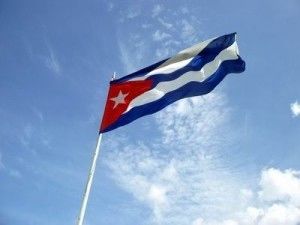
The world's first color TV broadcasting is in the United States, but in fact the second is Cuba and the third is Japan.
Source: www.nhk.or.jp
Cuba is a country that understands video so well that its leader, Castro, was an extra in Hollywood when he was young.

Source: www.apcjs.com
Because at the time of his arrest, he was still a "suspect" and not yet a criminal.
Source: detail.chiebukuro.yahoo.co.jp
If you're handcuffed, you're under physical restraint, and the viewer gets the impression that this person is a criminal.
Even if he is later found to have been falsely accused and acquitted, the image of a criminal does not disappear to those who see him.
So, at the suspect stage, we are mosaicing to protect human rights. However, this seems to be a self-regulation of TV stations.
Source: ja.wikipedia.org
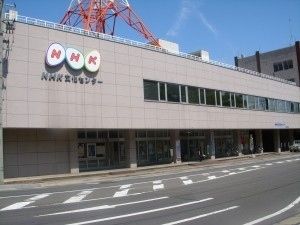
NHK defines black-and-white reception as' normal' and distinguishes color from' color.'
Source: tisen.cocolog-nifty.com
When color TV came out in the world, we made a difference in the reception fee, but it is still effective. For this reason, there is also a division called "satellite normal" which watches satellite broadcasting in black and white.
February 1st is a television broadcast day.
Source: www.nnh.to
On February 1, 1953 (1953), NHK Tokyo Broadcasting Station started the first full-scale TV broadcast in Japan.
Even if you only watch commercial TV, you have to pay NHK reception fee legally.
Based on the provisions of the Broadcast Law, the "NHK Broadcast Reception Regulations" have been established.
Once the receiver is installed, a receiver contract is signed without delay.
You are obliged to pay the broadcast reception fee.
Even if only commercial broadcasting is shown, it is applicable to receiving equipment and payment is made.
There is an obligation.

Source: www.amazon.co.jp
In Japan, there are no terms that are prohibited by law and other regulations.
Source: ja.wikipedia.org
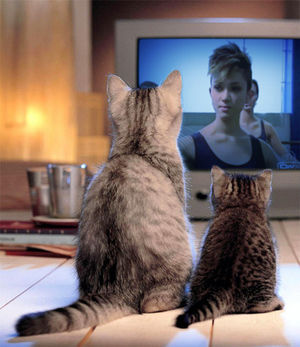
Japanese watch the most TV in the world
Source: ja.wikipedia.org
Statistics released at MIPTV, an international television show held in Cannes, France in 2005.
The longest TV viewers in the world were Japanese, who watched an average of five hours and one minute of TV each day.
The United States came in second with 4 hours and 46 minutes.
The global average is 90 minutes lower than the U.S.
China and Sweden came in last at 2:30.
People who watch TV for a long time die young?
Source: ja.wikipedia.org
According to Australian researchers
Compared with people who watch television for less than 2 hours a day
Those who spend more than four hours are 46 percent more likely to die from any cause.

Source: blog.seesaa.jp
On the 1st and 15th of every month, Nanbu Town in Saihaku District, Tottori Prefecture, runs a campaign called "No TV Day in the Town" to encourage the residents not to watch TV watch TV.
Source: ja.wikipedia.org
It aims to improve lifestyle habits and increase interaction between parents and children.

Source: blog.seesaa.jp
THERE WAS A SCRAMBLE AMONG THE BROADCAST OF Dr. SLUMP ARARE-CHAN.
Source: ja.wikipedia.org
