
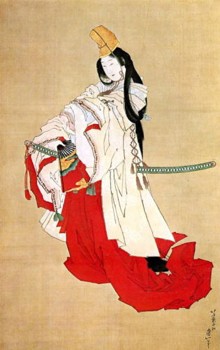
Ima-yoso is a subculture that is different from the high culture of waka poetry and Chinese literature. Emperor Go-Shirakawa, who is famous for having established the Insei government, loved this style so much that he compiled it into "Ryohin Hisho.
The origin of the name "Liangjin Hisho".

In ancient times, there were two men named Gu Gugong and Han Ga who had voices so beautiful that anyone who heard them could not help but shed tears. When they sang, the dust on the beams would fly up and not fall for three days...
The name is taken from a well-known saying.
Songs with strong personalities
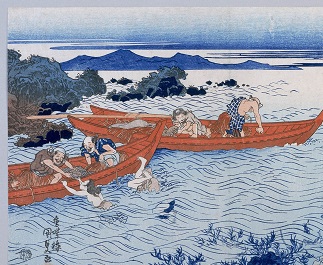
The sea people are there every morning and evening, gathering abalone shells.
My love is unrequited, like the abalone which the fishermen pick up from the sea in the morning and in the evening on the sea of Ise.
Abalone = wabi, a symbol of unrequited love in the songs of the time.
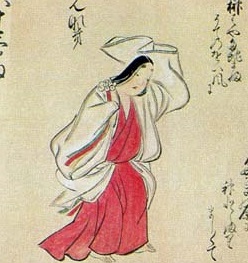
The bell is shaken above the eyes of the miko Todamiko, who shakes it loosely and shakily. If the bell is shaken below the eyes, it is said to be omitted, and the god is angry.
The priestess is shaking the bell above her eyes, but she's shaking it up, back and forth, and now she's shaking it below her eyes, as if she's tired.
A song about the impressions of spectators who saw a shrine maiden performing omagura and waving a bell. They are stingy, saying, "You should take it more seriously.
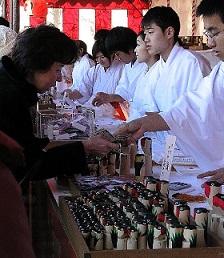
There are no women in the east (Kanto), or male miko, but the male gods possess them.
Is there no woman in Kanto? If so, does God choose a man?
In the past, shamanesses were called divine prostitutes. The term "male shaman" implicitly implies that she is a child of God. The word "male shaman" implicitly implies that he is a child of God.

I love you, I love you, I love you, I love you, I love you, I love you, I love you, I love you, I love you, I love you, I love you, I love you, I love you, I love you, I love you
Translation; I miss you, I miss you, I love you, I want to see you, I want to hold you, I want to see you, I want to hold you...
A love song from a woman's perspective. It reminds me of Kana Nish○.
summary
It was a little over 900 years ago, but many of the popular songs were love songs, and it was impressive that what they were saying was not so different from today.
