

Fujiko Fujio A. is often associated with black works such as "Laughs and Smiles. However, Fujiko-Fujio A. was actually a very sociable and cheerful person. This article summarizes his background, career, and representative works. Don't miss his relationship with Fujiko F. Fujio, with whom he formed a duo.
5. One of the residents of Tokiwa-so

Source: www.shogei.net
Tokiwa-so
It is famous for the residence of famous manga artists such as Osamu Tezuka.
A legendary wooden apartment that produced many famous manga artists who are left in the history of manga in Japan.
It existed from 1952 to 1982 at 3-chome, Minaminagasaki, Toshima City, Tokyo Prefecture.
On June 10, 1954 (June 10, 1954), FUJIMOTO invited Abiko to come to Tokyo and they said that unlike FUJIMOTO, who had no other choice but to go to Tokyo, Abiko, who had a stable life as an office worker, had a longing for newspaper companies. The first place where they lived was a two mat Japanese-style room rented from a relative's house in Abiko in Morishita, Koto Ward, Tokyo Prefecture.
Source: ja.wikipedia.org
After he moved to Tokiwa-so, his work rapidly increased as he worked on his own works and collaborated with members of the New Manga Party. He started to have six comic serials every month. The couple often helped Osamu Tezuka with his manga.
Source: ja.wikipedia.org
As Osamu TEZUKA left Tokiwa Villa, Fujiko Fujio and Osamu TEZUKA moved to the same room where Osamu TEZUKA was. At that time, they were delighted to be able to draw cartoons in Room 14 of Tokiwa Villa where Osamu TEZUKA, whom they had been longing for, was. Also, for the two of them who had no money, Tezuka paid the rent for the Tokiwa Villa and left the desk used by Tezuka to draw cartoons. Therefore, the cartoons they drew in the days of Tokiwa Villa were drawn on the same desk used by Tezuka.
Source: ja.wikipedia.org
The events at Tokiwa-so are described in detail in Fujiko Fujio's autobiographical manga' Mangado' (The Way of Manga) and its sequel' Ai … shirisoshimeshigoro ni …' (Love … shirisoshimeshigoro ni …).
6. Representative works

Source: www.7netshopping.jp
Ninja Hattori-kun
Period: 1964 - 1968 (1st period), 1981 - 1988 (2nd period)
The first period is serialized in the comic magazine "Shonen" (The Boy), and the second period is serialized in "Monthly Korokoro Comic" (Monthly Korokoro Comic). The story is about a boy Ninja Hattori-kun, a master of ninjutsu (ninja art), who comes to Tokyo from a hidden village in Iga Province for training and stays with the Mitsuba family, causing various disturbances. The story also introduces various ninjutsu (ninja art) while depicting his friendship with his child, Kenichi MITSUBA, who stays with him.

Source: www.amazon.co.jp
Monster.
The prince of Monster Land where various monsters live, Kabuto-kun takes Dracula, Werewolf, Frankenstein and others to his retainers, and with Hiroshi who became his friend, he plays an active role in the human world using mysterious power.

Source: www.amazon.co.jp
Pro Golfer Saru
Period: 1974 - 1980, 1982 - 1988 (New Pro Golfer Saru)
This is a series of golf comics published in "Weekly Shonen Sunday", "Bessatsu Korokoro Comic" and "Monthly Korokoro Comic". The main character, Saruya Sarumaru (alias: Saru), despite being a junior high school student, uses his amazing golf skills to compete with a group of shadowy professional golfers for prize money. In the early stages, the purpose was to convey the pleasure of golf to readers while explaining the terms of golf.

Source: www.amazon.co.jp
魔太郎 IS COMING!
Period: 1972 - 1975
This horror story was serialized in "Weekly Shonen Champion." 魔太郎 Urami, a typical junior high school student who has been bullied, is severely harassed every time by bullies and nonchalant people. However, 魔太郎 is actually a master of the supermagic "Urame Nenbo" and uses his specialty "Urame Nenbo" to carry out an occult and heroic revenge against them.

Source: www.amazon.co.jp
The Laughing Salesman
Period: 1968 - 1971, 1990 - 1995
It is a black humor comic book featuring Fukuzo MOGURO, an eerie and mysterious salesman.
Fukuzo MOGURO says, "I will fill the gaps in my heart," and gives people who have small or big complaints in their daily lives various things and opportunities to solve them. It is a story that satirizes human egoism, in which people who are given happiness (or its equivalent) for a while are provoked to desire in the sweet moment and fall to the bottom of misfortune as a result.

Source: www.amazon.co.jp
Mangamichi
Period: 1970 - 1972, 1977 - 1982, 1986 - 1988
An autobiographical comic by Fujiko Fujio. A youth story in which Michio MANA (modeled after Fujiko A) and Shigeru Saino (modeled after Fujiko F) aim to become manga artists. It was dramatized twice by NHK.
The sequel "Ai … shirisoshimeshigoro ni …" was serialized in "Big Comic Original Extra Edition" from 1995 to 2013.

Source: www.amazon.co.jp
Obake-no Q-taro (co-written with Fujiko F. Fujio)
It was serialized in "Weekly Shonen Sunday" between 1964 and 1966, and between 1971 and 1974.
This is a humorous manga about the life of Q' Taro, a ghost who came to the Ohara family and caused various disturbances. It was made into three animated cartoons.
Boyhood

Source: www.amazon.co.jp
Boyhood
Period: 1978 - 1979
This is a cartoon version of Hyozo Kashiwabara's "The Long Road." It is a moving story of Shinichi, who was evacuated from Tokyo during the war, spending time with the boys in the evacuation area. In 1990, it was produced by Fujiko himself and made into a film for the Toho family. Yosui Inoue's representative song, "Shonenjidai" (Boyhood), is the theme song of this film, and Fujiko A asked Inoue, who was her friend, to compose it.
Black Humor Short

Source: d.hatena.ne.jp
Black Humor Short
A group of short films based on black humor that began with the 1968 open-ended "Kuroi Seru Suman" (first published with this notation). Later, it was sublimated into serialized works such as "魔太郎 ga Kuru!" (Kuru is coming!), "Shadow Shokai Henki Ro" (Shadow Trading House), and "The Laughing Salesman."

Related Articles

What is Tokiwasou? History, anecdotes, trivia, cartoonists who lived there, members, and where it is located!
Tokiwa-so is a two-story wooden apartment building in Minami-Nagasaki 3-chome, Toshima-ku, Tokyo. Although the building was demolished in 1982 due to aging, it is still very well known as a "sacred place for manga. Even today, the Tokiwa-so Manga Museum and the Tokiwa-so Project have left their mark on the manga world. This article provides information about Tokiwa-so and the manga artists who lived there.
Read Article

Spoiler commentary and discussion of Laughing Man (anime, manga, drama)
The story is a black comedy manga created by Fujiko Fujio A. It is in the form of one complete episode each time a mysterious salesman, Moguro Fukuzo, fulfills the desires of modern people with problems and makes them pay for breaking his promises and advice. 1989, TBS; 2017, TOKYO MX, etc.; 1999, TV Asahi, etc, TBS in 1989, a TV anime on TOKYO MX, etc. in 2017, and a TV drama on TV Asahi in 1999. The series was broadcast on TBS in 1989, TOKYO MX in 2017, etc., and as a TV drama on TV Asahi in 1999.
Read Article

Spoiler commentary and discussion of Manga Road (manga and drama)
Manga Road" is an autobiographical manga by Fujiko Fujio and a drama based on it. It is a full-length coming-of-age manga about two boys, Michio Manga and Shigeru Saino, who aspire to become manga artists. Many real-life manga artists, such as Osamu Tezuka and Hiroo Terada, appear in the film. The publishers and magazines are also depicted as they were, making it a valuable record of the pioneering period of postwar manga. There is a sequel, "Ai...shirisome shikoro ni..." (Love...at the Time of Shirisome).
Read Article

忍者ハットリくん(藤子不二雄)のネタバレ解説・考察まとめ
『忍者ハットリくん』とは、1960年代中期~後半、1980年代に『少年』『月刊コロコロコミック』等で連載された藤子不二雄によるギャグ漫画作品。伊賀流少年忍者のハットリカンゾウが忍術修行の為に上京し、三葉一家のもとへ居候する事になる。そこへ同じくカンゾウの弟シンゾウや獅子丸ら伊賀流忍者、ケムマキケムゾウや影千代ら甲賀流忍者も上京し、日常での対立や騒動を引き起こしていくという内容。テレビドラマ、アニメ、実写映画化される程の人気作品となった。また国内のみならず海外でも配信され、知名度が高まった。
Read Article

Horrible traumatic times that shocked the hell out of LOL!!!
Manga work based on Fujiko Fujio A., known for "Ninja Hattori-kun" and other works. Mokuro Fukuzo is an unidentified salesman. He approaches people with various desires and grants their wishes. However, the people end up suffering like hell. Did you know that "Laughs and Smiles," which depicts human desires and foolishness, has a traumatic episode that has shocked many readers?
Read Article

An ordinary kid becomes a hero. Perman"
Fujiko F. Fujio's (hereinafter referred to as "Mr. F") works include "Doraemon," which is famous for its pattern of "a peculiar being staying at home," and "peculiar short stories" reminiscent of "Se Ni ni Bizarre Monogatari" (Strange Stories). Among them, Perman may be a little special.
Read Article

Obake no Q-taro (Oba-Q) Spoiler Commentary and Discussion Summary
Obake no Q-taro (Obake's Q-taro) is a slapstick gag manga and anime based on the manga by Fujiko Fujio that began serialization in Weekly Shōnen Sunday in 1964, featuring a "not-so-scary Obake. Q-taro appears on earth and takes up residence in the Ohara household after meeting Shota Ohara, but Q-taro's screw-ups and fumbling around cause everyone around him to play tricks on him, and in addition to laughing at his slapstick antics, there are times when Q-taro's kindness can sometimes be read into his humane nature.
Read Article

Spoiler commentary and discussion of Doraemon: The History of Nobita's Spaceblazer (film).
Doraemon: The History of Nobita's Spaceblazer" is the second feature-length animated film based on Fujiko F. Fujio's "Doraemon," which was released in March 1981. The adventure begins when the room of Nobita Nobi (Nobita Nobita), a fifth grader, and Doraemon, a cat-shaped robot who lives with him, are connected to the planet Koya Koya, where the pioneer immigrants Ropple and Chummy live. The film is known for its veteran voice actors playing guest characters, and a remake, "Doraemon the Movie: The New Record of Nobita's Spaceblazer," was released in 2009.
Read Article
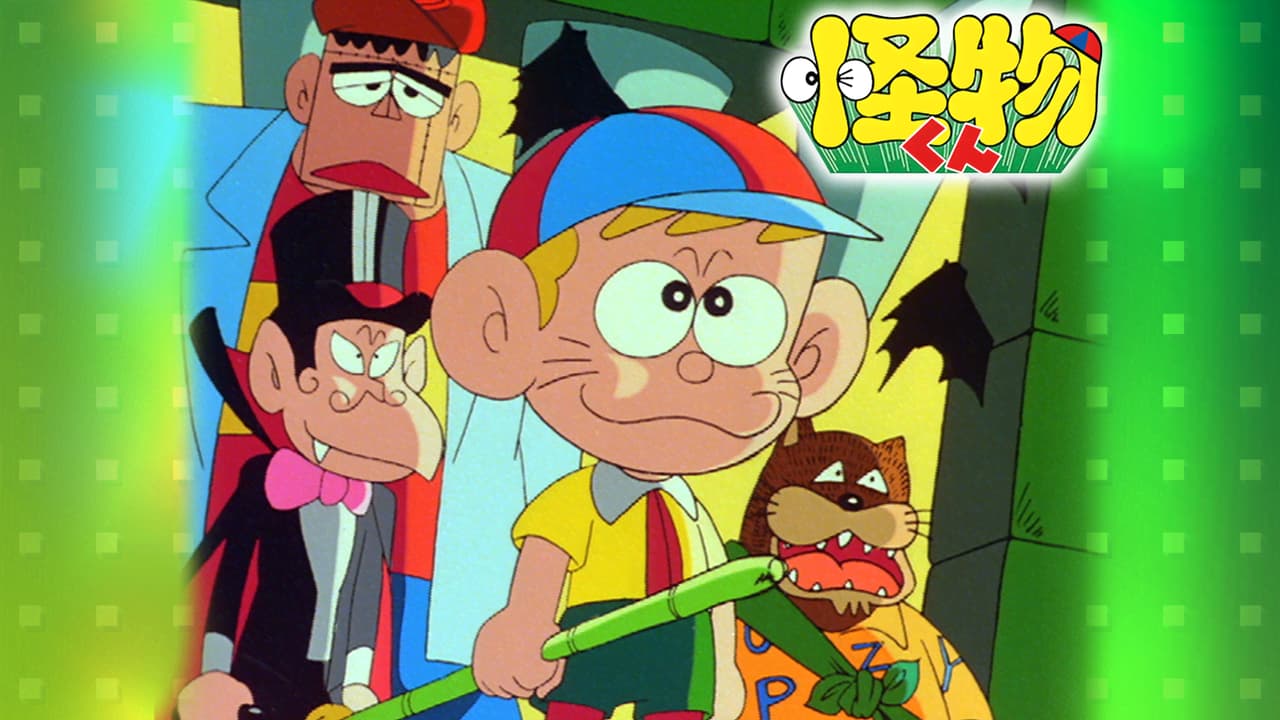
怪物くん(藤子不二雄)のネタバレ解説・考察まとめ
『怪物くん』とは、1960年代中期~後半、1980年代前半に『少年画報』『月刊コロコロコミック』等で連載された藤子不二雄によるギャグ漫画作品。怪物界の王子の怪物くんは王位継承修行の為に、3人の怪物達と共に人間界へやって来る。小学生の市川ヒロシと出会い友情を深める一方、世界征服を企む悪魔怪物達との対決を展開するという内容。モノクロ・カラーアニメ版も放送され人気となり、2010年代には実写ドラマ・映画化され再び話題となった。
Read Article
![Fujiko Fujio A] Actually, it's Deep! Fukuzo Mokuro's famous lines and quotes [Fujiko Fujio A](https://renote.net/files/blobs/proxy/eyJfcmFpbHMiOnsiZGF0YSI6NTcwNzIzMiwicHVyIjoiYmxvYl9pZCJ9fQ==--dc9270137659303f5bc7787bd686b1f58122f0f6/C8fqTMMUIAAyjnj.jpg)
Fujiko Fujio A] Actually, it's Deep! Fukuzo Mokuro's famous lines and quotes [Fujiko Fujio A
The eerie, yet somehow strangely fascinating work "Laughing Man" is a work of art. The main character, Fukuzo Mokuro, has many great lines and quotes in the story. Surprisingly, many of them are profound statements that make you think, "I see. We have carefully selected and collected his best lines and quotes from the anime version. Can you fill in the gaps in your heart?
Read Article

Introducing the times Mokuro Fukuzo, the main character of Laughing Man, helps people! Happy endings only 5 times!
Laughing Man" is a well-known masterpiece by Fujiko FujioⒶ. The story is told in a complete story format, with basically no redeeming qualities for anyone. However, there are a few happy endings in "Laughshelf Man. What kind of person did Fukuzo Mokuro really help?
Read Article
![Manga Road] That autobiographical masterpiece manga has been turned into a drama! Fujiko Fujio A.](https://renote.net/files/blobs/proxy/eyJfcmFpbHMiOnsiZGF0YSI6NTcwNzc1MCwicHVyIjoiYmxvYl9pZCJ9fQ==--c0d830e6ac22911652d1395adb15c21da677737d/20200425204707.jpg)
Manga Road] That autobiographical masterpiece manga has been turned into a drama! Fujiko Fujio A.
Manga-do" is Fujiko Fujio's autobiographical coming-of-age manga about two boys who aspire to become manga artists. It is a very long work, and if sequels are included, it was serialized for a whopping 43 years. It is divided into "Asunaro," "Risshi," "Seiun," "Shunrai," and "Ai...Shirisome Shikoro ni..." (Ai...in the Shirisome Period...). Please enjoy the tumultuous lives of these two cartoonists, who shared the same pen name "Fujiko Fujio," in the drama as well.
Read Article
![Pro Golfer Monkey] No longer a human occupation! Special Technique Masterpiece [Fujiko FujioⒶ].](https://renote.net/files/blobs/proxy/eyJfcmFpbHMiOnsiZGF0YSI6NTU3OTQ1NSwicHVyIjoiYmxvYl9pZCJ9fQ==--0ebb3e16e8bc6e99a7ea6778072fce7b7c067e49/d0130291_23311433.jpg)
Pro Golfer Monkey] No longer a human occupation! Special Technique Masterpiece [Fujiko FujioⒶ].
Fujiko FujioⒶ's masterpiece "Professional Golfer Monkey. Known as the first golf manga for boys, it was popular for its unique characters and golf courses. In "Professional Golfer Monkey," there are a wide variety of special moves. All of them are quite human, so good kids should not copy them.
Read Article

Who is Fukuzo Mokuro? The identity of the mysterious man and his famous words [Fujiko FujioⒶ].
Fukuzo Mokuro is the main character in Fujiko FujioⒶ's masterpiece "Laughing Man". Many people may have been traumatized by his eerie appearance and behavior, as well as his memorable words, "Dawn! may have traumatized many people. In this article, we will explain the secrets, true identity, and famous words of Mourukuro Fukuzo all at once.
Read Article

The best of Mukuro Fukuzo's images! Once you get hooked, you can't get out! Fujiko Fujio A.
Fukuzo Mukuro, the mysterious salesman feared (?) across generations as the main character of "Laughs. Fukuzo Mukuro is a mysterious salesman. Although his appearance is eerie, he has a surprisingly large number of fans. In this article, we have collected images of Fukuzo Mokuro. If you get hooked on his charms, which seem cute if you look closely enough, you may never get out of them!
Read Article

Fear! Collection of LINE Stamps by Fukuzo Mokuro [Fujiko Fujio A
Fujiko Fujio A.'s work "Laughs" boasts deep-rooted popularity that transcends generations. The characters of "Laughsell Suman" are now available as LINE stamps! The main character, Fukuzo Mokuro, is of course a main cast member. The recipients of this LINE Stamp will definitely be traumatized.
Read Article
![Bokura] Caution! A compilation of scary anime that are sure to depress and traumatize you [Bokura no].](https://renote.net/files/blobs/proxy/eyJfcmFpbHMiOnsiZGF0YSI6NzU5MDg3MSwicHVyIjoiYmxvYl9pZCJ9fQ==--cc204f5a08a995688080708f9a6c7b90dd0ccc0f/x720.jpg)
Bokura] Caution! A compilation of scary anime that are sure to depress and traumatize you [Bokura no].
Japanese anime culture has always been of a very high level and has produced many masterpieces. Among them, there are many with dark content, those with a bad aftertaste, and those with scary scenes that inevitably cause trauma. This article summarizes such depressing anime. These works are sometimes cute in design, but that makes them even more eerie...
Read Article
![Pro Golfer Monkey] Dangerous! Amazing Special Moves [Fujiko Fujio A.](https://renote.net/files/blobs/proxy/eyJfcmFpbHMiOnsiZGF0YSI6ODYzMTI4MiwicHVyIjoiYmxvYl9pZCJ9fQ==--808d0698122a7aa7e0aefc5f41fa483e7d3436d9/x1080.jpeg)
Pro Golfer Monkey] Dangerous! Amazing Special Moves [Fujiko Fujio A.
Fujiko Fujio A.'s famous work "Professional Golfer Monkey". In this work, numerous special shots appear. This article summarizes the "Flag Tsutsumi" and "Shrike Drop," special moves used by the main character, Monkey. If you have started playing golf as an adult, you will understand how great they are!
Read Article

The complete DVD-BOX of [Laughs] is now on sale! You can no longer escape! Fujiko Fujio A.
Laughs and Smiles" was first made into an anime in 1989. This work, which sharply exposes the darkness and ego of human beings, is a work that makes us think deeply about "the human way of life," despite its horrifying content. In 2014, "Laughsome Suman" was finally released on DVD! You know it will traumatize you, but you can't help but want it, and you may be doomed to no longer escape from the main character, Fukuzo Mokuro!
Read Article

The newest and most popular anime works Comparison of Old and New Anime Works [Fujiko Fujio A
Laughs and Smiles" is known as a work that leaves a strong trauma in the hearts of viewers, both children and adults alike. Its eerie and dark content may have left many people thinking, "I'll never watch that again! I'll never watch it again! This article introduces the old and new "Laughcell Suman" anime productions. Even though times have changed, scary things are still scary!
Read Article

The new voice actor who plays Mokuro is Tetsusho Genda [Fujiko Fujio A]. The new voice actor playing Mokuro is Tetsuaki Genda [Fujiko Fujio A].
Fujiko Fujio A.'s "Laughs and Smiles," known for its black humor manga, is being voiced by Tetsuaki Genda in the 2017 anime adaptation, replacing the late Toru Ohira, who had previously played the role of Fukuzo Mokuro. Even though the voice actor has been replaced, the "Dawn! is still as scary as ever!
Read Article

Tools "I don't want" in "Doraemon
"What tools do you want at Doraemon?" We sometimes hear this question, but on the other hand, we also hear the question, "I definitely don't want this one tool! Even if I could have all of the tools from the pockets and all of the works, I would definitely throw this one away! Even if I could have all the tools that appeared in the work, including the pockets, I would definitely throw this one away! Please take a look at some of these "unwanted" tools.
Read Article

A compilation of gaffes & outbursts & other hilarious statements from the cartoon "Doraemon".
Doraemon" is a well-known cartoon character, but did you know that the cartoon "Doraemon" and the animated TV series "Doraemon" actually say completely different things (under the strict supervision of our BPO)? In this article, we have excerpted the frame scenes of the real "Doraemon" as he is depicted in the cartoon "Doraemon.
Read Article

Doraemon" is no longer a joke! Secret Tools
The "secret tools" in the popular national anime and manga "Doraemon" are all very attractive. The "Dokodemo Door" and the "Takekoputaa" are all things that every human being would like to have! They are all things that any human would want to have. However, there are also "jokey secret gadgets" among them. I have compiled a list of them, because they were terrible when I opened the lid, and there were a large number of them.
Read Article

Fujiko F. Fujio Museum's popular souvenirs. It's a waste to give them away!
The Fujiko F. Fujio Museum is located in Kawasaki City, Kanagawa Prefecture. The museum is a facility where visitors can experience firsthand the history of Fujiko F. Fujio, the creator of "Doraemon" and many other popular works. What you will want to buy at the Fujiko F. Fujio Museum are souvenirs! Here are some souvenirs that are so cute and unique that it would be a shame to give them away.
Read Article

Time Patrol, over here! Violations regarding the history of "Doraemon
I often hear people say that it is already a violation when Doraemon came to Nobita's place, but I also see quite a few other actions that make me want to say, "Aren't you altering history, hey?", Dora-san.
Read Article

The cause of the feud between the two? Thorough explanation of why Obake's Qtaro is out of print [Obake no Qtaro].
Obake no Q-taro," the classic manga known by the abbreviation "Oba-Q" (Obake's Q-taro). Created by two cartoonists with the joint pen name Fujiko Fujio, "Obake no Q-taro" has been out of print for a long time despite its extreme popularity. This article explains why.
Read Article
![Fujiko F. Fujio] Very Black! Seven Masterpiece Short Manga](https://renote.net/files/blobs/proxy/eyJfcmFpbHMiOnsiZGF0YSI6NTY2ODgyNywicHVyIjoiYmxvYl9pZCJ9fQ==--2c711fe1040a7bb018377f78fec5d2d08f944de7/y_61124c2af20ff.jpg)
Fujiko F. Fujio] Very Black! Seven Masterpiece Short Manga
Doraemon" is a nationally popular work loved by children and adults of all ages. Fujiko F. Fujio, known as the creator of "Doraemon," is actually famous as a master of science fiction manga, and many of his works are full of irony and satire with black content. We have collected such masterpieces of short manga by Fujiko F. Fujio.
Read Article
![Fujiko F. Fujio] Predicted a new type of coronavirus! [Midori no Mamorujin]](https://renote.net/files/blobs/proxy/eyJfcmFpbHMiOnsiZGF0YSI6NTkwODUzNSwicHVyIjoiYmxvYl9pZCJ9fQ==--5de73b24dfc4871544158ffa3cbd58e736a38471/EWl6loKU8AEUkYO.jpg)
Fujiko F. Fujio] Predicted a new type of coronavirus! [Midori no Mamorujin]
The new coronavirus has been raging around the world since 2019. There is a manga that seems to have predicted the coming of such an era. The work is "Midori no Mamorujin" (The Guardian God of Green). It is a collection of complete short stories by Fujiko F. Fujio, in which a mysterious bacteria spreads at a frightening speed. It is a work that should be read only now.
Read Article
![Fujiko F. Fujio] A collection of quotes and lines that stick in the mind.](https://renote.net/files/blobs/proxy/eyJfcmFpbHMiOnsiZGF0YSI6NTkwMDU5NSwicHVyIjoiYmxvYl9pZCJ9fQ==--eeb565095223adf8442c727ab32af6ef52afdc46/fujiomeigen.jpg)
Fujiko F. Fujio] A collection of quotes and lines that stick in the mind.
Fujiko F. Fujio has created numerous masterpieces. What was in the mind of this genius manga artist and what did he want to convey to us? Fujiko F. Fujio's life and way of thinking are sometimes told through the characters in his works. In this article, we have collected some of the best quotes and lines left by one genius manga artist. Did any of them stick in your mind?
Read Article
Perman] The Original! The Flying Hero! Fujiko F. Fujio
Perman" is known as one of Fujiko F. Fujio's masterpieces. The plot, in which the dull protagonist boy transforms into a hero of justice, is not unusual today, but at the time, many children must have been excited by the story. This article introduces the original (?) superhero "Perman. superhero "Perman".
Read Article

Fujiko F. Fujio: The world is not only fun! A collection of black works
Fujiko F. Fujio has created many masterpieces of science fiction, including "Doraemon," "Perman," and "Kiteretsu Encyclopedia. Many of them are cheerful and enjoyable even for children. However, in fact, some of Fujiko F. Fujio's works are so black that it is hard to believe that they were created by the same person. In this article, we have collected such eerie works by Fujiko F. Fujio.
Read Article
![Kaibutsu-kun] Review is ready! Let's review the synopsis of the drama [Satoshi Ohno]!](https://renote.net/files/blobs/proxy/eyJfcmFpbHMiOnsiZGF0YSI6NTY2MjYwNywicHVyIjoiYmxvYl9pZCJ9fQ==--c40757a0495c3a60e2537a61f0f925f4e9999895/EhI2phZVgAA-ZWC.jpg)
Kaibutsu-kun] Review is ready! Let's review the synopsis of the drama [Satoshi Ohno]!
The drama "Kaibutsu-kun" became a hot topic of conversation when Satoshi Ohno starred in it. Such "Kaibutsu-kun" is also a big hit in the movie! This article introduces the synopsis of the drama version and the highlights of the movie. For those who have seen the drama, please refer to this article as a review, and for those who have not yet seen the movie, please refer to this article as a preliminary knowledge.
Read Article
![Obake no Qtaro] Very unreachable! Highly traded comics [Obake no Q].](https://renote.net/files/blobs/proxy/eyJfcmFpbHMiOnsiZGF0YSI6NTU3ODkyNywicHVyIjoiYmxvYl9pZCJ9fQ==--113803f2ab627a045f408cfcb3fd891d05d2681a/D0fepr3UYAAmMus.jpg)
Obake no Qtaro] Very unreachable! Highly traded comics [Obake no Q].
Obake no Q-taro" captivates people with its adorable characters. In fact, this work was drawn to support the finances of an animation studio established by manga artists from Tokiwaso. If you knew the amount of money that was traded for the comics, your eyeballs would pop out of your head.
Read Article

I'll be on the edge of my seat until I see it, and when I see it, I'll be on the edge of my seat! Applause for guts! A collection of live-action manga adaptations
Most of the images of manga works are animated, but there are also live-action versions of some works, performed by live actors. But some of them make me think, "Why bother with live-action!" and some of them almost make me want to get on board. We have compiled a list of such courageous "live-action works based on manga".
Read Article

Kaibutsu-kun: A lot of people are hooked on him! Cool but Cute Satoshi Ohno Images and Videos
Satoshi Ono stars in the drama "Kaibutsu-kun. Despite his cute appearance, the music video for the theme song "Monster" shows a cool Satoshi Ohno. Many of you may have had your hearts pierced by such a gap between him and the audience. This article introduces images and videos of Satoshi Ohno as a monster.
Read Article
Contents
- Occupation: Manga artist / Fujiko Fujio
- March 10, 1934 Real name: Motoo Abiko (Motoo Abiko)
- Draw
- 1. Son of the chief priest
- 2. Fujiko F. Fujio (Hiroshi Fujimoto) is an elementary school classmate
- 3. Worked for a newspaper company
- 4. Vegetarian
- 5. One of the residents of Tokiwa-so
- 6. Representative works
- Boyhood
- Black Humor Short