

This is a summary of the Count of Saint Germain, a figure who is whispered to be a time traveler and immortal. He is said to be the illegitimate son of Queen Marie-Anne de Nebourg of Spain and Count Melgar, a nobleman, but he is famous as a person who has been sighted at various times. We will examine the mystery of the Count of Saint Germain by introducing various anecdotes about him, including the testimony of Louis XV.
What is the Count of Saint Germain?
She is said to have been the illegitimate daughter of Queen Marie-Anne of Spain and Count Melgar, a nobleman.
The financial security and high level of education and culture that he enjoyed throughout his life can be largely attributed to his origins. In terms of his education, his contemporaries appreciated his knowledge of various fields, not limited to chemistry, as well as his skill as a musician and his excellent artistic talent.
However, his life in the first half of his life is extremely uncertain, and it is not until after 1758, when he was active in French society, at the age of 67, that his true identity becomes clear. However, it is also unclear whether this age is correct, as he was only in his 40s or earlier when he was active in French society.
Source: ja.wikipedia.org
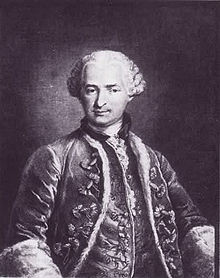
Source: ja.wikipedia.org
his alias
He is also known as "the immortal superman," "the alchemist who knows the secret of immortality," and "the time traveler who travels through time and space.
Source: www.never-world.com
The story of Countess Gerge
There were many witnesses at this time, among them the Countess de Gerge, a French noblewoman. She testified that she had indeed met the Count de Saint Germain in Venice in 1710, the same year as the composer Rameau.
At that time he was between 45 and 50 years old. He must have been the Count of Saint Germain.
About 40 years later, at a party given by the Duchesse de Pompadour in Paris, she met the Count again and was astonished to the point of being stunned. She was stunned to see the same man, not a bit older, appear before her again.
She said, "Well, you look just like the man I met when I was in Venice, but it's been 40 years. But that was 40 years ago. ...... Do I have the wrong person?"
The Count of Saint Germain is said to have replied to her.
I am indeed that Saint Germain whom you met in Venice some 40 years ago, madame. I swear it. You were very young at the time, and your husband was the Italian ambassador.
Yes. But he looked about the same age as you are now. ......
"I may look the same, but I am actually very old. ......
http://inri.client.jp/hexagon/floorB1F_hsg/_st_germain.html
The Story of Louis XV
In 1748, the Austrian ambassador residing in France to King Louis XV,
"A curious personage, the Count of St. Germain, is here in France, and I would like you to see him." The Austrian ambassador to France suggested to King Louis XV that he should meet the Count of Saint Germain.
Louis XV was bored. Louis XV seemed interested.
I don't know what kind of man he is. He is unrivaled in alchemy and chemistry, he has even produced an elixir of immortality, and is said to be a man of great wealth.
Louis XV did as he was advised and met with the Count of Saint Germain.
On the day of the meeting, the Count of Saint Germain appeared before Louis XV, a man in his 40s, well dressed and gentlemanly in his speech.
He bowed to Louis XV, took something out of his pocket, and put it on the table in pieces. He looked at them and saw that they were all diamonds.
This is a gift for his Majesty. Please accept them.
Where did he get these diamonds? Where did you get such a magnificent thing?
I did not buy them. I made them.
The Count said simply.
This diamond incident made the Count of St. Germain a topic of conversation in various social circles in Paris. The Count himself attended various parties and told mysterious stories to the aristocrats.
On one occasion, he began talking about Richard, the medieval king of England, and reminisced about his participation in the Crusades with him (the Third Crusade = 1189-92).
When those listening looked at him doubtfully, the Count looked back at his servant,
You remember, don't you? Explain to him that I am telling the truth.
The servant replied, "That's impossible, sir,
The servant replied, "That's impossible. I have only been in the Count's service for 500 years (some say 300 or 100 years).
Oh... that's right. That was before you came.
And so on.
http://ww5.tiki.ne.jp/~qyoshida/kaiki/94sunjelman.htm

Source: www.jbook.co.jp
Various anecdotes
◆He could use his right and left hands equally well, and when he wrote letters separately with both hands and overlapped them, they fit perfectly.
He was a great collector of diamonds and wore diamonds not only on his rings but also on his chained wristwatch, snuff box, and even on his shoe clasps.
He had a factory in Venice where he wove silky cloth from flax yarn. He had a factory in Venice that wove silky cloth using flax yarn, a technique he had developed and in which he employed about 100 workers.
A painter of rare talent, he was renowned for his ability to capture the brilliance of gemstones on canvas. He was able to produce amazingly bright colors, which is said to be due to the mixture of pearls in his paints.
He always appeared to be between 40 and 50 years old, but he had no wrinkles and showed no signs of physical deterioration. His demeanor was graceful and dignified, but not awe-inspiring; it was the kind of demeanor that made one shy away. He was polite and refined.
He had the ability to see a person's question before they asked it. Telepathically, he could sense when he was needed in a distant city or country.
◆ He was fully versed in the esoteric principles of the Orient, practiced meditation and concentration, and on several occasions sat zazen in a Hindu-like posture. Alternatively, he had a hermitage in the heart of the Himalayas, where he sometimes lived away from the world. He remained in India for 85 years for training.
http://inri.client.jp/hexagon/floorB1F_hsg/_st_germain.html
This marvelous man also had the power to see through the inquisitor's questions in unparalleled detail even before they were asked. He could sense when he was needed in distant cities and nations by a kind of telepathy, and he had the remarkable habit of not only appearing in his own room or in that of his friends, without the use of doors, but of leaving from it in the same manner."
Source: blog.goo.ne.jp
He has a small but well-groomed figure, a gentle manner, refined conversation, and vast knowledge.
He spoke not only French, but also English, Spanish, German, Russian, Portuguese, Hebrew, Persian, Arabic, Sanskrit, and Chinese, and was an expert at playing musical instruments and painting.
What's more, he had some extraordinary things to say.
He said that he had been there when Alexander the Great entered the Babylonian capital, as if he had seen it firsthand.
When I asked one of his servants about it, he replied, "I have only known the Count for 300 years.
When Casanova was invited to his laboratory, he was told that when he placed a copper coin on the board, it burst into flames and turned into a gold coin.
It is also said that he predicted their fate to Louis XVI and Marie Antoinette, who turned a deaf ear to his repeated warnings, and told them in detail about trains and airplanes, which did not exist at that time.
When a French noblewoman met him for the first time in 40 years, she was surprised to see him looking much the same as before.
Even after he was presumed dead in West Germany in 1987, there has been no end to the number of people who have claimed to have seen him.
Source: www.kdn.gr.jp
He also once told me that he would not die because he was drinking a special water called Elixir.
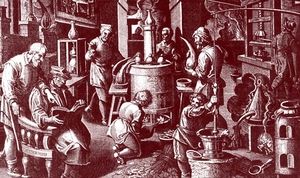
Source: rikanet2.jst.go.jp
The Count who dies and comes back to life
What is curious is that the Count of Saint Germain, who was immortal, died in Germany in 1784, according to one record.
Once back in France in 1775, he met Louis XVI and Marie-Antoinette and gave them some advice, as evidenced by the overthrow of the monarchy in the French Revolution of 1789, which was doomed to destruction if left unchecked. But his efforts to persuade them were unsuccessful. Not only that, he was almost arrested and put in jail.
He fled to Germany, where he lived and studied alchemy at the residence of Count Kassel. In 1784, he died suddenly in a room of the house. Some say that the cause of death was rheumatism and depression.
However, it is not clear how certain this story is. The Count of St. Germain had appeared before the public on several occasions after this.
After the capture of the Bastille prison on July 14, 1789, Marie-Antoinette received an anonymous letter containing a final piece of advice that could only have come from the Count of Saint Germain.
During the Revolution, he appeared in many places in Paris, most frequently in the Place de la Clève, where the guillotine was located.
Even in the 19th century, there was no end to the number of witnesses who claimed to have seen the Count of Saint Germain.
http://flamboyant.jp/alchemy/alch12/alchemy012.html
Disappeared Count's Footprints
Napoleon III, who had joined the Carbonari party, took an interest in Saint Germain and ordered the police to collect documents and other materials related to him at the Tuileries Palace. The documents were destroyed in a fire that ravaged the palace in 1871, and it is said that most of St. Germain's footprints were lost at this time.
Source: ja.wikipedia.org
Who was the Count of Saint Germain?
According to one theory, Count St. Germain was a spy sent to France on the secret orders of King Friedrich II, who entered the French court to conduct secret political operations. He often traveled throughout Europe, all for the purpose of political maneuvering.
According to another theory, he was a member of the Rosicrucian Order, a secret society, and was also engaged in political maneuvering in various parts of the world on a secret mission. Since the Rosicrucians are a secret society with an extremely alchemical natural philosophy, this is very likely.
Source: flamboyant.jp
Did they have special telomeres?
Scottish biologist's theory. Genes exist in animal cells. When it divides,
When the cell divides, the telomeres at both ends of the cell shorten and eventually disappear, and division ceases. This is aging.
However, if the gene is in the form of a ring, it does not shorten, and although it cannot reproduce, it is theoretically immortal.
According to him, five such people have been born so far, based on probability.
Source: yoshizokitan.blog.shinobi.jp
