
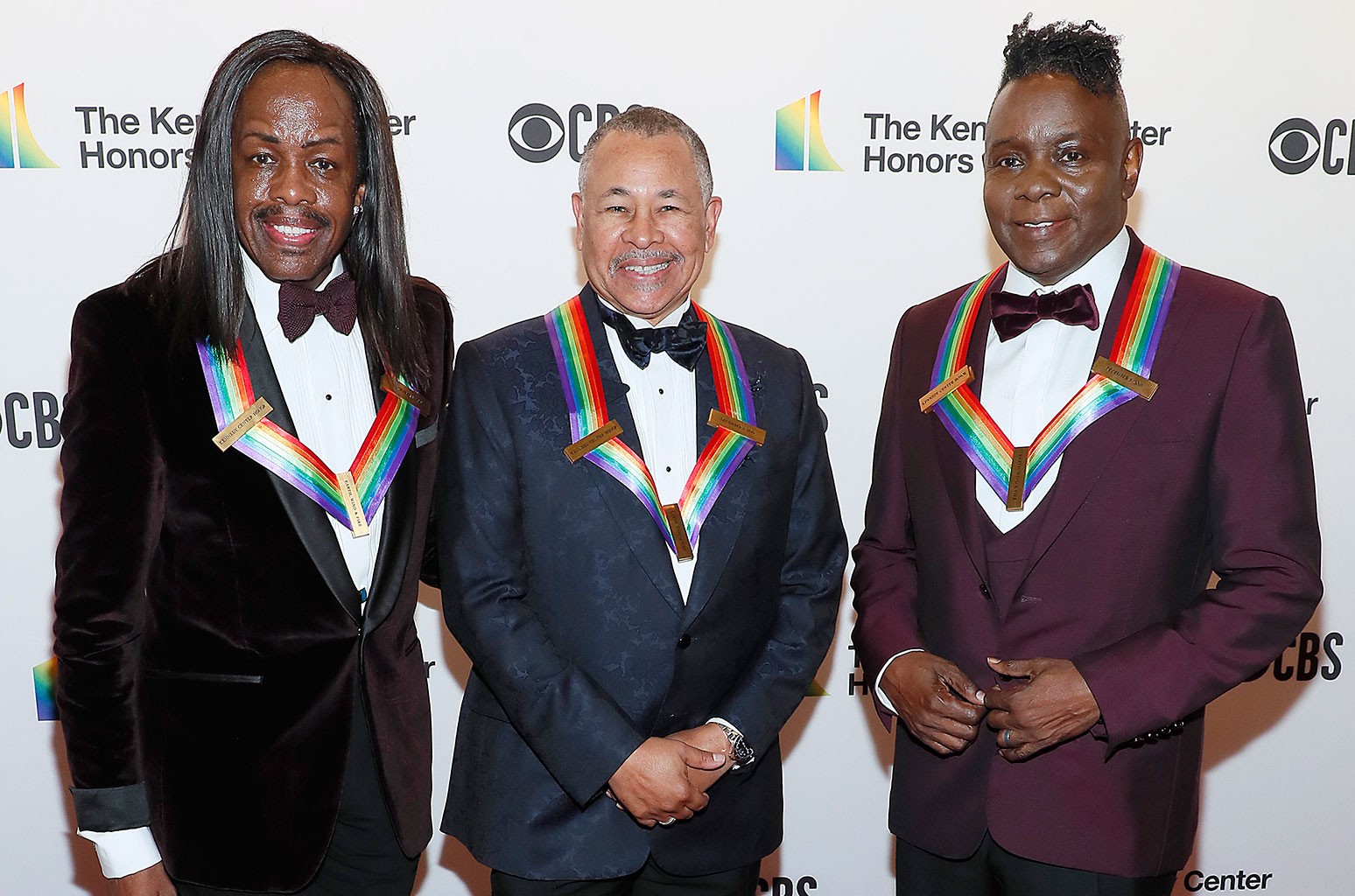
Earth Wind & Fire is a black R&B, funk, disco, and Afro-pop group formed in Chicago in 1969 by founder Maurice White. The group had many hits, including "Shining Star," "Cosmic Fantasy," "September," "Boogie Wonderland," and "Let's Groove. "Maurice White passed away in 2016, but Philip Bailey succeeded him, and the ultra-band is still active more than 50 years later. The band has won six Grammy Awards and has sold approximately 90 million records worldwide.
Overview of Earth, Wind & Fire (Earth, Wind & Fire)
Earth Wind & Fire is a black R & B, funk, disco, and afropop group that was formed in 1969. It is said to be one of the greatest bands that mankind has ever produced. In 1969, its founder Maurice White formed the group "Solti Peppers," which later changed its name to "Earth Wind & Fire." The group made its record debut with Warner Bros. in 1970. In 1972, it completely replaced all the members except for the Maurice & Verdine White brothers and added new members such as Philip Bailey to make a fresh start from Columbia Records.
It gained worldwide popularity with its catchy melodies, vocal duels with Maurice White and Philip Bailey's Falsett Voice, and gorgeous disco sound featuring a horn section. It has received six Grammy Awards and has sold about 90 million copies worldwide, including hits from the 70s such as "Shining Star," "Space Fantasies," "September" and "Boogie Wonderland," and "Let's Groove," a dance tune representative of the 80s. On February 3, 2016, leader Maurice White passed away after a long battle with Parkinson's, prompting comments from fans and celebrities around the world to commemorate his death. It was followed by a Grammy Award for Distinguished Service.
Even now, the band continues to liven up with the likes of Philip Bailey, Verdine White and Ralph Johnson, and is gaining new fans.
History of Earth, Wind & Fire (Earth, Wind & Fire) activities
1969-1970 Creation period
Earth Wind & Fire co-founders Wade フレモンズ, Sherry Scott and Maurice White
In 1969, Maurice White, a former Chess Records session drummer and former member of the Ramsey Lewis Trio, formed ソルティーペパーズ with two friends Wade Lemons and Don Whitehead in Chicago-making the single "La La Time" a hit from Capitol Records. Salty Peppers' second single failed, and Maurice moved from Chicago-to Los Angeles-where he brought his brother Vedine to the city, along with Chicago-born singer Sherry Scott and percussion player Yakoff Ben Israel. On June 6, 1970, ヴァーダイン joined the band as a bassist. The band eventually signed Warner Bros. Records.
Early 1970-1974
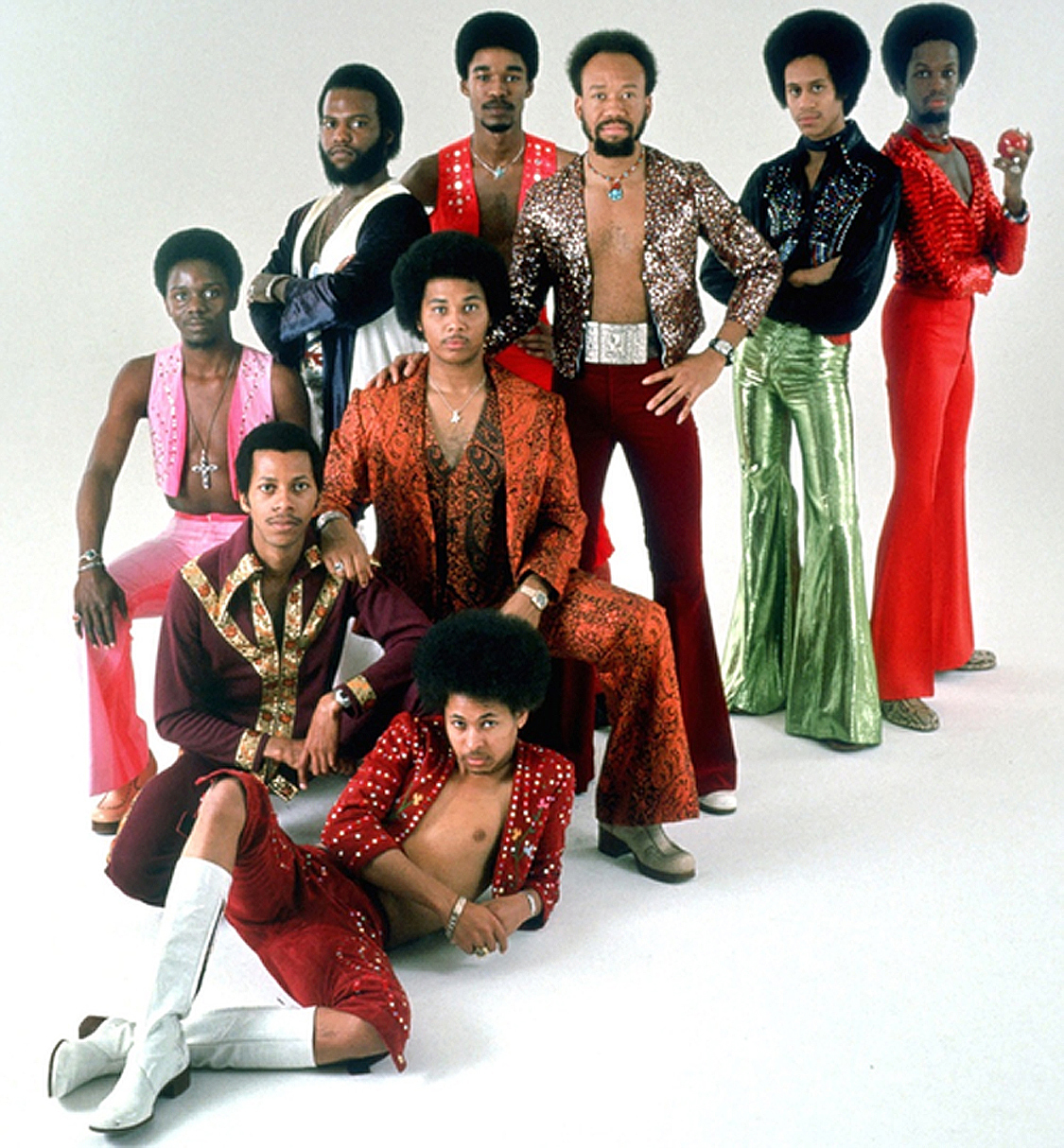
In the early' 70s, EWF moved to Colombia and became an eight member squad.
According to astrology, the band changed its name to "Earth Wind & Fire" because Maurice could see the elements of earth, air, and fire. Maurice held more auditions in L.A. and added Michael Beal on guitar, Chester Washington on reeds (mouthpiece), Leslie Drayton on trumpet, and Alex Thomas on trombone, completing the 10-member EWF lineup. Maurice played percussion but shared lead vocalist duties with Leslie Drayton, and their self-titled debut album, Earth Wind & Fire, was released on Warner Bros. in February 1971. The album reached #24 on the Billboard Top Soul Albums chart. The Detroit Free Press said, "I don't know what to call this group. Afro-gospel, jazz, blues rock?" He stated.
Around 1970, Melvin Van Peebles, a playwright/poet and noted radical, entrusted EWF with the soundtrack to his low-budget film Sweet Sweetback, which was released in April 1971 and was the Billboard Top R&B Album It was an unexpected hit, reaching #13 on the Billboard Top R&B Albums chart.
In November 1971, EWF's second album, The Need of Love, was released and reached No. 35 on the Billboard Top Soul Albums chart. After the release of the second album, however, Maurice replaced all the members of the band, leaving only his brother Verdine. 1972 saw Maurice join vocalist Helena Davis, Ronnie Laws on flute and saxophone, rhythm guitarist Roland Bautista, keyboardist Larry Dunn, vocalist Phillip Bailey, keyboardist Larry Dunn, and drummer Philip Bailey, and the rest of the band. Vocalist Philip Bailey and percussionist Ralph Johnson joined the group. Clive Davis, then president of Columbia Records, was so impressed by EWF's performance at New York's Rockefeller Center that he purchased the contract from Warner Brothers, and EWF moved to Columbia.
In October 1972, CBS/Columbia Records released Last Days and Time (Last Days on Earth). The album reached #15 on the Billboard Top Soul Albums chart. Shortly thereafter, Roland Bautista and Ronnie Laws left the band to pursue their own musical opportunities. In Roland Bautista's place, rhythm guitarists Al McKay and Johnny Graham were added as new members.EWF's fourth studio album, Head to the Sky, was released in May 1973. The album reached #2 on the Billboard Top Soul Albums chart, #27 on the Billboard 200 chart, and the album went platinum (1 million copies) in the United States. The single "Evil" reached #19 on the Billboard Adult Contemporary Songs chart and #25 on the Billboard Hot Soul Songs chart. Keep Your Head to the Sky" also reached #23 on the Billboard Hot Soul Songs chart. Jessica Cleeves left the band after the release of this album.
In March 1974, "Open Our Eyes Sun Incarnate" was released, co-produced by Maurice and Joe Weissert. The band toured with War and other groups that were also becoming popular at this time, and gained support from both black and white audiences. The album reached #1 on the Billboard Top Soul Albums chart, #15 on the Billboard 200 chart, and was a platinum disc. The single "Mighty Mighty" reached #4 on the Billboard Hot Soul Songs chart and #29 on the Billboard Hot 100 chart. The song "Karimba Story" reached #6 on the Billboard Hot Soul Songs chart, and "Devotion" reached #23 on the Billboard Hot Soul Songs chart and #33 on the Billboard Hot 100 chart. After the release of this album, Maurice's brother Fred White joined the band.
On April 6, 1974, EWF played the California Jam, a West Coast rock festival that drew 200,000 people. The concert was televised in the U.S. by ABC on May 10, 1974.In September 1974, Warner Bros. released Another Time, a double-disc compilation album of songs from all of EWF's two early studio albums. The album reached #29 on the Billboard Top Soul Albums chart. Later in late 1974, Maurice produced Ramsey Lewis' album "Sun Goddess," released on Columbia, and the album reached #1 on the Billboard Top Soul Albums chart and #12 on the Billboard 200 chart, earning a gold disc (500,000 copies). The title track "Sun Goddess" reached #20 on the Billboard Hot Soul Songs chart.
1975-1980 Heyday
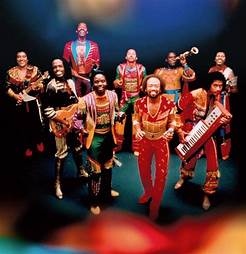
In the 70s, the world of Maurice is perfectly embodied. Produce hit songs such as "September" and "Boogie Wonderland."
In 1975, EWF was asked by Sig Shore, producer of the film "Superfly," to do the soundtrack for a new movie titled "That's the Way of the World." The movie starred Harvey Keitel and Maurice White as the leader of a group called "The Group. Keitel played the role of a record producer who listens to "The Group" and is amazed by their playing, but the film itself was not a hit at all. The soundtrack, That's the way of the world, was produced by Maurice White and Charles Stepney and was released in March 1975, prior to the film's premiere. The album debuted at number one on both the Billboard 200 and Billboard Top Soul Albums charts and was a triple platinum disc (3 million copies). The single "Shining Star" reached No. 1 on both the Billboard Hot 100 and Hot Soul Singles charts, making EWF the first black artist to top both the Billboard Album and Singles charts. It also won the Grammy Award for Best R&B Vocal Performance by a Duo or Group. The second single from the album, "That's the Way of the World," reached #5 on the Billboard Hot Soul Singles chart and #12 on the Hot 100 chart. This success led the band to hire a dedicated horn section called the Phoenix Horns. They consisted of Don Myrick on saxophone, Louis Satterfield on trombone, and Ramlee Davis and Michael Harris on trumpet.
In November 1975, they released "Gratitude," a two-CD album of three live takes and one studio take, which reached No. 1 on both the Billboard Top 200 and Top Soul Albums charts and earned a triple platinum disc. The single "Sing a song" reached No. 1 on the Billboard Hot Soul Songs and No. 5 on the Hot 100 chart.
In 1975, Maurice White founded Kalimba Productions, which includes his former bandleader Ramsey Lewis, songstress Denise Williams, who was once a member of Stevie Wonder's "Wonderlove" backup group, and the girl group Emotions. The Emotions, a girls' group, and others joined the group.
Charles Stepney died of a heart attack on May 17, 1976 in Chicago at the age of 45. Maurice produced and dedicated a new album, Spirit, to Stepney in October 1976. The album reached No. 2 on both the Billboard Top Pop Albums and Top Soul Albums charts and was a double platinum disc. The single "Getaway" reached No. 1 on the Billboard Hot Soul Songs chart and No. 12 on the Billboard Hot 100 and Dance Club Play charts, respectively. The following single, "Saturday Night," also reached #4 on the Billboard Hot Soul Songs chart and #21 on the Hot 100 chart.
In November 1977, EWF released their eighth studio album, "All'n All," which reached #1 on the Billboard Top Soul Albums chart and a respectable #3 on the Billboard 200 chart. It also won a Grammy Award for Best R&B Vocal Performance by a Duo, Group or Chorus. In late 1977, the group embarked on a "Tour of Universes," which featured a number of pyramids on stage and members floating in the air. Their theatrical performances, which included several pyramids on stage and members floating in midair, were very well received, and they began to show their top-notch performance both on record and live. The single "Serpentine Fire" reached #1 on the Billboard Hot Soul Songs chart and #13 on the Billboard Hot 100, and the next single, "Fantasy," reached #12 on the Billboard Hot Soul Songs chart.
EWF participated in the soundtrack for the July 1978 feature film "Sgt. Pepper's Lonely Hearts Club Band," performing a cover of The Beatles' "Got to Get You in My Life." Although the film was not a commercial success, EWF's "Got to Get You in My Life" reached No. 1 on the Billboard R&B Songs chart and No. 9 on the Billboard Pop Singles chart. The album was a platinum disc hit. The album became a platinum disc hit.
In November 1978, EWF released "The Best of Earth, Wind & Fire. Although it was a best-of album, it included new songs, one of which was "September," a song synonymous with Earth. September" debuted at No. 1 on the Billboard Hot Soul Songs chart and No. 8 on the Billboard Hot 100. The album reached #3 on the Billboard Top Soul Albums chart and #6 on the Billboard 200 chart.
In June 1979, EWF released its ninth studio album, "I Am," with young David Foster as producer, who wrote six of the nine songs. The album was a sparkling funk album that truly injected white blood into black music, and it expanded the band's fan base dramatically. The album reached #1 on the Billboard Top Soul Albums chart and #3 on the Billboard 200 chart. A disco tune from the album, "Boogie Wonderland," one of Earth's most popular songs, featuring the Emotions, reached #2 on the Billboard Hot Soul Songs chart and #6 on the Billboard Hot 100. In addition, "After the Love has gone," a gem of a ballad written by David Foster, reached #2 on both the Billboard Hot 100 and Hot Soul Songs charts, earning producer David Foster his first Grammy Award, Duo or Group Best R&B Vocal Performance by a Duo or Group.
In October 1980, EWF released the double album Faces, which reached #2 on the Billboard Top Soul Albums chart and #10 on the Billboard 200. The album did not produce a single hit, but when Maurice White was asked in a 2007 interview which of the EWF albums was his favorite, he replied, "Maybe it's 'Faces,' because we really came together. Because we really came together and this album gave us the opportunity to venture into uncharted territory. However, after the album's release, rhythm guitarist Al McKay left the band due to a disagreement over the band's direction. The Los Angeles Times said, "'Faces' is the R&B album of the year.
1981-1986 Electric Sound
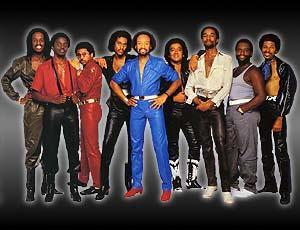
In the 80s, Korean costumes were changed to electric ones.
As the 1980s progressed, Maurice White considered the changing sound in the music scene and decided that he needed to incorporate the electronic sounds that were popular at the time into his work. As a result, EWF's 11th album, "Raise!" was released in the fall of 1981, incorporating this new electronic sound. The album marked the return of rhythm guitarist Roland Bautista to EWF. Bautista's playing added a hard rock feel to the sound and overshadowed the magnificent horn section that had been present. The album reached an impressive No. 1 on the Billboard Top R&B Albums chart and No. 5 on the Billboard 200 chart, earning it a platinum disc. It was led by "Let's Groove," the first single from the album and Earth's signature song, which reached #1 on the Billboard Hot R&B Songs chart and #3 on the Billboard Hot 100 chart, showing that Earth was still going strong into the 1980s.
In February 1983, the album "Power Light" was released, and the first single "Fall in Love with Me" was a good track that developed a typical Earth sound like a sequel to "Let's Groove," but charted at #17 on the Billboard Hot 100 chart and #4 on the Billboard Hot R&B Songs chart. B Songs chart, but it failed to match the success of its predecessor, "Let's Groove," which reached #17 on the Billboard Hot 100 chart and #4 on the Billboard Hot R&B Songs chart. The album reached #4 on the Billboard Top R&B Albums chart and #12 on the Billboard 200 chart, earning it a gold disc.
In November 1983, the band released its 13th studio album, Electric Universe. Finally, the horn section was all but eliminated, and the synthesizers were fully integrated into the electro sound. The first single "Magnetic" became a smash hit, reaching No. 10 on the Billboard Hot R&B Songs chart, and the second single "Touch" reached No. 23 on the Billboard Hot R&B Songs chart. Although the album was a good album with a good selection of songs, this new approach was met with confusion and rejection by previous fans, and it became one of the most controversial albums of Earth's career. The album reached #8 on the Billboard Top Soul Albums chart and #40 on the Billboard 200, but after the album's release in 1984, Maurice announced that the band would go on hiatus.
During the hiatus, each member of the band continued their activities. First, Maurice White released his only solo album, "Maurice White," on Columbia in 1985. The single "I Need You" from the album reached #20 on the Billboard Adult Contemporary Songs chart and #30 on the Billboard Hot R&B Singles chart, and this gem of a ballad was used in a Sony commercial in Japan, where it was a particular hit.
Another vocalist, Philip Bailey, released his second solo album, "Chinese Wall," on Columbia in 1984. Among his hits, "Easy Lover," a duet with Phil Collins, was a big hit on MTV and other stations, reaching No. 2 on the U.S. Billboard Hot 100 and No. 1 on the U.K. Singles Chart, becoming one of the most popular hit songs of the 80's. In 1986, Philip Bailey released his second solo album, "Chinese Wall," which was released on Columbia Records. Philip Bailey also released his third studio album, "Inside Out," in 1986, and also worked with Kenny Loggins, Stevie Wonder, and Ray Parker Jr.
1987-1994 Restart
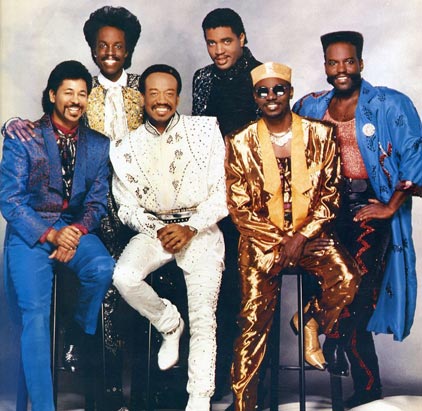
EWF relaunched in the late 80s
In 1987, Maurice moved to restart Earth. With a lineup that included Vardyne White, Ralph Johnson, Philip Bailey, Andrew Woolfolk, and new members guitarist/vocalist Sheldon Reynolds, keyboardist Vance Taylor, and drummer Sonny Emory, Earth was after four years The band reunited.
In November 1987, the new EWF released a new album, "Touch the World". 4 years was a long time in the 80's, during which time the environment and sound of black music changed drastically, and this album reflects those times. While incorporating street-oriented content, the album still retains their recognizable Earth sound, much to the delight of fans of the past.
The album's opening track, "System of Survival," opens the album with a hip-hop-inspired opening that is in tune with the currents of the times, but still retains the Earth sound. Released as the first single, it was the first number one hit on both the Billboard R&B and dance charts in quite some time. System of Survival" was nominated for a Soul Train Award in the category of Best R&B/Soul Single - Group, Band or Duo. The following single, "Thinking of You," also maintained the momentum of Earth's heyday, but with a more sophisticated, current-sounding dance number that debuted at No. 1 on the Billboard Dance Club Songs chart and No. 3 on the Billboard Hot R&B/Hip-Hop Songs chart. The song was a big hit on the Billboard Dance Club Songs chart and reached No. 1 on the Billboard Hot R&B/Hip-Hop Songs chart. In May 1988, EWF delighted longtime fans with their first tour of Japan in almost nine years.
In November 1988, EWF released "Best of Earth, Wind & Fire Vol. 2," which became a gold disc. Both albums were released as singles, with "Turn On (Beat Box)" reaching #26 on the Billboard Hot R&B Songs chart.
In February 1990, EWF released their 15th studio album, Heritage. The album aggressively incorporated the New Jack Swing beats that Teddy Riley had championed and that were sweeping the R&B world at the time. The title track, "Heritage," featuring The Boys, reached #5 on the Billboard Hot R&B Songs chart. Wanna Be the Man" was No. 19 on the Billboard Hot R&B Songs chart, but it featured MC Hammer, who at the time was dominating the U.S. music scene and was very popular in Japan, and created a bigger buzz than the charts. The album reached #19 on the Billboard Top R&B Albums chart.
In September 1993, Earth's 16th studio album, "Millennium," was released on the old Warner Bros. Records label. It featured artists such as Ronnie Laws and Prince. The album reached #8 on the Billboard Top R&B Albums chart and #39 on the Billboard 200 chart. The first single, "Sunday Morning," reached #10 on the Billboard Adult R&B Songs chart, #20 on the Billboard Hot R&B Songs chart, and #35 on the Billboard Adult Contemporary Songs chart.
On October 13 of that year, former lead vocalist Wade Flemons died of cancer in Battle Creek, Michigan.
1996 - present Neo Period
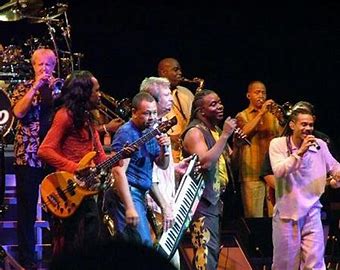
Since the' 90s, despite the absence of Maurice, he has been active mainly in Philip Bailey.
In 1995, they signed a contract with avex in Japan and released a live album at Velfarre. The following year, in 1996, the label released "Avatar," the band's latest album in Japan, demonstrating the strength of their popularity in Japan. In 1996, Maurice started a new label, Kalimba Records, based in Santa Monica, California. EWF's seventeenth studio album, In the Name of Love, was released on Rhino Records in 1997. The album was noted for its digitalized neo-soul sound style.
Around this time, Maurice toured with the band occasionally, but frequently did not participate. At the time he explained that he wanted to take a break from the hard touring schedule. During that time, Philip Bailey was given the role of stage leader for the band, with Maurice overseeing EWF as executive leader. Maurice then showed signs of Parkinson's disease, but Maurice continued to perform at occasional EWF shows and to write and produce new songs for EWF and other artists while controlling his illness.
EWF performed as guests at the White House on June 20, 2000, at a special dinner hosted by President Bill Clinton for the King of Morocco, King Muhammad VI, and His Highness Lalla Meriem.On August 21, 2000, EWF performed in Morocco for King Muhammed's 37th birthday in a private EWF collaborated on Wycliffe John's second studio album, Ecleftic: 2 Sides II a Book, issued in August 2000, which reached No. 3 on the Billboard Top R&B/Hip-Hop Albums chart and No. 9 on the Billboard 200 chart and No. 9 on the Billboard Top R&B/Hip-Hop Albums chart.
In 2001, a biographical documentary on the band titled "History of EW & F - Shining Star" directed by Katherine Arnold was released. On September 13 after the September 11 attacks that year, the band members performed a concert at the Verizon Wireless Virginia Beach Amphitheatre in Virginia and donated $25,000 to the American Red Cross.
On February 24, 2002, EWF performed at the closing ceremony of the 2002 Winter Olympics in Salt Lake City; a compilation album titled "Essential Earth, Wind & Fire" was released by Columbia in July 2002; and a 1980 Live In Rio, an album of live performances in Rio de Janeiro, Brazil, was released by Kalimba Records in November 2002.
In May 2003, EWF released their 18th studio album, Promise, on Karimba Records; in September 2003, EWF was inducted into the Vocal Group Hall of Fame.
On February 8, 2004, EWF performed "Shining Star" at the 46th Annual Grammy Awards at the Staples Center in Los Angeles, California. covered Jimi Hendrix's "Voodoo Child (Slight Return)" and teamed up with the Black Eyed Peas to sing "Shining Star" at Super Bowl XXXIX in Jacksonville, Florida, on February 6, 2005.
In 2004, EWF and Chicago released a DVD "Chicago & Earth, Wind & Fire - Live at the Greek Theatre" of their concert at the Greek Theatre in Los Angeles, which was followed by a joint US tour. The DVD was released on June 28, 2005 and certified platinum in the U.S. by the RIAA, and Chicago and EWF later collaborated on a new recording of the Chicago ballad "If You Leave Me Now" for the 2005 Chicago compilation album, Love Songs They collaborated.
In September 2005, EWF's 19th studio album, Illumination, was released on Sanctuary Records. Illumination reached #8 on the Billboard Top R&B/Hip-Hop Albums chart and #32 on the Billboard 200 chart.
In 2006, Maurice released Hot Feet, a Broadway musical about the music of Earth, Wind & Fire; on December 11, 2007, EWF performed "Fantasy" and "September" at the Nobel Peace Prize Concert in Oslo, Norway. In February 2008, EWF performed at the Viña del Mar Festival in Chile, the oldest and largest outdoor music festival in Latin America, where they were awarded the Gaviota de Plata (Silver Seagull), the highest award that can be given to an artist. For several years, the EWF song "In the Stone" was used to open the festival, and on March 10, 2008, the EWF's handprints were added to the Munich Olympic Walk of Stars, a promenade in Munich's Olympic Park with embedded handprints of famous people from around the world. In 2008, the EWF participated in the opening ceremony of the U.S. Open Tennis Championships, celebrating its 40th anniversary, and performed during the parade of past champions.
On February 22, 2009, EWF was invited to the White House for the Governor's Dinner. In April 2009, former EWF keyboardist Robert Brookins died of a heart attack at the age of 46. EWF joined Chicago again and began a 30-city tour of the United States.
In February 2010, EWF participated in the recording of "We Are The World 25 For Haiti". That year, Maurice White, Philip Bailey, and Verdine White were inducted into the Songwriters Hall of Fame along with former EWF members Al McKay and Larry Dunn.
On February 29, 2012, former EWF rhythm guitarist Roland Bautista died at age 60; he made a guest appearance on the track "Something About You" on LL Cool J's 2013 album Authentic.
On September 10, 2013, Now, Then & Forever, the band's first album in eight years, was released; on January 13, 2014, former percussionist Beloid Taylor, who co-wrote the band's 1976 hit "Getaway," died; in February 2014, NBA All-Star Game with Pharrell and Janelle Monáe; a few months later, on May 2, former lead vocalist Jessica Cleaves died of complications from a stroke at age 65; on October 21, 2014, EWF's first Christmas album, Holiday, was released.
EWF founder and leader Maurice White, who suffered from Parkinson's disease for many years, died on February 4, 2016. Maurice White received the Grammy Lifetime Achievement Award with EW&F at the Grammy Awards ceremony at the Staples Center in Los Angeles on February 15, 2016. Stevie Wonder and Pentatonix sang "That's the Way of the World" in honor of Maurice White at the ceremony.
On September 10, 2019, the Los Angeles City Council designated September 21 as Earth Wind & Fire Day in honor of the group.
On August 20, 2021, the group released the single "You Want my love" featuring Lucky Daye.
Earth, Wind & Fire (Earth, Wind & Fire) members
Philip Bailey Bailey (Philip / vo)


Contents
- Overview of Earth, Wind & Fire (Earth, Wind & Fire)
- History of Earth, Wind & Fire (Earth, Wind & Fire) activities
- 1969-1970 Creation period
- Early 1970-1974
- 1975-1980 Heyday
- 1981-1986 Electric Sound
- 1987-1994 Restart
- 1996 - present Neo Period
- Earth, Wind & Fire (Earth, Wind & Fire) members
- Philip Bailey Bailey (Philip / vo)
- Verdine White (Verdine White / b)
- Ralph Johnson (Ralph Johnson / dr)
- Myron McKinley / key
- Philip Bailey Bailey, Jr (Philip Jr. / background vo)
- B. David Ho Whitworth (B DAVID Itworth / vo / perc)
- Morris O'Connor / g
- John Paris (John Paris / dr / vo)
- Former members of Earth, Wind & Fire (Earth, Wind & Fire)
- Maurice White (Maurice White / vo)
- Fred White (Frederick H. White / dr)
- Al McKay (Al McKay / g)
- Larry Dunn (Larry Dunn / key)
- Greg Moore (Greg Moore / g)
- GARY BIAS (Gary Bias / sax)
- Johnny Graham (Johnny Graham / g)
- Jessica Cleaves (Jessica Cleaves / vo)
- Roland Bautista (Roland Bautista / g)
- Robert Blue Brookins (Robert Kins / key)
- Sonny Emory (Sony Emory / dr)
- Freddie Ravel (Fred Ravel / key)
- Ronnie Laws (Ronnie Laws / sax)
- Sheldon Don Reynolds (Shell REYNOLDS / g)
- Andrew Woolfolk (Andrew Woolfolk / sax)
- Wade Flemons (Wade フレモンズ / vo)
- Bernard Beloyd Taylor (Veroid Taylor / per)
- Yackov Ben Israel (Yakoff Ben Israel / per)
- Leslie Drayton (Leslie Drayton / tr / vo)
- Sherry Scott
- Earth, Wind & Fire (Earth, Wind & Fire) discography
- Earth, Wind & Fire
- The Need of Love
- Last Days and Time
- Head to the Sky
- Open Our Eyes
- Another Time
- That's the Way of the World
- The Gauntlet
- Spirit
- All'N All the sun god)
- The Best of Earth, Wind & Fire Vol.1
- I Am
- Faces
- Raise!
- Powerlight (Genesis)
- Electric Universe
- Touch the World (Touch the World)
- Heritage
- Millennium
- In the Name of Love (In the Name of Love)
- The Promise
- Illumination
- Now, Then & Forever
- Holiday
- Representative song of Earth, Wind & Fire (Earth, Wind & Fire)
- SHINING STAR
- THAT'S THE WAY OF THE WORLD
- SING A SONG
- GETAWAY
- SATURDAY NITE
- FANTASY
- JUPITER
- BRAZILIAN RHYME
- SEPTEMBER
- AFTER THE LOVE HAS GONE
- BOOGIE WONDERLAND
- LET'S GROOVE
- FALL IN LOVE WITH ME
- MAGNATIC
- SYSTEM OF SURVIVAL
- THINKING OF YOU
- HERITAGE
- WANNA BE THE MAN
- Words and remarks of Earth, Wind & Fire (Earth, Wind & Fire)
- Maurice White: "I stole a lot from John Coltrane, Funkadelic and Kool & the Gang. It's your job to add originality to that and pass it on to the next generation."
- Philip Bailey: "It's been 20 years since I became the leader of Earth, Wind & Fire, and whenever I have to make a decision as a band, I keep in mind that I think Maurice will respect me. We all know that this is not only part of Earth, Wind & Fire's DNA, but also a way to get along as a Earth, Wind & Fire."
- Earth, Wind & Fire (Earth, Wind & Fire) Inside Stories, Trivia, Small Stories / Episodes, Anecdotes
- Earth Wind & Fire "September" Day
- "September": The Secret Story of Birth
- "After the Love has gone" is a secret story of its birth.