
We have compiled a list of 10 recommended non-fiction books.
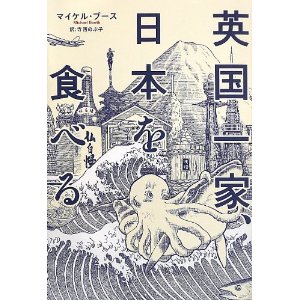
A British family eats Japan
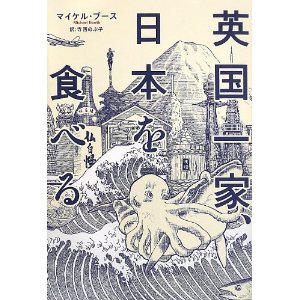
The author is a British food writer. He stayed in Japan with his family for three months, and describes in lively sentences his experiences of eating his way through the country from high-class restaurants to common eateries. The things we usually take for granted seem new to us when filtered through the filter of a traveler.
A British food journalist travels with his wife and two sons (ages 6 and 4) on a family vacation, experiencing Japanese food this way and that.
The book's title, cover illustration, and binding are all in the style of a "carefree travelogue of Japan.
The book starts out with the family eating yakisoba and yakitori at Shinjuku's "Memories Yokocho" with the four of them enjoying the delicious, tasty food. It's a good start. The story also mentions that the children enjoyed eating Sapporo ramen in Hokkaido and ramen in Hakata.
The rest of the story, however, goes deeper and deeper into the depths that even Japanese people would not normally go near. We hear from the top food experts in Tokyo and Kansai, and come into contact with restaurants and chefs that are rarely accessible to ordinary people. This is a deep exploration of Japanese food that you may not have read about before.
At the members-only restaurant Mibu, Michael praises Chef Hiroyoshi Ishida's hamo (suckling duck meat), saying that "every hair on my body stood on end" and that "if I could taste this broth again, I would give it all up.
I see. This is the kind of world that exists.
Here's to the good-hearted Michael Booth and his family!
Source: www.amazon.co.jp
To buy Iberian pork.
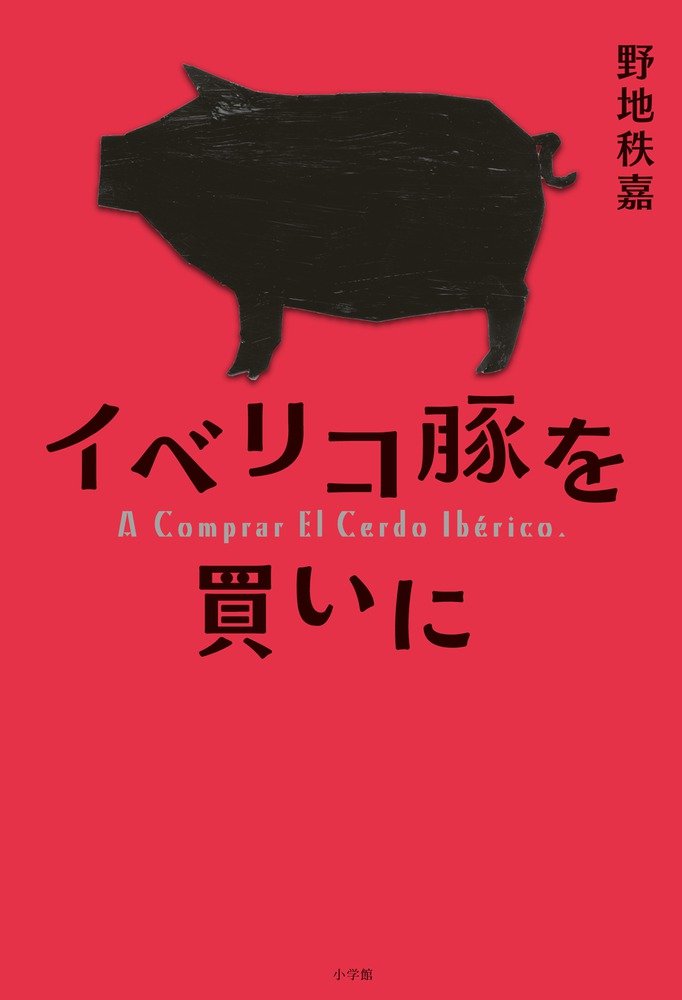
Iberian pork" is a breed of pig that has become popular in recent years, but where and how is it raised and processed? With such questions in mind, the author ventures out to the actual Iberian pig production area. This is a story about pigs.
It is a hot, incredibly hot book.
At first, I started reading the book with an easy mind, thinking that it was just a book to introduce Iberian pork, but in the latter half of the book, a great deal of excitement awaited me.
The author's and other characters' passion for Iberian pork is painfully conveyed to the reader, overwhelming him or her.
At the heart of the story, which is told with a variety of materials including the story of Iberico pork, the meat industry, and ham production, is a passionate story of men who sincerely work toward their goals, and the book makes you keenly aware of the difficulty and wonder of achieving something!
Source: www.amazon.co.jp
Worst Work History
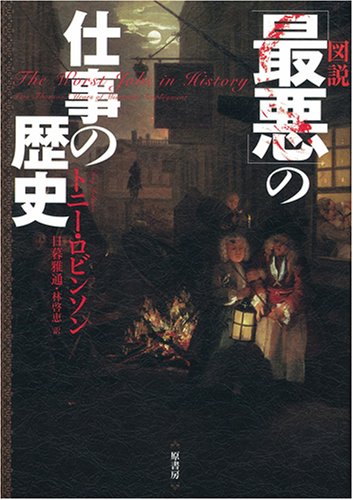
From the puke collector to the iron collector, from the skewer boy to the king's urinal keeper, from the chimney sweep to the dreaded .......
From ancient times to modern times, this is the first book that traces the history of "common people's work" that was hard and grueling, but someone had to do it.
This is the first book that traces the history of "common people's work" from ancient times to modern times.
Neither aristocratic life nor modernization would have been possible without him!
This book is a "Hello Work" that has supported history in the true sense of the word, and is one of the toughest "Hello Work" in the world.
The book presents a number of "worst jobs" that existed in Britain in the past, one for each period from Roman to Victorian times. The book is based on a popular British TV show on Channel 4, facilitated by the book's author, Tony Robinson.
Channel 4 is a popular commercial station. Tony Robinson is a popular host. (The book is based on a variety show like "Mino Monta tries his hand at the worst job of each era! (to put it in the correct way), it is a book version of a variety show like "Mino Monta tries to do the worst job of each era! If you read it as an academic book, you will be disappointed, but if you think of it as a variety show, it is well researched.
The book is full of the hard work of ordinary people. However, depending on one's point of view, there are many jobs that are just as hard in modern Japan. But in fact, such jobs support the development of society.... It made me think about such things. It is true that "the worst jobs" is the theme of this book, but the book is written with a lot of British humor, so it is enjoyable without being too serious, and has a kind of refreshing feel to it.
Source: www.amazon.co.jp
The man who saw the edge of death
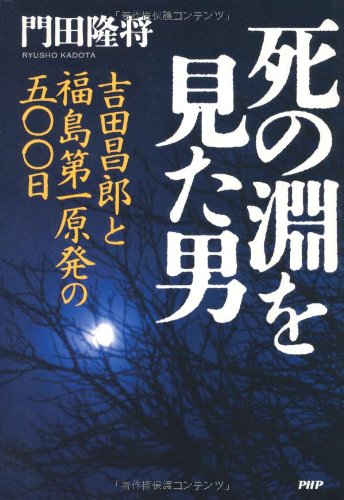
The author, a non-fiction writer, interviewed Masao Yoshida, Naoto Kan, Haruki Hantome... The astonishing truth about the "nuclear accident" as told nakedly by the people involved.
This is a high-quality nonfiction book about the Fukushima Daiichi Nuclear Power Plant accident.
As many reviewers have written, this is a nonfiction book that resonates with the heart.
It does not question the pros and cons of nuclear power, and there is no needless malice in the words and actions of former Prime Minister Naoto Kan. The fact that the content of the book varied depending on where the interviews were conducted may be the difference between those who were able to cover the story in detail and those who were not able to, and may mean that the book was not written based on speculation.
I myself have been in the evacuation zone on business, but even though I was there for only a few hours, the fear of not being able to see made me tired before I even realized it, and I felt exhausted when I returned home. I have nothing but respect and gratitude for those who risked their lives for a long period of time in such extreme conditions.
Toward the end of the book, the author touches on the personalities and families of the individual characters. Among these, the book carefully interviews and introduces a 21-year-old worker who was victimized by the tsunami on the day of the disaster, but was slandered in the media and on the Internet for "running away" based on unsubstantiated rumors. I felt that the author's conscience was in his attempt to firmly restore the lost honor of this young man and his family in his unaffected description. I hope that the influence of the media is exercised correctly in this way.
Source: www.amazon.co.jp
America, a sinking superpower
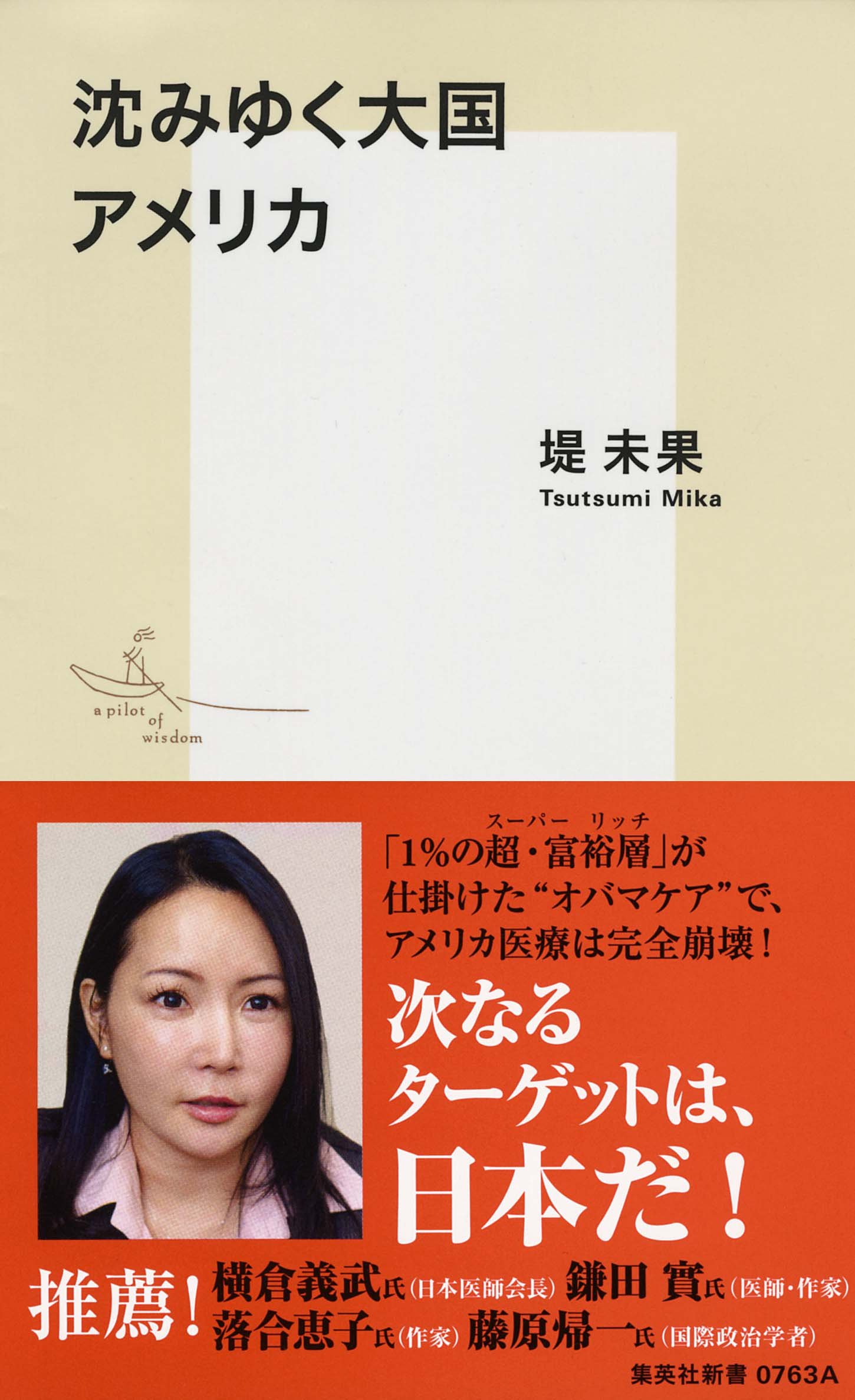
There are many ways to think about the United States as a country, but this book calmly writes out the negative aspects.
Japan is now as good as America. or "The Japanese system is better..." and so on.
There is no shortage of people who explain the issue of medical disparity with a knowing look on their face, saying that Japan's system is better,
However, if you read the contents of this book, you will see that the current situation in Japan is still heaven, and you will be able to relive the hell of the real healthcare collapse caused by the greed of the U.S., as much as you want.
At the same time, we are tremendously anxious about the steady, under-the-table remodeling of Japan's stable system by the Abe administration.
What particularly impressed me in this book was a comment by the vice president of the Japan Medical Association
If a medical institution in financial trouble is taken over by a foreign company, there is no way to recover from it.
And, although medical services are exempt from taxation, the consumption tax on medical care is not deductible, so hospitals and doctors are forced to bear an unfair burden for the consumption tax.
The whole story is dreary and comatose, but still, competent and aspiring people are putting themselves on the line to protect the ''now''.
I am grateful, and at the same time, I think it is an opportunity to rethink cruel market fundamentalism.
Source: www.amazon.co.jp
99 Unclassified Areas of the World You Can Never Visit: From the Underground Tunnels of Gaza to the Queen's Bedchamber
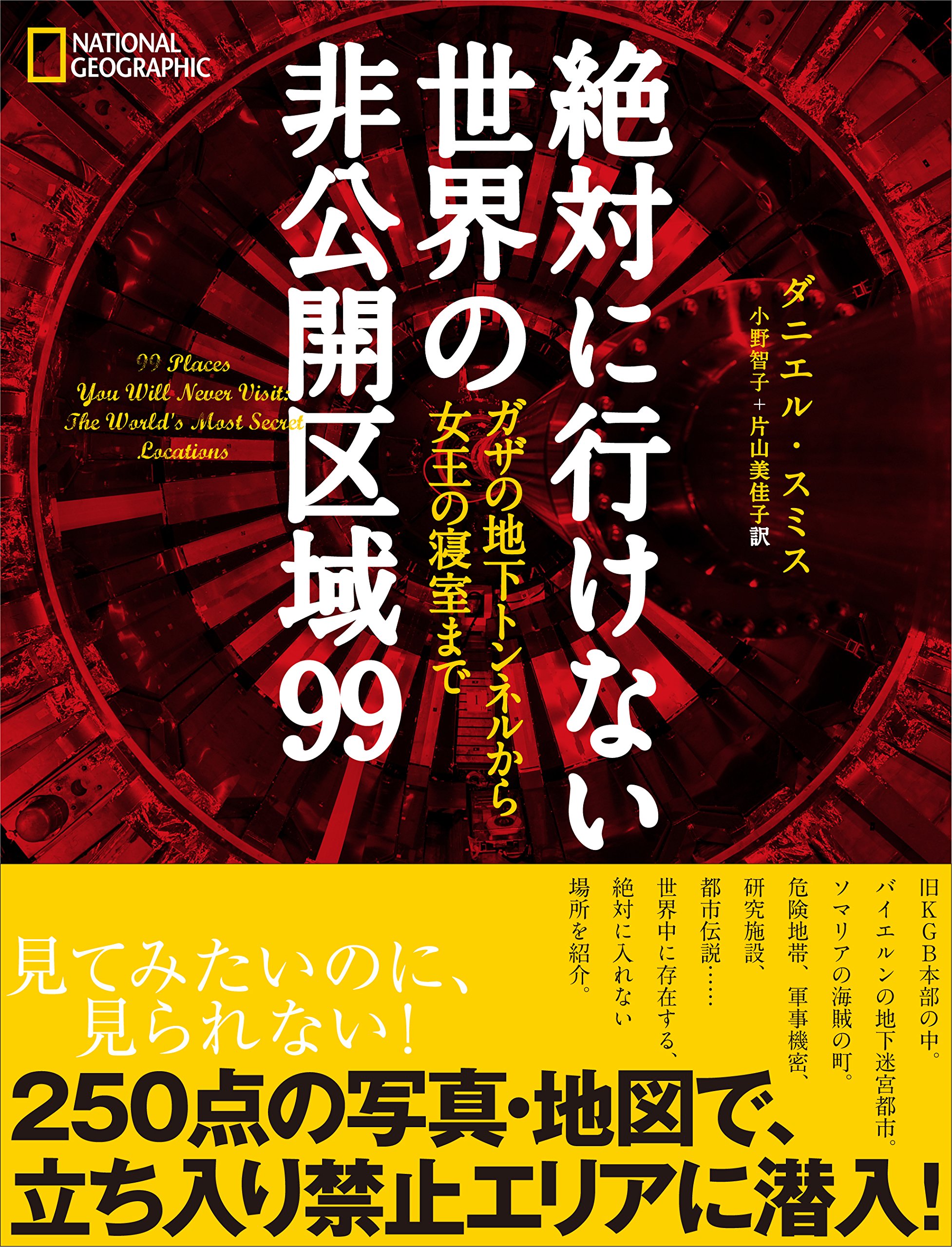
A no-holds-barred visual book introducing 99 "off-limits" places in the world! This book introduces 99 "off-limits" places and facilities in the world, which for various reasons are impossible to go to. Why don't you take a peek at the secret places you can't visit even if you spend your whole life there?
I was surprised at how many places there are in the world that I didn't know existed, and I was impressed and intrigued by how well they had done the interviews.
Source: www.amazon.co.jp
I was a boy in a soapland.
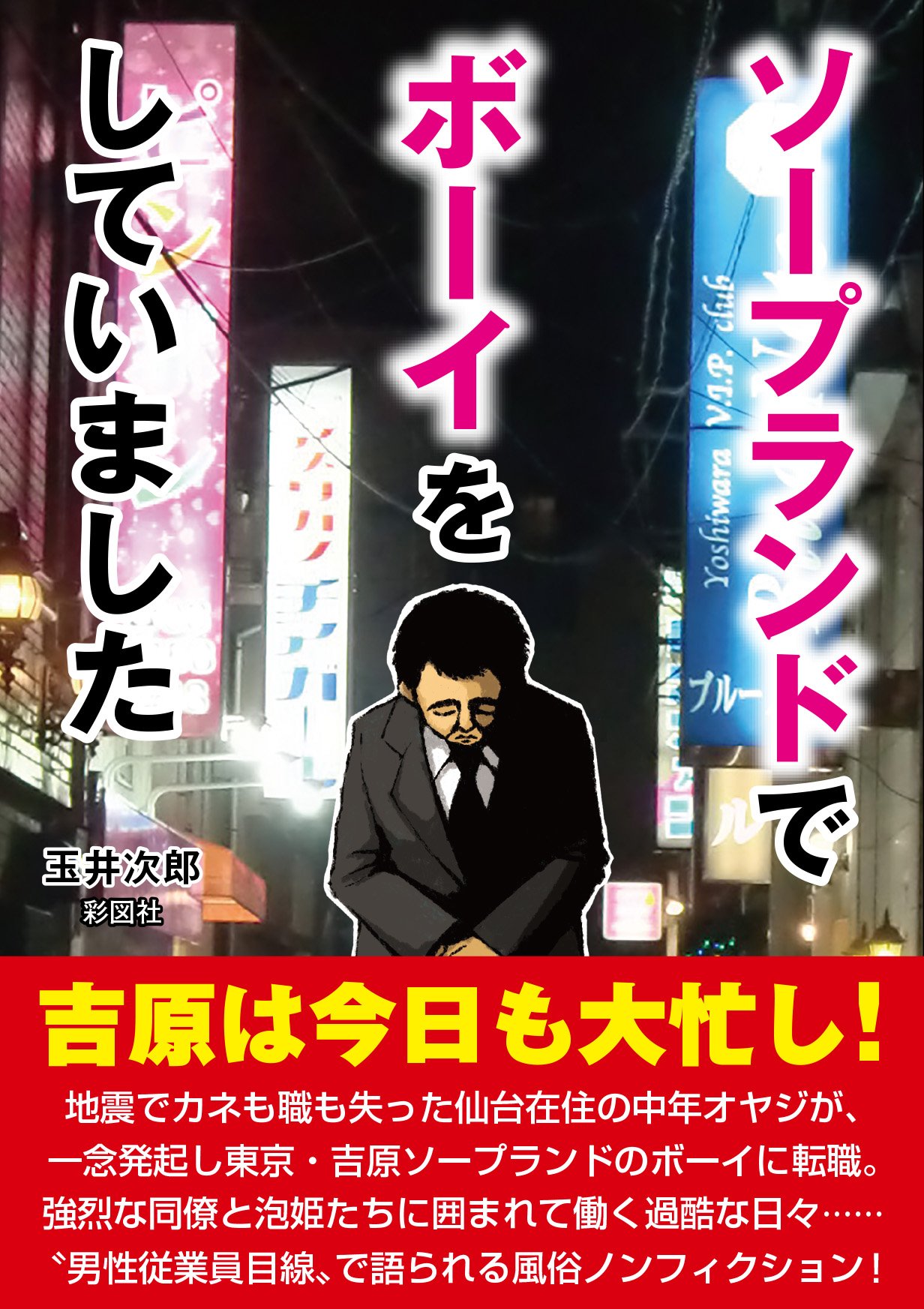
A middle-aged man living in Sendai who lost both his money and his job in the earthquake decides to change his job to become a boy at a soapland in Yoshiwara, Tokyo.
He is surrounded by strong coworkers and bubbly princesses during his tough days.
This is a non-fiction book about the sex industry told from a male employee's point of view!
There are many books on adult entertainment in the world,
However, I believe there has never been a book that describes the realistic backstage of soaps based on actual experiences.
I would love to see a movie or a live-action version of this book.
Source: www.amazon.co.jp
It was a great read and I read it in one sitting. He is 50 years old and in a new industry and job description. But you can see how he works hard for his family. The book taught me that, although the decline of age and the ability to absorb things may have something to do with it, in simple terms, people can do anything if they work hard enough. That's what this book taught me. I am not one to write reviews, but after reading this book, I couldn't help but write one in the aftermath. I am rooting for the author's future life. Good luck.
Source: www.amazon.co.jp
Paper Connections! They make the paper for the books.
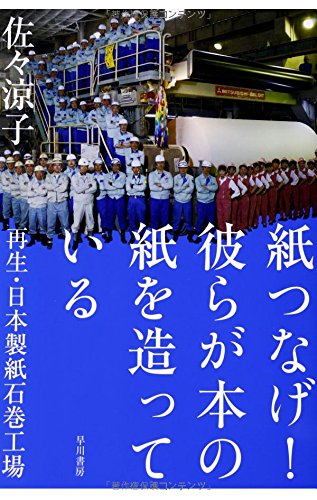
A masterpiece of nonfiction, this book thoroughly covers the process from the despair of the disaster to the reconstruction of the factory.

Contents
- A British family eats Japan
- To buy Iberian pork.
- Worst Work History
- The man who saw the edge of death
- America, a sinking superpower
- 99 Unclassified Areas of the World You Can Never Visit: From the Underground Tunnels of Gaza to the Queen's Bedchamber
- I was a boy in a soapland.
- Paper Connections! They make the paper for the books.
- Why didn't Masahiko Kimura kill Rikidozan?
- Prosperity: 100,000 Years of Human History to Pioneer Tomorrow