
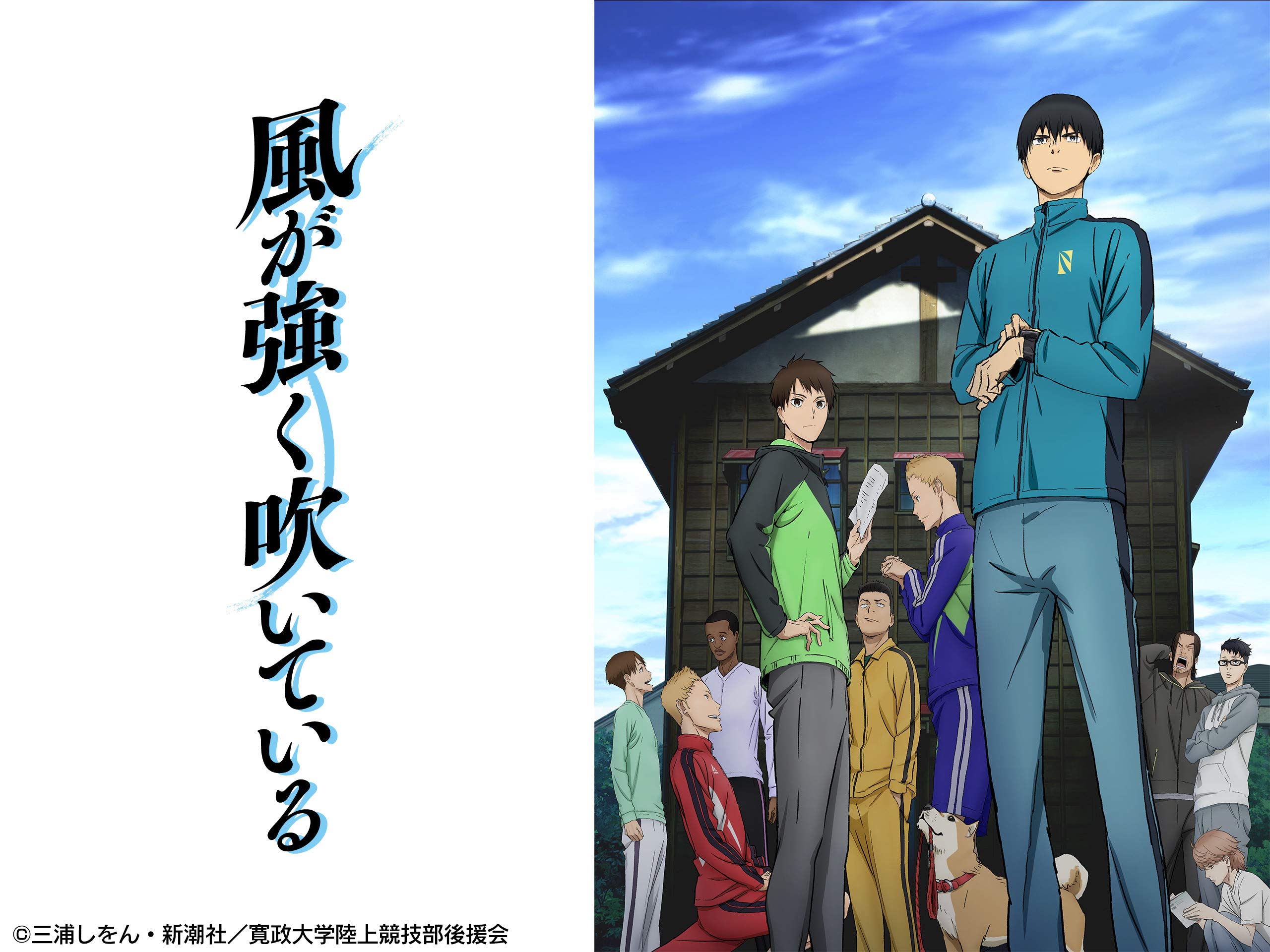
The Wind is Blowing Strongly" is a coming-of-age novel by Shion Miura set during the Hakone Ekiden Road Relay Race, published in September 2006, adapted into a manga and radio drama in 2007, a stage adaptation in January 2009, and a live-action film in October of the same year. It was also adapted into an animated TV series in 2018. A former genius runner, first-year college student Kurahara Run (Kakeru) was nimbly running along the streets at night to get away from a shoplifter. As he runs alongside fellow college senior Haiji Kiyose (Haiji), who is fascinated by his running, asks him if he likes running while riding his bicycle alongside him. This is the story of 10 college students gathered together by Haiji to run for the Hakone Ekiden (relay relay race).
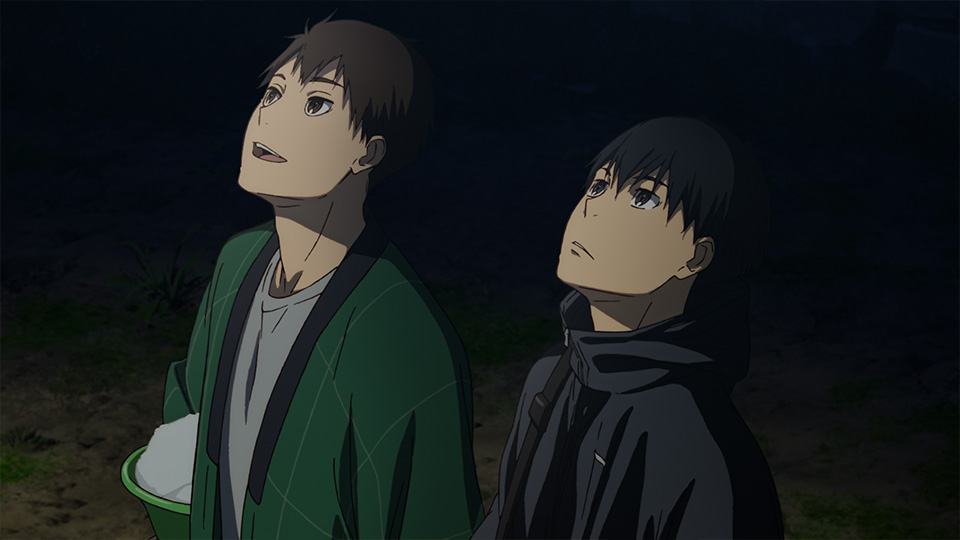
This was the first word Haiji spoke to Kakeru when she met him. Haiji, who had broken her legs and found it difficult to run, had such a shock that she wanted to scream at night when she saw Kakeru running, her ideal figure in love with her. "Do you like running?" which Haiji hung with her eyes shining like a child, was a word that Kakeru remembered many times while running.
Prince: "If I couldn't run with everyone. If I couldn't come to this place. I hate myself even more!"
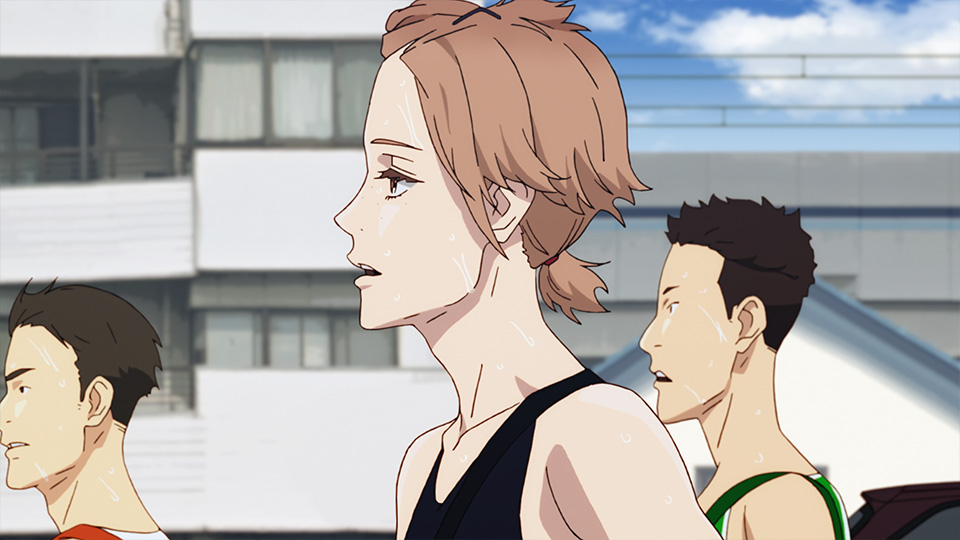
Toward the end of the first stage, the Prince was desperately running with his arms around him as the other runners increased their pace at once. This is what the Prince said at that time. Running at the Hakone Ekiden does not change his abhorrence of running, but he never gave up track and field. His stubborn and competitive character is shown in "If I couldn't run with everyone. If I couldn't come to this place. I hate myself even more!"
JOTA: "It's time to finally let go of the half of our precious soul."
Jota, who runs the Hakone Ekiden, thought of her twin brother, George. Jota had grown up with her, but during her training she felt her talent for running in the midst of the difference between herself and her younger brother. Jota, who is in the same grade and genuinely admires the running of Kakeru, who is a genius, and thinks that George, who follows her, will grow more as a runner in the future, wholeheartedly supports her brother to go on a different path. This feeling was expressed when she said, "The time has come to finally release the half of my precious soul."
Kakel: "Why do we keep running like this? Why can't we stop doing things that are so hard and that are so painful? We are stubborn and proud for our friends, our goals, and ourselves. I don't know, no one. That's why we keep our eyes on each other. That's why it sticks in our hearts."
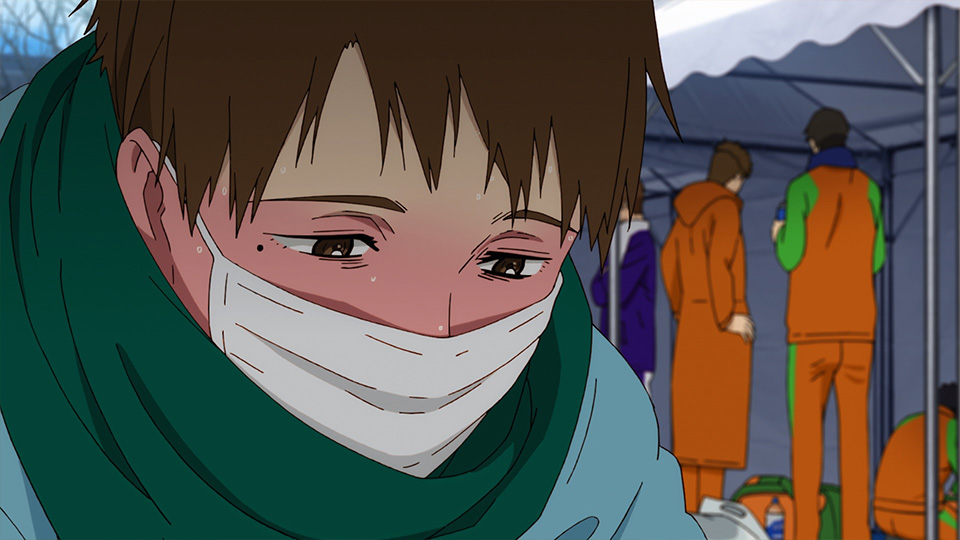
Looking at the image of a prodigy running one step at a time with a high fever in the fifth stage on the monitor, Kakeru, who was waiting at the goal on the way to Hakone, felt it. It was also a moment when he was touched by the image of a prodigy stopping many times times, shaking off the director's restraints, and desperately moving forward. It was a wonderful run that I felt the "strength" for Kakeru to run. "Why do we keep running like this? Why can't we stop doing things that are so hard and so painful? For our friends, our goals, and ourselves, we are proud and proud. I don't know, no one. That's why we don't look away from each other. That's why it sticks in our hearts." shows Kakeru's emotion.
Niko-chan: "I like running. I love you."
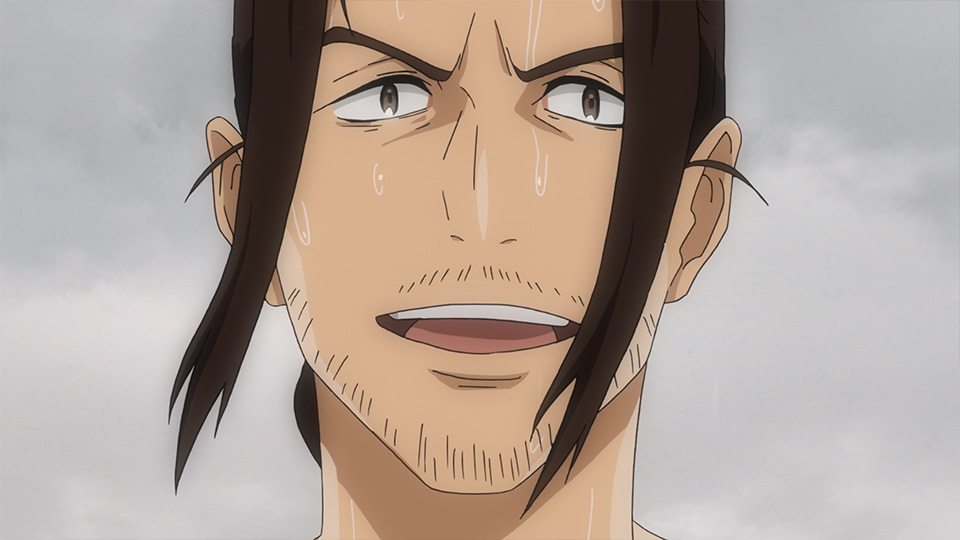
"I like running. I love you." is a phrase that Niko-chan, who was supported by Yuki, once again expressed his love for running while running at the Hakone Ekiden. Niko-chan, whose physique did not improve his record in high school, was so excited that he almost laughed at him. This feeling of excitement has not changed over the years.
King: "Yes."
"I asked" is the phrase used by King, who runs the Hakone Ekiden in the 8th Ekiden Stage, when he passes his belt to Kakeru, who runs the Hakone Ekiden in the 9th Ekiden Stage. During his college days, King couldn't get used to the people around him, so he forced himself to smile, but he couldn't be honest with his loneliness and loneliness. While running, he didn't have to pretend to be himself for the people around him. He knew that he could be himself, and アオタケメンバー became irreplaceable for him. It is also a scene where you can see that King, who has become lonely, lonely, and able to love himself, has become able to say words that depend on someone.
Behind the Scenes, Trivia, and Small Stories / Episodes and Anecdotes of "Kaze ga Kowa Utsuteru"
Anime like human drama
The director of the anime, Kazuya Nomura, said that he wanted to "strongly depict the human drama part" during a recreation before being included in the film. Prior to making the film into an anime, Nomura watched only the original version of the film and did not watch other media. The voice actor of Chikuseiso, as he said, makes the play more natural in the catch of the conversation, bringing out the natural life of the people of Chikuseiso.
Real Chikuseiso voice recording site
According to Toyonaga and others, the voice actors who play the characters of Takeseiso in this anime are somewhat similar in age and personality to the characters they play. Hoshino, who played the role of Niko-chan's senior, was tall and had long hair, so he looked exactly like him from behind. Also, Otsuka, who played the role of Kakeru, was the first voice actor in an anime, and he hardly spoke at the scene due to his tense and quiet personality. However, he seemed to be laughing when he heard the story of Nyuno, who played the role of the prince, Uchiyama, who played the role of the prodigy, and Enoki and Uemura, who played the role of the twins. There are some parts that overlap with Kakeru, who is a poor talker but gradually becomes friendly with the members. Kabumoto, who played the role of Musa, whose main job was to be an actor, was also like a "foreign student" from another world to the voice actors.
The animation staff is the perfect lineup for a youth troupe.
Directed by Kazuya Nomura, who previously directed "GHOST IN THE SHELL" and "JOKER GAME," the series is written and composed by Kohei Kiyasu of the 36th Academy Award-winning film "Kirishima, Bukatsu Naite Yo" (Kirishima: Quit the Club), the animation is produced by Production I. G, which produced "Haikyu!" and "Kuroko's BASKETBALL," and the anime soundtrack is produced by Yuki Hayashi, who is in charge of the music for the "Haikyu!" and "MY HERO ACADEMIA" series. The Hakone Ekiden is carefully depicted as a group drama, with characters other than Haiji carefully focused on the background of the characters. The fun of track and field training and the running music that refreshingly colors the human relationships and complex feelings of university students are also attractive.
Theme song and insert song of "Kaze ga Kowa Utsuteru"
OP (opening): Unison Square Garden "Catch up, latency" (Chapter 1-11)

Related Articles
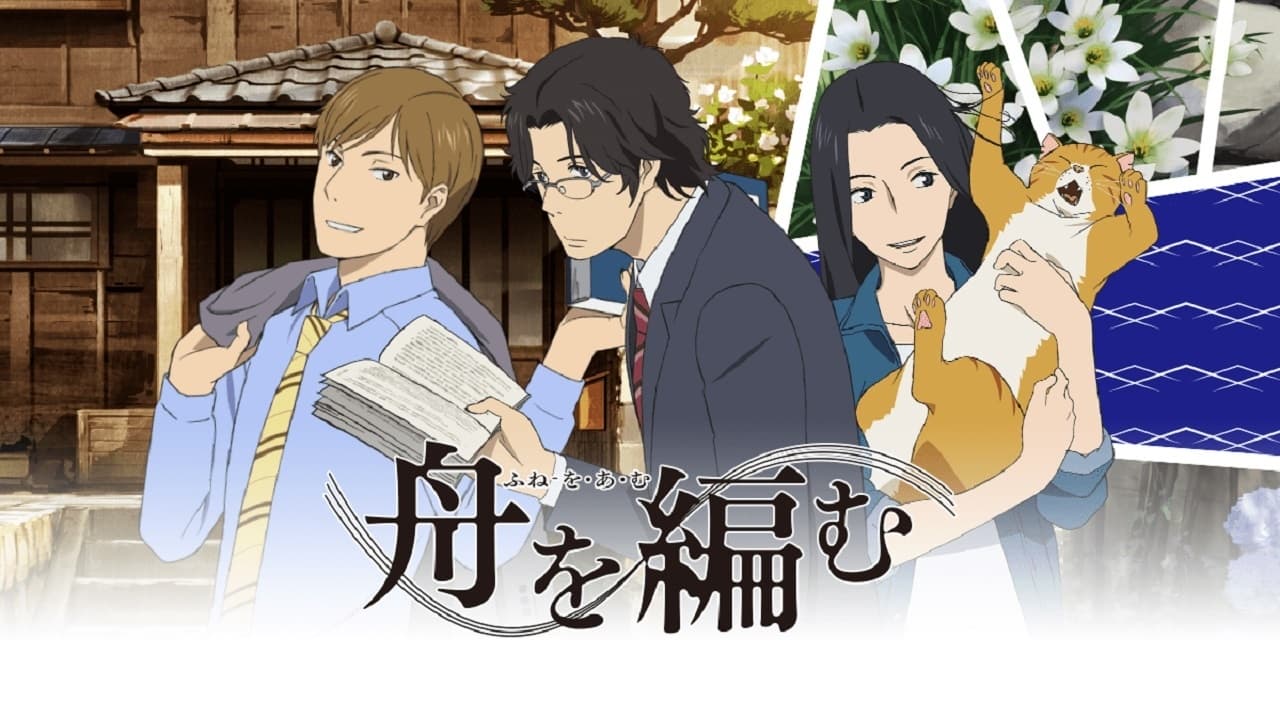
Spoiler commentary and discussion of Arranging the Boat (novel, film, and anime).
Funa o Knit" is a humanistic novel by Shion Miura, set in the dictionary editing department of a publishing company. It was serialized in the women's fashion magazine CLASSY. and published in book form by Kobunsha in 2011, won the 2012 Honya Taisho Award, and was made into a film starring Ryuhei Matsuda in 2013 and a TV anime in 2016. Mitsuya Mashime, who works at Genbushobo, is transferred to the dictionary editing department as a member of the editorial team for the newly published dictionary "Daidokai. This is the story of a group of highly individualistic compilers who have gathered to produce a dictionary, who become immersed in the profound world of dictionaries and face the language.
Read Article
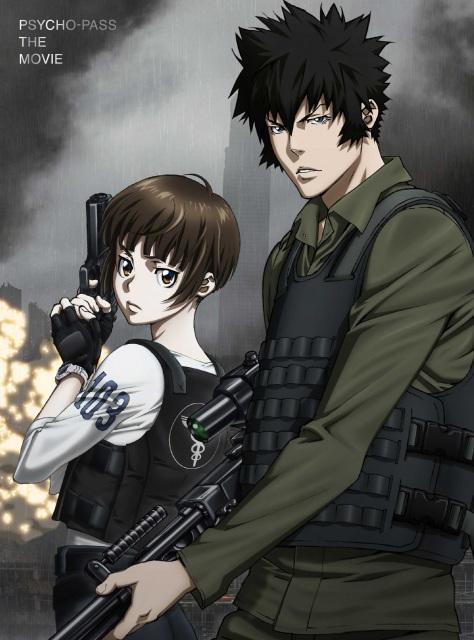
PSYCHO-PASS the Movie: Cunning Bite is back! The stage is set overseas, and the hot battle is about to begin!
A man who had done justice for himself became a murderer and disappeared. What is he thinking now, and what is he trying to accomplish? Akemi Tsunemori, who has grown up to be a full-fledged detective, steps into the "Sheen," where the new sibula system has been introduced. In the danger zone where bullets fly, he meets a man again.
Read Article

The Space Brothers: A Summary of the Movies in which Kumiko Aso Shines as an "Adult Sister" [Knitting the Boat].
Kumiko Aso is a talented actor who has appeared in numerous films! She exudes an atmosphere of an "adult older sister" and is especially popular among men. This article summarizes the movies in which Kumiko Aso has appeared. Her charm shines through in every movie she has appeared in, such as "Arrange the Boat" and "Space Brothers".
Read Article
Contents
- Overview of "Kaze ga Kowa Utsuteru"
- Outline and story of "Kaze ga Kowa Utsuteru"
- Hakone Ekiden member set
- Summer Training Camp and Official Records
- Hakone Ekiden 1st Day
- 2nd day of Hakone Ekiden
- Characters in "Kaze ga Kowa Utsuteru"
- Kansei University
- KIYOSE Haiji
- Kurahara Race (Kuraharakakel)
- IWAKURA Yukihiko
- Akihiro Hirata
- Yohei SAKAGUCHI
- Takashi Sugiyama
- Moussa Camara
- Akane Kashiwazaki
- 城太郎
- Jojiro
- 葉菜子 KATSUTA (hanako KATSUTA)
- Other
- Kazuma Fujioka
- Sakaki Kosuke
- Genichiro Tasaki (Gen ichiro TASAKI)
- Shingo KATSUTA
- Chive
- Term "the wind is blowing hard"
- Official record
- Chikuseiso (アオタケ)
- Cross Country
- Words, lines, scenes, and scenes of "Kaze ga Kowa Utsuteru" (The wind is blowing strongly)
- Heidi: "Do you like running?"
- Prince: "If I couldn't run with everyone. If I couldn't come to this place. I hate myself even more!"
- JOTA: "It's time to finally let go of the half of our precious soul."
- Kakel: "Why do we keep running like this? Why can't we stop doing things that are so hard and that are so painful? We are stubborn and proud for our friends, our goals, and ourselves. I don't know, no one. That's why we keep our eyes on each other. That's why it sticks in our hearts."
- Niko-chan: "I like running. I love you."
- King: "Yes."
- Behind the Scenes, Trivia, and Small Stories / Episodes and Anecdotes of "Kaze ga Kowa Utsuteru"
- Anime like human drama
- Real Chikuseiso voice recording site
- The animation staff is the perfect lineup for a youth troupe.
- Theme song and insert song of "Kaze ga Kowa Utsuteru"
- OP (opening): Unison Square Garden "Catch up, latency" (Chapter 1-11)
- OP (opening): Q-MHz feat. Mitsuhiro Hidaka a. k. a. SKY-HI "Strong Wind, You Are Hot" (CHAPTER 12 - CHAPTER 23)
- ED (ending): Mukai Taichi "Reset" (Episode 1 to Episode 11)
- ED (ending): "Michi" (Road) (Chapter 12 to 23) by Mukai Taichi