
Wizardry Gaiden: The Five Ordeals is a 3D dungeon role-playing game released for Windows in 2006. It is one of the Japanese-made "Wizardry" series.
The game, which purports to be a return to the roots of the original "Shoden" series, uses a simple game system with the initial five races and eight occupations, and the UI (user interface) of the previous title, "Battle Prison". In addition to the five official scenarios with independent stories, the game features a built-in editor that allows users to create their own scenarios.
The Goddess's Kiss
At random, one person is rejuvenated and given either a performance value increase, maximum HP increase, petrification, death, or ash.
Magnet
Random loss of one item per person (even if equipped).
Alarm
It attracts monsters and starts a battle (even if you run away, a battle starts again).
Teleporter
Have everyone at the party teleport somewhere at random.
Critical hit
A special attack by a ninja. When the attack hits, the message "Decapitated!" appears with a certain probability. If a critical hit is made, no matter how much HP is left, no matter how much damage is done, the head will jump and you will die. (As an aside, even a slime monster without a head will give the message "Decapitated!") itated! ")
Even non-Ninjas can produce characters equipped with certain items. Note that the enemy side also has monsters with critical abilities from the beginning.
Energy drain
A special attack in which a character's level is lowered when a physical attack hits. An immortal monster (undead) often comes out. Characters whose level drops below 0 as a result of the drain are lost.
Destruction of weapons and armor
This is a special attack. When a physical attack hits, it sometimes destroys the weapon or armor (not related to other protective equipment such as a shield or helmet) that the player character is equipped with.
Become ashes, lost
If you cast a resuscitation spell on a dead character and fail, the character turns to ashes.
This would double the cost of temple resuscitation, and would require a seven level Buddhist spell called "Raise Ash" if a character's spell were to be used.
If you fail to revive from the ashes, the character will be lost and should never be able to return to the game.
Character loss can also occur in other situations, such as when a character's energy level drops below 0 due to an energy drain, when a character dies, when a character jumps into a stone, or when a character's life force drops below 3 due to a level increase at a lodging (senility).
Total annihilation
Unlike most role-playing games, if a party is killed in a battle or accident, the character's body will be left in the Lost Palace (not re-run from save), and the only way to save them is to organize another party as a rescue team team to retrieve the body. If the party is killed in a battle or accident, the character's body will be left in the Lost Palace (not re-run from save). If the party is killed in a battle or accident, the character's body will be left in the Lost Palace (not re-run from save). Wizardry
The characters are not guaranteed to be safe when they are wiped out, and they may be randomly deprived of items or, in the worst case, lost. A lost character cannot be resurrected with a resuscitation spell or Kant Temple.
In this movie, if you jump into a stone mass, the whole party will be lost (never to come back).
Special Power
Special force present only in some items. At the end of the item equipment screen, you are asked, "Do you use special force of 0 0?"
Various benefits can be obtained by using it, but some of the items have negative effects (such as loss of ability and death).
If special power is released, there is a certain probability that it will be damaged or changed to another item, so it is risky to use it carelessly.
Healing
The ability to automatically recover HP on specific items.
With healing + 1, one HP is recovered with each step or turn in battle.
If healing is positive, a "+" appears next to HP on the status screen, and if it is negative, such as possession of poison or cursed items, a "-" appears.
Some monsters also have enemies that have healing powers.
Formation and range
Up to six people can organize a party, with the first three being called' avant-garde' and the last three' avant-garde'.
There is a concept of "range" in the weapons that a player character is equipped with, and the number of groups of monsters that can attack varies depending on the position of the formation and the type of weapon.
Short range = Only the front can attack monsters up to the second group. Swords, axes, etc.
Middle Range = Forward can attack monsters up to 4th Group, Back can attack monsters up to 2nd Group. Frailty, spears, etc.
Long range = Any monster can attack regardless of the formation. Bows, shuriken, etc.
On the other side, there are monsters with special attacks that can reach the back row, such as tall giants and those who fly.

Related Articles
Wizardry #5 (Wizardry #5) Spoilers and Discussion Summary
Wizardry #5 is a 3D dungeon role-playing game released by Certec, Inc. in the United States in 1988. It is subtitled "Heart of the Maelstrom". It is the fifth installment in the classic RPG series, the originator of the "hack and slash" genre. A "calamity" is said to have the power to destroy the world. The Gatekeeper, a wizard with the power to control it, has been captured by the evil witch Thorn. The adventurers must defeat Thorn and save the Gatekeeper in order to save the world.
Read Article
Wizardry #4 (Wizardry #4) Spoilers and Discussion Summary
Wizardry #4 is a 3D dungeon role-playing game released by Certec, Inc. in the United States in 1987. It is subtitled "The Return of Werdna. It is the fourth installment in the classic RPG series, the originator of the "hack and slash" genre. Werdna, the sorcerer defeated in the first game, takes the lead role, summoning demons and slaughtering adventurers on his way to the surface to recover the stolen amulets (amulets).
Read Article
Spoiler commentary and discussion of Wizardry Gaiden IV (The Heartbeat of the Womb Demon)
Wizardry Gaiden IV" is a 3D dungeon role-playing game released in 1996 exclusively for the Super Nintendo Entertainment System. The subtitle is "Throb of the Demon's Heart. It is the fourth Japanese-made Wizardry game. While this title is an orthodox hack-and-slash game, it incorporates a Japanese-style setting, events, and horror elements, and allows players to interact with numerous NPCs and enjoy the struggle for power. The story involves having adventurers collect the "Three Sacred Treasures" in order to control a local uprising triggered by the death of the previous lord of the Scarlet Lotus Castle.
Read Article
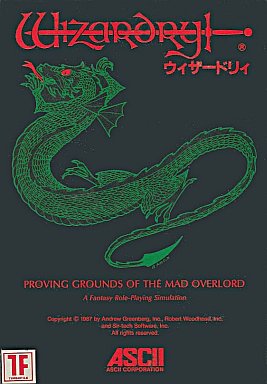
Wizardry #1 (Wizardry #1) Spoilers and Discussion Summary
Wizardry #1" (Wizardry #1) is a 3D dungeon role-playing game released by Certec, Inc. in the United States in 1981. The subtitle is "Proving Grounds of the Mad Overlord," and it is a classic RPG in which a party of six players explore an underground labyrinth, defeat monsters, obtain items from treasure chests, and strengthen and train their characters. This is the first title in the series.
Read Article
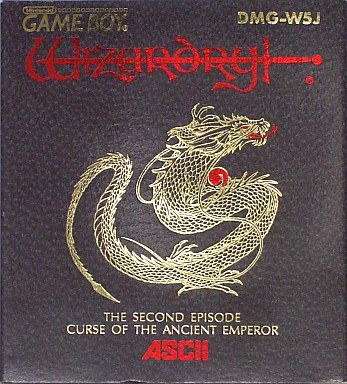
Wizardry Gaiden II (The Curse of the Ancient Emperor) Spoilers and Discussion Summary
Wizardry Gaiden II" is a 3D dungeon role-playing game on a Game Boy cartridge released in 1992. Its subtitle is "Curse of the Ancient Emperor. It is the second Japanese-made Wizardry game. When ruins are excavated in the fortress city of Almar, the curse of an ancient emperor buried there becomes a disaster that strikes the city. The adventurers challenge the ruins in order to remove the curse.
Read Article
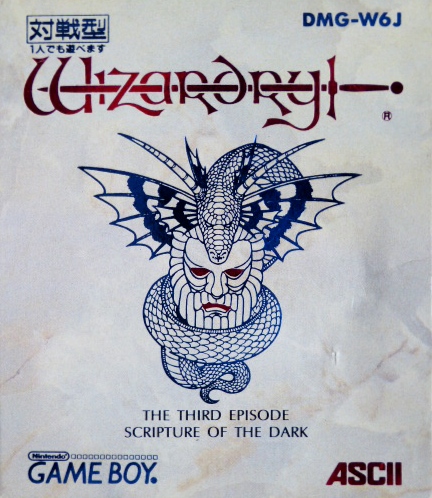
Wizardry Gaiden III (The Scriptures of Darkness) Spoiler Commentary and Discussion Summary
Wizardry Gaiden III" is a 3D dungeon role-playing game on a Game Boy cartridge released in 1993. Its subtitle is "SCRIPTURE OF THE DARK. It is the third Japanese-made Wizardry game. King Agan, the ruler of the fortress city of Dalia, has fallen into madness and withdrawn due to the curse of the Golden Mask. Adventurers are gathered to lift the curse and restore the king to sanity.
Read Article
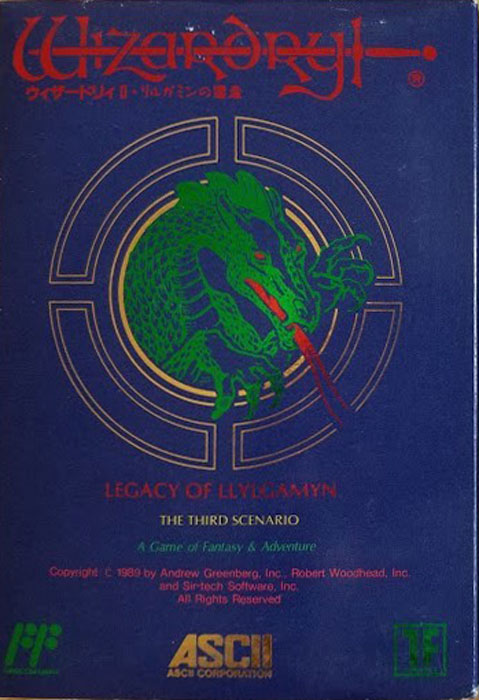
Wizardry #3 (Wizardry #3) Spoilers and Discussion Summary
Wizardry #3 is a 3D dungeon role-playing game released by Certec, Inc. in the United States in 1983. It is subtitled "Legacy of Llylgamyn. It is the third game in the classic RPG series, the originator of the "hack and slash" genre. The mission of the adventurers is to bring back the pearl guarded by the great dragon Le Kevres in order to discover the cause of a worldwide natural cataclysm.
Read Article
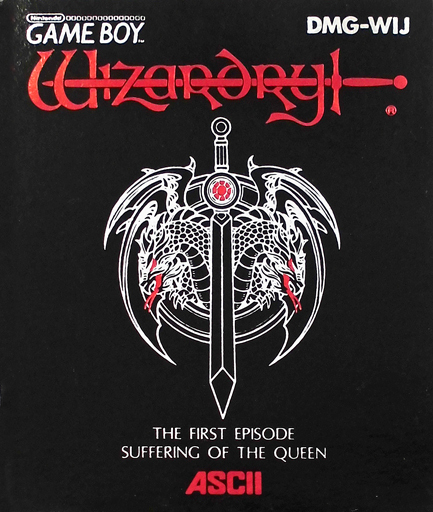
Spoiler commentary and discussion of Wizardry Gaiden I (The Passion of the Queen)
Wizardry Gaiden I" is a 3D dungeon role-playing game on a Game Boy cartridge released in 1991. The subtitle of the game is "Suffering of the Queen. It was the first Japanese-made Wizardry game. After Queen Iras ascends to the throne, the city of Lilgamin has been plagued by a series of disasters. Even the court magician Tylotham has betrayed his court and holed himself up in the "Cursed Hole. Adventurers are summoned to defeat him.
Read Article
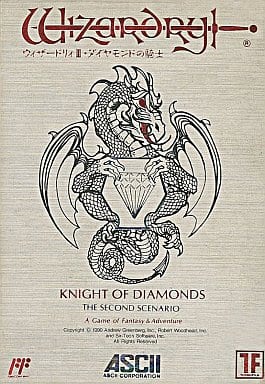
Wizardry #2 (Wizardry #2) Spoilers and Discussion Summary
Wizardry #2" is a 3D dungeon role-playing game released by Certec, Inc. in the United States in 1982. It is subtitled Knight of Diamonds. It is the second installment in the classic RPG series, the originator of the "hack and slash" genre. The mission of the adventurers is to bring back the "Staff of Nilda," which protects the city of Lilgamin and has disappeared into the "Cursed Pit of Dabalps.
Read Article
A compilation of two legendary RPGs based on Dragon Quest
Dragon Quest" is now so famous that it can be considered a national RPG, but it was not created entirely from scratch. There are two legendary RPGs in the development of Dragon Quest.
Read Article
From masterpieces to lost works! Super Nintendo RPG Summary [Wizardry: The Story of Rugamine and others].
Here we have compiled a list of famous RPGs for the Super Nintendo Entertainment System (SNES). The list ranges from well-known masterpieces, to honorable works that are not major, to stray works that are famous in a certain sense. There are also early works such as the popular RPG series "Fire Emblem" and "Final Fantasy".
Read Article
Contents
- Outline of "Wizardry Gaiden: The Five Ordeals"
- Outline and story of "Wizardry Gaiden: The Five Ordeals"
- Traveler's Property
- Children of the King Selene
- The Dvoid of Apotheosis
- The Pickled Man of Galvan
- The Wheel of Flame
- Game system for "Wizardry: The Five Ordeals"
- Bar
- Inn
- Store
- Temples
- Citadel
- Out-of-town
- Game Flow
- About Characters
- Capability value
- Race
- Character
- Age
- AC (armor class)
- Character's occupation
- Fighter
- Mage
- Priest
- Thief (Thief)
- Bishop
- Samurai
- Lord
- Ninja (Ninja)
- Treasure Chest and Trap
- Arrow of Crossbow
- Stinger
- Electric shock
- Gas bomb
- Bomb
- Spellblaster
- Rainbow Glitter
- The Goddess's Kiss
- Magnet
- Alarm
- Teleporter
- Critical hit
- Energy drain
- Destruction of weapons and armor
- Become ashes, lost
- Total annihilation
- Special Power
- Healing
- Formation and range
- Summoning spell
- Scenario Editor Service
- Characters from "Wizardry Gaiden: The Five Ordeals"
- Ally, NPC
- Earl of Selene
- Suzuke Otoko
- King of Steel
- Enemy monster
- Boundary watcher
- メラスケイモン
- Neperet
- Scotos
- Garrows
- Metal Monster
- Go * Do *
- False gods
- "Wizardry Gaiden: The Five Ordeals" (The Five Trials)
- Sun Mask
- Jewel Cupernesis
- 0 0 St. Armors
- コデックス of the contract
- Heat knuckle
- Molecular structure model
- Acid crystals
- Anraku tablet
- Steel wing
- Terms used in "Wizardry Gaiden: The Five Ordeals"
- * Inside the rock *
- * Oops *
- * I touched it! *
- A.C.
- Base Scenario
- User Scenarios
- Tangle Palace
- Eternal Guardian
- Silver Tower
- Abyss of ancient ruins
- Behind the scenes, trivia, small stories / episodes and anecdotes of "The Five Trials of Wizardry Gaiden" (The Five Ordeals)
- Basics of Redo, Reset Technique
- Bug in the game (now fixed)
- Galvin's Pickled Man is based on Galvani Electric
- Metal Monster is based on Painkiller