
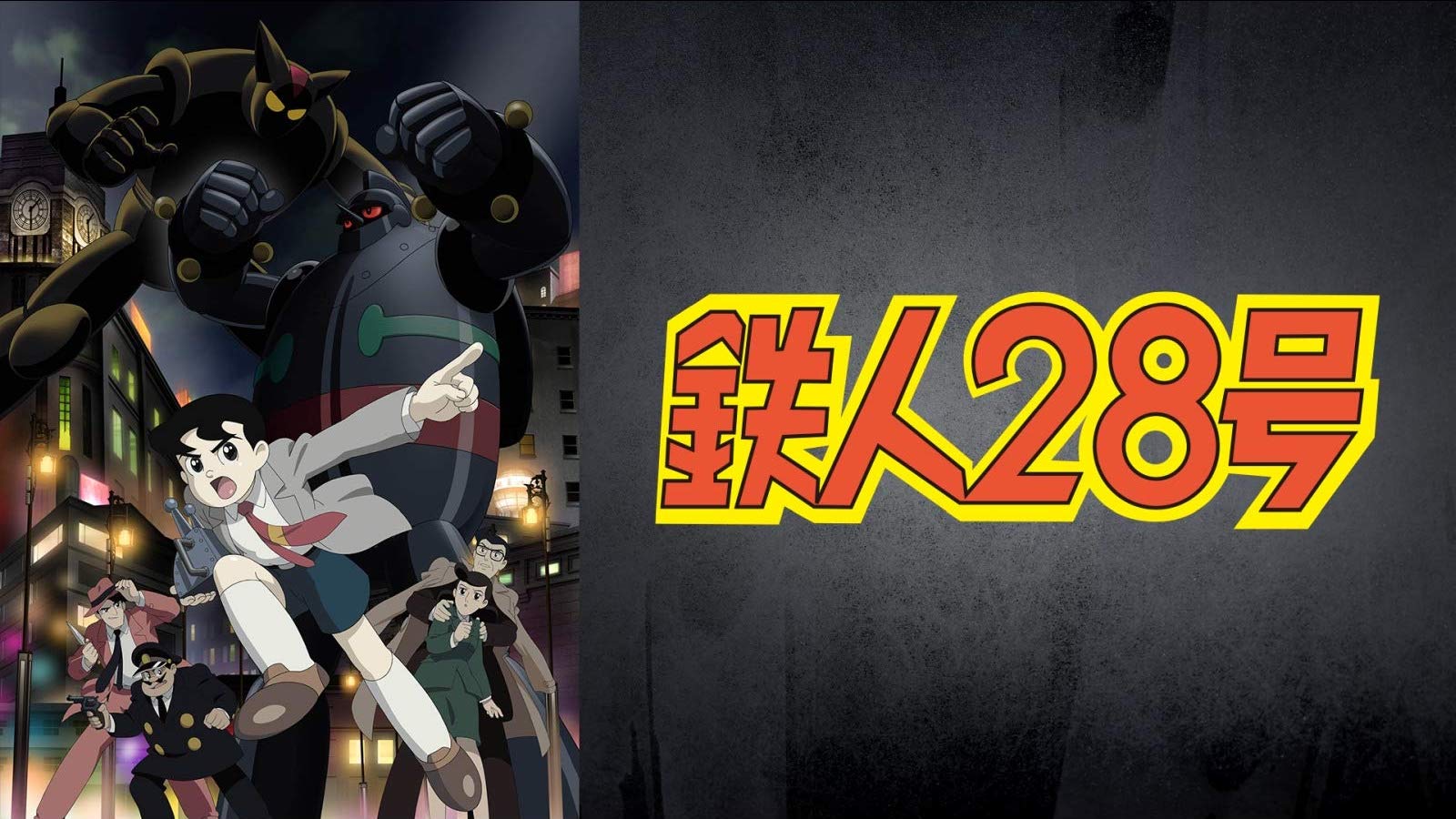
Tetsujin 28-go" is Japan's first giant robot series based on the manga by Mitsuteru Yokoyama.
It depicts the activities of a boy detective "Shotaro Kaneda" and a giant robot "Tetsujin 28-go" controlled by him.
Originally a boys' detective manga, it became extremely popular in the 1950s because of the addition of "giant robots wrestling" to the story.
Along with "Astro Boy," "Tetsuwan Atom," "Tetsujin 28-go" is a milestone work from the early days of manga and anime in Japan, and it remains strongly in the memories of the Japanese people.
Overview of IRONMAN 28
"IRONMAN 28" is the first Japanese series of giant robots based on a comic book by Mitsuteru Yokoyama.
The English title was "Gigantor" in the 1950s and 1990s, but since the 2000s English-speaking countries have used "Tetsujin 28-go" (a similar phenomenon is seen in "Kamen Rider").
"Shotaro Kaneda," a juvenile detective, and "IRONMAN 28," a giant robot controlled by Shotaro, face up to the bad guys and the robots they control.
In the 1950s and early 1960s, the Iron Man, whose size and strength far exceeded that of a human being, and the powerful "Pro-Wrestling," an enemy robot, captured the hearts of young people and instilled a longing for "giant robots."
In "MAZINGER Z," every giant Japanese robot, such as "Mobile Suit Gundam" and "NEON GENESIS EVANGELION," is said to be under the influence of the movie.
Along with "Astro Boy," it remains strongly in the memory of Japanese people as a work that shines as a landmark at the dawn of manga and anime in Japan.
This manga was inspired by "Tetsuwan Atom" by Mitsuteru Yokoyama, a mid-level cartoonist, who learned from an engineer when he was a newspaper reporter that machines had to be made large at first and then become smaller as technology developed.
In other words, in contrast to "Astro Boy," which depicts life-size robots equipped with advanced artificial intelligence in the world of the future, "Astro Boy" depicts large robots that can move only by being manipulated by humans, setting the time as the 1955 s (1950s) at the time of writing.
For this reason, while Atom was always a good boy, Tetsujin was always good or bad depending on the remote controller.
The fact that the pilot can take any action he wants, from heroic action to destructive action, was a clean hit for the boys at that time.
In other words, he succeeded in sliding his longing for cars and airplanes into the imaginary existence of giant robots.
Because it is historically popular, there are many derivative works and sequels, ranging from manga to stage to TV commercials.
Outline and story of "IRONMAN 28"
Comic book version
"IRONMAN 28" (original version)
It is equivalent to the original "IRONMAN 28" of Eikoh.
The story has many parts in common with the first period of the anime version, but at first it was serialized as' Shonen Tantei mono' (Juvenile Detective Story), and it has a strong aspect as a boy hero story similar to "Shonen Tantei Dan" and "Detective Conan."
One day, Shotaro Kaneda, a juvenile detective, comes across a scene where a huge robot of enormous size is raging.
It was "Iron Man No. 27," but it was a false report. Apparently, it was "IRONMAN 28" that was identified as No. 27. No. 27 had been easily destroyed by No. 28.
Shotaro managed to stop the IRONMAN 28's violent behavior, and took control of his power.
Later, it was revealed that the iron man was a secret weapon of the former Japanese army created by Shotaro's late father, Dr. Kaneda. The development was not in time to protect Japan during the war, but now it is time for the iron man to fulfill his mission.
Shotaro, with the help of his personal guardians, the robotics guru Dr. Shikishima, and the director of the Tokyo Metropolitan Police Department, Mr. Otsuka, begins to fight against the Japanese villains and the robots they control.
The Ironman continued to fight against the Bacchus, Blackox, Monster, and other powerful enemies that would later appear in Japan.
Sometimes he lost, but each time he got through the crisis with the wit and luck of Shotaro and his friends.
Before long, the iron man became obsolete, but he continued to protect Japan by acquiring the ability to fly with a rocket on his back and by growing himself.
IRONMAN 28: The Emperor's Coat of Arms (derived version)
It is a derivative comic by Yuichi Hasegawa.
It was set in the early 1955 s.
A girl named Alice Dragnet appeared to Shotaro, who was piloting IRONMAN 28. In parallel, mysterious robot armies appeared in various parts of Japan.
It was to compete for the seven "Emperor's Coats of Arms" that had been sent to robotics researchers from around the world. If the seven coats of arms were collected, they would be able to reach the location of the hidden treasure that Hitler brought to Japan just before the defeat of Nazi Germany.
Shotaro is not interested in the hidden treasure. However, in order to stop the damage caused by robots running wild in Japan, he participated in the scramble.
The Iron Man who had finished all the battles left this world with the determination of Shotaro and with his own volition that grew dim.
"Strategy to Regain the Iron Man" (derivative)
It is a derivative comic by Fumiya Sato.
This is a discontinued work and has not come to a true conclusion.
At the time of writing (in 2007), the stage was contemporary.
The Hikawa Research Institute, which had been working on the "Iron Man Project" in secret, was blown up by the PX group.
The aim was to steal the IRONMAN 28. Shotaro, who received an order from the Tokyo Metropolitan Police Department's 0 Division to retake the Tetsujin, and the gangster Murasame, attempted to infiltrate the PX group's underground base.
Of course, they were attacked by the PX troops and their robots.
After many twists and turns, Shotaro regains the iron man.
He made the decision to face his own destiny.
Animated version
"IRONMAN 28" (the first period)
An animated version of the original.
It is a work before color television, and it is a black-and-white image.
For this reason, some people who were viewers at that time had an image of' iron man's color = black and white.'
The story is roughly the same as the original version, but there are some differences, such as the original story of the anime being developed and the iron man being able to fly with a rocket on his back from the beginning.
In Japan in the 1950s, many families did not have a TV (the TV was a luxury item and could not be bought by low-income people), and it is said that during the time period when this film was broadcast, boys were seen crowding into the houses that had TV sets.
"TAIYO NO SHISHA TETSUJIN 28gou" (the second period)
The second phase of the anime, which was broadcast in the 1980s.
The main character, Shotaro KANEDA, became a member of Interpol and became the pilot of IRONMAN 28.
Interpol will fight the robots pointed at it by the evil Space Demon King.
Shotaro and IRONMAN 28, who defeated many enemies, eventually came to face a huge Space Demon King who was about to swallow the earth.
While the sun's rays, which are the energy source of the iron people, are cut off and they are dying, they receive information from their friends that they can win if they destroy the dark sun, which is the nucleus of the Cosmic Devil King.
Shotaro and IRONMAN 28 jump into the body of the Great Satan of the Universe to destroy the Dark Sun.
And the dark sun to be destroyed. The mission was a success.
Thus the Cosmic Devil perished, and peace came to the earth.
"Superconducting Robot IRONMAN 28 FX" (Phase 3)
The third period of the anime, which was broadcast in the 1990s.
This film is set more than 10 years after the first animated version of "IRONMAN 28," and Shotaro is an adult and has a family.
As a result, the main character, Shotaro, hit his son, Masato Kaneda, and a new robot, IRONMAN 28 FX, appeared as the main character.
Sometimes, the original ironman, who was manipulated by his father, Shotaro, also comes to the rescue, and it is depicted as a story in which old and new ironmen fight together.
Masato and FX engage in a number of fierce battles with the robots directed by the evil organization "Neo Black" and defeat them.
Eventually, it was discovered that the Neo Black president's "Zone" was a phantom created by a senior member of the group, the Devil Sword.
The Deville Fire Sword was once a robot developed by humans for space development, but it came to hate humans because it was thrown into space by humans.
However, the Devil Sword could not be accepted, and Masato and FX defeated it.
But peace has yet to come.
Comet White's Earth impact prediction. The Righteous and the Iron Man will try to destroy this comet, but it will be thwarted by the hands of a woman named Scarlet Rose.
However, the real intention of his action was nothing more than a misunderstanding that he had let his mother die.
When Scarlett's misunderstanding was eventually resolved, FX and Blackox jointly launched the final weapon, the "Genocide Buster," to destroy Comet White.
This is how peace came to the earth.
"IRONMAN 28" (the fourth period)
The fourth period of the anime, which was broadcast in the 2000s.
At the time of broadcasting, it was a late-night animation frame. Therefore, the main audience is adults in their 20s or older.
As a result, he deviated greatly from the world view that had not changed the world of boy's comic books, which had been absurd and rewarding and punishing.
The story is set in the 1955 s (1950s), which is less than half a century before the time of its broadcast. In other words, it became a period drama in a broad sense (a period drama in a narrow sense set before the Meiji Restoration).
The theme of the film is "IRONMAN 28, the legacy of the Imperial Japanese Army, looking at the Japanese people who overcame the chaotic period after World War II and are still suffering from the wounds of the war, being at the mercy of the people, and being left behind by the times."
Shotaro happens to be the pilot of IRONMAN 28, and through the help of Dr. Shikishima and Director Otsuka, he fights against the enemy. The flow itself is the same as the original.
However, the' reasons' leading to the battle are not the composition of justice and evil, but, in addition to the above theme,' those who had to enter the path of of the war, and Shotaro who did not know the war even though he cracked down on them' in addition to the above theme.
The story at the end of the story is heavily altered from the original, revealing that the iron man was planted with a "solar bomb" that would destroy the world if it exploded.
As a result, iron workers came to be regarded as dangerous and unnecessary by the Japanese government.
Shotaro suffers from this, but he still uses iron men to confront the crisis in Japan.
However, after the final battle, Tetsujin left Shotaro's control and headed for the blast furnace himself. The remote control was destroyed and there was no stopping.
However, the ironman who went to the blast furnace to "commit suicide" seemed to convey the parting words of the ironman himself and his father, Dr. Kaneda, who was the producer, saying, "I am a legacy of a dark and painful memory, and it is no longer necessary for Japan in the future. You (Shotaro) do not have to come here."
"IRONMAN 28 Gao!" (the fifth period)
The fifth period of the anime, which was broadcast in the 2010s.
Unlike the fourth period, the target audience is set to infants.
With a world view similar to that of "Anpanman," it became a work in which characters with bright, pop and cute designs had fun talking with each other.
Because of its younger audience than the original, there are anecdotes or stories of failure, especially from the viewers who became fans of the series in the fourth period.
On the other hand, the broadcast period itself is less than three years, making it the longest broadcast period in anime history.
The story takes the form of an omnibus and basically ends with one story. Since it is a short anime, the length of one story is as short as 8 minutes.
Many of the episodes are almost like educational cartoons, but around the final episode, the story was a bit like a hero, and he saved the Iron Man from a crisis approaching the earth by saying things like, "Mankind is on the verge of extinction!"
"IRONMAN 28: The Last Moon in Broad daylight" (movie version)
It is a theatrical production that shares the world view with the 4th period of anime.
However, the setting is a reset and restart of the fourth period of the animation, and the story does not continue and becomes an independent story.
One day, a man with the same name of "Osaki Shotaro" appears in front of Shotaro who is active with IRONMAN 28.
That man was Shotaro's brother-in-law. He was adopted by Kaneda and his wife, who had no children, but he was treated very well. However, it is believed that he died in the war before Shotaro was born, and his father, Dr. Kaneda, was so sad that he named his second son the same "Shotaro."
However, his older brother, Osaki Shotaro, whose heart has been hurt by the war, cannot get used to the world of peace.
Before long, Dr. Kaneda's other legacy, the "Great Ironman," appeared in Tokyo. As the name suggests, the Great Ironman was a decisive weapon that was several tens of times the size of the Ironman. It was a threat that could launch an "abandoned bomb," a weapon of wide-area destruction that could separate various parts of its body and reduce the impact to ashes.
But it has come back to life.
But Osaki Shotaro felt comfortable in a world with such weapons.
That's because Osaki Shotaro was raised as a regular iron pilot. He can only find meaning in himself by fighting. However, he felt that his position as' iron pilot' to realize that had been taken away along with his name by the birth of Shotaro.
Therefore, in order to establish his own meaning of existence in the present world, he thought that he had no choice but to deprive Shotaro of the qualification of iron pilot.
However, Shotaro, who showed desperate behavior in response to the revival of the great iron man, changed his mind and the two reconciled.
Shotaro and Osaki Shotaro joined forces to stop the Great Iron Man with the help of IRONMAN 28, and they made an oath that they would fight and survive so that they would not be swept away by the waves of this Japanese age.
Live-action

Related Articles
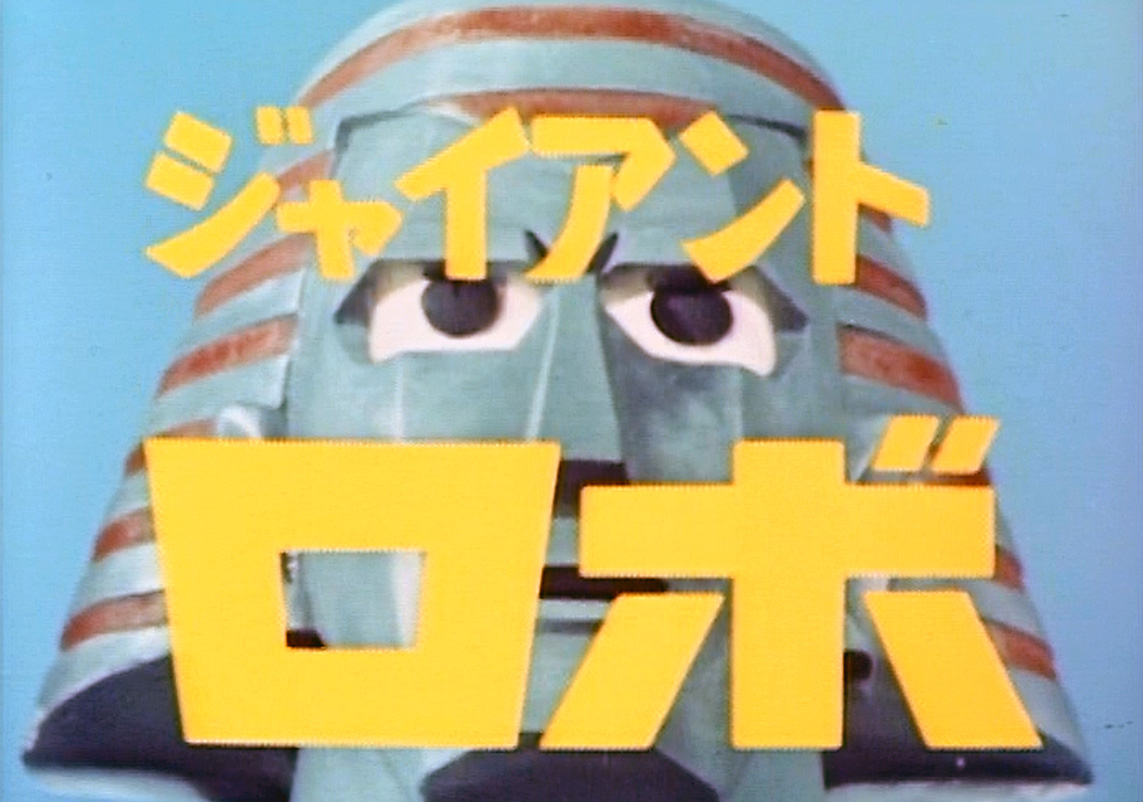
Giant Robo Spoiler Commentary and Discussion Summary
Giant Robot" is a science fiction robot manga work written by Mitsuteru Yokoyama. It was serialized in Weekly Shōnen Sunday from 1967 to 1968 in three parts. It was broadcast on the NET network from October 1967 to April 1968 for a total of 26 episodes. It depicts the activities of Daisaku Kusama, a boy who became a member of the Unicorn, and the giant robot GR1 (Giant Robot), which operates only under Daisaku's orders, through the battle between the evil organization BF Dan and the worldwide defense organization Unicorn.
Read Article
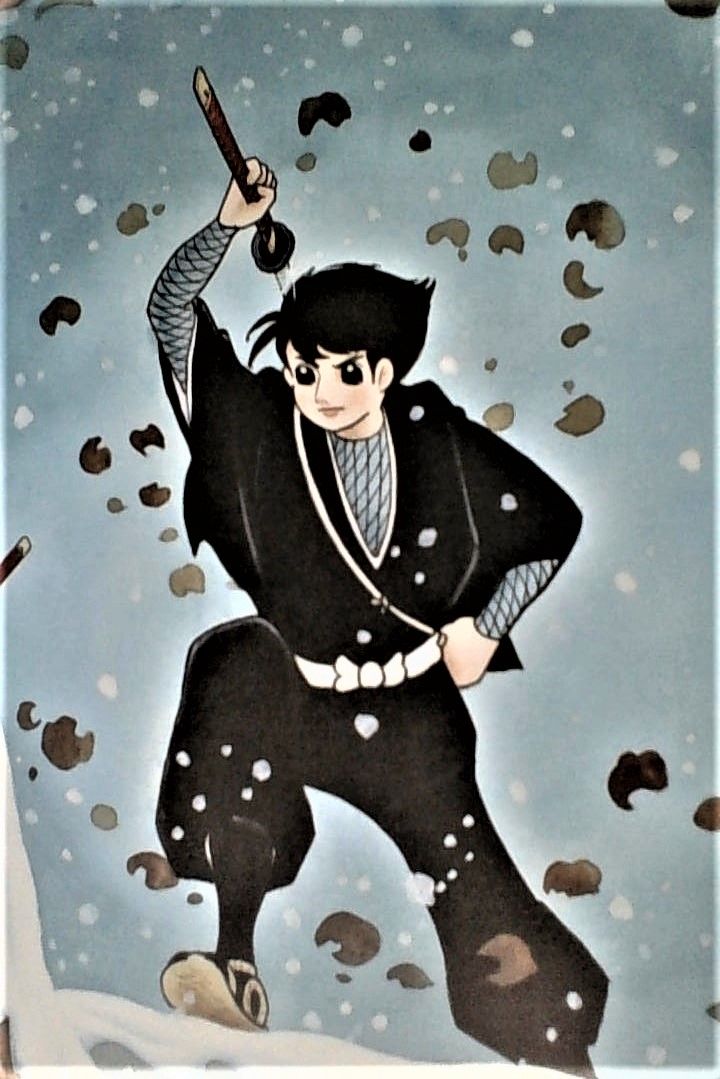
Spoiler commentary and discussion of Iga no Kagemaru (Mitsuteru Yokoyama)
Iga no Kagemaru" is a manga series by Mitsuteru Yokoyama, serialized in "Weekly Shōnen Sunday" from 1961 to 1966, which depicts the dark activities of the ninjas of the Iga, a covert organization of the Edo shogunate led by Hanzo Hattori. The main character, KAGEMARU, is a highly skilled ninja who uses kinoha no jutsu, and is well known and feared in the clandestine world. He overcomes many a tight spot by using his clever mind and cool-headed judgment to get behind his oncoming foes. This work is filled with shurikens, ninja techniques, and all kinds of ninja-like imagery, allowing the viewer to fully enjoy the world of the ninja.
Read Article
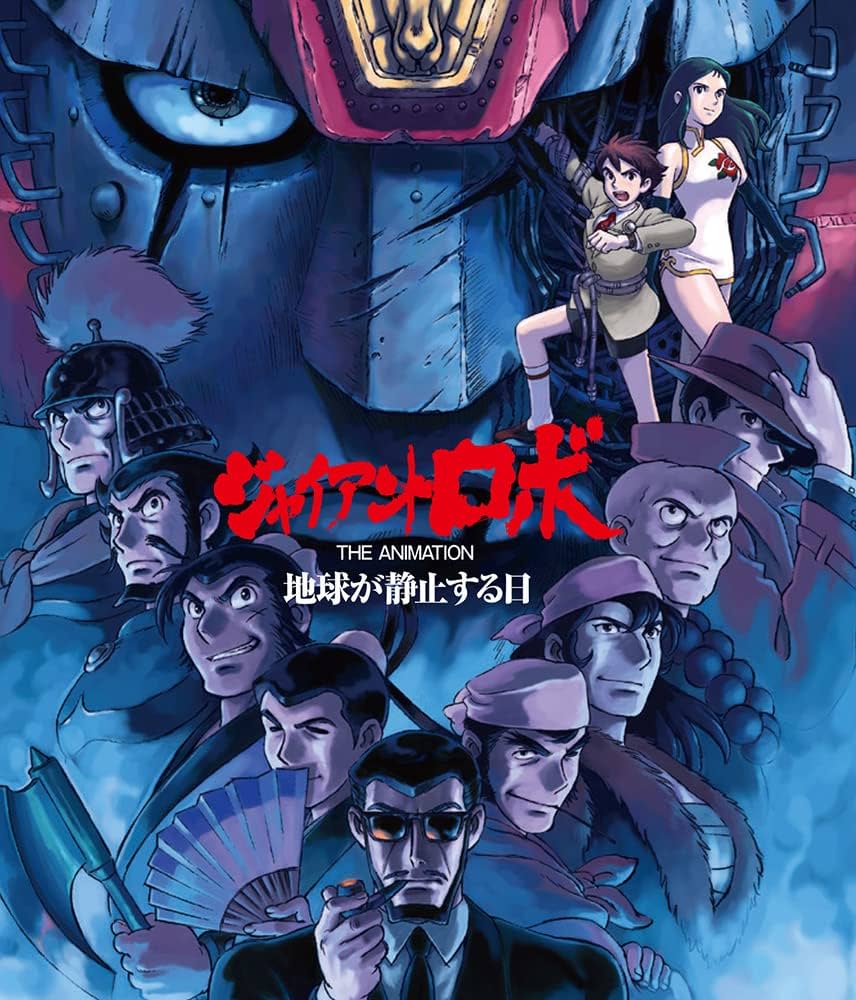
The Big Fire (BF) Squad's Ten Greatest Collections & the International Police Organization's Nine Great Heavenly Kings! Giant Robots
This section provides a summary of the ten most outstanding members of the Big Fire (BF) Squad, the secret society of evil that appears in "Giant Robots," and the Nine Great Heavenly Kings of the International Police Organization. Both are groups of strong men and full of unique members. Fans of "Giant Robo" as well as those who like tokusatsu anime should definitely take a look.
Read Article
Tags
Contents
- Overview of IRONMAN 28
- Outline and story of "IRONMAN 28"
- Comic book version
- "IRONMAN 28" (original version)
- IRONMAN 28: The Emperor's Coat of Arms (derived version)
- "Strategy to Regain the Iron Man" (derivative)
- Animated version
- "IRONMAN 28" (the first period)
- "TAIYO NO SHISHA TETSUJIN 28gou" (the second period)
- "Superconducting Robot IRONMAN 28 FX" (Phase 3)
- "IRONMAN 28" (the fourth period)
- "IRONMAN 28 Gao!" (the fifth period)
- "IRONMAN 28: The Last Moon in Broad daylight" (movie version)
- Live-action
- "IRONMAN 28" (TV drama version)
- "IRONMAN 28" (movie version)
- "28 1/2 Paranoid Giant" (the movie version)
- Radio edition
- "IRONMAN 28" (the first period)
- "IRONMAN 28" (the second period)
- Novel version
- "IRONMAN 28: Fantasy Science Fiction"
- "IRONMAN 28: The Novels"
- Theatrical version
- "IRONMAN 28"
- Commercial version
- "docomo for PCs" (CM using IRONMAN 28)
- List of IRONMAN 28 characters
- Friend of justice
- Shotaro KANEDA
- Dr. Shikishima
- Chief Otsuka
- Kenji Murasame
- Murasame 竜作
- Tetsuo Shikishima
- Dr. Kaneda
- Dr. Makimura
- Villain
- Fumanken Shuinin Hakase
- Masked monster
- Chloroform
- Nikoponsky
- Thrill Suspense
- Janelle Five
- Dr. Dragnet.
- Superhuman Kelly
- Dr. Black.
- Dr. Bigfire.
- List of IRONMAN 28 robots and mechanisms
- IRONMAN 28
- Blackox
- Monster
- Tetsujin 27
- Bacchus
- Gilbert
- Fire II
- Fire III
- Saturn
- Kaloria Ironman (fake IRONMAN 28)
- Gallon
- VL2
- Terms of the IRONMAN 28
- Remote control
- PX Group
- Words, lines, scenes from "IRONMAN 28"
- Shotaro: "Ikku! Tetsujin!"
- IRONMAN 28 "Gaoh!"
- Behind the Scenes, Trivia, Small Stories / Episodes and Anecdotes of "IRONMAN 28"
- There is a life-size standing statue in Kobe.
- "Mobile Suit Gundam."
- Superconducting Robot IRONMAN 28 FX Offends Creators
- Theme song and insert song of "IRONMAN 28"
- OP (opening): Duke Aces "IRONMAN 28"
- OP (opening): Nishirokugo Shonen Choir "Song of IRONMAN 28"
- ED (ending): "Shotaro March" (Instrumental)
- Ed Ending: Nishirokugo Boys and Girls Choir "Susume Shotaro"
- Insert: "Gang Song" by Vocal Shop