
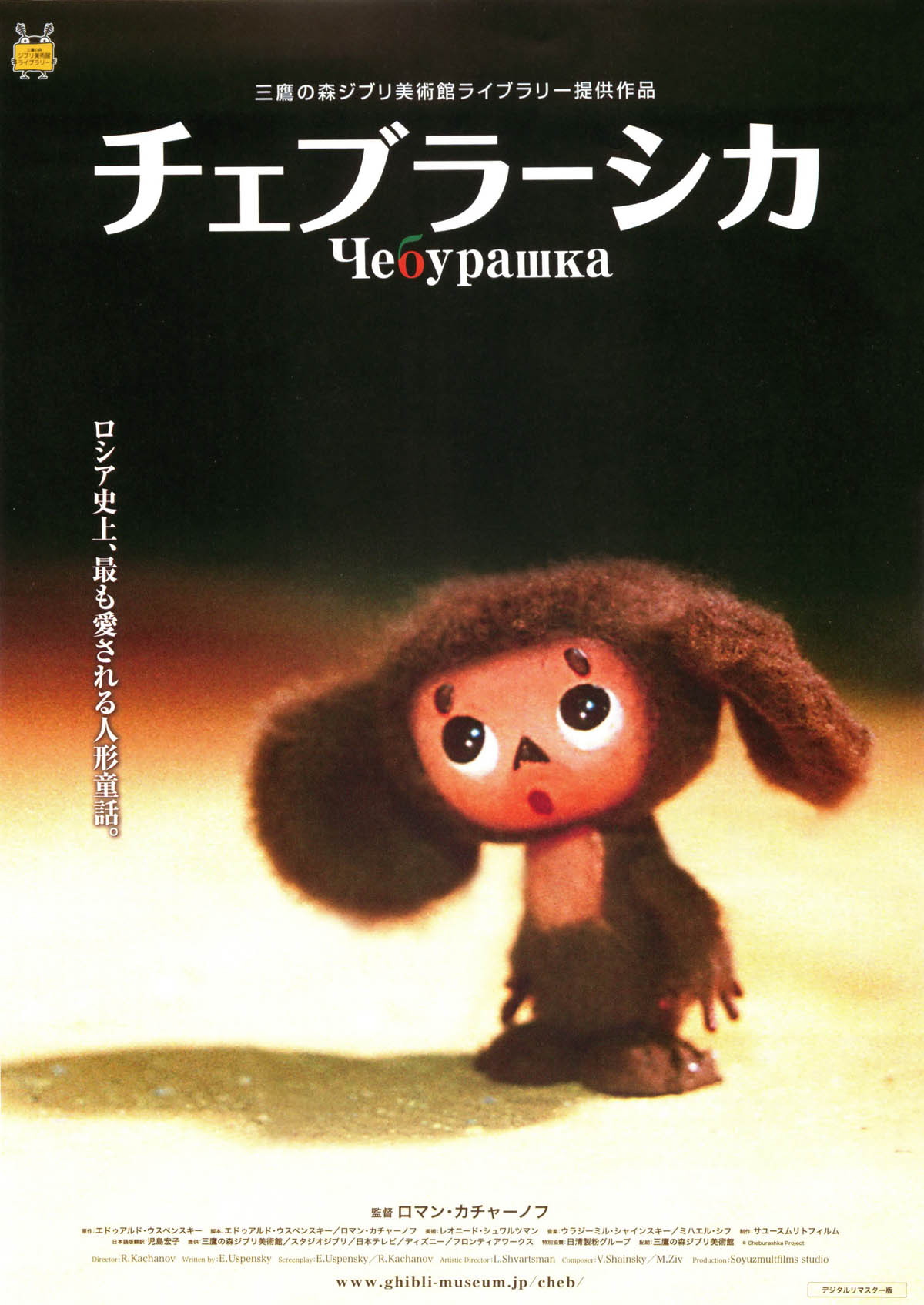
Cheburashka" is a puppet animation consisting of four episodes that was produced in the former Soviet Union (Russia) from 1969 to 1983. The story centers on Cheburashka, who arrives packed in a box of tropical oranges, and Gena, a kind-hearted crocodile who works at a zoo. While Cheburashka's lovability has made him popular in Japan and around the world, the story also depicts themes such as loneliness and identity. It is also attracting attention as a work with a unique worldview that has a dark side.
Geena was inspired by Lev Chandol, who came to visit her and said, "I'm not alone anymore." Geena began to build the house with Cheburashka and other animals. The house is a place where people can gather to be "alone." The town is probably full of people. But the animals that helped build the house are no longer needed because they have already served the purpose of becoming friends. ガーリャ proposes to live in Cheburashka, where she used to live in a telephone booth, but Cheburashka says she will be a kindergarten and I will work as a toy. "House of." is a Soviet expression that is also used to refer to the community center and castle ruins of the time.
The words, lines, scenes and scenes of "Cheburashka"
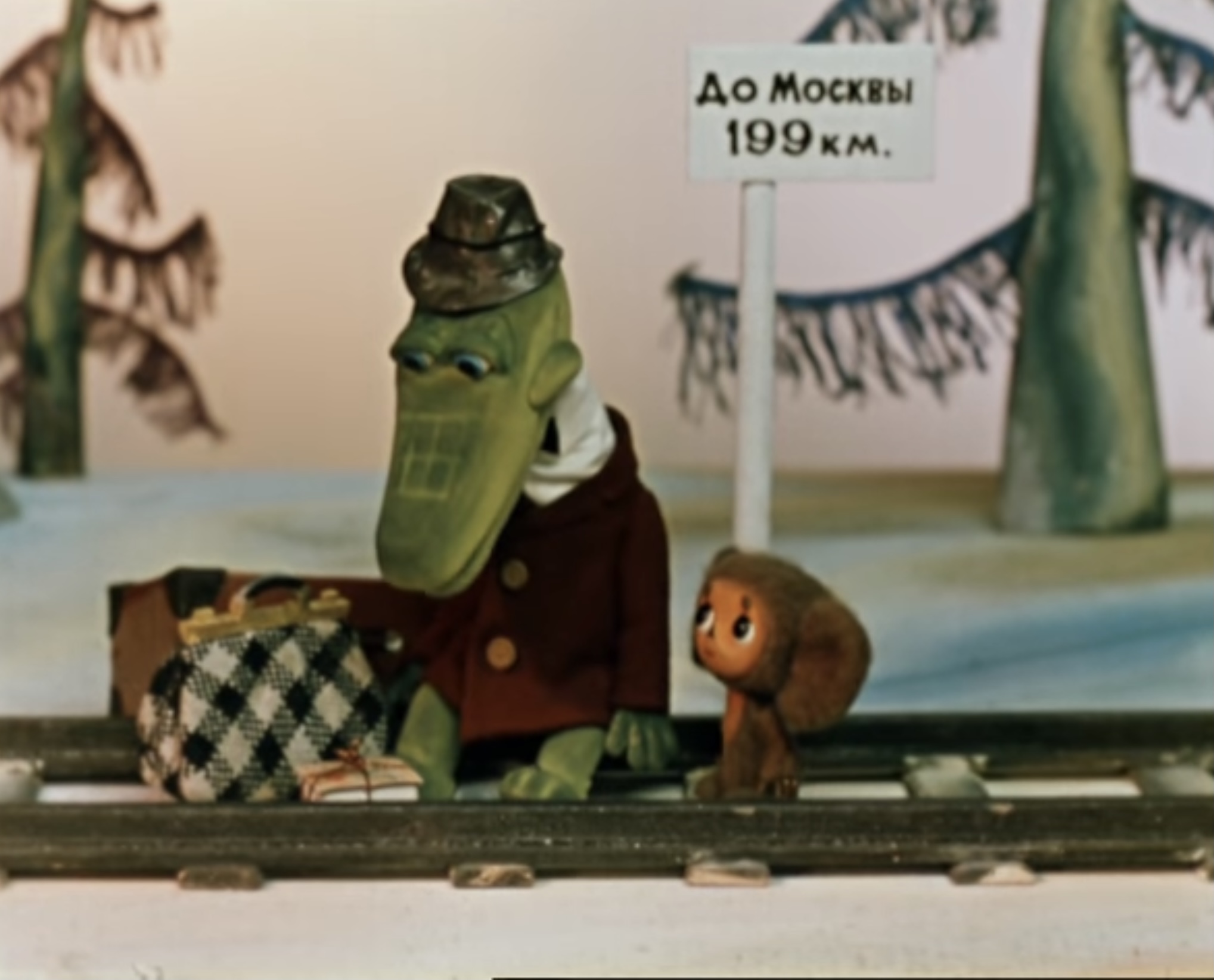
Geena and Cheburashka (from left) are at a loss on the tracks.
Even though it was created for the purpose of criticizing society, the reason why it continues to be popular to this day is the personality of the characters. Even in the heartwarming story, the characters who face unreasonable treatment with goodness are impressive.
Completion of Minna no Ie
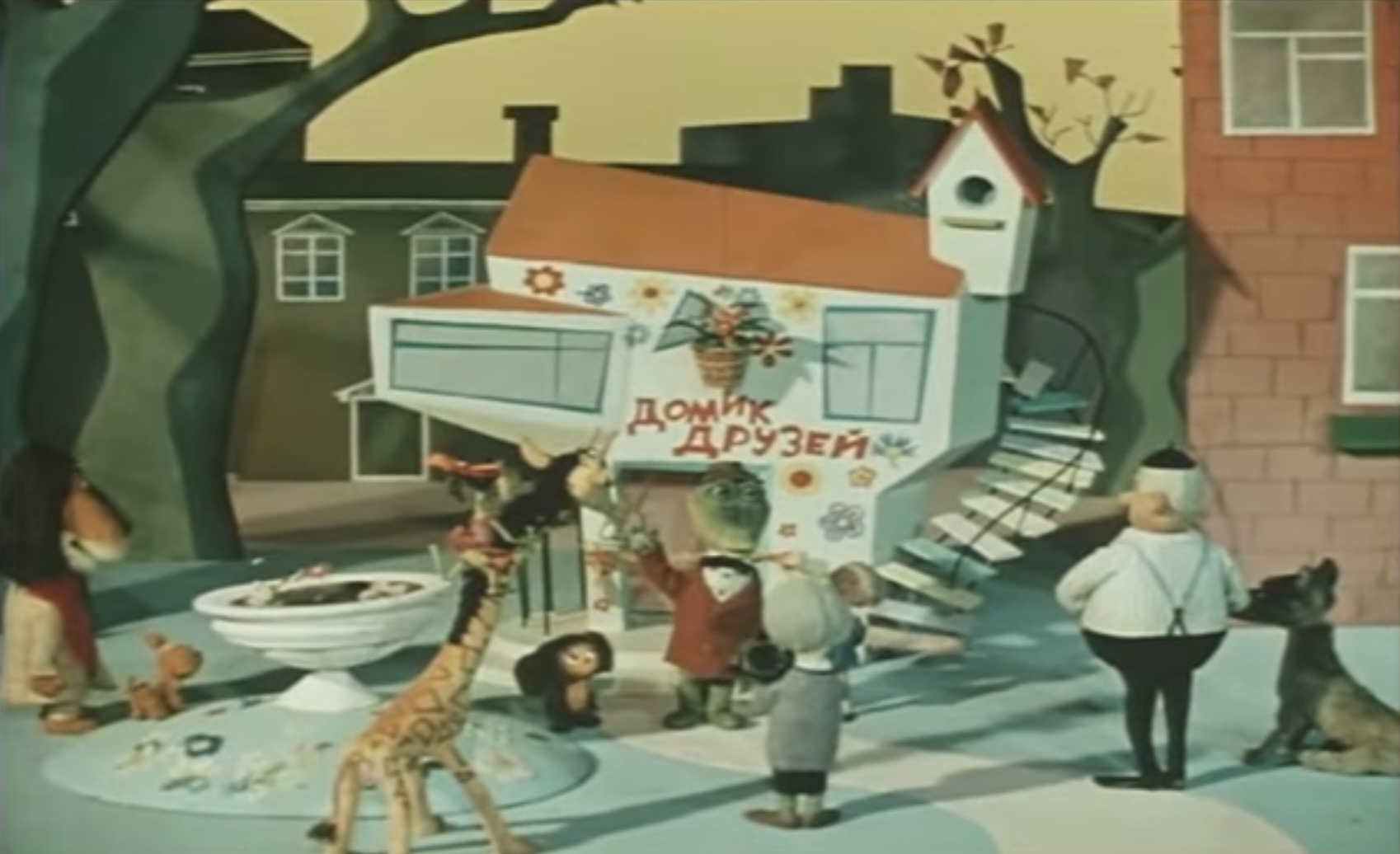
Everyone is pleased with the completion of "Everyone's House".
Gena, Cheburashka, and many other animals and humans built the House of All. The house was originally built for lonely people to make friends, but since it was built, it became unnecessary for them to make friends. So ガーリャ suggested that she live in Cheburashka, where she lives in a telephone booth. Cheburashka said that she wanted to be a kindergarten for everyone and work as a toy. It was partly because he disliked loneliness, but he was touched by the feeling that he wanted to use the house not only for himself but also for someone else. It was also impressive that everyone around him supported him without denying his desire to work as a toy.
Getting lost, finding the fruit of the tree
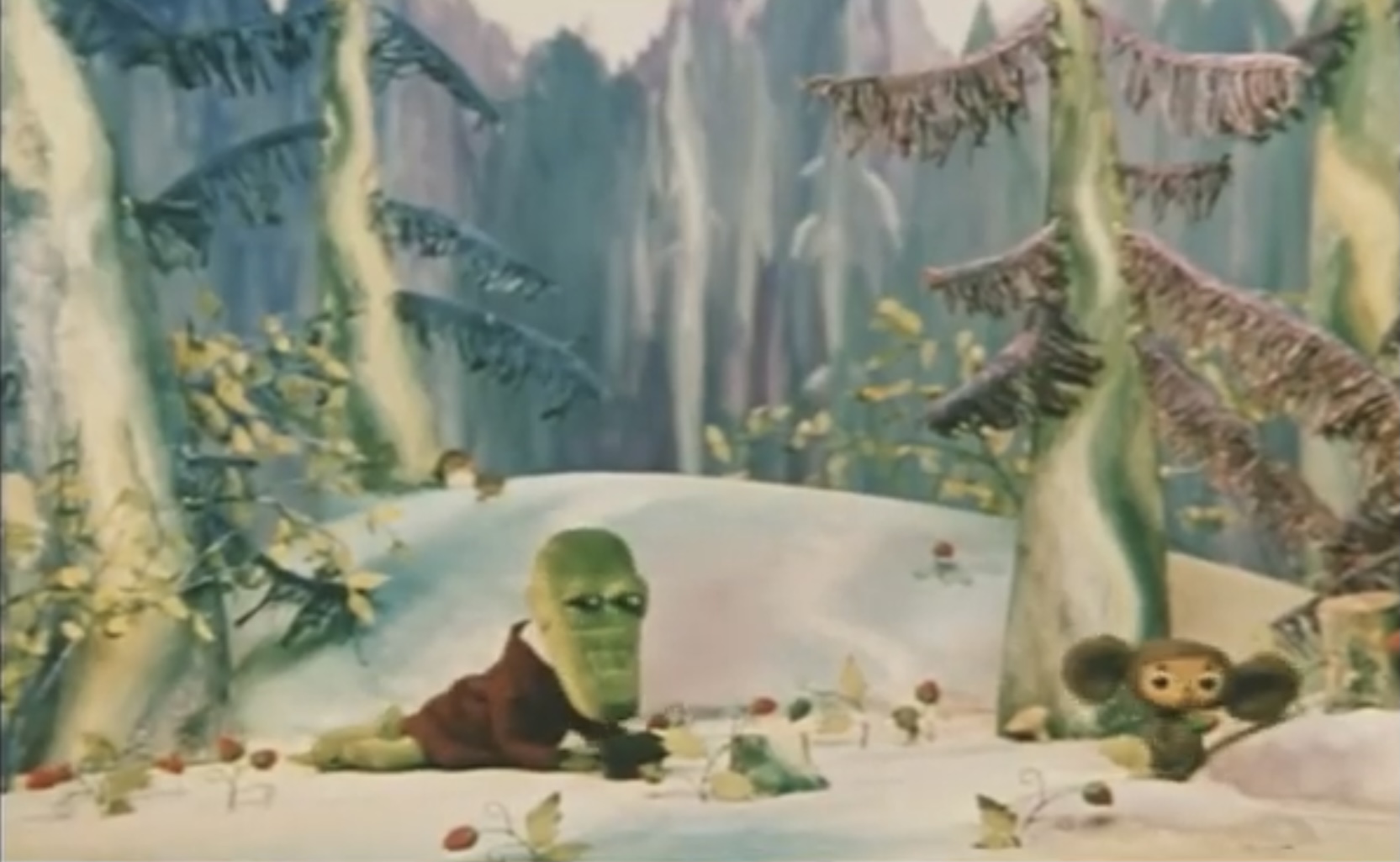
Geena and Cheburashka (from left) are engrossed in nuts.
Cheburashka and Ghena go on their first trip, but along the way シャパクリャク steals their tickets and wallet and pulls them off the train. They decide they have no choice but to walk home, which emphasizes the character's personality.
Cheburashka and Geena talk to each other to encourage each other. Cheburashka, who is thinking of Geena who is having a hard time with the baggage of the trip, suggests, "I will take the baggage, so Geena will take me." Geena, who feels the kindness of Cheburashka while making a strange suggestion that Geena takes everything on her own, leaves a bag on the railroad and holds Cheburashka, saying, "Well, that's a good idea." Then, Geena calls out breathlessly, "The important thing is that if you follow the railroad like this, you will never get lost." However, the railroad is divided into two ways and the chosen path is a dead end. However, the two find the fruit of the tree in the wrong way. It is also a unique scene, and I am touched by the fact that they keep good things and find hope in spite of difficulties. In the Soviet Union, where the Communist Party held great ideals at the time of the production, the common people were living a fruitless life. They might have been the only ones who stood close to the common people as they faced repeated difficulties.
Ghena "Rest assured, Cheburashka. The season is now fall. In other words, there will be no puddles or mud on the tracks."
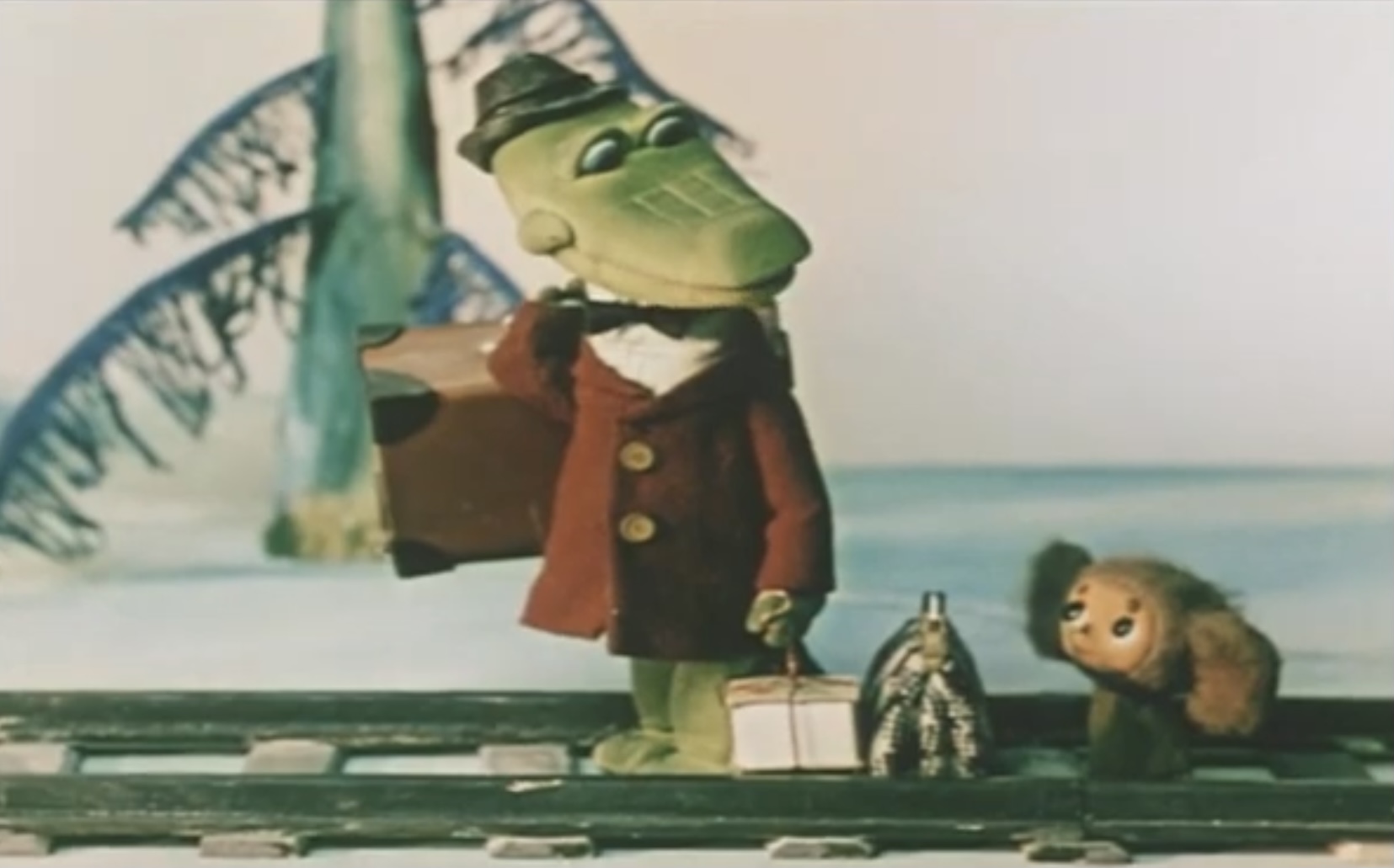
From the left are Geena and Cheburashka.
Geena and Cheburashka had their wallets and tickets stolen on their first trip. When they had no choice but to turn back along the tracks, Geena said to them on the snowy road, "Don't worry, Cheburashka. The season is now fall. In other words, there is no puddle or mud on the tracks." The two of them looked very depressed after the fun trip was ruined, but even if things didn't go well, they looked for the good side and faced the present situation. The name of Zelif is nice and gentle.
シャパクリャク "Going by trolley is シャパクリャク Granny"
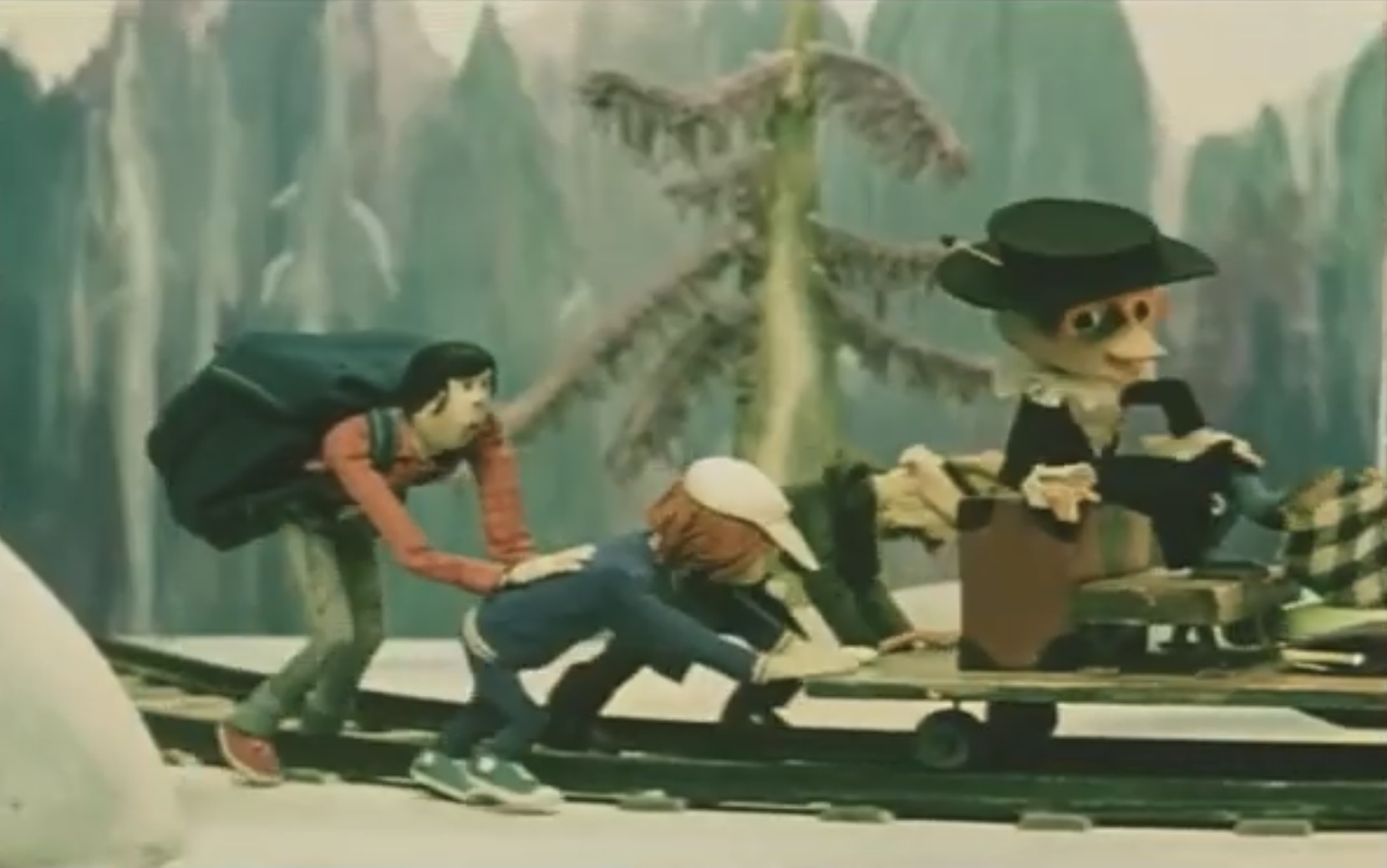
シャパクリャク appears in a trolley car pushed by travelers.
シャパクリャク, who is always invisible and shrewd, falls into a trap set by tourists along with Cheburashka and Geena. There, he declares that he will make them angry. After that, he appears while singing on a trolley pushed by all the tourists. "Going by trolley is シャパクリャク Granny". You can feel a touch of excitement different from that of Geena from the majestic singing.
Behind the Scenes, Trivia, Small Stories / Episodes and Anecdotes of "Cheburashka"
The name "Cheburashka" comes from the behavior of the daughter of an acquaintance.
The name "Cheburashka" was taken by Uspensky from a remark made by an acquaintance. When his acquaintance's little daughter stepped on his fur coat and fell, the acquaintance said, "It's like falling down." He thought this was an interesting expression and named the character.
Long-time DV author
His daughter testified that Eduard Uspensky, the author of the novel, had been a domestic abuser for many years. In 2020, when there was talk of naming Uspensky for the Russian Children's Literature Prize, Uspensky's daughter published an open letter saying, "My father is not the right person." In response, the National Children's Library refused to remove Uspensky's name from the prize, saying, "I only see his contributions to literature, not his private qualities."
In addition, Uspensky said about the character called シャパクリャク in the play that she was herself. シャパクリャク's cycle of being gentle after being bullied overlaps with the so-called' domestic violence cycle theory,' and it can be said that she has an aspect of overlapping her own behavior pattern, whether intentionally or unintentionally.
Conflict with Japan over animation rights
It is no exaggeration to say that the issue of rights cannot be separated from "Cheburashka," as character goods have been distributed without permission in the Soviet Union by the original author and Leonite Schwarzman, the author of the character, since the beginning of the production. "Cheburashka," which was co-produced with the Japanese side and released in 2010, is also at odds over the same rights. The Japanese side's Cheburashka Project Limited Partnership explained that it received exclusive licenses from both the late Uspensky, the original author, and the copyright holder of the Soviet-era animated film when it carried out the business of remaking and commercializing Cheburashka. However, the Russian side claimed that "the copyright of Cheburashka was handed over to the Japanese side by a former executive 16 years ago, but there are serious differences of opinion between the two sides over the terms and conditions of the contract," and the Japanese side is also said to have been manipulated by the Russian side when the official website was not accessible.
Theme song and insert song of "Cheburashka"

![The Snow Queen] Five Russian animation masterpieces with ties to Ghibli [Cheburashka].](https://renote.net/files/blobs/proxy/eyJfcmFpbHMiOnsiZGF0YSI6ODU4Mzc1NywicHVyIjoiYmxvYl9pZCJ9fQ==--e54a013af6f680049afcbc6628895959abf276e1/a0046233_21163573.jpg)
Tags
Contents
- Overview of "Cheburashka"
- Outline and story of "Cheburashka"
- Episode 1: "Hello Cheburashka"
- The second episode: "I WANT TO GO TO PEONER"
- EPISODE 3: "Cheburashka to Kaitō Grandmothera"
- Chapter 4: "Going to Cheburashka School"
- Fictional character from Cheburashka
- Cheburashka
- Geena
- シャパクリャク
- Larisca
- ガーリャ
- Lev Chandor
- Tovik
- Anita
- Mariah France Buna
- Cat
- Term for "Cheburashka"
- "Galmoshka."
- "Pioneer."
- "Home for All."
- The words, lines, scenes and scenes of "Cheburashka"
- Completion of Minna no Ie
- Getting lost, finding the fruit of the tree
- Ghena "Rest assured, Cheburashka. The season is now fall. In other words, there will be no puddles or mud on the tracks."
- シャパクリャク "Going by trolley is シャパクリャク Granny"
- Behind the Scenes, Trivia, Small Stories / Episodes and Anecdotes of "Cheburashka"
- The name "Cheburashka" comes from the behavior of the daughter of an acquaintance.
- Long-time DV author
- Conflict with Japan over animation rights
- Theme song and insert song of "Cheburashka"
- Insertion: Cheburashka (Larisa Brokhman),' Boku wa Cheburashka' (I am Cheburashka)
- Insert: "Sky Blue Train" by Gena (Vasily Livanov)