
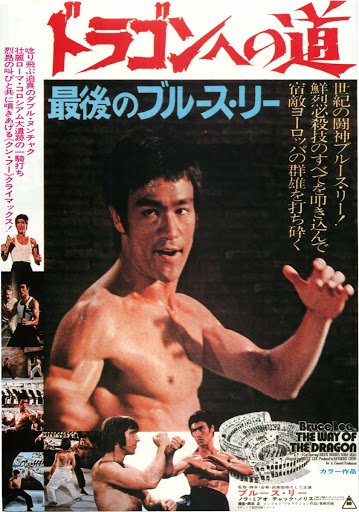
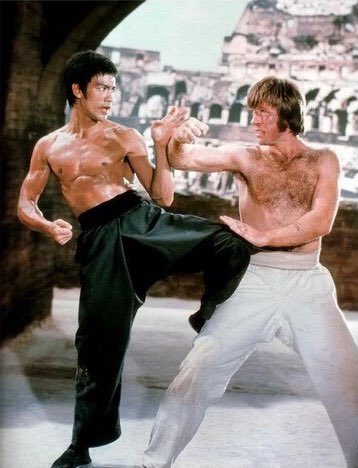
The Road to the Dragon" is a kung-fu film set in Rome, Italy, about a kung-fu master and a Chinese restaurant worker who confront a gangster's misdeeds. It is the first overseas location film directed by Bruce Lee, and in contrast to his two previous films, "Dragon Crisis" and "Dragon's Wrath", his performance in this film is often comical. The climactic confrontation scene between Bruce Lee and Chuck Norris at the Colosseum is still talked about today and has influenced many filmmakers.
Colosseum
Source: pbs.twimg.com
It is the place where Thang Long and martial artist Colt faced each other at the climax of this movie. It is a circular arena built by Emperor Vespasian and Emperor Titus in 80 AD during the Roman imperial period. It is also famous as a tourist spot representing the Italian capital of Rome. However, the scene of the fight between Thang Long and Colt was filmed in a set in Hong Kong without permission.
Kaichoon
Source: lh3.googleusercontent.com
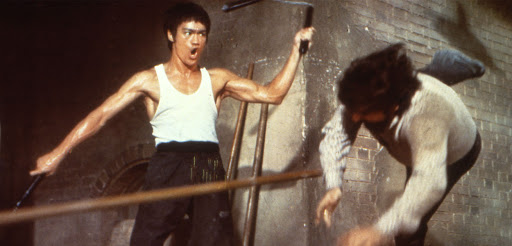
Thang Long (Bruce Lee, photo left) makes a roaring sound and performs kung fu.
The shouting voice of Bruce Lee when he fights in the movie is expressed in this way, but when "Road to the Dragon" was released, it was called' Zekeru' (screaming) or' Oshout' (roaring).
Gymnastics

Source: pds.exblog.jp
Thang Long stretches before a battle with Colt.
In this movie, you can also enjoy Bruce Lee's gymnastics such as the stretch scene in front of the mirror in the first half of the story and the bending and stretching exercise before the battle with Colt at the climax. This alone gives you a glimpse of his physical ability.
Words, lines, scenes and scenes of "Road to the Dragon"
Thang Long: "This is Chinese Martial Art"
Source: www.cinemanavi.com
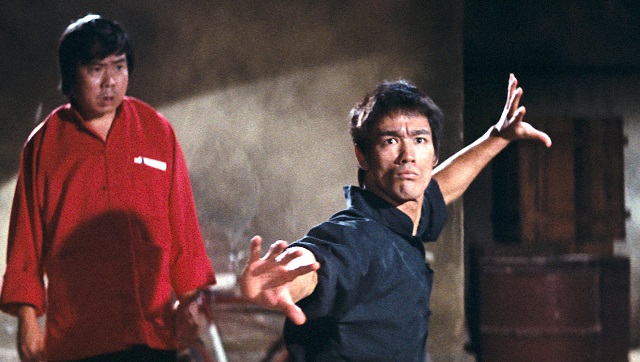
Thang Long (right) poses.
The employees were angry at the gang group who came to harass Chen's shop and tried to fight in the back of the shop, but Jimmy, one of the employees, was easily beaten by the gang. Then Thang Long, who was watching the situation, stood up. He showed a kung fu posture and said, "This is Chinese martial art," and defeated the gang one by one. After this incident, the employees started to trust Thang Long, and Chen also started to love Thang Long.
Thang Long: "If You Cause Trouble, You Will Suffer, Translate!"
Source: cdn1.i-scmp.com
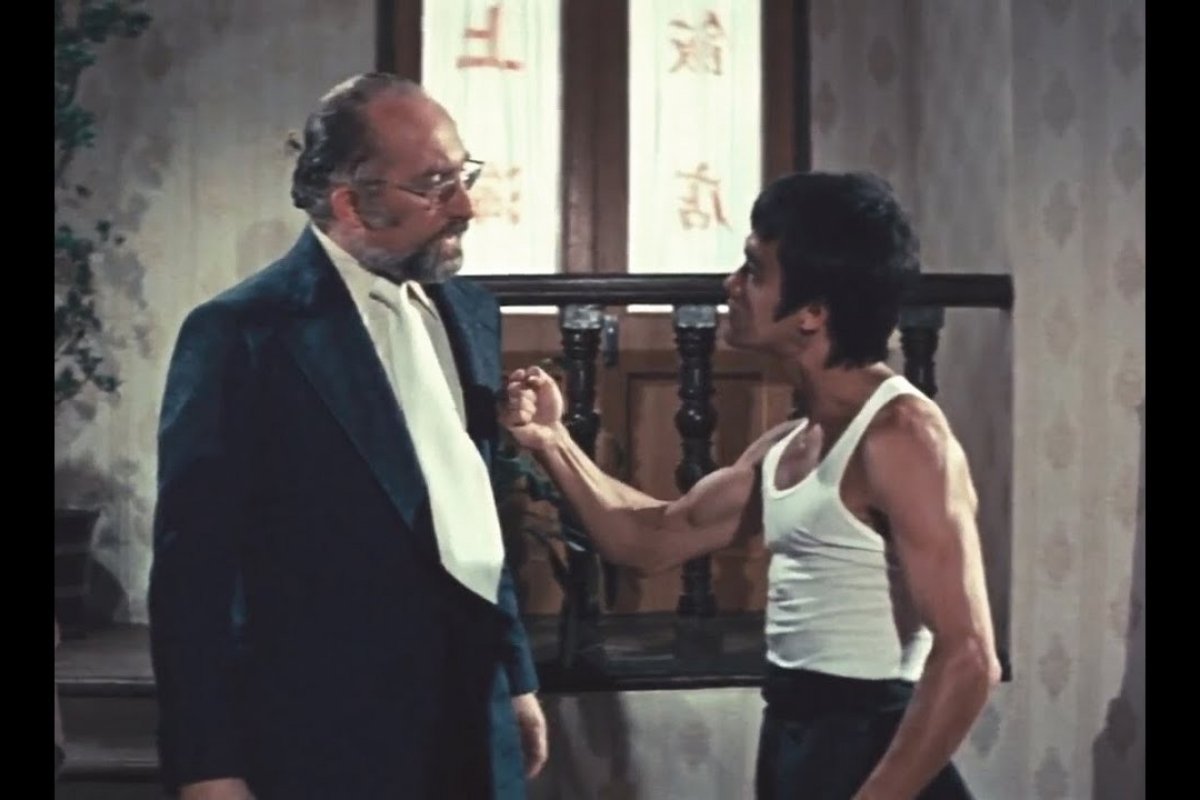
Thang Long (right) thrusts his fist at the gang boss (left).
The gang boss comes to Chen's shop with Ho, his subordinate and interpreter, and one of his men puts a gun on Thang Long and takes him to the back of the shop. After that, the bosses urge Chen to sell the shop's land. However, Thang Long repels the outside retainers, comes inside the shop and defeats the gang inside the shop, and the boss's plan fails. When the boss and Ho try to escape from the place, Thang Long walks up to them and says, "If you cause trouble, you'll get hurt, translate!" Thang Long, who can't speak a foreign language, tells Ho to translate his words, Ho tells the boss the same thing in English, and the gang group leaves.
Hasehira: "Oh, wow! Is it Tanron?": "Oh, ouch!"
Source: img1.daumcdn.net
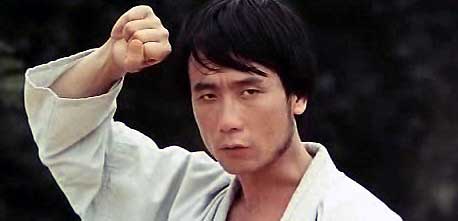
Japanese martial artist Hasehira
In the second half of the story, Won In-a Japanese karate player played by Wong In-shik, asks Thang Long, "Oh, wow! Is it Thang Long?" when he challenges Thang Long to a match. Then Thang Long challenges the match with a nod and easily loses, saying, "Ouch! Ouch!" in pain. This Japanese line with his great intonation is often used as a topic of conversation among Bruce Lee fans even today.
The Secret Story, Trivia, and Small Stories / Episodes and Anecdotes of "The Road to the Dragon"
"The Path to the Dragon" loved by the family

Source: cdn-ak.f.st-hatena.com
In the opening scene of "The Road to the Dragon," the main character Thang Long (left picture) and a guest he met in the airport lobby (right picture).
Mrs. Linda, Bruce Lee's wife, later said in an interview that her favorite work was "The Road to the Dragon" because "the humorous part (of the play) is the closest to him (Bruce Lee)."
Influence on celebrities

Related Articles
Spoiler commentary and discussion of Enter the Dragon
Burning Dragon" is a kung-fu action film produced in 1973 as a co-production between Hong Kong and the United States. The film was a worldwide hit and sparked a kung fu film boom. The film stars Hong Kong actor and martial arts master Bruce Lee. He died suddenly shortly after completing this film, making this his last work. On a fortress island off the coast of Hong Kong, a tournament is held for martial arts masters. Lee, a young Chinese man who participates in the tournament as a secret agent at the request of the British government, obtains evidence of drug trafficking on the island and confronts a powerful evil using Shaolin Kempo as his weapon.
Read Article
Spoiler commentary and discussion of Dragon's Fist of Fury (Fist of Fury)
Dragon Fury" is a Hong Kong film produced in 1972. It is the second in a series of kung fu films starring Bruce Lee, who became a top star in Hong Kong after the success of his previous film, "Dragon Crisis. It was released in Japan in 1974. Set in Shanghai in the early 1900s, when Japanese imperialism was rampant, the film depicts a young man whose former teacher was killed by a faction of Japanese martial artists who are plotting to destroy the Chinese martial arts dojo "Seibukan," and he single-handedly confronts the faction in order to exact revenge.
Read Article
Dragon Crisis (film) Spoiler Commentary and Discussion Summary
Dragon Crisis is a Hong Kong film produced in 1971. It was the first in a series of kung fu films starring Bruce Lee, who made a triumphant return to Hong Kong from the United States, under contract to Golden Harvest. It was a huge hit in Hong Kong, breaking box office records at the time. In Japan, it was released in theaters in 1974, following the popularity of the hit film "Burning Dragon. A young man from the countryside goes to work at an ice factory in town, but when he discovers that the factory is involved in drug crimes, he challenges the factory gang to a fight.
Read Article
Spoiler alerts and discussion of the death play (Hong Kong movie).
Death Play" is a 1978 Hong Kong film directed by Robert Close and starring Bruce Lee. Star actor Billy Law is offered a contract by a syndicate organization, but he stubbornly refuses. One day during filming, Billy is shot and thought to have been killed by a bullet, but in fact Billy is not dead and takes the fight to the syndicate single-handedly. After shooting the action scenes in 1972, Bruce Lee passed away suddenly. A few years later, a substitute stuntman was used for additional filming, and the film was produced in 1978.
Read Article
Who is the coolest guy in the eyes of men?
We have compiled a list of the coolest men to choose from.
Read Article
Late Night Gintama⁉"Osomatsu-san" Episode 7 Parody Summary
Episode 7 is all about Totti! We've also included a parody of Totti... and this time we've put together a parody of episode 7!
Read Article
Tags
Contents
- Overview of The Path to the Dragon
- Outline and story of "Road to Dragon"
- Characters in "Road to the Dragon"
- Thang Long (played by Bruce Lee)
- Cheng (played by Nora Miao)
- Jimmie (played by Unicorn Chan)
- Tony (played by Tony Liu)
- American martial artist Colt (played by Chuck Norris)
- Fred, a European martial artist (played by Robert Wall)
- Japanese martial artist Hasehei (played by Won In-shik)
- Gang Guy Ho (played by Paul Wei Ping-ao)
- Uncle Wang (played by Huang Tsung Hsing)
- Gang boss (played by John Venn)
- Street (played by Malisa Longo)
- Term for "the path to the dragon"
- Double nunchuk
- Colosseum
- Kaichoon
- Gymnastics
- Words, lines, scenes and scenes of "Road to the Dragon"
- Thang Long: "This is Chinese Martial Art"
- Thang Long: "If You Cause Trouble, You Will Suffer, Translate!"
- Hasehira: "Oh, wow! Is it Tanron?": "Oh, ouch!"
- The Secret Story, Trivia, and Small Stories / Episodes and Anecdotes of "The Road to the Dragon"
- "The Path to the Dragon" loved by the family
- Influence on celebrities
- Trouble over distribution rights between Toho Towa and Toei
- Relationship with the phantom work "Seiho"
- Theme song and insert song of "Road to Dragon"
- Theme song: Joseph Koo "WAY OF THE DRAGON (electric guitar ver.)"
- Theme song: "The Road to the Dragon" by Mike Remedios