
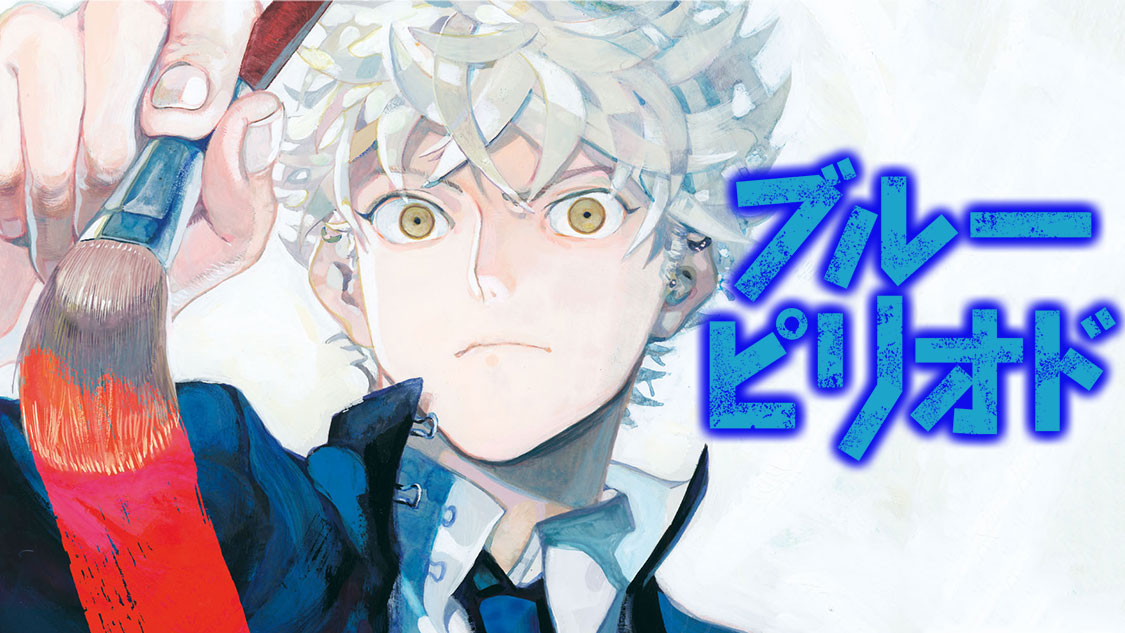
Blue Period" is a youth manga about young people facing "art" serialized by Tsubasa Yamaguchi in "Monthly Afternoon" (Kodansha) since 2017. The main character, a high school sophomore who has nothing in particular to be passionate about and who feels a sense of emptiness in his daily life, is drawn to the world of painting through an art class and decides to apply to Tokyo University of the Arts, which boasts the highest ratio of applicants to applicants in Japan. This is an ensemble coming-of-age drama that depicts the anguish and struggles of the protagonist and his friends, who continue to struggle without giving up no matter how many times they are beaten down by the harshness of the art world.
Sakurai
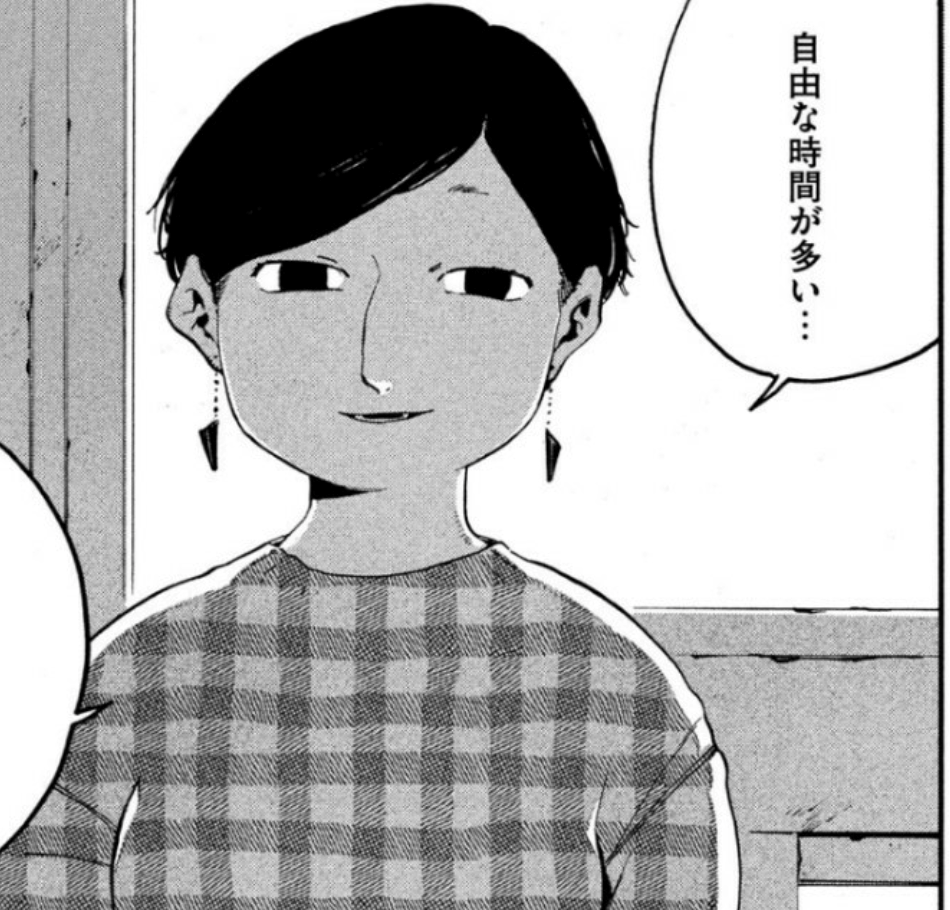
Assistant at the Wall Painting Institute. Supports professor Roh.
Term "blue period"
Preparatory school, Tokyo School of Fine Arts (東美)
At the recommendation of Saeki, Hatora and Yuka attend a preparatory school specializing in the art college entrance exam. Hatora is majoring in oil painting and Yuka is majoring in Japanese painting. At this preparatory school, they meet Maki and Yu, who are taking part in the art college together, and Setanosuke, who will become a classmate at the art college. The model is the Shinjuku Art Academy (Niimi). Niimi is one of Japan's leading art college entrance exam preparatory schools in Shinjuku Ward, Tokyo, and is also the alma mater of the author, Yamaguchi.
Tokyo University of the Arts
It is the only National University of Integrated Arts in Japan and has produced many outstanding artists. It consists of 2 faculties and 14 departments: Faculty of Art (Department of Painting, Department of Sculpture, Department of Crafts, Department of Architecture, Department of Design, Department of Advanced Art and Expression, and Department of Art) and Faculty of Music (Department of Composition, Department of Command, Department of Vocal, Department of Instrumental, Department of Japanese Music, Department of Music Science, and Department of Creating a Musical Environment), and Graduate School of Art, Graduate School of Music, and Graduate School of Cinematography. This work focuses on the oil painting
Tama Art University (タマビ)
Established in 1953 in Setagaya Ward, Tokyo Prefecture, it is a private university whose abbreviated names are Tamami (タマビ) and TAU. It consists of 10 departments of the School of Fine Arts (Department of Painting, Department of Sculpture, Department of Crafts, Department of Graphic Design, Department of Production Design, Department of Environmental Design, Department of Information Design, Department of Integrated Design, Department of Theater and Dance Design, and Department of Fine Arts), 6 departments of the Master's Course (Department of Painting, Department of Sculpture, Department of Crafts, Department of Design, Department of Art Studies, and Department of Theater Dance), and a doctoral course (Department of Fine Arts). In Hashida
Musashino Art University (Musashi)
It is a private university established in 1962 in Kodaira, Tokyo Prefecture. The abbreviated name of the university is 武蔵美 (Mousavi) or MAU. It consists of two faculties and 12 departments: the Faculty of Art and Design (Department of Japanese Painting, Department of Oil Painting, Department of Sculpture, Department of Visual Transmission Design, Department of Industrial Design, Department of Spatial Production Design, Department of Architecture, Department of Basic Design, Department of Art and Culture, and Department of Design Information), and the Faculty of Art and Design (Department of Creative Innovation and Department of Imaging), as well as the Graduate School of Art and Design and the Graduate School of Art and Design. In the story
Oil painting
Oil painting is a type of painting that uses oil as a medium to dissolve pigments. The oil painting course is a course in which you learn the technique of drawing using such drawing materials, but in the oil painting specialization of the painting department of the National University of the Arts, where the main character, Hatora, took the entrance examination and went on to study, there is a tendency not to be bound by the conventional category of oil painting, which is "to construct a new concept of painting that integrates diversified expressions, and to express using various expression media ranging from traditional to advanced technologies." The author, Mr. Yamaguchi, is also a graduate of the oil painting specialization of the National University of the Arts, but he submitted manga for his graduation work.
Department of Japanese Painting
Japanese-style painting is a type of painting that was introduced to Japan at the same time as Buddhism, using painting materials and techniques. In ancient times, Japanese-style painting materials were used for all of the murals of ancient tombs, the coloring of Buddhist statues, fusuma-e paintings, and hanging scrolls. In the department of Japanese-style painting, students learn this traditional technique. In this work, Yuka takes an examination for the Japanese-style painting major in the department of painting at the National University of the Arts.
Eskis
The word "Eskis" has a similar meaning to "sketch," but generally refers to a draft. In the Blue Period, Hatora and others write their compositions and themes in a sketchbook before starting to make works in the first and second exams of the National University of the Performing Arts. At the National University of the Performing Arts, this Eskis is also subject to scoring.
Sketch
It is also called "Subyo" or "Subaki" and refers to an artistic production technique or work in which the shape, light and dark of an object are drawn on a plane. In the work, it is described as "a method of training to improve observation and technical skills by grasping the shape, space and texture." At the university where Hatora took the exam, Subyo will be given a test in the first stage exam. Depending on the main material used for drawing, it is divided into charcoal drawing and pencil drawing, and depending on the object to be drawn, it is divided into still life drawing, portrait drawing, plaster drawing, etc.
F100
F100 refers to the size of a canvas. The canvas size is generally represented by an alphabet times a number, where the alphabet represents the length of the short side and the number represents the length of the long side. F100 is represented by a number, which is 162 cm by 130 cm.
"Blue Period" Quotes, Lines, Scenes
SAEKI SENSEI: "A CHILD WHO COULD N'T WORK HARD WAS A CHILD WHO HAD NOTHING TO LIKE."

Tags
Contents
- Overview of the Blue Period
- Outline and story of "Blue Period"
- High School Life
- Encounter with a picture
- Determination of course
- Prep school
- Facing your own picture
- Discovery of his own paintings
- To be bound by the paintings of the past
- Art University Entrance Examination
- University Life
- New Encounters and Rejection of Test Paintings
- Cultural Festival and Mikoshi Production
- Facing up to Sadasuke
- "Blue Period" characters
- Key person
- The eight tigers of Yaguchi
- Ryuji Ayuka
- Setasuke TAKAHASHI
- Eight Tiger Friends
- 純田
- Koigakubo
- Utashima
- Art club
- SAEKI Sensei
- MORI Senpai
- Yamamoto Senpai
- Umino-san
- Shirai-san
- Shirota chan
- Tokyo Academy of Fine Arts
- Kuwana Maki
- Haruka Hashida
- Master Oba
- Sae Okada
- 啄郎 ISHII (Takuro ISHII)
- Sakuraba Hanako
- Tokyo University of the Arts
- MURAI Yakumo
- Kenji Hachiro
- Kakinoki no Kamomo Yashiro
- (iii) Kiminemi (Miki-Kiminemi)
- Ayano Aizawa
- Tanashi
- Professor Roh
- Professor Tsukinoki
- Professor Nekoyashiki
- 花陰 真里亞 (Hanakage Maria)
- Yumesaki
- Sakurai
- Term "blue period"
- Preparatory school, Tokyo School of Fine Arts (東美)
- Tokyo University of the Arts
- Tama Art University (タマビ)
- Musashino Art University (Musashi)
- Oil painting
- Department of Japanese Painting
- Eskis
- Sketch
- F100
- "Blue Period" Quotes, Lines, Scenes
- SAEKI SENSEI: "A CHILD WHO COULD N'T WORK HARD WAS A CHILD WHO HAD NOTHING TO LIKE."
- Ryuji AYUKAWA: "IF YOU FEEL FRUSTRATED, YOU CAN STILL FIGHT."
- AYUKAWA Ryuji "I WONDER IF ONLY MY' LIKES' WILL PROTECT ME!"
- Hatora Yaguchi: "It doesn't mean you're always happy to do what you like."
- Hatora Yaguchi: "If you're embarrassed about not having confidence, it's better for me to accept that and develop strategies."
- Maki Kuwana: "Don't think you can't betray your reputation. You're the only one who can really forgive yourself."
- Hatora Yaguchi: "I should be able to do anything, because my life belongs to me."
- Professor Nekoyashiki: "Then why don't you write about your sex with him? Why do you get it? Are you laughing at such a writer? Is that pride more important than making your work better?"
- Professor Nekoyashiki: "If you don't give me everything, people won't see my work."
- Behind the Scenes, Trivia, Small Stories / Episodes and Anecdotes of "Blue Period"
- Collaborators of the pictures in the story
- Collaboration with Tokyo University of the Arts at "Tokyo University Art Twin Marunouchi 2018"
- Collaboration with Alfort in Bourbon
- Collaboration with Pipe