
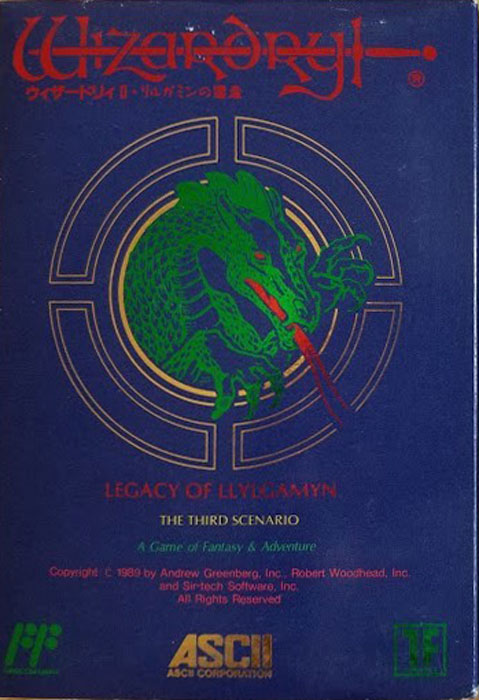
Wizardry #3 is a 3D dungeon role-playing game released by Certec, Inc. in the United States in 1983. It is subtitled "Legacy of Llylgamyn.
It is the third game in the classic RPG series, the originator of the "hack and slash" genre. The mission of the adventurers is to bring back the pearl guarded by the great dragon Le Kevres in order to discover the cause of a worldwide natural cataclysm.
Adventurer's Inn
A facility for adventurers to recover and upgrade their HP and MP. Recovery and upgrade of MP can only be done here. If you try to recover HP at an inn, the time passes quickly and it is easy to get old, so most players go to' Stable' (free, MP recovery only, 1 day passed) frequently.
Boltac's Trading Post
You buy and sell items. You can also judge uncertain items and remove cursed items. When you sell an item, it immediately doubles in value and is put on the shelf, so you are called "Bottakuri Store" by the players.
Temple of Cant
A facility for the treatment of abnormal conditions and the resuscitation of characters who have died or become ashes. Donations are expensive, there is a risk that the resuscitation of the dead will fail, and even if it fails, it will not be refunded. Characters who fail to resuscitate from ashes will be lost (buried and lost from the game). Famous lines include "Get out, you mischievous apostate!" which is thrown out when there is not enough money, and "Whisper - Pray - Chant - Remember!" during resuscitation.
Edge of Town
There is a training area where you can create and register characters, and a labyrinth where you can have adventures. You can also transfer game interruption and characters here.
Game Flow
Players create characters at the training ground or transfer characters trained in the past (but return to one level because they are descendants of heroes), and challenge the labyrinth in a party of up to six people. They search the labyrinth, fight with monsters, and return to the castle when they are in danger. Basically, they go back and forth between the' castle' and' labyrinth,' which are the bases. They cooperate in a party of good and evil, and on the sixth floor, they show the' neutral crystal' as a proof of their cooperation to Ryule ケブレス, the Shugo (provincial constable), get permission to search, and bring back the' sacred jewel of Iarizin' to clear the game.
About Characters
Similar to a general RPG, a level, HP (Hit Point) and MP (Magic Point) are set for a character, and by defeating a monster, he gains an EP (Experience Value) and becomes stronger by improving the level.
There are two types of MP, magicians and monks, each of which is divided into seven levels. The upper limit of MP for each level is nine times at most, no matter how hard you train.
Other than the above, the characters in "Wizardry" include the following:
Capability value
There are six performance values (Strength, Wisdom, Faith, Vitality, Quickness, and Strength of Luck), and the base value is determined by the race you chose when you created the character. You can choose any occupation by randomly setting bonus points. The maximum performance value is 18.
Race
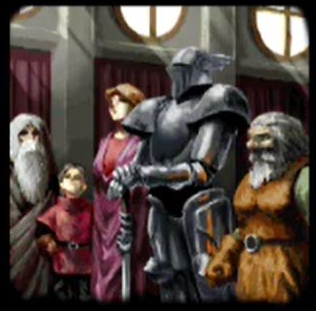
From left to right: Nomes, Hobbits, Elves, Humans, Dwarves
There are five tribes (Man, Elf, Dwarf, Norm, and Hobbit).
He is an average person except for religious people. He is a wise and religious elves for magic jobs. He is a powerful and vital dwarf for avant-garde jobs. He is a religious and well-balanced nome for monks. He is a swift and lucky hobbit for thieves.
They are thin and beautiful looking elves and short dwarves, nomes, and hobbits (of which the dwarves are muscular), but the elves and dwarves, which are often set to be long-lived in general RPGs, have almost the same life span as humans in "Wizardry."
Character
It has three characters: good, neutral, and evil. It is also called religious precepts.
Good and evil characters cannot have the same party at' Gilgamesh no Sakaba,' and only neutral characters can have a party with anyone of any character.
However, it is possible to have a mixed party of good and evil by entering Meikuchi Palace and using the' Look for friends' command to join the party.
When you encounter a monster, it will be displayed as "friendly 0 0" (monster name). In this case, you have to choose "leave" (unconditionally avoid fighting) if it's good, and "fight" if it's bad.
If a person chooses an action against his or her character (such as choosing to fight when it is good), his or her character may change from good to evil and vice to good.
As an aside, friendly monsters appear almost only on the ground floor in this story, and changing their personalities is more difficult than in other scenarios. Since the experience value of monsters is generally low and it takes time to nurture them, it will be easier to proceed with the game if you adopt neutral characters as much as possible (ideally, all party members except Buddhist monks should be neutral).
Age
The age of the character. The age immediately after creation is around 13-16. It increases by staying at an inn, coming back to life with a resuscitation spell, changing jobs at a training ground, etc.
As one's age increases, it becomes more likely that one's ability values will decline when one's level is upgraded, and if one's life force drops below 3, it is called "senility" (synonymous with "lost," meaning one cannot come back to life).
AC (armor class)
A measure of a character's physical defenses. An unequipped character has an AC of 10, which can be strengthened by equipping it with protective gear or chanting protective spells.
It should be noted that the lower the AC, the higher the performance, and that the concept of AC is rather close to evasive power rather than defense power to reduce damage as represented by "Dragon Quest".
If the AC is lowered, the hit rate of the physical attack of the enemy monster is lowered, and it is possible to make it difficult to hit.
Character's occupation

Related Articles
Wizardry #5 (Wizardry #5) Spoilers and Discussion Summary
Wizardry #5 is a 3D dungeon role-playing game released by Certec, Inc. in the United States in 1988. It is subtitled "Heart of the Maelstrom". It is the fifth installment in the classic RPG series, the originator of the "hack and slash" genre. A "calamity" is said to have the power to destroy the world. The Gatekeeper, a wizard with the power to control it, has been captured by the evil witch Thorn. The adventurers must defeat Thorn and save the Gatekeeper in order to save the world.
Read Article
Wizardry #4 (Wizardry #4) Spoilers and Discussion Summary
Wizardry #4 is a 3D dungeon role-playing game released by Certec, Inc. in the United States in 1987. It is subtitled "The Return of Werdna. It is the fourth installment in the classic RPG series, the originator of the "hack and slash" genre. Werdna, the sorcerer defeated in the first game, takes the lead role, summoning demons and slaughtering adventurers on his way to the surface to recover the stolen amulets (amulets).
Read Article
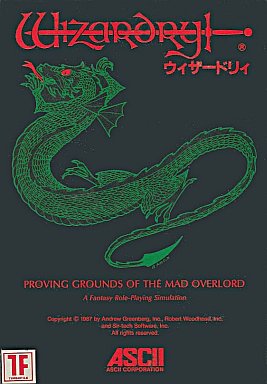
Wizardry #1 (Wizardry #1) Spoilers and Discussion Summary
Wizardry #1" (Wizardry #1) is a 3D dungeon role-playing game released by Certec, Inc. in the United States in 1981. The subtitle is "Proving Grounds of the Mad Overlord," and it is a classic RPG in which a party of six players explore an underground labyrinth, defeat monsters, obtain items from treasure chests, and strengthen and train their characters. This is the first title in the series.
Read Article
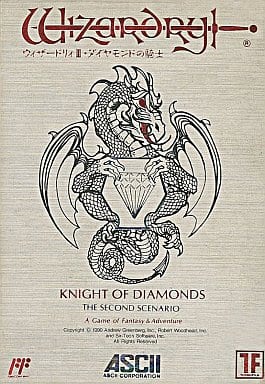
Wizardry #2 (Wizardry #2) Spoilers and Discussion Summary
Wizardry #2" is a 3D dungeon role-playing game released by Certec, Inc. in the United States in 1982. It is subtitled Knight of Diamonds. It is the second installment in the classic RPG series, the originator of the "hack and slash" genre. The mission of the adventurers is to bring back the "Staff of Nilda," which protects the city of Lilgamin and has disappeared into the "Cursed Pit of Dabalps.
Read Article
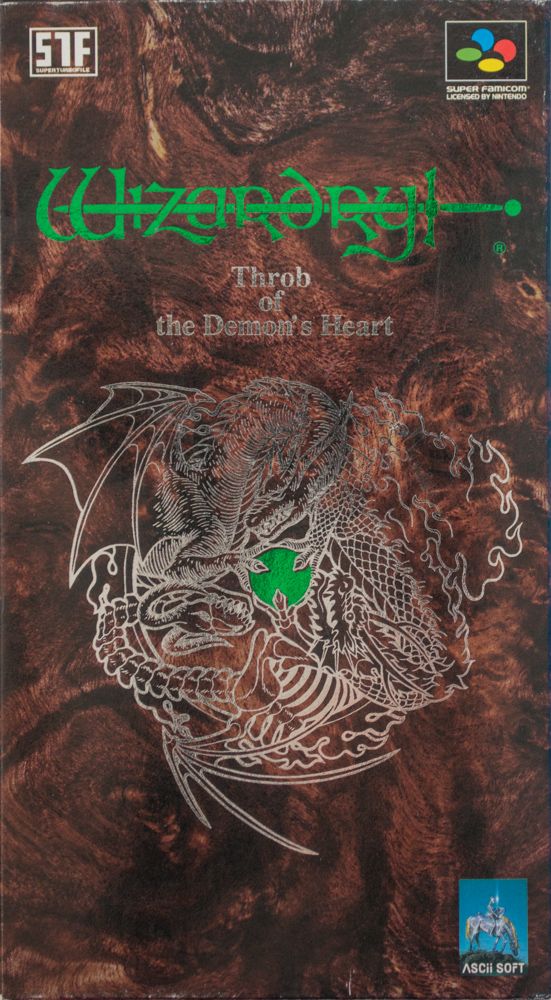
Spoiler commentary and discussion of Wizardry Gaiden IV (The Heartbeat of the Womb Demon)
Wizardry Gaiden IV" is a 3D dungeon role-playing game released in 1996 exclusively for the Super Nintendo Entertainment System. The subtitle is "Throb of the Demon's Heart. It is the fourth Japanese-made Wizardry game. While this title is an orthodox hack-and-slash game, it incorporates a Japanese-style setting, events, and horror elements, and allows players to interact with numerous NPCs and enjoy the struggle for power. The story involves having adventurers collect the "Three Sacred Treasures" in order to control a local uprising triggered by the death of the previous lord of the Scarlet Lotus Castle.
Read Article
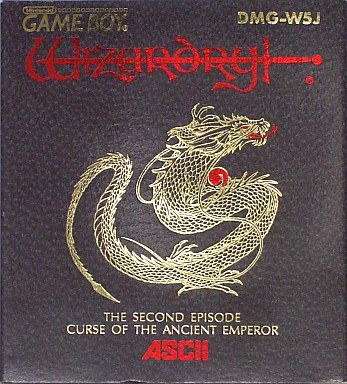
Wizardry Gaiden II (The Curse of the Ancient Emperor) Spoilers and Discussion Summary
Wizardry Gaiden II" is a 3D dungeon role-playing game on a Game Boy cartridge released in 1992. Its subtitle is "Curse of the Ancient Emperor. It is the second Japanese-made Wizardry game. When ruins are excavated in the fortress city of Almar, the curse of an ancient emperor buried there becomes a disaster that strikes the city. The adventurers challenge the ruins in order to remove the curse.
Read Article
Wizardry Gaiden: The Five Ordeals (The Five Ordeals) Spoilers and Discussion Summary
Wizardry Gaiden: The Five Ordeals is a 3D dungeon role-playing game released for Windows in 2006. It is one of the Japanese-made "Wizardry" series. The game, which purports to be a return to the roots of the original "Shoden" series, uses a simple game system with the initial five races and eight occupations, and the UI (user interface) of the previous title, "Battle Prison". In addition to the five official scenarios with independent stories, the game features a built-in editor that allows users to create their own scenarios.
Read Article
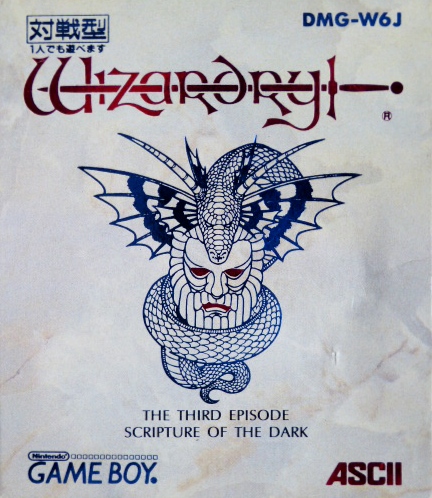
Wizardry Gaiden III (The Scriptures of Darkness) Spoiler Commentary and Discussion Summary
Wizardry Gaiden III" is a 3D dungeon role-playing game on a Game Boy cartridge released in 1993. Its subtitle is "SCRIPTURE OF THE DARK. It is the third Japanese-made Wizardry game. King Agan, the ruler of the fortress city of Dalia, has fallen into madness and withdrawn due to the curse of the Golden Mask. Adventurers are gathered to lift the curse and restore the king to sanity.
Read Article
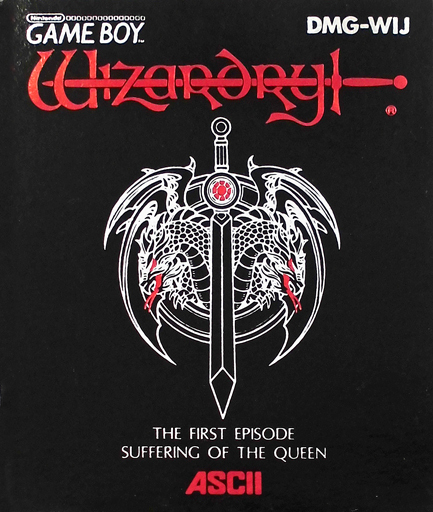
Spoiler commentary and discussion of Wizardry Gaiden I (The Passion of the Queen)
Wizardry Gaiden I" is a 3D dungeon role-playing game on a Game Boy cartridge released in 1991. The subtitle of the game is "Suffering of the Queen. It was the first Japanese-made Wizardry game. After Queen Iras ascends to the throne, the city of Lilgamin has been plagued by a series of disasters. Even the court magician Tylotham has betrayed his court and holed himself up in the "Cursed Hole. Adventurers are summoned to defeat him.
Read Article
A compilation of two legendary RPGs based on Dragon Quest
Dragon Quest" is now so famous that it can be considered a national RPG, but it was not created entirely from scratch. There are two legendary RPGs in the development of Dragon Quest.
Read Article

From masterpieces to lost works! Super Nintendo RPG Summary [Wizardry: The Story of Rugamine and others].
Here we have compiled a list of famous RPGs for the Super Nintendo Entertainment System (SNES). The list ranges from well-known masterpieces, to honorable works that are not major, to stray works that are famous in a certain sense. There are also early works such as the popular RPG series "Fire Emblem" and "Final Fantasy".
Read Article
Contents
- Overview of Wizardry #3
- Outline and story of "Wizardry #3"
- Global Disaster
- The Cause of Wise Men
- Guardian Dragon ケブレス Cave and Jewels
- Touching by Queen ベイキ
- Acquisition of the hoju
- Wizardry #3 game system
- Facilities in Rilgamin
- Gilgamesh's Tavern in Gilgamesh
- Adventurer's Inn
- Boltac's Trading Post
- Temple of Cant
- Edge of Town
- Game Flow
- About Characters
- Capability value
- Race
- Character
- Age
- AC (armor class)
- Character's occupation
- Warriors (FIG)
- Mags
- Priest (PRI)
- Thieves (THI)
- Bishop (BIS)
- Samurai (SAM)
- Load (LORD)
- Ninja (NIN)
- Formation
- Treasure chest
- Annihilation and Lost
- Character transfer
- Characters from "Wizardry #3"
- Queen ベイキ (Beyki)
- Le ケブレス / El ケブレス (L' kbreth)
- High Corsair
- Abdul
- Po' le
- Delf
- Angel
- Priest of Fung
- Mifune
- Zeno
- Wizardry #3 item
- Weapon
- Danpei
- Battle axe
- Sword of カシナート
- Muramasa
- Shuriken
- Ivory Dagger
- Ebony Dagger
- Amber Dagger
- Honen no Danpei
- Wicked Axe
- Giant's cudgel
- Nunchuk
- Butterfly Knife
- Golden Axe
- Protective gear
- Leather armor
- Breastplate
- Armor + 2
- Holy armor
- Talisman
- Iron Shield + 2
- Steel Helmet
- Golden Tiara
- Misryl Kote
- A mantis's paw
- Other goods
- Golden Medallion
- Wand of the Earth
- Holy water
- Staff of Flame
- Air Charm
- A binned ship
- Crystal of good
- Evil crystal
- Neutral crystal
- Iaricin Orb
- Muse Festival jewel
- Ruby slippers
- Rabbit's foot
- Thief's Pick
- Mending Paralysis
- Troll Ring
- Dragon's Fang
- Book of the Devil
- Akai Shoe Store
- Yellow earplugs
- Wizardry #3 Terminology
- I'm in the stone.
- Energy drain
- * Oops *
- Critical hit
- Special Power
- Become ashes, lost
- Healing
- Riddle
- "Wizardry #3", Trivia, Small Stories / Episodes and Anecdotes of "#3"
- "Reset technique" to avoid the worst situation such as death or total annihilation
- Capacity value increase and experience value adjustment using energy drain
- The Magician's Magic Spell: "Mahaman" Surely Revive the Dead
- How to Multiply the Rod of Earth, the Rod of Fire
- Arc demon Gaining experience through aquaculture
- Magician's spell "Haman" seals off enemy spell during game (FC version II)
- "Haman" and "Mahaman" earn huge experience (FC version II)
- The Japanese FC version #3 is the second work.