

The 24-hour marathon is the centerpiece of the 24-hour TV program that began in 1992. Until now, many runners have continued to run to reach the goal within the time limit. In this issue, we look back at the history of these runners from 1992 to 2002.
How the 24-Hour TV Marathon Began
The 24-hour marathon has now become synonymous with 24-hour TV. However, in hindsight, it seems to be quite an outlandish project. How did it begin?
The runner for the first marathon, in 1992, was Kanpei Hazama. The story goes back to two years before that, in 1990. Kanpei was a star in Osaka, but at the time he was still unknown in Tokyo. With the aim of selling his name, TV Asahi wanted to make a documentary about his challenge in the "Spartathlon," a Greek ultra-marathon in which runners run 246 kilometers in 36 hours. This is how it all began."
Source: www.yomiuri.co.jp
Past Runners 1992-2002
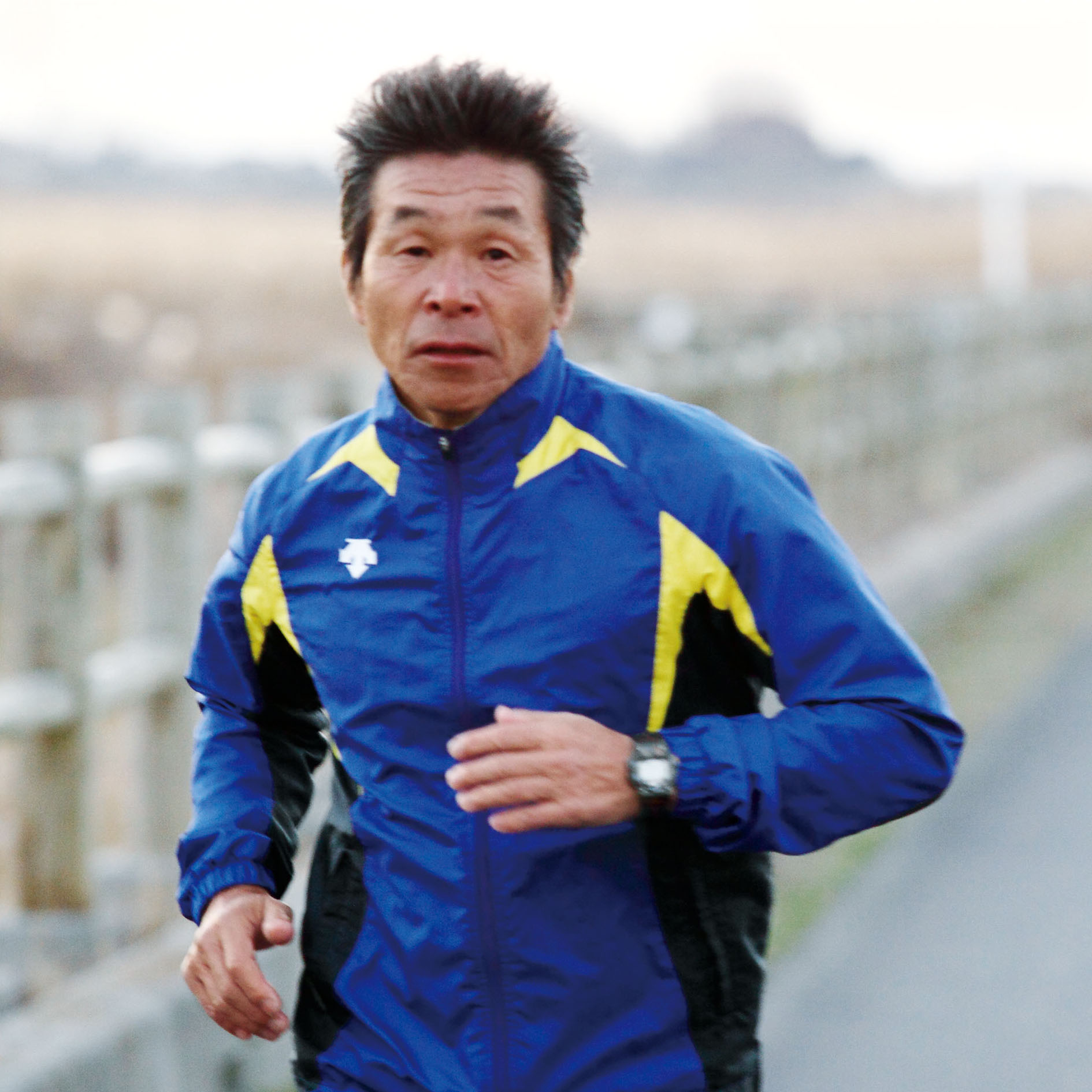
In 1992 and 1993, Kanpei Hazama was the runner.
In 1993, he finished the race with flying colors, but in 1992, he retired during the race.
Furthermore, Kanpei was the only one to retire during the race!
Although there have been runners who failed to finish the race within the time limit, it is surprising that Kanpei was the only one who retired during the race.
But there is a reason for that: ......
Kanpei Hazama is a well-known marathon runner, and it is surprising that such a person could not finish the marathon. Actually, there is more to it. The first marathon route was announced in advance, and as a result, the marathon route was flooded with spectators, making it dangerous, so he had no choice but to abandon the race.
Source: okiraku-news.net
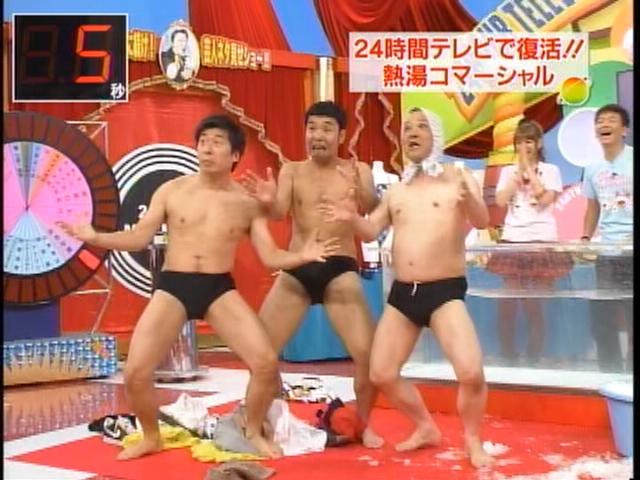
1994, Ostrich Club
Searching for 24 Hour TV Marathon Ostrich Club only brings up images like this: ......
And true or false, there are also rumors like this
Beat Takeshi, 64, visiting editor-in-chief of this newspaper, gave a bombshell testimony.
He revealed that the Dacho Club, who served as runners in 1994, had told him that they had traveled by car.
The marathon runner for the "24-Hour TV" race was Kazuo Tokumitsu (70). Mr. Tokumitsu was one time,
Didn't he have a myocardial infarction or something? Is he all right? Well, I guess he will be walking instead of running after all.
Well, the Ostrich Club, who used to be a runner, said, "I didn't run.
He said, "I ran up to a certain point, and then I drove. Well, that might have been an Ostrich joke.
Source: news020.blog13.fc2.com
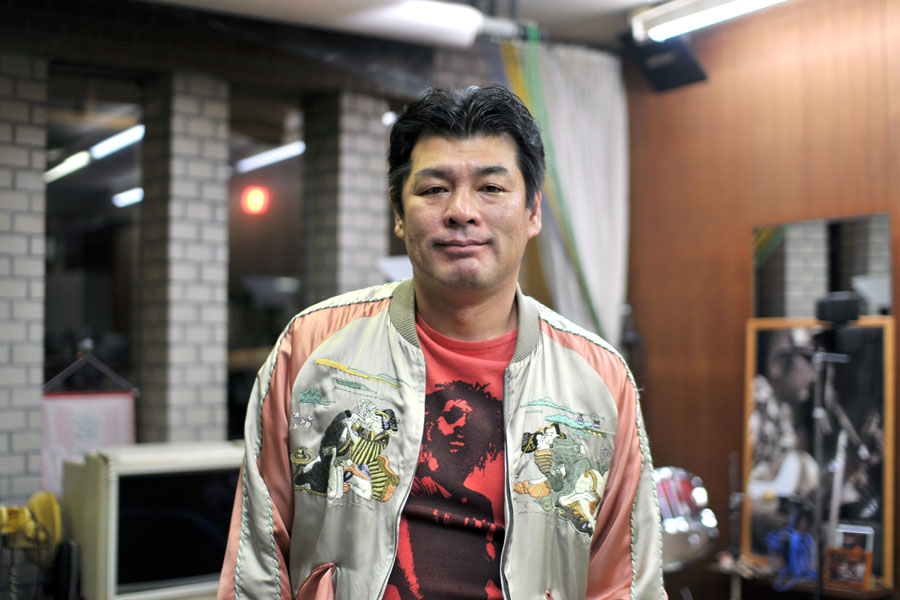
In 1995, it was Kanpei again.
The following year, 1996, it was Hidekazu Akai.
His daughter is cute.
1995 Kanpei Hazama (3rd time) 600 km Kobe-Tokyo in 7 days
1996 Hidekazu Akai 100km 600 people relayed around the Japanese archipelago
1997 Tatsuya Yamaguchi 100km
1998 Tsuyoshi Morita 100km
1999 Akira Nishikino 110 km
2000 TOMIZUMASU Masashi 150km
Source: www.adjmamlhnm.com
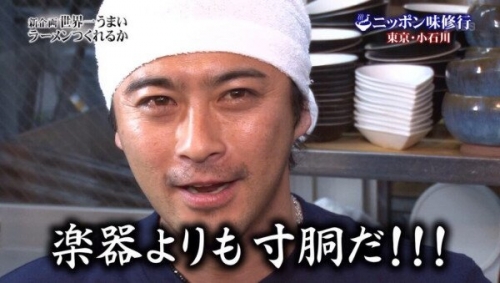
The first Johnny's was Tatsuya Yamaguchi of TOKIO.
Now he is a carpenter or fisherman.

Also in 1998, from Johnny's Office, Tsuyoshi Morita, V6.
You were the youngest runner.
I think his physical strength is better than previous runners, but it must have been tough.

In 1999, he was the star Nishiki.
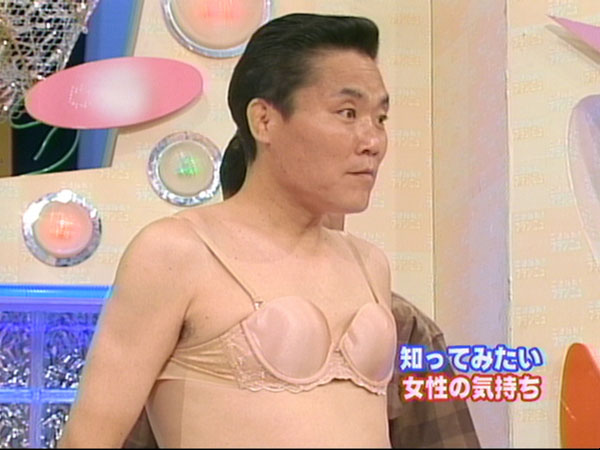
1999 - Mr. Masashi Tommies.
I don't quite understand the criteria for the selection of the winners.
2001 Naoko Ken 85kg
2002 Tomomi Nishimura 100 kg
Source: www.adjmamlhnm.com
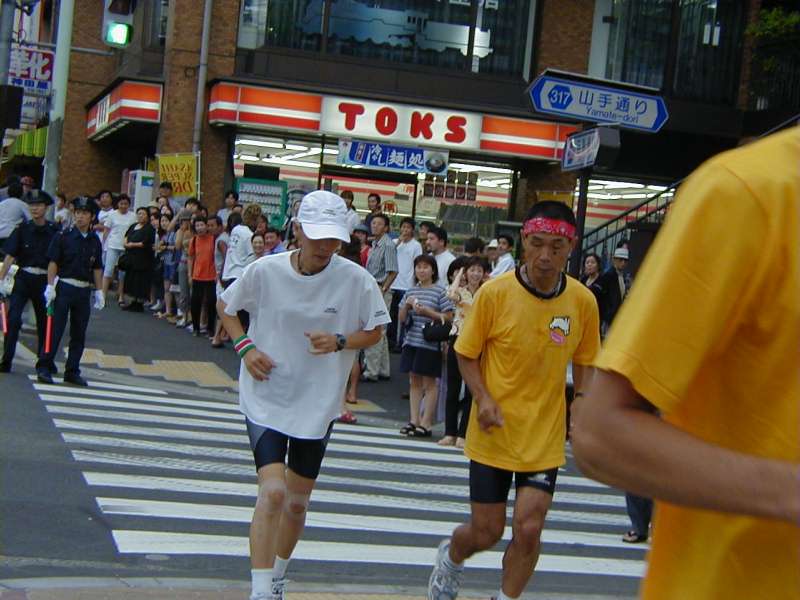
Naoko Ken's live tracking was still available.
The women runners have continued for the past two years.
The first woman to be a 24-hour runner is Naoko Ken.
Really Nande?
The next year was Tomomi Nishimura.
Hmmm.

When I was an idol, I never thought I would run a 100-kilometer marathon, of course.
The Mystery of Personnel Selection and the Significance of the Charity Marathon

I have no particular intention to criticize. I am just saying that some people may think so.
It is a charity program, but there is a production budget, so it is not wrong to pay a fee out of that budget. NTV is a for-profit company, and there is no denying the fact that the charity programs it conducts are intended to have an advertising effect, isn't there?
The point is that the donations should only be used for the purpose of saving the earth.
In the first place, TV personalities are in the business of making money by appearing on TV. The people who get paid for their work are doing it professionally, so it is only natural that they get paid for their work.
The content of "24-Hour TV" is usually discussed a year in advance. In other words, immediately after the end of that year's "24-Hour TV," the next year's plans begin to be formulated. However, only a small number of people are involved in these discussions, and they are said to be small gatherings of top management. Then the "24-hour" format was gradually filled in, he said.
But those who are not involved never hear about it," he said. Even the station's employees are often unaware of such information. That is how careful we are about information leaks.
The most obvious example of this is the selection of runners for the charity marathon. Every year, there are rumors that this person is going to run, but it is rare that the name of the person who is to run the charity marathon is ever leaked.
Source: www.cyzowoman.com
In other words, the selection of people is decided behind closed doors by a limited number of people.
I honestly don't think the people were chosen with any sense. ......
It doesn't seem like they are inviting people who are in season, so is there some kind of criteria?
There are many mysteries in 24-hour TV, and the selection of marathon runners is one of them.
In this article, I have summarized the 24-hour TV program from 1992 to 2002, and in the next article, I would like to summarize the program from 2003 onward.
