
Plague Inc. is a free-to-play, real-time strategy simulation game developed by Ndemic Creations of the United Kingdom. The game is about creating a deadly epidemic and competing to see how quickly you can infect and exterminate all humans who resist the disease.
The game is compatible with Android and iOS, and a paid version with additional features is available on Steam as "Plague Inc: Evolved.
Overview of Plaque Inc.
Plague Inc., developed by Ndemic Creations of the United Kingdom, is a free, basic, real-time, strategic simulation game that was distributed in 2012. It works on Android and iOS devices. Also, a paid version called "Plague Inc: Evolved" is available on Steam, which is free of the billing elements of the Android and iOS versions and includes additional features.
Perhaps the greatest feature of the game is its gameplay. Because of its shocking content, the purpose of the game is the extinction of human beings due to infectious diseases, the theme is usually derived from and incorporated into the affirmation or denial of the human world, the pursuit of peace, or the alarm for it. However, the game does not contain such a delicate, emotional, or intellectual ideal.
Because there are few characters with personalities and the stories they weave, the player (despite being a human being) controls the disease as if he or she were building a puzzle with no emotion, spreading the disease until the last human being is literally dead.
This game was supervised by an expert from the World Health Organization (WHO), and the behavior of pathogens depicted in the game is depicted in accordance with reality to the extent that it does not impair the playability (except for fictitious pathogens).
Because of this, the company has been in the limelight since its initial announcement whenever there was an outbreak of an infectious disease in the real world, especially when the novel coronavirus (COVID-19) broke out in Wuhan, the People's Republic of China, and Ndemic Creations was flooded with inquiries about its relevance. (The company issued a statement saying that it "pursued reality and education, but it was just a game.")
Outline and story of "Plague Inc."

There is no clear story: the title, Plague Inc., does not describe such an organization in the game (only that when you start the game, "the pathogen you created infected the first person").
As mentioned earlier, the content of the game is just a puzzle game of execution and reflection, with few clear settings or stories appearing as the game progresses.
It means that even if there are pathogens that are trying to make us extinct, it doesn't tell us why or why they appear, or whether they have any purpose in the post-extinction world. In short, it is very simple. It has elements similar to those used in the early days of computer games, which are games for playing programs.
In contrast, there are plenty of random events that take place during the game.
There are basic progress factors such as the discovery of pathogens and the development of specific medicines, as well as events that affect progress such as the spread of infection due to the Olympic Games, the prevention of the spread of infection due to the advancement of purification technology for aircraft and ships, and the rapid decrease in population in countries where natural disasters or wars have occurred.
On the other hand, there is a lot of simple flavor text, and there is a twist to keep players from getting bored, such as the funny news that plumber killed turtles in Italy (Super Mario, a long-time rival of the turtle family, often dives into pipes, and speaks English with an Italian accent).
But they're all designed simply to display text in a window like the search bar at the top of the map, with no flashy graphics or sound effects.
Plague Inc.'s game system
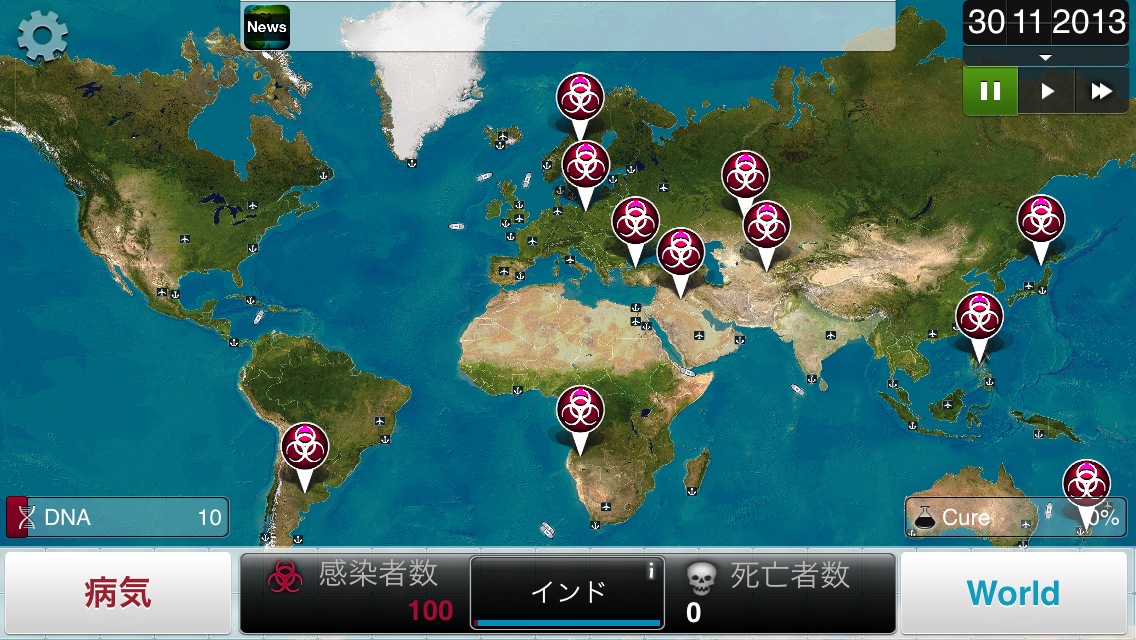
The goal of the game is to wipe out the human race with a new infectious disease of his own name, so that the pathogen must infect all of us and then kill us.
The crucial difference from the real world is that "if there are no human infected people, there will be no transmission."
So if there is at least one healthy person left in the game and all infected people die, the pathogen somehow disappears altogether and the game is over. (In reality, the pathogen continues in various ways, as in the case of a recurrence of an infectious disease that once seemed to have subsided.)
This is why the first infected person is automatically detected. If you select a country that causes an epidemic, the game starts with an announcement saying, "0 0 disease has infected humans for the first time."
The game is a round game that starts with the outbreak of a disease, ends with the extinction of the human race, and ends with the eradication of the disease. Once the round is over, the progress is reset (but not the score, performance, or release of new elements).
In addition, only one progress can be saved during a round, and when a new round is started by changing the pathogen, the progress must be discarded.
Additional Content
Cure Mode
Contrary to the original purpose of the game, its purpose is to eradicate infectious diseases that shock the world.
The game system itself has changed little, but the name of each item that is operated has changed remarkably.
"DNA points → funds," "evolution → quarantine," "(unique) capabilities → business," and so on. In other words, the player controlled the pathogen in normal mode, but in Cure mode, instead, the player issued a nationwide order to create a wonder drug. (However, there is no description that such a special agency or post was created.)
The game goes the other way. In normal mode, the focus is on how to spread the infection without being discovered by humans. In Cure mode, latent pathogens are exposed by "business" and revealed pathogens are controlled by "quarantine" to buy time to create a wonder drug.
Each operation requires funding. The conditions for victory are also reversed from the normal mode, and it is said that a magic bullet is completed.
In addition, the BGM, which in normal mode made the world covered with pathogens, was changed to show the tragic feeling of human beings resisting the disease of death.
The degree of difficulty tends to be higher than that in the normal mode.
Scenario Mode
Paid content.
It's called "scenario mode," but it's a mode in which the game starts in a different state than usual (for example, the game starts with aircraft and ships completely blocked from moving, so you need to break through from there first).
It is easy to understand if you interpret it as a mode that clears the given "subject" that is often seen in simulation games.
There are more than 10 scenarios.
A small part of the game is free, but basically it's a fee and you can only play it if you buy a scenario pack.
In addition, an app that allows you to create this scenario is sold separately, and you can create your own scenario by purchasing it. You can upload the created scenario to the "custom community" in the game and share it with other users.
How to play the game
The first thing a player must do is to choose the "pathogen" of the contagion to wipe out the human race; in the Android and iOS versions, the initial choices are limited, but will increase as the player progresses through the game or by paying for the game.
After selecting the pathogen, the choice is, as mentioned earlier, the country where the first infectees are to be generated. However, if you simply decide to go with "Japan," without thinking, you will stumble. In Japan, the country is "wealthy," "has strong resistance to infectious diseases," and "is surrounded on all sides by the sea, making it impossible to spread the disease by land.
The climate is also defined in detail, including whether it is cold or warm, whether it is predominantly urban or rural, and whether it has an airport or a port. These factors interact with the nature of the pathogen, making the spread of infection easier or more difficult.
For example, Greenland is a cold country with no airport (of course, there are many airports in reality. The game's strategy is that if the pathogen remains vulnerable to low temperatures and humidity, or if Greenland seals off its harbors, it will be difficult to spread the disease, and steps must be taken.
For this reason, it would be easier to start with a "poor country" that is "weak in resistance to epidemics" and that is "in contact with many other countries by land.
Once the pathogen and the nation to be infected are selected, the game begins. From this point on, there are three choices available to the player.
The first is whether to "evolve" the status of the pathogen, i.e., its ability to increase or decrease infectivity, its symptoms, which determine its lethality, or whether to "leave it as it is" or "degenerate" it.
Time progresses even if the game is left unattended as long as it is running, and eventually the presence of the pathogen is detected by mankind. When the development progress reaches 100 percent, the pathogen is eradicated and the game is over (or more precisely, the number of infected people is gradually reduced and the disease is finally eradicated).
The player must therefore infect the entire human population with the pathogen within a real time limit. However, if they try to spread the disease in the dark, their presence will be detected in no time, so they must first make sure that they are not discovered. The basic strategy is to spread the contagion by increasing the infectivity of the disease while keeping it harmless, and then to rapidly increase the lethality rate at a time when the contagion is ready to spread to the entire human population.
The evolution of each ability of the pathogen necessary to achieve this strategy requires "DNA points," but opportunities to acquire these points are limited. In addition, the evolution of abilities is based on a step-by-step system, so it is not possible to acquire only high-level abilities.
For example, if a pathogen can only operate in hot countries, it must first evolve so that it can withstand climate change, then acquire higher infectivity, and later acquire more virulent properties and complexity that delay the development of special drugs, and so on. The pathogens need to be acquired in the order required for the chosen pathogen and situation.
But it doesn't stop there. Each of the pathogens controlled by the player has its own characteristics that inhibit its control and interfere with the formation of the player's strategy. A virus, for example, can evolve on its own due to its ferocious mutability. For example, a virus can evolve on its own due to its ferocious mutability, becoming lethal when you don't want it to be lethal, and wasting DNA points for its degeneration.
These occurrences are completely random and cannot be controlled by the player's will. This system of pathogens, which is never exactly as it should be, creates a high level of tension in the game and a sense of contingency that prevents the game from getting stuck in a rut.
Paradoxically, however, the game also contains many elements of so-called "luck games," and it is not always possible to clear the game as long as one has the ability to do so.
About Random Events
As mentioned earlier, random events may occur in the game.
For example, an announcement saying, "Purification technology for aircraft and ships has advanced" is made, which makes it difficult for pathogens to escape to countries across the sea. In this case, even if purification technology exists, it is necessary to evolve the pathogens so that they can survive, which increases the difficulty.
On the other hand, there are events like the Olympics the Olympics or festivals, where players have an advantage, such as infection outbreak in the host country.
Since most of these events occur by chance, as the name implies, they also make the game more difficult. Therefore, if there are too many random events that are not good for you, it may be a good strategy to start over (the time required for one round from the outbreak to the end is usually about one hour at the longest, and there is no penalty for abandonment, so the disadvantage of starting over is small).
Characters from "Plague Inc."
As mentioned earlier, there are no special characters in the game because there are no stories, and there is no object or numeric data to build a specific character other than a pathogen.
In the form of in-game news, small letters at the top of the screen give a curt picture of researchers and government officials from around the world making these decisions, or of the rapid spread of infections. If I were to name the most character-like entities, they would be the pathogens I am named for, and this is explicit, as the selection screen also shows a close-up of the pathogen in silhouette.
Items from Plaque Inc.
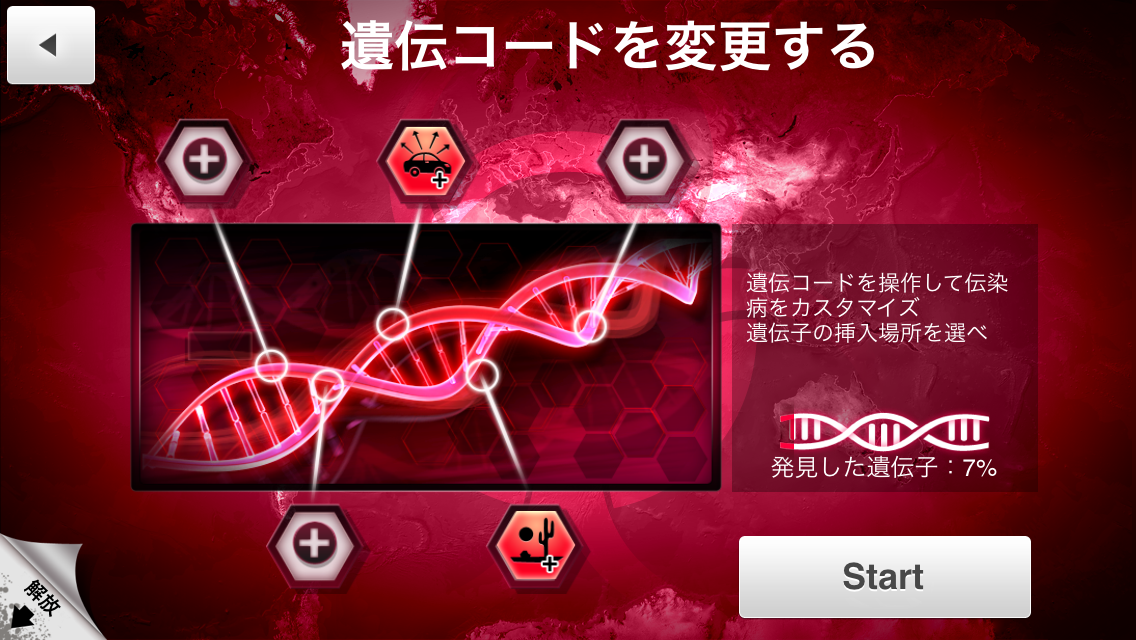
There are no in-game items that can be used. For example, there are no consumer items that can earn DNA points all at once. Players have to play the game based on their own abilities. That is, there is an enhancement option called "genetic code" that can be attached to pathogens at will and draw out beneficial properties.
However, since it is sold in the form of "0 0 pack" which includes the release flag of new infectious diseases as a billing element, whether or not these items are handled as paid items is left to the judgment of the user.
Paid Pack List

Tags
Contents
- Overview of Plaque Inc.
- Outline and story of "Plague Inc."
- Plague Inc.'s game system
- Additional Content
- Cure Mode
- Scenario Mode
- How to play the game
- About Random Events
- Characters from "Plague Inc."
- Items from Plaque Inc.
- Paid Pack List
- All Types Release Pack
- Brain-eating insect expansion pack
- Necrovirus expansion pack
- Simian flu expansion pack
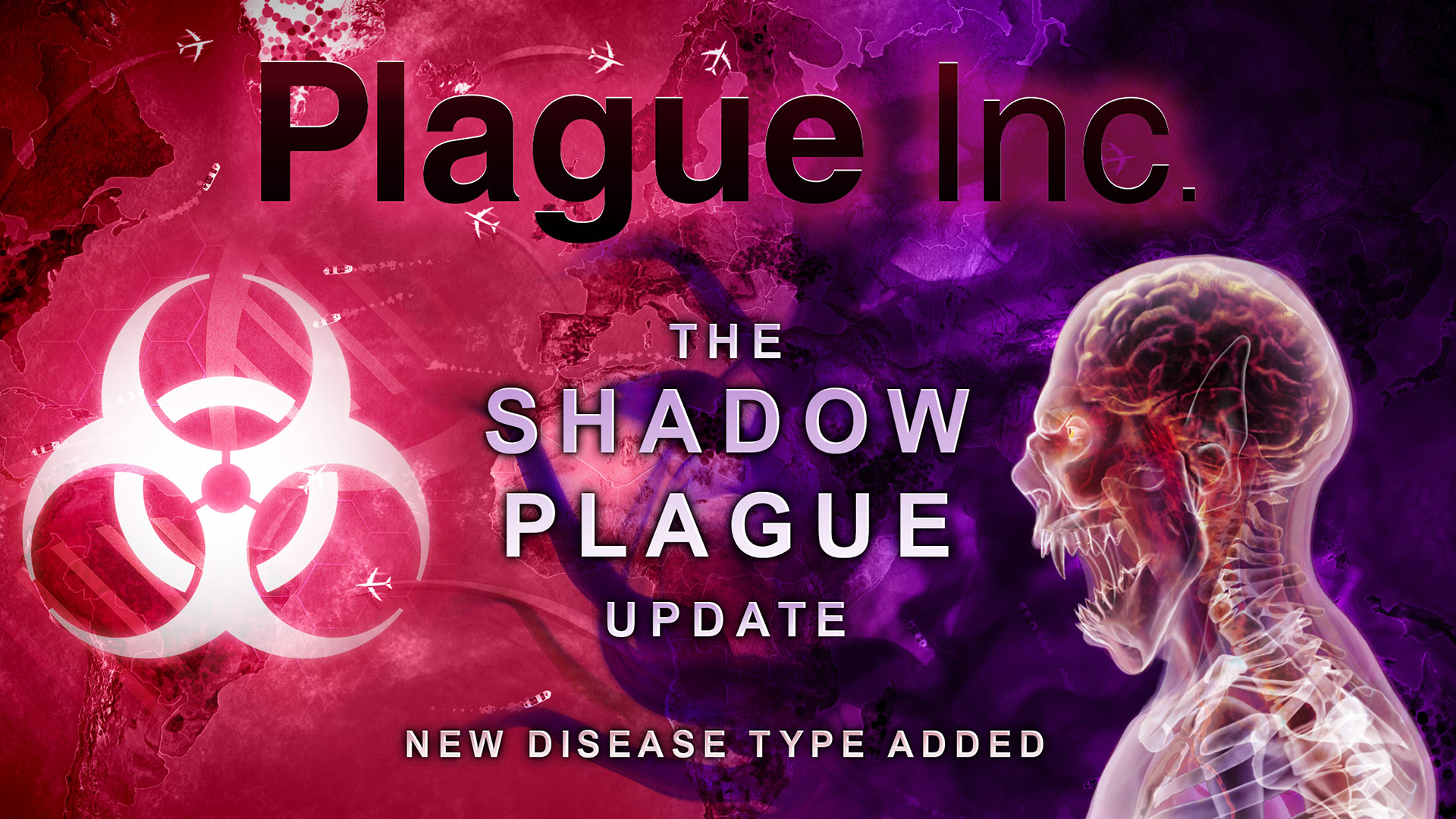
- Shadow plague Expansion Pack
- Epidemic disease expansion pack
- Scenario expansion pack
- Scenario Creator
- Terms in Plaque Inc.
- Major pathogen
- Bacteria
- Virus
- Fungus
- Parasite
- Prions
- Nanovirus
- Biological weapon
- Other
- Evolution
- Infectivity
- Risk
- Fatality rate
- Bubble
- DNA point
- Behind-the-Scenes Stories, Trivia, Small Stories / Episodes and Anecdotes of "Plague Inc."
- It's not a game that stirs anxiety and conflict.
- Seven years after its launch, it reached the top of the app rankings.
- The game is full of English satire