
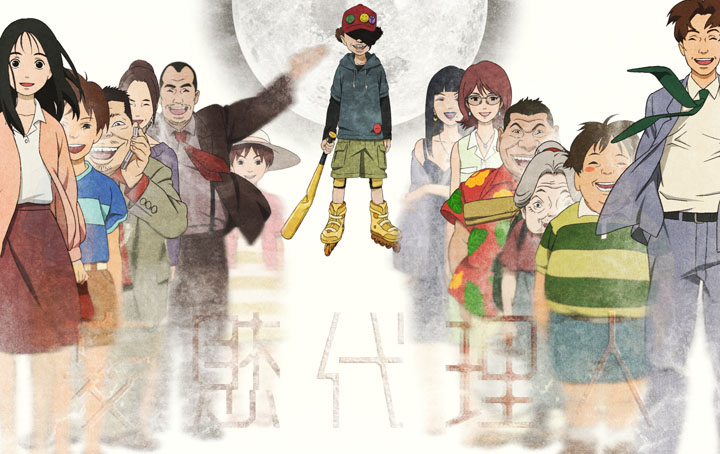
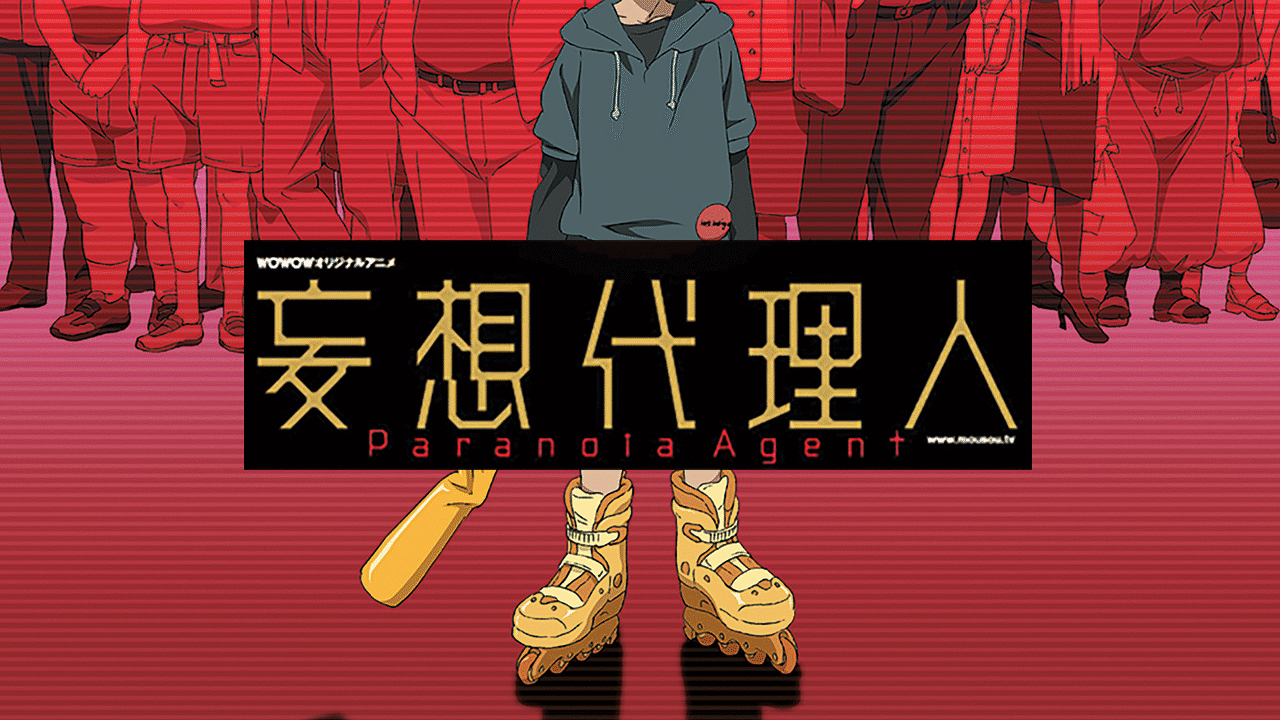
Mousou Yoroshiku" is an animated TV series produced by Madhouse and directed by Satoshi Kon, which was broadcast on WOWOW for 13 episodes from February 2, 2004. Tsukiko Sagi, the creator of the healing mascot character "Maromi," has been in the limelight since her creation, but she is under pressure from those around her who expect her to become the next hit character. One day, Tsukiko is attacked by a street monster, Shonen Bat, and the victims follow one after another. Keiichi Inogari and Mitsuhiro Umaniwa, the detectives in charge of the Shonen Butt case, realize in the course of their investigation that the victims have something in common: they are harboring secrets and darkness in their hearts that they cannot tell others.
Outline of "Mousou Jyugyoin" (Mousou Jyugyoin)
Mousou Sagyo" is a 13-episode animated television series produced by Madhouse and directed by Satoshi Kon, which was scrambled and broadcast on WOWOW from February 2, 2004. The music was composed by Susumu Hirasawa. This was Satoshi Kon's first animated TV work, although he is best known for his animated films such as "Paprika" and "Millennium Actress," and it attracted attention for its drastically different atmosphere from episode to episode, including suspense featuring a woman with a dual personality and an RPG-style comedy in which a detective is caught up in the delusion of a young gamer boy accused of a crime. The film also attracted a lot of attention.
According to director Satoshi Kon's diary, the starting point of this film was to recycle the ideas he had accumulated during the production process of his previous three theatrical films, "Perfect Blue," "Millennium Actress," and "Tokyo Godfathers.
As the latter half of the film progresses, the fiction erodes reality, and the line between fantasy and reality disappears. The theme of this film is the borderless between fiction and reality, which is similar to the theme of his masterpiece "Paprika," and the eerie presence of the boy bat, who is everywhere and nowhere and exists only in people's imagination, and the fate of the characters whose lives are ruined by the boy bat's crime, combined with its unique aftertaste, leave a strong impression on the viewer. The end of the lives of the characters whose lives are ruined by the boy bat's crimes, combined with the unique aftertaste, leave a strong impression.
Tsukiko Sagi, a young creator living in Tokyo, has been catapulted into the public limelight by creating the healing mascot character Maromi, but she herself is a bon vivant and weakly assertive woman. Her boss expects her to create the next hit character, but she is in a slump and not doing well. Her colleagues at the office are jealous of Tsukiko's success and talk about her behind her back. Tsukiko, who is not good at socializing, does not talk back to them, but consoles herself with a stuffed Malomi toy that she carries around in her bag at all times.
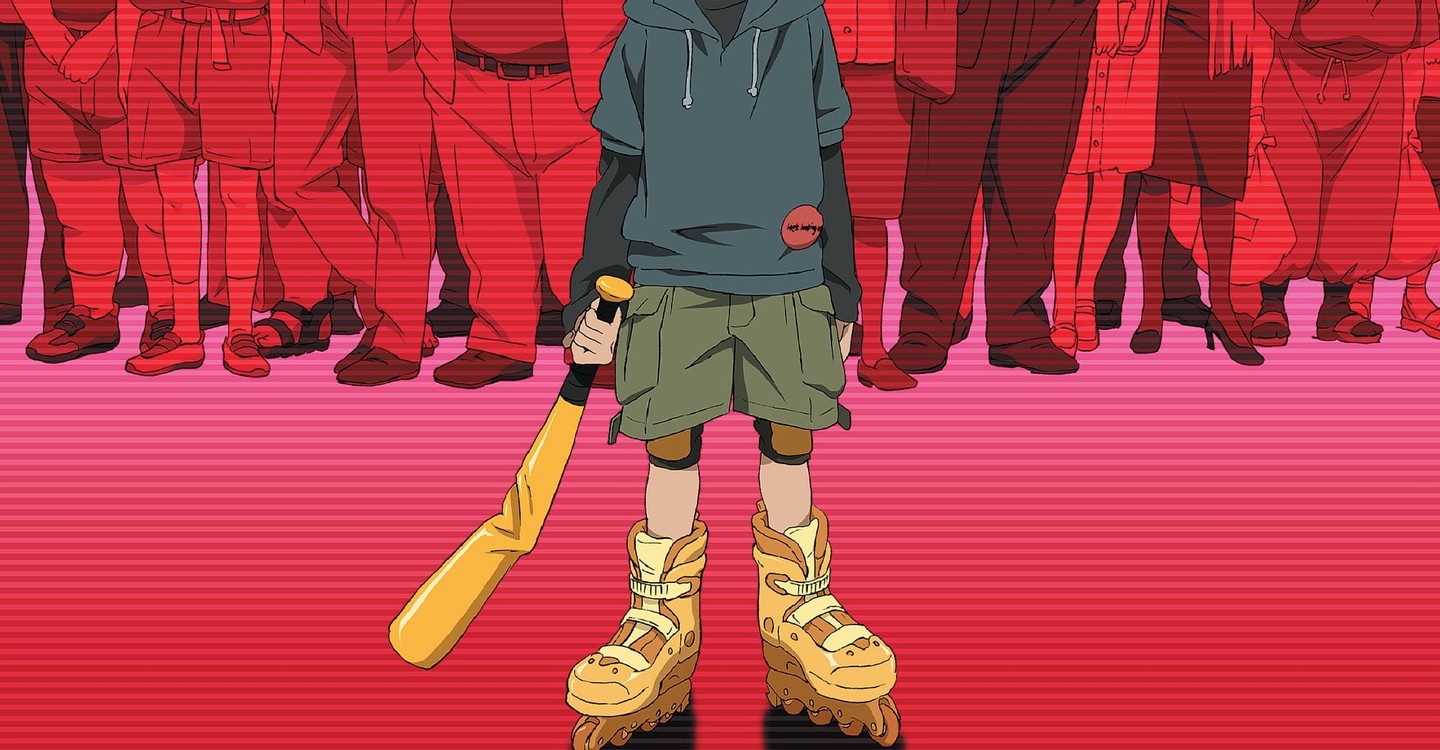
One day, while walking alone at night, Tsukiko is attacked by a boy on roller skates with a baseball bat. Tsukiko was hit with the bat and was hospitalized for her injuries, and the public dreaded the street monster, calling him "Shonen Batsu" (boy bat). Finally, even the reporter who was obsessively involved with Tsukiko and the people around her become victims of the boy bat, but the culprit is never caught, even though there are many witnesses and victims.
Keiichi Inogari and Mitsuhiro Umaniwa, the two detectives in charge of the case, discover that all the victims have something in common: they are all harboring some kind of unspoken secret or darkness in their hearts.
Synopsis and story of "The Mousho Agents
juvenile bat
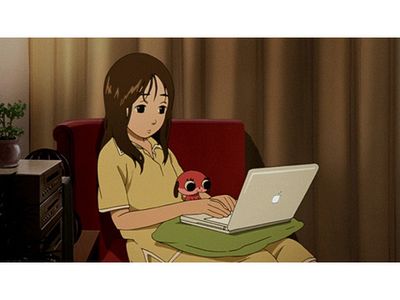
通り魔被害に遭った鷺月子
In the parking lot of a hospital in Tokyo, an old man in a hospital gown was single-mindedly writing what looked like a mathematical equation. The old man suddenly looked up and his eyes widened as if he had witnessed something.
Elsewhere in Tokyo, in an office, Tsukiko Sagi (鷺月子) was frowning at her computer. She is an up-and-coming creator of the popular healing character Maromi, but she is in a slump. Her boss was impatient with her next work, and Tsukiko was getting impatient.
That night, Tsukiko is attacked by a street pervert on an unpopular street.
The next day, detectives Keiichi Ikari and Mitsuhiro Maniwa visit Tsukiko in her hospital room and try to get a description of the culprit from her, but Tsukiko is vague and her story is not clear. However, the possibility that the murderer was an elementary school student emerges from her mutterings, "5 years...6 years...small.
The story of the elementary school student street ripper quickly swept the media. The juvenile street rioter, dubbed "Shonen Bat," would go on to affect everyone in society, from children to adults.
crime
After Tsukiko's case, crimes committed by juvenile bats begin to occur everywhere. An elementary school student who was bullied at school, a man who got involved with yakuza and became involved in crime, and a woman who tried to quit prostitution but could not. When they are unable to escape from their current situation and seek something that will destroy their "now," the boy bat appears and raises his metal bat.
Inogari and Umaniwa continue to investigate the case, but no strong testimony is forthcoming, and the investigation is beset by difficulties.
Then, unexpected news comes in. A civilian who was attacked by a boy bat has turned the tables on the boy bat and caught him.
copycat criminal
The boy caught was an eighth grader named Kitsuzuka. He talks about his delusions of grandeur in the interrogation room, making Inogari and Umaba fed up.
However, the crimes committed by the boy bat do not stop. When they check the time of the crime, they find that Kitsuzuka is in custody. When Inogari questions Kitsuzuka, he makes several specific confessions, but it turns out that he only committed part of a series of crimes. He was a copycat.
As Umaga watches Kitsuzuka, he thinks that the common denominator among the victims of juvenile bats is that they were cornered and wanted to escape.
Umaba gradually begins to believe in the existence of the boy bat, who appears as a savior for the cornered. As the investigation reaches a deadlock, Umaga is unwittingly inspired by the boy bat, and the boundary between reality and delusion begins to blur.
kyogen
Inogari and Umaniwa reviewed the case of Tsukiko, the first victim, and went to see an elderly homeless woman who was believed to have been near the crime scene. Her testimony was somewhat blurred and not entirely clear, but she muttered, "There was no one there," and "That woman was alone the whole time. Tsukiko's testimony that she was attacked by a child was a lie.
However, the boy bat's crimes did not stop. Gradually, the public becomes enamored with the boy bat. At the same time, Tsukiko's character "Maromi" was made into an anime and became a big boom.
Meanwhile, Kitsuzuka is beaten to death by a boy bat in a detention center. Inogari and Umaniwa witnessed the scene, but the boy bat slipped on roller skates and disappeared into the wall.
The boy bat case was referred to the police with the suspect dead, and Inogari and Umaniwa were held accountable and resigned from their positions.
However, Umaniwa did not give up. Wearing large goggles and a cape, he bit into an amateur radio machine to search for "cornered humans" who would be targets for the boy bat. Believing that the boy bat would appear there.
malomi
Moving back and forth between fantasy and reality, Umaniwa discerns that Tsukiko, who first created the boy bat, is the source of all this.
Maromi has become a social phenomenon of unprecedented proportions. CDs sold out in just 20 minutes, and countless balloons in the shape of Maromi floated in the sky over Tokyo. There was no end to the fights between fans fighting over the merchandise, and some even considered Maromi's existence to be dangerous.
Umaniwa's investigation reveals that a puppy named "Maromi," which Tsukiko had when she was a child, had died in an accident. At the time, Tsukiko said that she was attacked by a boy on roller skates with a metal bat, during which time Maromi ran out onto the roadway.
In the sense of a medium for escaping from reality, the boy bat and Maromi were of the same nature.
rupture
What started as Tsukiko's escape from reality, Shonen Bat has now been shared by countless people. Shonen Bat is thought of as a savior that destroys an irresistible reality, but it is only a temporary escape. Nothing has changed the reality of those who thought they were saved by the boy bat, whether it was a boy who was bullied, a man ruined by debt, or a woman stuck in prostitution.
Still, the delusions of those who were mediated by the boy bat grew endlessly, and finally burst. A pitch-black shadow appeared from somewhere and swallowed the people. A train in motion, a newscaster in a TV studio, and people walking around town are all swallowed up by the shadow that surges like a wave.
Tsukiko meets her childhood self as she is guided by Inogari and Umaniwa. While walking her puppy Maromi, she gets a stomach ache and while cowering, Maromi runs into the roadway and gets run over. Fearing that her strict father will reprimand her, Tsukiko exclaims, "It's his fault, he's here! she exclaims. The shadow takes the form of a boy raising a crumpled baseball bat. The boy bat is the product of the young Tsukiko's guilt and self-preservation for letting Maromi die.
The adult Tsukiko embraces Maromi's corpse and weeps, "Maromi...I'm sorry..." Tsukiko had accepted reality over the past 10 years. Then the boy bat muttered "goodbye" and disappeared.
good-bye
Two years after the incident, a healing mascot that replaces Maromi is in vogue in Tokyo, which has rapidly recovered. People are still living in a painful reality.
Tsukiko quit her job at a design firm and became an ordinary office worker, while Inogari was working as a security guard.
In the parking lot of a hospital in Tokyo, a white-haired figure in a hospital gown was single-mindedly scribbling down mathematical formulas. It was Umaniwa, whose hair had turned completely white. When he finished writing the equation, he looked up suddenly as if he had noticed something.
Characters and Characters in "Mousou Jyugyoin" (The Mousou Agent)
key people
Tsuyuko Sagi
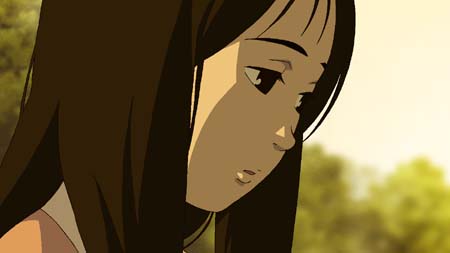
CV: Noto Mamiko
The protagonist of this work. She is 22 years old, a creator at M&F (M&F), and the creator of a dog mascot named Maromi. He is the first victim of the boy bat.
Although Maromi is a hit and unexpectedly attracts public attention, he lives a suffocating life under pressure from his boss and colleagues who are jealous of his next creation. His personality is weakly assertive, vague, and natural. His tempo is a little off, and he smiles at Kawazu, who impersonates a colleague who talks behind his back, saying, "You look a lot like him. His behavior is childish in places, probably because he has been traumatized by Maromi's death and his mental age has stopped at 12 years old.
Ten years ago, when he was 12 years old, he was the victim of a street crime that closely resembled a juvenile baseball bat, but this time it was the mad act of Tsukiko, who had inadvertently killed her dog, Maromi. Raised in a father-son household, Tsukiko was strictly disciplined, and she was frightened that her father would scold her if he found out that she had caused Maromi's death, so she quickly told a lie. The negative emotions born in her at this time bring the boy bat back to life in the present day.
malomi

Related Articles
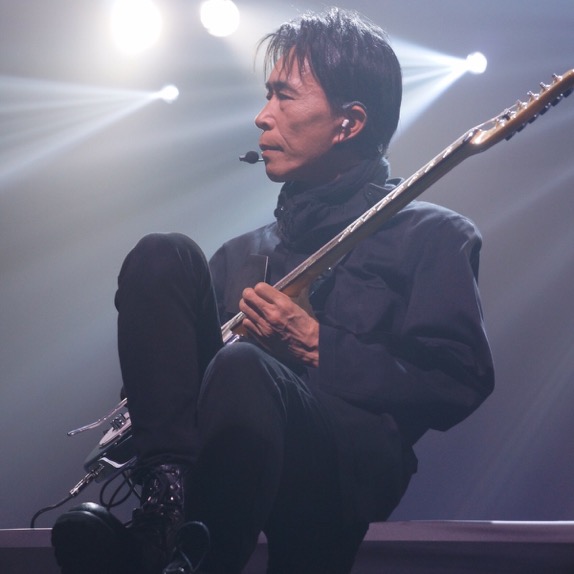
In-depth summary of Susumu Hirasawa (Stealth Majors)
Susumu Hirasawa, a musician who is once again in the spotlight with his latest song "Ashes," is active at the forefront of various media, including TV shows and the Internet, as a musician, producer, and music provider.
Read Article
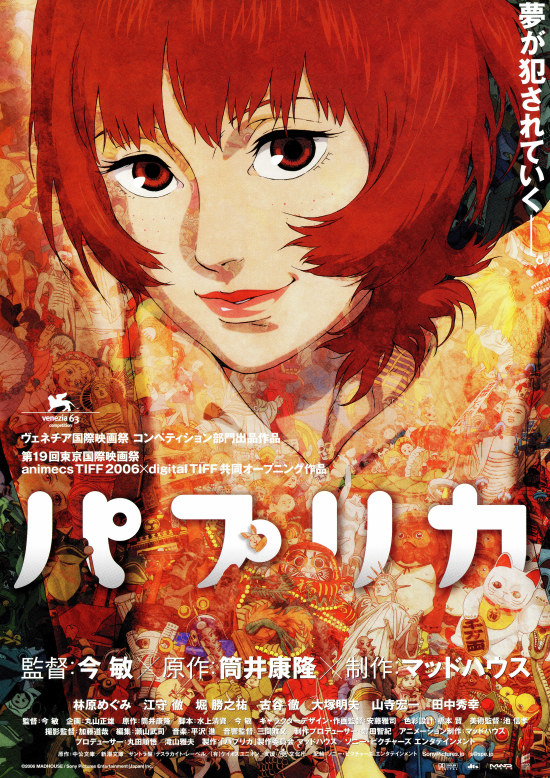
Spoiler commentary and discussion of Paprika (animated film).
Paprika is an animated film directed by Satoshi Kon. Based on the novel "Paprika" by Yasutaka Tsutsui, it was released in theaters on November 25, 2006. Atsuko Chiba is a psychotherapist who takes on the role of "Paprika," another personality in the DC Mini, a device that allows people to share their dreams. One day, an incident occurs in which DC Mini is stolen from the laboratory and misused. Atsuko and her friends at the institute try to find a solution to the problem, but the dreams begin to affect the real world as a result of the incident.
Read Article
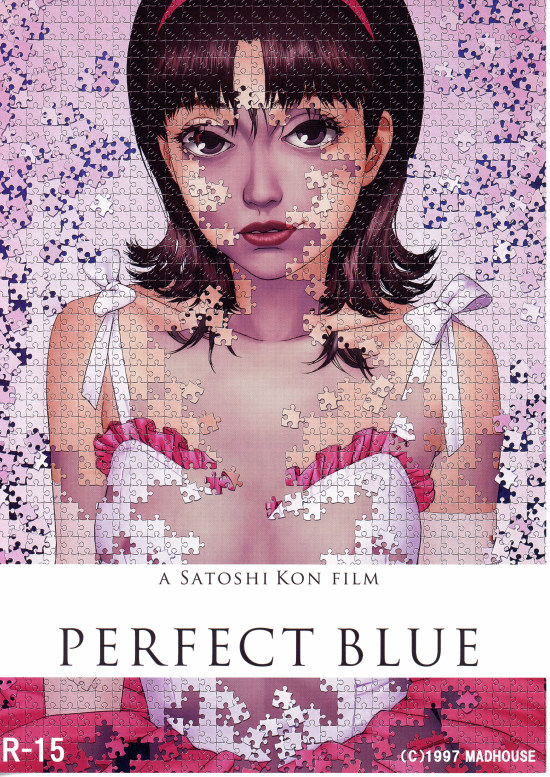
PERFECT BLUE spoiler commentary and discussion summary
PERFECT BLUE is an animation film directed by Satoshi Kon. It was released in theaters in Japan on February 28, 1998. The main character, Mima, was a popular member of the idol group "Cham," but suddenly retires from idol life to pursue an acting career. In order to get rid of her idol image, she tries various things, but behind her back, people around her start getting attacked one after another.
Read Article
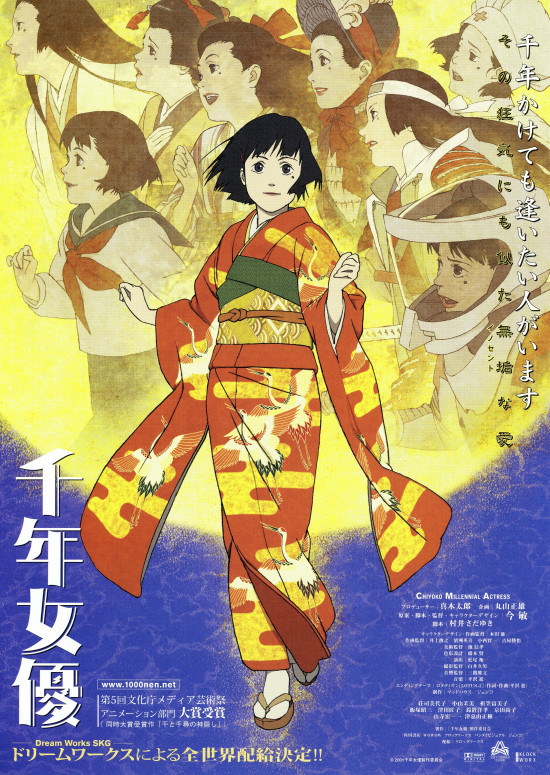
Spoiler alerts and discussion of Millennium Actress (animated film)
Millennium Actress is an original animated film directed by Satoshi Kon and released in theaters on September 14, 2002. The main character, Fujiwara Chiyoko, is a veteran actress who has been acting since she was a child. She is interviewed by Genya Tachibana and Kyoji Ida of a film production company when the studio of the film company "Gin-ei", to which she has been indebted, is about to be demolished due to its aging.
Read Article
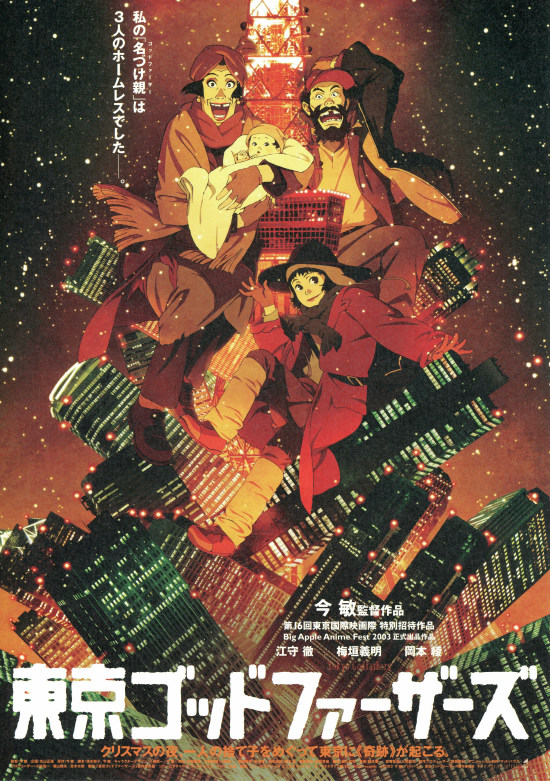
Tokyo Godfathers (Animated Film) Spoilers and Discussion Summary
Tokyo Godfathers" is an original animated film directed by Satoshi Kon and was released on November 8, 2003. Three homeless people, Gin-chan, Hana-chan, and Miyuki, find a baby, Kiyoko, abandoned in a garbage dump on Christmas Day. 3 of them set out to look for Kiyoko's parents, but end up getting involved in various commotion.
Read Article
A compilation of depressing, traumatic, and dark anime! Mousou Jyugyo (Mousho Jyugyo) etc.
Here are some of the recommended anime with strong depressive and traumatic elements. The list includes such masterpiece depressive anime as "Curse of the Curse," "Mousou no Hana," "Mousou no Jito," "Haiba Renmei," "GUNSLINGER GIRL," "Palm Tree," and others.
Read Article
A collection of hidden animation masterpieces! A collection of masterpieces that deserve more recognition!
We have compiled a list of anime works that are not as well known as popular works, but are still worthy of being called masterpieces. We have introduced many works such as "Shijohan Shinwa Taikei" and "Mousou Jyugyo" that are well-drawn and have a unique worldview that draws the viewer in. If you are interested in these works, please try renting them or watching them through distribution services.
Read Article
A compilation of recommended depressing and traumatic anime! Perfect Blue", "Gakko Gurashi! and more!
Here are some of the depressing and traumatic anime that are recommended based on online reviews and opinions. SPEED GRAPHER", "BLASSREITER", "Perfect Blue", "Gakkou Gurashi! and many other recommended anime.
Read Article
![Perfect Blue] A compilation of movies that make you lose track of the boundary between dreams and reality! You can enjoy the mysterious sensation of your brain melting! Big Fish.](https://renote.net/files/blobs/proxy/eyJfcmFpbHMiOnsiZGF0YSI6ODU0OTY5MiwicHVyIjoiYmxvYl9pZCJ9fQ==--883bcc6c9a48b2148833976afb53550f4a30aa6f/757196093d7523928c11c18cec3a2c54c1b2f75376f150a3d51d38ac892403b8.jpg)
Perfect Blue] A compilation of movies that make you lose track of the boundary between dreams and reality! You can enjoy the mysterious sensation of your brain melting! Big Fish.
Among the many films that have been made, there are many that have a worldview that makes it difficult to distinguish whether it is a dream or reality. For example, "Perfect Blue" or "Big Fish"? There are many others, which I have summarized in this article. There is a certain chemistry to these movies, and those who are into them are hooked, but those who are not can be traumatized by them. It's up to you to decide whether or not you actually watch the films I've mentioned.
Read Article
AKIRA: 7 Anime Movie Masterpieces! All of them are films that even adults can enjoy, even if they have to rent them! Paprika
We will introduce seven masterpieces of anime films that can be enjoyed not only by children but also by adults. These include "AKIRA," the original cyberpunk masterpiece, "Ghost in the Shell," which is also popular for its original manga, and "Paprika," which has attracted attention for its crazy worldview.
Read Article
Tags
Contents
- Outline of "Mousou Jyugyoin" (Mousou Jyugyoin)
- Synopsis and story of "The Mousho Agents
- juvenile bat
- crime
- copycat criminal
- kyogen
- malomi
- rupture
- good-bye
- Characters and Characters in "Mousou Jyugyoin" (The Mousou Agent)
- key people
- Tsuyuko Sagi
- malomi
- Keiichi Ikari
- Mitsuhiro Maniwa
- Mysterious old man
- Mysterious old woman
- juvenile bat
- Victims by juvenile bat
- Akio Kawazu
- Yuichi Taira
- Shogo Ushiyama
- Harumi Chono / Maria
- Masami Hirukawa
- Makoto Kozuka
- Taeko Hirukawa
- Other Persons
- Masashi Kamei
- Old man's son
- Masahiro Hatomura
- Yuichi's mother
- homeroom teacher
- Akihiko Kasa
- psychiatrist
- Double Lip Boy
- Sequential solder
- Shunsuke Makabe
- host (of a TV show, etc.)
- protagonist
- heroine
- Housewives
- Hirukawa's wife
- Midori Shibasaki
- News NA
- Boy teasing Taeko
- Taeko's friend
- Shogo's mother
- News NA
- waiter
- staff member
- criminal matter
- seagull
- winter bee
- zebra
- office worker
- masculine gender
- Group of high school girls
- Mieko Kamohara
- Housewives of the apartment complex
- juvenile
- Naoyuki Saruta
- Akihiro Takamine
- Yoshio Hiranuma
- Shinichiro Tatsuta
- Nobunaga Oda
- Yoshihiro Wanibuchi
- Satoko Shikayama
- Hitomi Kanie
- Takenori Kumakura
- Michiko Sato
- Misae Ikari
- Goro Inukai
- Tsukiko's father
- Hey, Bernie.
- Terminology for The Delusional Agent
- Dual Lip
- hunting for malomi
- slumbering in a sleepy bed
- star ruby
- moonsapphire
- male homosexuality
- M&F (M&F)
- NBN (NIPPON BROADCASTING NETWORK)
- radar man
- dissociative identity disorder
- Famous quotes, lines/scenes and scenes from "Mousou Jiken" (The Mousou Agent)
- 'Remember, when we were kids? That was fun. ...... I'll break it all down for you."
- "All right, ......, let's go. Far away."
- You should rest. Take a break."
- Even if the world is wrong, there is always something right, so we can live."
- I've long since figured out that there's no place for me, and the reality that there's no place for me is exactly where I belong!"
- "Malomi ...... sorry ......"
- Backstory, trivia, subplots/episodes, and anecdotes about "The Delusional Agent
- Yoshihiro Wanibuchi, who appeared in episode 10, is credited as the storyboard artist for episode 2, which is the pen name of director Satoshi Kon
- In episode 13, the reason Tsukiko gave up Maromi's lead 10 years ago was because she had her first menstruation.
- The last scene of episode 13 loops back to the beginning of episode 1.
- The subtitle of episode 8, "Bright Family Planning," is an ironic reference to the relationship between Fuyubachi, Zebra, and Seagull, from which nothing comes to fruition.
- Theme song and insert song for "Mouso Jyojin
- OP (Opening): Susumu Hirasawa, "Yumenoshima Shinen Koen
- ED (Ending): Susumu Hirasawa "Shirogaoka - Maromi's Theme