
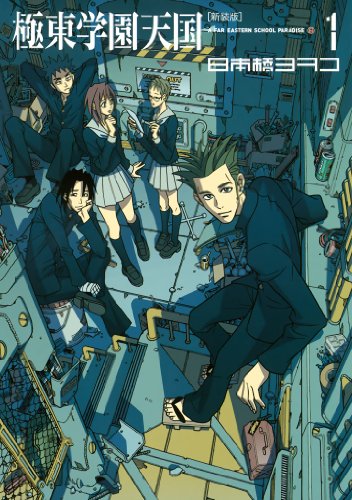
Kyokuto Gakuen Tengoku" is a Japanese manga by Yowoco Nihonbashi, serialized in "Weekly Young Magazine". The main character, Signal Hiraga, transfers to Goshikidai Academy, a den of ruffians. As soon as he transfers to the school, he is suddenly drawn into a school cafeteria war between the different grades, as ordered by Nobunaga Kido, a third-year student who is in charge of the school. A new edition of the four-volume manga was released in 2013, with a new extra manga at the end of the book.
The agency that manages all schools in the Far East, the fictional setting of this story.
If a school is deemed unnecessary by this agency, it will be closed.
Protected Designated Cultural School
All schools and academies in the Far East are under the jurisdiction of an institution called the "Supreme Education Commission of the Far East.
However, schools that are selected as a designated cultural academy are exceptionally free from the jurisdiction of this institution.
Once selected as a designated cultural academy, no matter what the educational policy is, it will not be destroyed as a place where talented students can be born.
Nobunaga Kido, in order to make Goshikidai Gakuen a Protected Designated Cultural Academy, pressed the talented Riichi Muto to paint a picture.
auditor
He is in charge of auditing students who are misbehaving and reporting them to the "Far Eastern Supreme Board of Education".
Nobunaga Kido's sister, Shima Kokubunji, serves as this auditor.
delegate selection
This is the plan that Nobunaga Kido and other SAVANT members have been working on behind the scenes of the "school cafeteria battle.
The plan was to determine the next leader of SAVANT by the time Nobunaga graduates from high school.
Through the "school cafeteria battle," the number was narrowed down to two, Riichi Muto and Signal Hiraga, but after the "forced elimination" was completed, Signal was chosen as the next leader.
Signal was given full rights to the school and an MD disk filled with SAVANT data.
Incidentally, this plan was requested by Jun Mamiya, Nobunaga's close friend and president of the school.
Full nationalization of schools in the Far East region
The agenda from the meeting of the "Supreme Education Committee of the Far East."
The content of the proposal was that public high schools in the "Far East" should take measures to accept problem children and close private high schools that have become hangouts for delinquents.
Goshikidai Gakuen was included in the proposal, and the president of Goshikidai, Jun Mamiya, was sent a letter of consideration for the closure of the school.
Behind the closure of Goshikidai was the involvement of Eigen Kido, the president of Takagi High School.
He took a strong-arm measure to eliminate the territory of his son, Nobunaga Kido.
Hiraga Shirasen, the adoptive father of Hiraga Signal, who objected to this, was considered a dangerous element and was placed under house arrest by the school president.
To resist this proposed measure to close the school, auditor Kokubunji Shima instructed the students to create their own values that would make it impossible to destroy Goshikidai.
As a result, the proposed closure of the school was withdrawn, although the protected designation of the school as a cultural academy was dropped.
achievement test
A test to measure the educational level of the school.
If a student gets a red mark, he or she will be transferred to a rehabilitation facility in the third grade.
In order to protect his fellow students, Signal Hiraga tries to teach them to study at the risk of being ostracized.
Far East Class S Examination
It refers to an examination that only those with the highest academic test scores can take.
In the past few years, students from Kojo High School have been at the top of the class, and it was this S-level examination that led to Kojo's decision to enter a protected designated cultural school.
In order to protect Goshikidai Gakuen from closure, Kokubunji Shima arranged for Hiraga Signal to take this test and he came out on top.
S-class evidence
The trump card prepared by Kokubunji Shima for Goshikidai Gakuen's entry into the "Protected Designated Cultural Academy".
Possession of Somei-Yoshino, a World Heritage Site.
A work of art by Toshikazu Muto, grandson of a leading figure in the art world.
High level classes by former Savant members.
The fact that Hiraga Signal won the top S-class examination.
These are the contents of "Evidence of S-class.
At one time, it was covered up by Eigen Kido, who wanted to abolish Goshikidai, but at the "Far East Supreme Education Conference", Shirousen Hiraga appeared with this "S-class evidence".
As a result, Goshikidai regrettably missed the chance to become a "Protected Designated Cultural School," but the proposal to abolish the school was withdrawn.
The 24th Far Eastern Supreme Education Conference
This meeting took place on February 4. It started at 9:00 a.m., the same time as Kido's entrance exam for the music college.
This is the same date and time as Kido's entrance exam for the College of Music.
At this meeting, Jun Mamiya, the president of Goshikidai Academy, confirmed the withdrawal of the proposal to close Goshikidai.
This was a strong credit to Kokubunji Shima, who collected the "S-class evidence," and Hiraga Shirasen, who delivered the "S-class evidence" to Mamiya.
The Royal College of Music
The College of Music where Nobunaga Kido took his entrance exam. The examination date was February 4.
Since Goshikidai Gakuen is a closed space, the entrance examination was held remotely by video.
Nobunaga's entrance examination number was A-3251.
The subject was Beethoven's Piano Sonata No. 17 in D minor, Op. 31-2, "Tempest," 3rd movement.
The day of the examination was administered by the Practical Examination Administration Committee of the Royal College of Music in England.
Forced removal on February 4
Eigen Kido, the president of Takagi High School, approached the "Far East Supreme Education Committee" to force the closure of Goshikidai Academy, where his son, Nobunaga Kido, is a student.
He came up with a plan to forcibly remove the students from Goshikidai.
The plan was to ask for the cooperation of the Student Movement Disposal Team and use force to calm the students down.
This was also the same day as Nobunaga Kido's entrance examination for the College of Music, and the true purpose of the operation was to sabotage the entrance examination.
gate
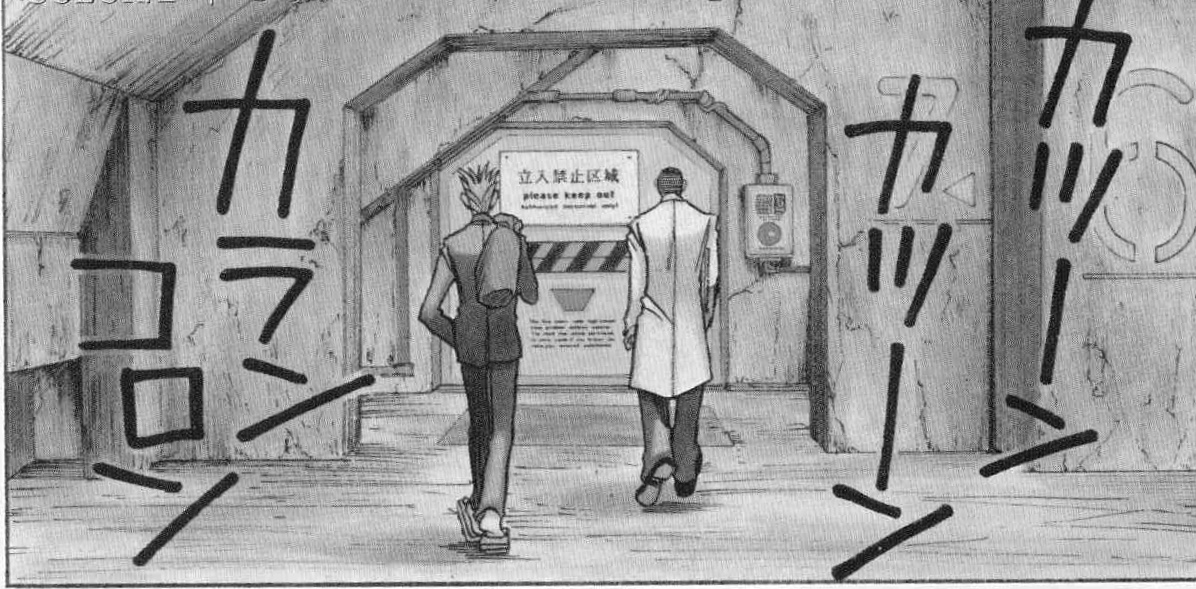
Goshikidai is a school with its only entrance and exit closed by a strict gate.
Once a student passes through the gate, he or she is not allowed to leave until graduation.
The entrance examinations for universities are also not allowed to leave the school, so the school uses a remote entrance examination system.

Related Articles
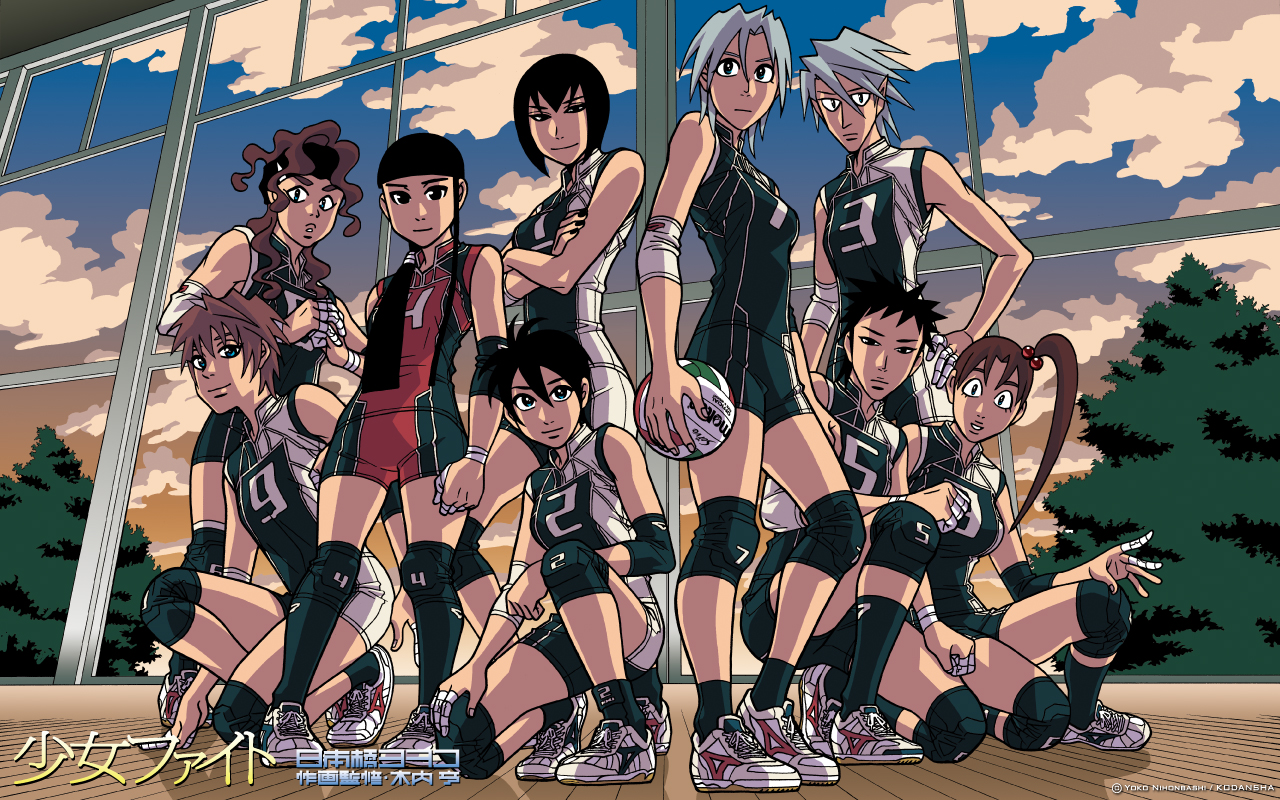
Spoiler commentary and discussion of Shoujo Fight (Yowoko Nihonbashi)
Shoujo Fight" is a manga about high school girls' volleyball, serialized in Kodansha Evening by Yowoco Nihonbashi. The main character Oishi Neri has been suffering from a mental illness after her older sister's accident, which made her a one-in-twenty talent in the world of women's volleyball. This is a coming-of-age story in which she takes her entrance into high school as a turning point, grows up through her friends, and joins forces with them to win the Spring High School championship. The work won the Bross Comic Award 2008 Grand Prize, and was also made into an OVA in October 2009.
Read Article
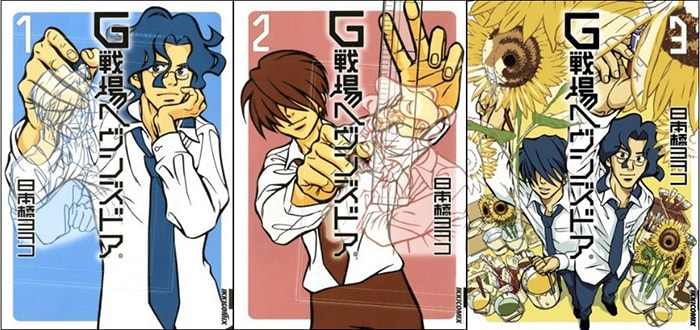
Spoiler commentary and discussion of G Battlefield Heaven's Door (Yowoko Nihonbashi)
It was serialized by Yowoko Nihonbashi in "IKKI Monthly" from November 2000 to June 2003. There are three volumes in the series. In March 2005, the story was made into a radio drama on NHK-FM's "Seishun Adventure" program.
Read Article
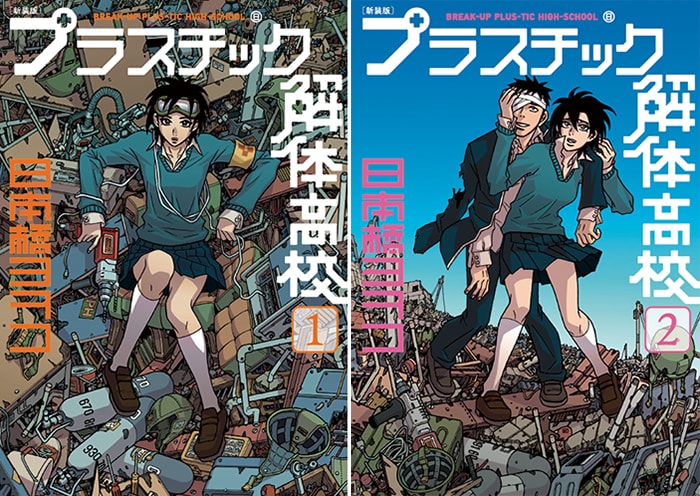
Spoiler commentary and discussion of Plastic Demolition High School (Yowoko Nihonbashi)
Plastic Kaitai High School" is a manga work by Yowoco Nihonbashi. It was serialized in "Weekly Young Magazine" from the 39th issue in 1997 to the 19th issue in 1998. There were two volumes. It is a coming-of-age story in which the main character and his friends enter a special preparatory class at a prestigious high school, Odan High School, and struggle with conflicts with their homeroom teacher and the student council, as well as difficulties in human relations. It was the author's first serialized work.
Read Article
Contents
- Outline of "Far Eastern School Heaven
- Synopsis and story of "Far Eastern School Heaven
- Characters in "Far Eastern School Heaven
- 2nd year A class
- Hiraga Signal
- Riichi Muto
- Hitoshi Yamakane
- Kansuke Takatsu
- Mushanokoji Korekiyo
- Kuroko Haneda
- Ren Kishiwada
- Sadako Washio
- Juri Tsuburaya
- Grade 3B
- Nobunaga Kido
- Rokuro Hattori
- Yuzo Okita
- Class B, Year 2
- Egg Princess
- crane (any bird of the family Gruidae, esp. the red-crowned crane, Grus japonensis)
- 2 years C group (Blitz Network)
- Northern (Hokubu)
- Five-three (five-three)
- Monotropastrum humile (species of saprophytic plant)
- Danna Koyanagi
- 1year c class
- Shigeru Tokaihayashi
- Akemi Shibata
- Other
- Jun Mamiya
- Toruko Mamiya
- Kokubunji Sima
- Hiraga, white line
- Eigen Kido
- Wife of Eigen Kido
- Tamon (variety of Japanese word)
- Utazu
- Tanaka
- Tomita
- Koji Meguro
- Tashiro
- board chairman
- landscaper
- Father of Toshikazu Muto
- Ayako
- woman who works in the purchasing department
- Kazuo
- Terms of "Far Eastern School Heaven
- requisition order
- school cafeteria competition
- athlete who competes in the last match of a team competition (kendo, judo, etc.)
- extra prize
- Designated equipment
- Goshikidai Private School
- National Kojo High School
- Class Selection
- Yoshino cherry tree
- SAVANT
- arm band
- Good questions are more important than answers.
- retinopathy of prematurity
- finger-locking
- Desiccant (silica gel)
- Shoushinshu
- The Shawshank Redemption.
- Far Eastern Supreme Board of Education
- Protected Designated Cultural School
- auditor
- delegate selection
- Full nationalization of schools in the Far East region
- achievement test
- Far East Class S Examination
- S-class evidence
- The 24th Far Eastern Supreme Education Conference
- The Royal College of Music
- Forced removal on February 4
- gate
- Student Movement Processing Team
- boiler room
- staff tower
- Public" and "private."
- Famous quotes, lines, scenes, and scenes from "Far Eastern School Heaven
- Because my soul is rotting."
- It's like thinking a stone thrown at you will fly free."
- I didn't say you got caught, did I?
- "Even if you live like winter, spring will come."
- You're a nice guy.
- When you realize you can't live a clean, straight life, that's when the booze gets you."
- "I want to die" is the same as "I want to live," which is the same as saying, "I want to live."
- I prefer idiots who answer to the best of their ability and get it wrong to idiots who submit a blank sheet of paper because they don't want to embarrass themselves by making a mistake."
- Give up on giving up on me, Yamakane.
- A scene where a sophomore almost pulled off a victory.
- It's much better than those who do nothing but complain from the safety of their own homes."
- "You're scared because you don't want people to hate you for doing what you love, and you want to defend your last bastion to the death."
- How can you so easily guess the one word you wish someone had said to you?"
- Get dirty, because there are things in this world that are not straight-forward enough, and real purity is found only when you get dirty."
- "Even if you live like winter, here comes spring."
- There is nothing on the road that someone else has prepared for you."
- I've never had my soul so stirred."
- We just want to live our lives the way we want to live them.
- Let's make heaven."
- Backstory, trivia, small stories/episodes, and anecdotes from "Far Eastern School Heaven
- Kyokuto Gakuen Tengoku" is a censored manga
- Yowoco Nihonbashi is actually not good at drawing.
- Nobunaga Kido is accepted to a music college.
- Yowoco Nihonbashi's favorite "Kyokuto Gakuen Tengoku" character is Rokuro Hattori.