
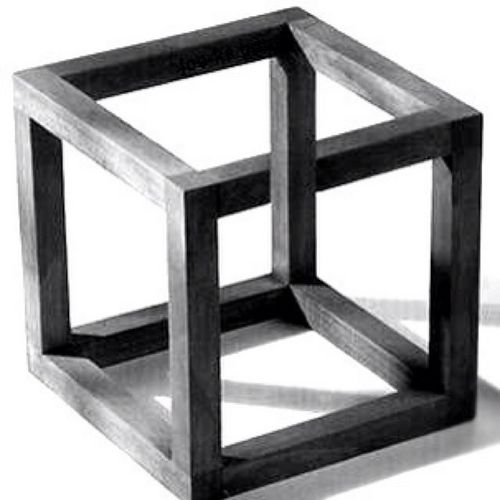
This page introduces Escher's work, which is mysterious and incomprehensible, but technically amazing in some way.
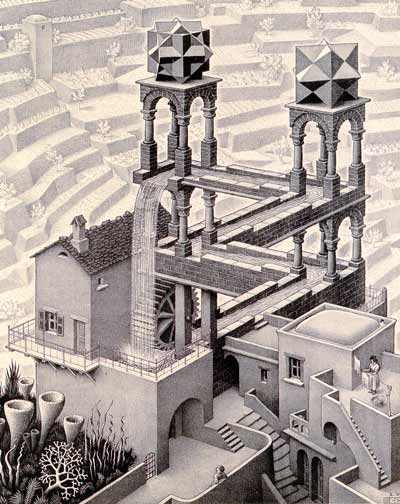
Escher is famous for this work. But we are not familiar with Escher's works.
Maurits Cornelis Escher (June 17, 1898 - March 27, 1972) was a Dutch painter (printmaker) best known for his woodcuts, lithographs and mezzotints. He created highly original works, such as unbuildable structures, confining the infinite within the finite, and filling flat surfaces with ever-changing patterns.
Source: ja.wikipedia.org
It appears that he used a variety of techniques to create his works.
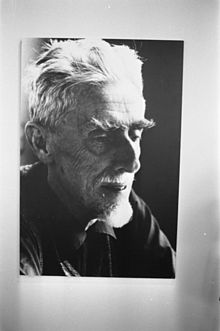
Nor was I familiar with the author's face.
His deep insight and inquisitiveness have made him a favorite among physicists and mathematicians for his expression of concepts such as symmetry, hierarchy, continuity, infinity, and zero.
Source: d.hatena.ne.jp
It's a kind of charisma that even non-painting types support it.
Escher's unique world of "mathematical images
Source: kotobank.jp
Mathematical images?
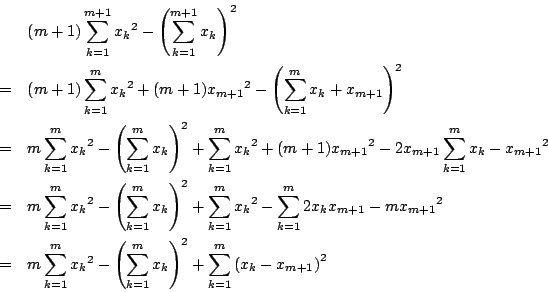
Did he do something this complicated in the Escher painting? Maybe that's why he is supported by mathematical scholars.
I would like to study it with an eye to its connection to symmetry and group theory, but it's not easy.
I don't see any avenues for researching from the "Escher" side.
Source: www.amazon.co.jp
There seems to be nothing unusual about viewing Escher's appeal from a mathematical perspective.
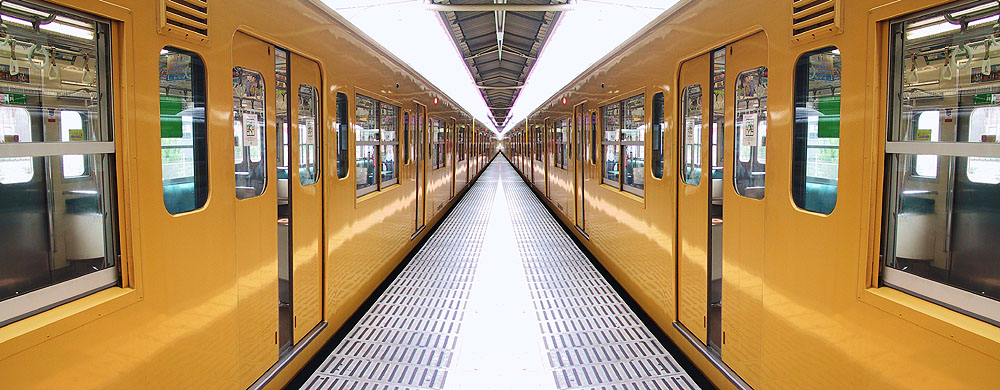
Symmetry...it may be something that makes some people feel uncomfortable.
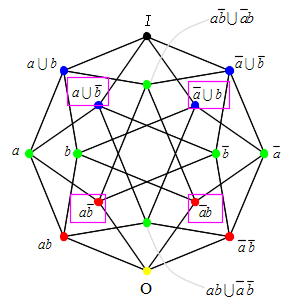
This is "group theory," they say.
It doesn't make me feel bad, but it does make me confused.
In other words, group theory is
Group theory is the study of groups. The notion of group is a central concept in abstract algebra.
Source: ja.wikipedia.org
In other words, Escher's works seem to be a grouping of some kind of herd gathered in a certain symmetry or other law-like manner.
With that in mind, an image of Escher's work
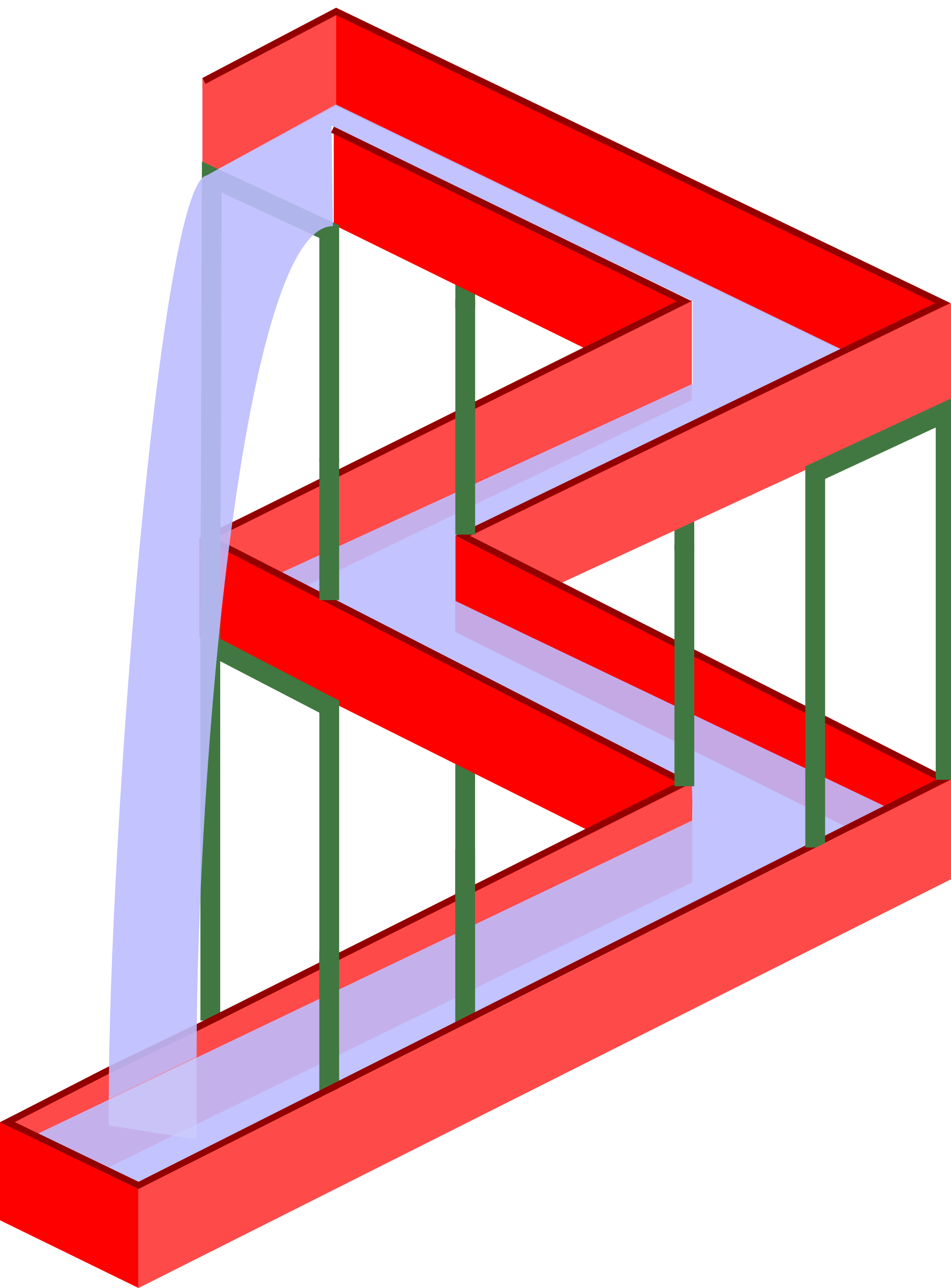
How do you solve that mathematically with group theory because it is actually impossible?
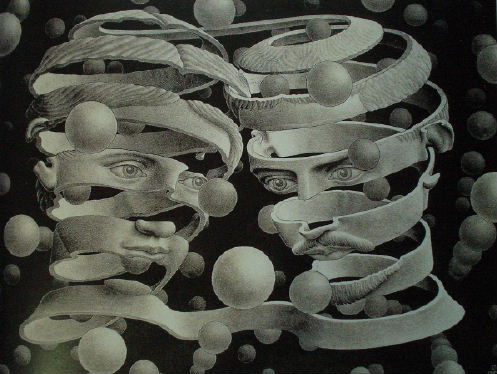
It is fantastic, but I do not envy this world.
Unless we are mathematicians, we find ourselves increasingly confused about Escher's work when we try to decipher it.
