
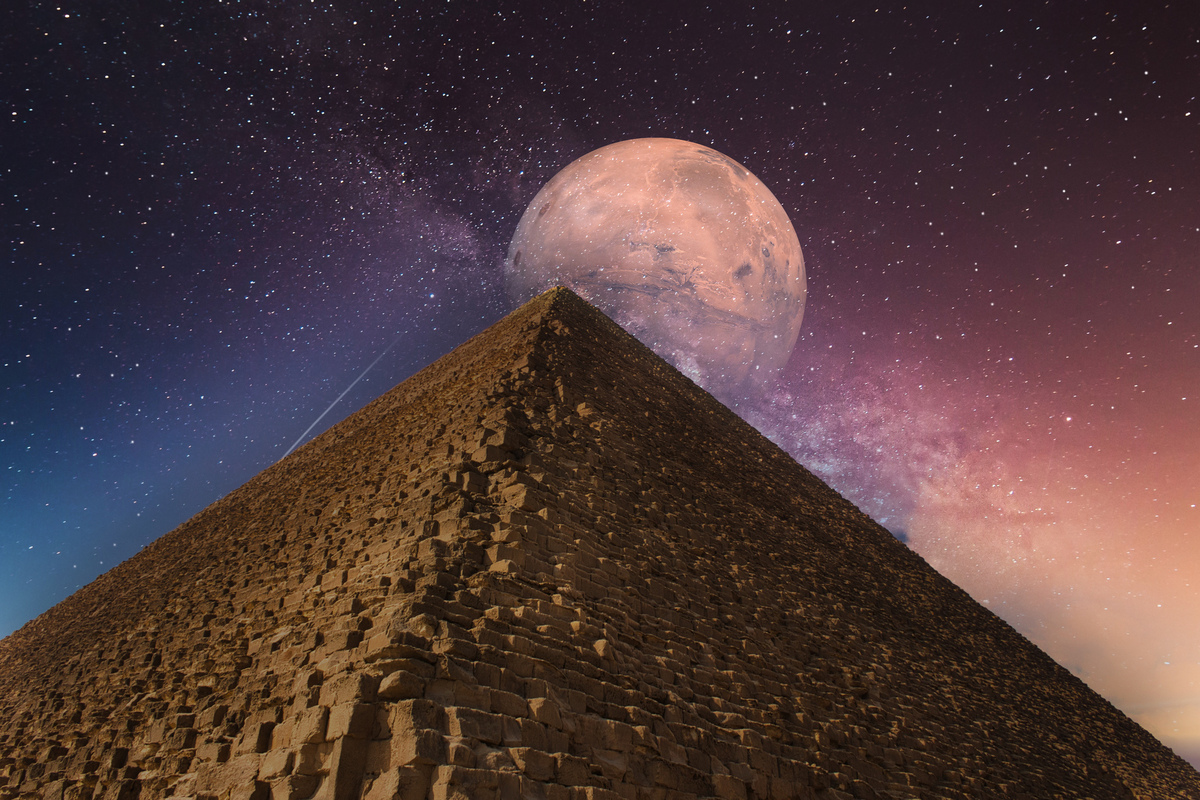
Mysterious structures, pyramids, are scattered all over Egypt. The most famous of these, and one that holds a great deal of mystery, is the Pyramid of King Khufu. It was built by stacking 2.7 to 2.8 million stones weighing approximately 2.5 tons, and its length and height were carefully calculated to be in the golden ratio. As research progressed, it was discovered that the number "19.5 degrees" could be derived by superimposing the spherical earth and the tetrahedral pyramid, and that there are power spots scattered throughout the earth at latitudes of 19.5 degrees.

Source: swnews.jp
sunspot
The Sun is the physical center of the solar system, including the human-inhabited Earth, and accounts for 99.86% of the total mass of the solar system, exerting a gravitational influence on all bodies in the solar system.
Sunspots are dark because their temperature is about 4,000°C, which is lower than the normal solar surface temperature (about 6,000°C). The cause is believed to be the sun's magnetic field.
A sunspot is an area that looks like a black spot when the solar surface is observed. They are also called sunspots. In reality, the sunspot is not completely black, and this area also emits light, but the light is weaker than the surrounding area, so it appears black. Sunspots increase and decrease in a cycle of about 9.5 to 12 years.
(From Wikipedia)
On the sun, the region of sunspot activity and highest temperature is 19.5 degrees north and south.
Source: homepage3.nifty.com
Source: www.wallpaperlink.com
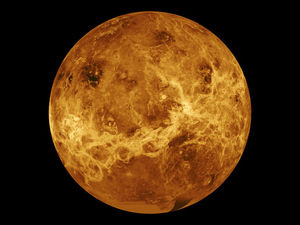
Volcanoes of Venus
Venus is the second planet in our solar system from closest to the sun. It is also the planet closest to Earth.
Venus has an almost completely inverted axis of rotation, which means that it rotates in the opposite direction of the other planets. On Earth and other non-Venus planets, the sun rises in the east and sets in the west, but on Venus it rises in the west and sets in the east.
Venus' rotation is synchronized with the period of its meeting with the Earth, so that only the same side of Venus can always be seen from the Earth at the time of closest approach.
(From Wikipedia)
Also on the surface of Venus, probably in the Alpha (25°S, 0°E) and Beta (25°S, 283°E) 25° regions, active large volcanic complexes exist in the 19.5° neighborhood.
Source: homepage1.nifty.com
Source: labaq.com
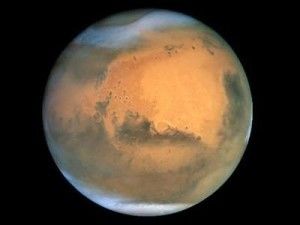
Mars Largest volcano in the solar system
Mars (Latin: Mars Mars, English: Mars, Greek: Άρης Ares) is the fourth planet in the Solar System from closest to the Sun. It is classified as a terrestrial planet and orbits outside the Earth.
(From Wikipedia.)
The volcanic spindle shape of the giant Mount Olympus is at 19.5 degrees north latitude.
Source: homepage1.nifty.com
Mount Olympus is the largest mountain in the solar system. Its altitude from the Martian elevation reference plane is 25,000 meters.
The maximum slope angle is only a few degrees, and the diameter of its base is more than 550 kilometers.
Pyramid of Mars is 33 degrees west longitude and 19.5 degrees north latitude
Source: blogs.yahoo.co.jp
Various other locations seem to be related to Mars at 19.5 degrees.
Source: upload.wikimedia.org
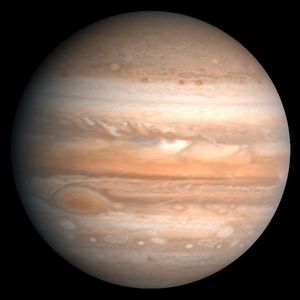
Jupiter's Great Red Spot
Jupiter is one of the planets in the Solar System, the fifth planet orbiting in the fifth orbit from the inner side.
It is the largest of the solar system's planets in both size and mass.
(From Wikipedia)
The Great Red Spot, which is clearly vortex on Jupiter's surface, is at 19.5 degrees.
Source: homepage1.nifty.com
Vortex is a whirlpool.
Source: upload.wikimedia.org
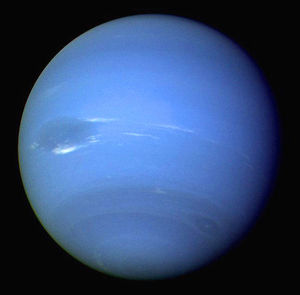
Neptune, the Great Dark Spot
Neptune (Neptune) is the eighth planet in the Solar System from closest to the Sun. It orbits farthest from the sun among the planets in the solar system.
The name Neptune is a reference to Neptune, the Roman god of the sea.
The Great Dark Spot is a dark oval area seen on Neptune. It is similar to Jupiter's Great Red Spot, but it is thought to be a thin atmospheric component, similar to Earth's ozone hole, rather than a dynamical vortex.
(From Wikipedia)
http://ja.wikipedia.org/wiki/%E6%B5%B7%E7%8E%8B%E6%98%9F
A similar spot was discovered on Neptune's surface in 1986 by Voyager II at 19.5 degrees north latitude.
Source: homepage1.nifty.com
There are still many secrets in the universe that we do not know.
Related Summary
Summary of ruins created 10,000 years ago! Civilizations older than the history of mankind, including the ruins of Göbeklitepe - RENOTE
renote.net
We have compiled a list of super-ancient civilizations that are believed to have been created before the first human civilization, the Mesopotamian civilization. Listed here are mysteries related to super-ancient civilizations discovered around the world, such as the ruins of Göbeklitepe in Turkey, the underwater ruins of Yonaguni Island in Okinawa, and the pyramids on the Kola Peninsula in Russia. We have researched the authenticity of each site, including detailed information about them and whether they really existed 10,000 years ago.
