
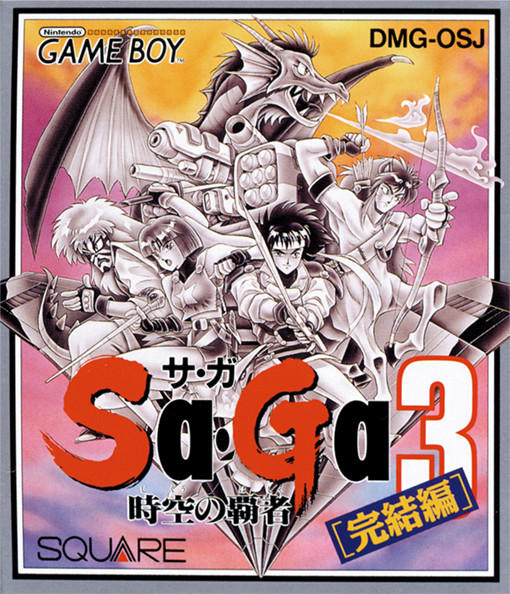
Sa-Ga 3" is a Game Boy exclusive software released by Square Enix on December 13, 1991. It is the final installment of the Saga series. This title was the last in the GB series. Unlike the previous two games, the system has been changed to the orthodox one where players level up with experience, and the limitation on the number of times they can use weapons and magic has been eliminated. In this story, three young people are sent back in time to change the future, and together with their friends, fight against the gods of another dimension beyond time and space.
A means of attack performed with the bare hands without the use of weapons.
It has the characteristics that beastmen are good at, such as body techniques. The higher the attack power of the user, the more powerful the attack.
holy sword
Any non-monster species can have a characteristic that they are good at. The higher the user's attack power, the more powerful it is. It is more powerful against enemies that block instant death.
ability
A special ability possessed by races other than humans and espers.
It does not depend on weapons or equipment, but is a power that each race originally possesses, and there is no limit to the number of times it can be used.
Armor for "Sa・Ga3" (The Master of Time and Space)
shield
The only resistant armor that can be replaced during battle. It has the effect of increasing the cyborg's HP and attack power. It is mainly designed to reinforce defenses, and is not intended to be used as an item, but rather to be equipped to increase the status of the cyborg.
armour
Body armor. Many of them reinforce the statuses such as speed and attack, and especially increase the cyborg's HP and defense.
headpiece
Armor for the head. Many of them have various resistances. Increases the cyborg's HP and defense.
forearm
Armor for arms. Many of them have various resistances. Increases the MP and speed of cyborgs.
shoes
Armor for feet. Many of them increase speed. Increases the MP and speed of cyborgs.
decoration
An accessory; armor that can be equipped with two pieces, some of which activate magic when used in battle. It has various resistances and increases the cyborg's MP and magic power.
Saga 3: Shadow or Light" for Nintendo DS
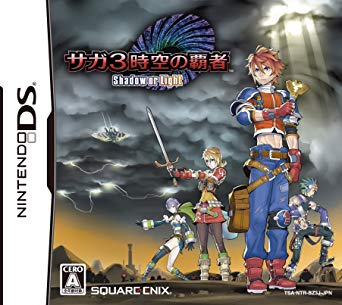
Saga 3: Shadow or Light" (SOL), released on January 6, 2011, is a full 3D remake for the Nintendo DS based on the GB version of "SaGa 3: The Conqueror of Time and Space".
The game was developed by Rakujin, the developer of "Saga 2: Legend of the Hidden Treasures GODDESS OF DESTINY" (GOD), which was released in 2009. The same staff continues to shift directly to this title.
The original GB version was the only one of the saga series in which Akitoshi Kawazu, the creator of the saga series, was not involved in the development, but in this remake, he has joined as the general director, and both the system and scenario have been modified in a manner similar to the previous saga series.
Therefore, there are significant changes and additions from the GB version.
The 3D version has greatly enhanced the visual aspects of the game, such as the staging of events and effects during battles.
Character design continues to be handled by Motoi Kobayashi from "GOD".
In addition to Takashi Sasai, the composer of the GB version, Kenji Ito, who is in charge of the Saga series, participated in arranging the music.
The most significant change is the elimination of the "experience-based level system" that was used in this title.
The level system was originally not used in the series prior to "Sa-Ga 3: The Complete Series," and its elimination brings the game into conformance with the previous series.
In addition, symbol encounters are used in the remake, as opposed to the random encounters used in the GB version.
The battle system basically follows that of the previous "GOD," but the "linkage system" has been changed to the system used in "Saga Frontier," in which the combination of techniques becomes the name of the game.
Newly adopted in this title is the "Times Gear" system.
The "Times Gear" is a device that manipulates time, and as the story progresses, various functions are added. However, in order to use these functions, "gear points" are required.
Gear points" are accumulated when attacking or being attacked by enemies in battle.
These points accumulate from +/- 0 to +5, and the numbers are displayed on a ball that looks like a jewel on the screen. This ball is called the "gear gauge.
The color of the gear gauge changes according to the number of points.
Some of the "Times Gear" has an ability called the "Freeze System" that stops time while the user is moving. Using this system, you can get out of a pinch when surrounded by enemies, stop gimmicks on the field, and gain an advantage in the search for units in Stethlos.
The scenario aspect of the game has also been significantly changed.
The "Scenario Synchronization System" (SSS), which was also included in the previous "GOD" game, has been added. In this system, choices appear during events, changing the development and ending, and the player can refer to the "future prediction" hints to determine which choice to make.
But these choices are conditioned by the "gear points" mentioned above, and there are some choices that require a certain number of points and some scenarios that can only be selected if you have less than a certain number of points.
A new subquest called "Hunt" has also been added. In addition, gifts from the townspeople and dialogues of the characters have been added.
In particular, Polnareff and Milfey, who were main characters in the GB version but had no dialogue at all, now have dialogue.
Slime has been added as a new character to explain additional items.
When these and other subquests are completed, and the SSS achievement, gear gauge color, and other conditions are met, the true endgame will appear, and the "true ending" can be seen when the player defeats this endgame.
However, to fight the true last boss, you must defeat the last boss once and watch the post-ending event.
In this title, "Easy" and "Normal" difficulty levels have been added at the start of a new game. In addition, once the game is cleared, "Hard" difficulty and "NewGame+," which allows the player to start from the beginning with some of the content from the first clear, are added.
The true nature of borage
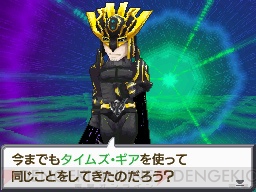
Borage's true identity was Wanderer.
In this work, the true identity of Borage, which was not told in the GB version, is revealed.
Borage is the person who sent the three protagonists back in time, but his true identity is actually a mysterious character named Wanderer, who appears as a new character in this work.
Wanderer is a mysterious man whom Dune met in the space-time chasm when he was knocked unconscious during the first warp in Stethlos.
He was the one who provided the protagonists with various information and added functions to the Times Gear.
The space-time chasm is a place that must be passed through when warping through space-time in Stethlos.
Wanderer is a resident of this space-time chasm, and since he can freely enter and leave all eras and other dimensions, he is a mysterious figure who knows about past and future events.
In the GB version, Stethlos was created by the god Saul, but in this work, he is the one who created him.
Therefore, Wanderer's appearance is that of a masked figure in imitation of Stethlos, and he is called "Stethlos Man" or "Stethlos Mask" by the players.
The reason Wanderer cooperated with the hero as a molage was because he needed to bury the god Ragna and the god Saul at the same time.
The space-time chasm in which he lives is kept in a state of coexistence between the saga world created by the god Saul and the world of another dimension where the god Laguna resides.
However, when God Laguna absorbs God Saul and becomes one God, he tries to destroy the two separate interdimensional worlds and the saga world to make them one world again. If this were to happen, the space-time chasm between the two worlds would also disappear.
In fact, the god Saul was also trying to absorb the god Ragna by accumulating power through sleep.
Whichever god wins, the two worlds will be remade into one, and the space-time chasm in which he lives will disappear.
Therefore, he chose to defeat both gods at the same time so that both worlds would survive and the space-time chasm would continue to exist.
He used Dune and the others for this purpose.
His aim was right on target, and Dune and his group succeeded in destroying the gods Ragna and Saul at almost the same time.
Although Wanderer knew both the past and the future, Dune and his friends had altered the history that Wanderer knew one after another, so that a future that he did not know was being drawn up.
Everything was going to be all right, but Dune had always wondered how Borage knew that Dune was Jupiter's child.
When Dune and his friends arrived in the future world, Jupiter's child had not yet been born.
At that time, no one would have known that the child of Jupiter would be born in the future.
Dune herself did not know until she heard it from Borage.
So why did only Borage know? It was because he knew what was going to happen in the future.
Also, several unexplained things that had happened so far, such as how Wanderer knew how to use the Times Gear given to him by Borage, led Dune to suspect Borage and to realize that his true identity was Wanderer.
Wanderer reveals his identity to Dune and the others and tells them the truth.
Since it is necessary to maintain a balance between the gods Laguna and Saul to prevent either of them from winning, Wanderer has been leading the Saul gods to side with the Laguna gods when they have the advantage, and to reduce the Saul gods' power when the Saul gods' power is in their favor.
In order to weaken the power of the Saul gods, he also killed Dune's father, Jupiter, in the form of Borage.
Of course, knowing the future, he did this knowing that Jupiter would later be resurrected, but this offended the Dunes, and Borage Wanderer ended up fighting the Dunes.
In other words, Borage Wanderer is the real final boss.
In battle, he fights first in the form of Borage and then in the form of Wanderer.
Wanderer had no intention of fighting the Dunes, who had initially served his purpose, but now that their true identity was known, he decided that he could not let them live.
Incidentally, if the color of your Times Gear is blue or higher before you fight Laguna, you will have the option of fighting or not fighting Borage when you fight Borage.
If you choose not to fight, you will still fight Wanderer, but after fighting and winning, Dune will let him go without putting a stop to him. This is because he felt that Borage was a friend who had fought with Dune and his friends against the god Laguna.
The final scene is the same in either case, and Dune and his friends return to the town of Dahm in the present world after the completion of the time machine.

Related Articles
Summary of SaGa Frontier (SaGa Frontier) Spoiler Commentary and Discussion
Saga Frontier" is a PlayStation® game released by Square Enix on July 11, 1997, in the RPG genre, and is the seventh title in the Saga series. The player can choose one of seven main characters, each with a different storyline. In addition to the fantasy theme of the previous titles, this new title also incorporates science fiction elements. The "Linkage" system has also been introduced in this title. The seven protagonists weave their own stories in a number of small worlds called "regions.
Read Article
Romancing SaGa (Romancing SaGa 1) Spoilers and Discussion Summary
Romancing SaGa" is a role-playing game (RPG) for the Super Nintendo Entertainment System (SFC), released by the current Square Enix on January 28, 1992. It is an ambitious work newly created by the staff of the "Sa-Ga" series for the Game Boy. The biggest selling point of the game was its use of the "free scenario system," which was still rare at the time, and allowed for a high degree of freedom. Players were free to choose one of eight main characters, each of whom had a different story to tell, to explore the world at their leisure, and fight legendary evil gods.
Read Article
Romancing SaGa 3 (Romancing SaGa 3) Spoilers and Discussion Summary
Romancing SaGa 3" is a role-playing game software for the Super Nintendo Entertainment System (SNES) released by Square Enix in 1995. It is the sixth title in the Saga series, the third in the Romancing Saga series, and is often called the culmination of the series. In addition to the free scenarios that characterize the series, there are a variety of mini-games. Players choose one of eight main characters and embark on an adventurous journey to solve numerous mysteries brought about by the "Deadly Eclipse.
Read Article
Spoilers and discussion of SaGa Frontier 2 (SaGa Frontier 2)
Saga Frontier 2" is a PlayStation® game released by Square Enix in 1999. It is the eighth title in the "Saga" series and the second in the "Saga Frontier" series. The series' characteristic free scenario is adopted in this title as the "History Choice" system, in which players follow scenarios in chronological order. Set in a world where magic has become commonplace, the story spans approximately 100 years, featuring Gustave XIII, who is unable to use magic, and William Knights and his family, who must confront the disasters that occur in the shadows of the times.
Read Article
Romancing SaGa 2 (Romancing SaGa 2) Spoilers and Discussion Summary
Romancing SaGa 2" is an RPG developed by Square (at the time) for the SFC. The game is characterized by a free-play scenario rather than following a predetermined flow, and by a flash system that allows players to learn techniques regardless of their level. The player becomes the emperor of the Varennes Empire and confronts the "Seven Heroes" who once saved the world. The battle continues and spins across generations.
Read Article
Sa-Ga2: The Legend of the Hidden Treasure (Final Fantasy Legend II) Spoiler Commentary and Discussion Summary
Sa-Ga2: The Legend of the Hidden Treasure" is a Game Boy (GB) game released by Square Enix on December 14, 1990. It is the second title in the Saga series. The basic system follows that of the previous title, "Makaikai Toushi Sa-Ga," but changes and additions have been made to the system to make it even easier to play. The "hidden treasure," a legacy of the ancient gods, is said to provide great power when obtained. The main character sets out on a journey with his friends in search of his father, who has gone missing in pursuit of the "hidden treasure.
Read Article
Spoiler commentary and discussion of Mage Toushi Sa-Ga (The Final Fantasy Legend)
Makai Toushi Sa-Ga" is a Game Boy (GB) exclusive software released by the current Square Enix on December 15, 1989. The genre was the first RPG, which at the time was said to be impossible for the handheld GB, and it became the company's first million-seller software. This was the memorable first title in the Saga series. It attracted attention for its novel system in which there was no concept of experience or level, and the method of growth differed depending on the type of character. The story takes place in four worlds connected by a single tower. At the top of the tower is a paradise. In search of that paradise, the protagonist sets off on an adventure to the tower.
Read Article
Romancing Saga Re-Universe (Romancing Saga RS) Spoilers and Discussion Summary
Romancing Saga Re-Universe" is an online smartphone RPG for iOS and Android jointly developed and released by Square Enix and Akatsuki. Set 300 years after "Romancing SaGa 3," eight new heroes (Polka, Liz, Zenon, Valdor, Brownie the Fairy, Xin-Du, Madeline, and Evelyn) have gathered to bring peace to the world and prevent a demon king who plans to revive the "Death Eaters" that take all new life. The charm of this game is that you can develop one style with attachment and develop tactics to fight battles.
Read Article
サガ スカーレット グレイス(SSG)のネタバレ解説・考察まとめ
『サガ スカーレット グレイス』とは、スクウェア・エニックスより2016年に発売されたPlayStation Vita用のRPGである。本作は4人の主人公を選択し、各キャラクターに割り当てられたメインシナリオや『サガシリーズ』の魅力であるフリーシナリオをプレイヤーが自由に進めることができる。それぞれのシナリオを読み解きながら、舞台となる世界や神についての真実を探るストーリーが展開されていく。
Read Article
アンリミテッド:サガ(アンサガ)のネタバレ解説・考察まとめ
『アンリミテッド:サガ』とは、スクウェア・エニックスから2002年に発売されたPlayStation 2用のRPGである。7人いる主人公から1人を選択しゲームを始めるが、選択した主人公によって異なる目的を果たすべく旅をする内容となっている。従来のシリーズとは全く異なるゲームシステムを採用しており、賛否は分かれるが理解を深めることでこのシステムが大きな魅力となってくる。
Read Article
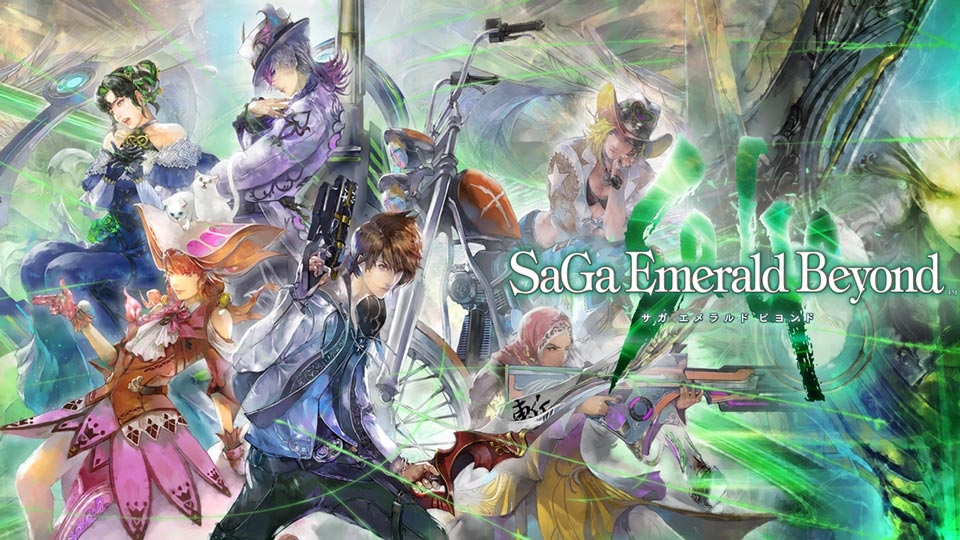
サガ エメラルド ビヨンド(サガエメ)のネタバレ解説・考察まとめ
『サガ エメラルド ビヨンド』とはスクウェア・エニックスより2024年に発売されたRPGであり、『サガ』シリーズの1作である。『サガ』シリーズのコンソール向けゲームとしては前作『サガ スカーレットグレイス』以来となる完全新作となっており、バトルシステム面において、『サガ スカーレットグレイス』で採用された「タイムラインバトル」をさらに発展させたシステムを採用している。タイトルは本作で採用されているシステム「エメラルドビジョン」に由来する。
Read Article
![A Masterpiece] I want to play it again before I die! Super NES Game 【Recommended】.](https://renote.net/files/blobs/proxy/eyJfcmFpbHMiOnsiZGF0YSI6MTgwNzkyLCJwdXIiOiJibG9iX2lkIn19--89a512c082c743fd6aa77efd98b378b2f9c670a1/z_5fb7b0d7ec722.jpg)
A Masterpiece] I want to play it again before I die! Super NES Game 【Recommended】.
I want to play it again before I die! This is a compilation of Super Nintendo Entertainment System (SNES) game titles. There are more than 1,000 Super Nintendo Entertainment System (SNES) game titles, so we took the time to compile this list. Generally, the further back you go, the older the release.
Read Article
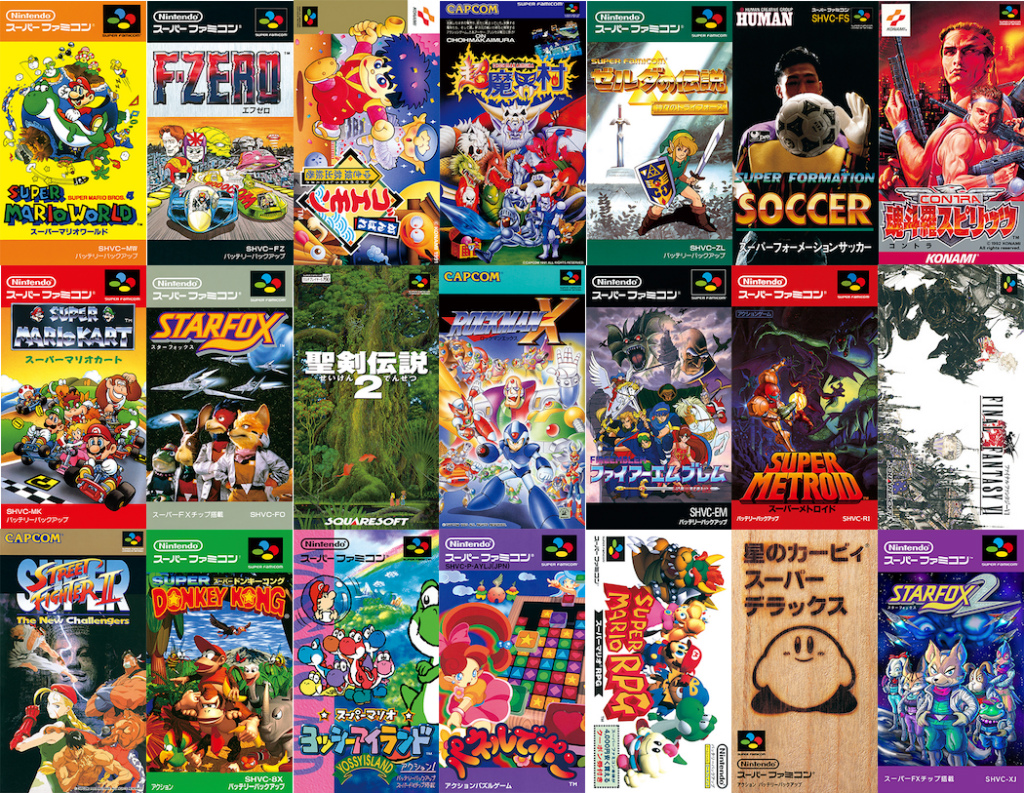
A compilation of recommended Super Nintendo Entertainment System (SNES) software classics.
We will compile a list of the most interesting and highly rated SFC classic software in the series by genre. The SNES is still colorful even if you play it now. Some of them have appeared on the Virtual Console.
Read Article
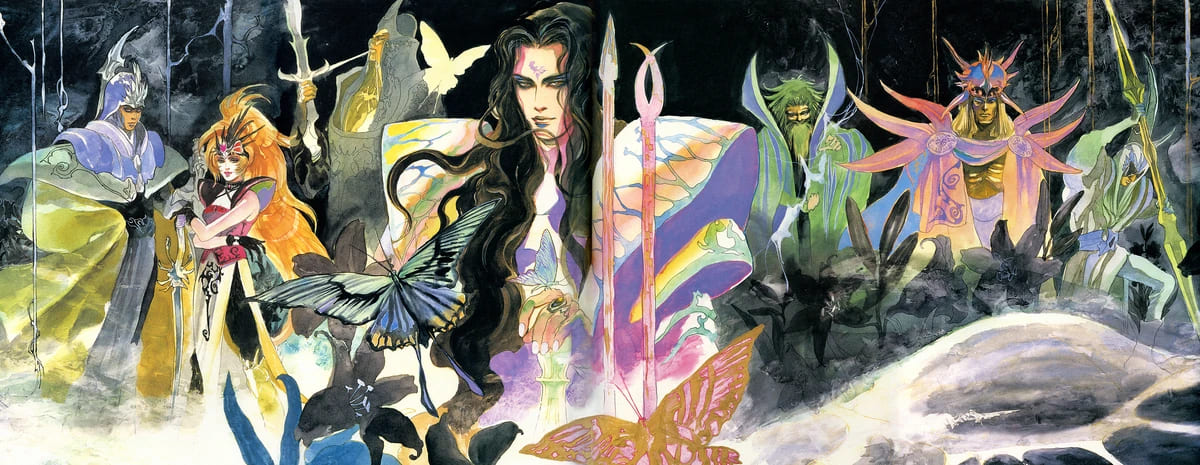
Comparison of the Seven Heroes of Romancing SaGa 2 with the Royal Shichibukai of ONE PIECE [ONE PIECE].
ONE PIECE" is a very popular manga published in Weekly Shonen Jump magazine. There are rumors that the "Seven Heroes" in Square's (now Square Enix) game "Romancing SaGa 2" are modeled after the Seven Pirates. So, I decided to compare the two in this article. Well, it seems that there are many similarities.
Read Article
Summary of similarities between Romancing SaGa2's Seven Heroes and ONE PIECE's Royal Shichibukai [perfect match].
The "Seven Heroes" in the game "Romancing SaGa 2" and the early "Royal Shichibukai" in the manga "ONE PIECE" have much in common. Wagnus of the "Seven Heroes" and Crocodile of the "Royal Shichibukai" share the same attempt to take over a country. Noel of the "Seven Heroes" and Mihawk of the "King's Shichibukai" are similar in that they are gentlemen and masters of swords.
Read Article
Contents
- Outline of "Sa・Ga3" (Sa・Ga3, the Master of Time and Space)
- The story of "Sa・Ga3" (Sa・Ga3, the champion of space-time)
- Programming in Logic
- Current Saga World
- Past Saga World
- The present saga world again
- Future Saga World
- Future saga world, floating continent
- alternate dimension world
- Other dimensional world, underground
- Other dimensional world, Gothic region
- Return and future saga world
- ending
- The World of "Sa・Ga3" (Sa・Ga3, the Master of Time and Space)
- Giant water bottle
- Current Saga World
- Past Saga World
- Future Saga World
- Town of Dahm
- temple
- Town of Irem
- Town of Ray
- Town of Mu
- City of Viper
- Village of Yadis
- alternate dimension world
- Town of Darius
- Village of Hermit
- Town of Kinaia
- Town of Steslos
- Town of Zakarion
- Town of Cloud
- Town of Port-au-Prince
- Town of Mozuma
- Town of Command
- Terms for "Sa・Ga3" (The Master of Time and Space)
- Stethlos.
- Stethlos Unit
- wave gun
- maser gun
- tachyon cannon
- Moebius strip gun
- stealth barrier
- Drive Engine
- hover engine
- flight engine
- past warp
- Future Warp
- space-time warp
- capsule hotel
- purification machine
- radar
- remote control
- Characters in "Sa・Ga3" (Sa・Ga3, the Master of Time and Space)
- protagonists
- dune
- Polnarev
- mille-feu
- Japanese fluvial sculpin (Cottus pollux)
- scenario character
- Melrose
- Freya.
- Nemesis
- Dior
- borage (Borago officinalis)
- Other Characters
- Elder Gil.
- Kronos
- great-grandmother
- Dr. Quasar.
- Volfes
- Jupiter
- barzai (small fish)
- Charles.
- picking up a lot of things (e.g. garbage, ranks, etc.)
- sword blade
- Saul God
- gods of another dimension
- douglas
- ashula
- chaos
- Miroku
- fenrir
- belial
- pagos
- volvox
- teal
- Laguna God
- Game System of "Sa・Ga3" (The Master of Time and Space)
- combat system
- growth system
- tribe
- human being
- one who has ESP (extrasensory perception)
- human beast
- monster
- cyborg
- robot
- magic
- status
- home page
- MP
- attack
- speed
- charm
- a hit
- protection
- magic protection
- Avoidance Ratio
- magic avoidance
- Resistance/Weaknesses
- item
- magic stone
- holy sword
- rocket belt
- Weapons in "Sa・Ga3" (The Master of Time and Space)
- Weapons for hand-to-hand combat
- bow (and arrow)
- gun
- weapons
- art
- holy sword
- ability
- Armor for "Sa・Ga3" (The Master of Time and Space)
- shield
- armour
- headpiece
- forearm
- shoes
- decoration
- Saga 3: Shadow or Light" for Nintendo DS
- The true nature of borage
- Backstory, Trivia, and Anecdotes of "Sa・Ga3" (The Master of Time and Space: Sa・Ga3)
- The protagonist family of "Sa-Ga2: The Legend of the Hidden Treasure" appears.
- Stethlos Model
- Osaka-ness is everywhere.