
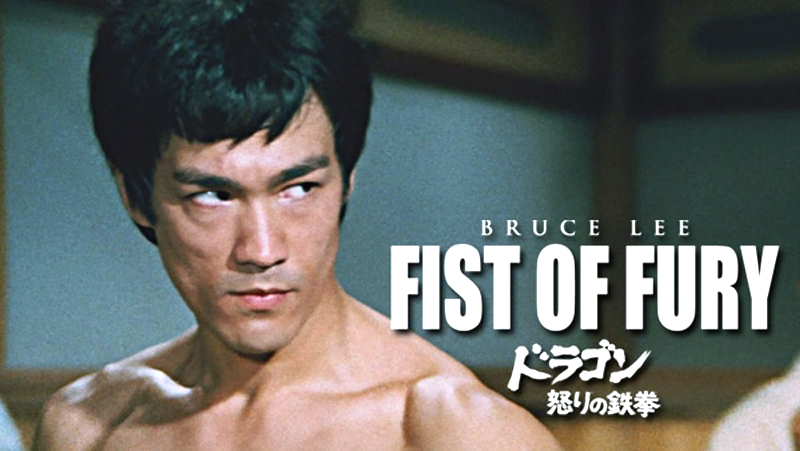
Dragon Fury" is a Hong Kong film produced in 1972. It is the second in a series of kung fu films starring Bruce Lee, who became a top star in Hong Kong after the success of his previous film, "Dragon Crisis. It was released in Japan in 1974. Set in Shanghai in the early 1900s, when Japanese imperialism was rampant, the film depicts a young man whose former teacher was killed by a faction of Japanese martial artists who are plotting to destroy the Chinese martial arts dojo "Seibukan," and he single-handedly confronts the faction in order to exact revenge.
About the Stage
While the previous film was shot mostly on location in Thailand, this film was shot entirely in Hong Kong, mostly on studio sets. (However, the story is set in Shanghai.)
About Costumes
Many Japanese actors appear in this film, but about half of those who appear in hakama wear them backwards and forwards. Riki Hashimoto, a Japanese actor who plays Suzuki, pointed out the Hakama to the director, Lo Wei, but he said, "It looks cooler this way," and the film was shot as it was. However, all of the scenes in which Hashimoto appears in the film are all wearing the correct hakama, and it is believed that his pride as a Japanese made him fix the problem.
About the rickshaw scene
There is a scene in which Cheng lifts a rickshaw with Wu on it all by himself, which was the brainchild of the director, Lo Wei. Bruce Lee, who plays Cheng, initially refused, saying that it was impossible and unrealistic to lift a rickshaw with a person on it like that, but eventually Lee relented and the scene was shot. (The support tree connecting the two handles in this scene was on Lee's back, but in the throwing scene it was in front.)
About the last scene
There are two theories about the last scene. One is that Bruce Lee insisted to director Lo Wei, who wanted Cheng to escape from the Seibukan, that he could not let a man who had killed many people live, which led to the hero's elimination. Another theory is that the film was originally supposed to end with Chen's death, but Lee complained that it was strange for a hero to be killed, so the film ended up having a final scene that did not show the death, with a stop motion right before the death. In the Chinese version, when Cheng leaves the dojo at the end of the film, there is a scene outside the gate where the Japanese military police and the British are waiting to kill him with guns at the ready, but if you look closely, you can see the people calling out Cheng's name loudly behind them. It is one of the most famous scenes that conveys the anger and sadness of the Chinese people who were ruled by the powers that be.
What Happened After the Shooting
After filming was completed, the relationship between Bruce Lee and director Lo Wei deteriorated. Lee was asked to star in Law's next film, "The Cold-Faced Tiger (not shown in Japan)," but he complained about the script and did not take him up on the offer. In the end, Lee's schedule did not allow him to star in the film.
Monster bird sounds and nunchucks
Bruce Lee became known around the world with the blockbuster movie "Burning Dragon," and his trademark is the "achoo" sound of the bird and his deadly weapon, the nunchaku. In fact, this is the first film in which both the "kaitori" sound and the nunchaku appear. Director Lo Wei took notice of Lee's spirited voice that he accidentally uttered during rehearsals for an action scene. After discussions with Lee, the unique cry as seen in the film was born. The nunchaku were first used when Yasuaki Kurata, a Japanese actor appearing in Hong Kong films at the time, was talking with his friend Lee and brought up the subject of nunchaku, to which Kurata presented him with a pair of plastic nunchaku (this was Kurata's side of the story; Lee has never explicitly stated this).
Bruce Lee also became involved in the production of this film, and in addition to the kaitori sound and nunchaku, Chen's kiss scene was also Lee's idea. Incidentally, this is the only film in which Lee has a kiss scene in his starring role.
Behind-the-scenes story of how the sub-cast was decided
Japanese participants Riki Hashimoto, who played Suzuki, and Jun Katsumura, who played a bouncer, both belonged to Katsu Productions (actor Shintaro Katsu's production company) at the time. Hashimoto was an actor known for his role as Daimajin in the Daiei special effects period drama series "Daimajin," while Katsumura was also a swordsmith who performed stunts for Shintaro Katsu in the "Zatoichi" series. According to Katsumura's interview talk, the two initially appeared together when Bruce Lee himself, who was still completely unknown in Japan at the time, paid a visit to Katsupro's office. Lee met with Katsu and requested that Katsu himself appear in the film, but the request was not granted. However, Lee's enthusiasm moved Masaru, and he agreed to have his own apprentice appear in the film. According to Hashimoto's account, the two were suddenly asked to "go to Hong Kong" at Katsu Productions, and they traveled there without any previous knowledge of the city, and Katsumura guided them through the scene of their one-on-one fight with Lee. However, he says that he was not given a script and had no idea of the story itself.
Incidentally, Bob Baker, who appears in the film as a strong foreign karate master, was a friend of Lee's from his days in the U.S. and appeared in the film at Lee's request (Bob Wall, who appeared in "The Road to the Dragon" and other films, is a completely different person).
Stuntman Jackie Chan
The climax of the film is the one-on-one fight scene between Chen and Suzuki. Jackie Chan, in his stuntman days, performs Suzuki's stunt in the scene where Suzuki takes Chen's flying kick and breaks through a shoji screen. The highly difficult stunt, shot at high speed and using a trampoline and wires, was the highlight of the film and was used in the final cut of the trailer, marking Jackie's rise to prominence as a stuntman. Bruce Lee is said to have paid the greatest compliment to the young stuntman, and Jackie also performed an important stunt in "Burning Dragon" later on. Also participating in the film were Yun Wah, Lam Chien-ying, and Yun Pyo, who would later become some of Hong Kong's most famous actors.
There was a mistake in the English title.
Regarding the title, the English title of this work, "Fist of Fury," refers to the profound technique of the Seibumon, the lost fist, and is not necessarily a translation of "Iron Fist of Fury. Simply translating "Fists of Fury" into English, the plural form "Fists of Fury" is correct. The title of this film at the time of its U.S. theatrical release was "The Chinese Connection," but it was mistaken for the title of the previous film, "Dragon Crisis," which depicted a confrontation with a drug cartel, and the title of the American version of the previous film became "Fists of Fury. The Chinese Connection" was released at that time. Incidentally, "The Chinese Connection" is a pun on "The French Connection," a hit American movie at the time.
Today, this film is known as "Fist of Fury" and "Dragon Crisis" is known as "The Big Boss" in the English-speaking world, including the United States.
Episodes on the release of the film in Japan
In Japan, Bruce Lee's popularity was ignited by the blockbuster success of "Burning Dragon," and the follow-up "Dragon Crisis" was naturally a big hit as well. The film was intended to be the third Bruce Lee film to be released in Japan. However, since the story of this film was that a Japanese man appeared as a villain and was exterminated by Lee in the end, there was initially some reluctance to release this film. Toho Towa, the distributor of the film, which had set the release date for July 20, 1974, the first anniversary of the death of Lee, who died shortly after the completion of "Burning Dragon," took steps to conceal the fact that a Japanese was the villain in the film. The name of the Japanese martial arts master Suzuki was changed to "Lin," and the dialogue in the scene where Cheng sees Tien, the cook, wearing a belly band and asks him, "Are you Japanese?
Golden Harvest initially sold the Japanese screening rights to Toei at a discount, and Shigeru Okada, then president of Toei, who ordered the film, immediately said, "We can do this with Shinichi Chiba," and did not purchase the film, but instead produced "Geki Toushi! Murder Fist" starring Shinichi Chiba.
Music for "Dragon's Fury of Iron Fist
All of the original songs in this work were composed by Joseph Koo, who is in charge of music, but library sources and many pre-existing songs were also used as additional music.
<The following is a list of songs whose names are known.
Projection Esemplastic for White Noise
Composed by Joji Yuasa / included in the omnibus LP "Experimental Music of Japan" (1967) and others
*The sound source is a recording of a studio live performance broadcast on NHK's radio program "Contemporary Music" in 1964.
Here Comes the Hawk
Composed by Roy Budd / included in the soundtrack release of the movie "Flight of the Doves" (1971)
Western Generique (Western Theme)
Composed by Francis Ray / included in the soundtrack version of the movie "Un Homme Qui Me Plai" (1970)
The Crushout (Total Death)
Composed by Eddie Souter / included in the soundtrack disc of the film "Mickey One" (1965)
Shy Ann
Composed by White Lightnin / included in the soundtrack version of the movie "Western Rock/Zachariah" (1971)
Soran-bushi
Folk song of Hokkaido (performer and sound source unknown)
Diamond Robbery
Composed by Johnny Keating / included in the soundtrack version of the movie "Robbery" (1967)
Family Man
Composed by Quincy Jones / included in the soundtrack version of "They Call Me Mr. Tibbs!
Knife Fight on the Hill
Composed by Sid Ramin / included in the soundtrack version of the movie "USA Blues" Stiletto (1969)
Atmospheres
Composed by Giorgi Righetti / included in 2001: a space odyssey (1968) soundtrack
Four Moods
Composed by Paul Buckmaster / included in "Friends - Paul and Michelle" (1970) and other soundtracks
Spell of the Unknown
Composed by Roger Rodger / included in Major Productions Music 59 (circa 1960) and other commercial library music LPs
Originally composed for the library music of RTF, the French national broadcasting company.
A Drop O' the Irish (Smuggler's in the Cemetery)
Composed by Roy Budd / included in the soundtrack release of the film "Flight of the Doves" (1971)
In the theatrical trailer for the film's Hong Kong premiere, R. Strauss's "Zarathustra: How Spake Zarathustra" (soundtrack version of "2001: A Space Odyssey") was used along with the "Western Theme" used in the film.
Theme song and insert song for "Dragon's Wrath of Iron Fist
Theme music: Mike Remedios, Theme from "Dragon's Wrath of Iron Fist" (English version)

Related Articles
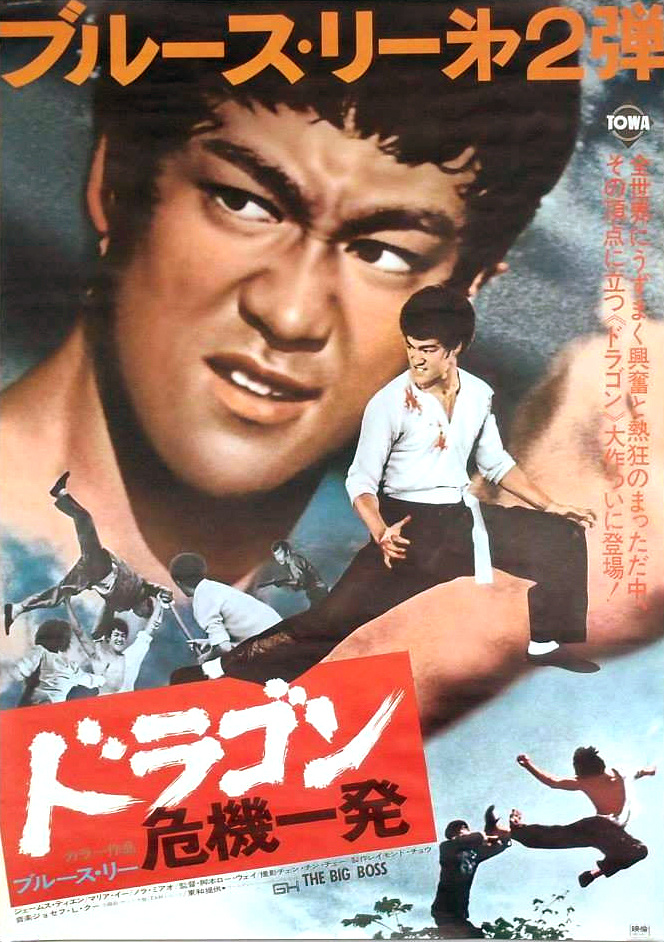
Dragon Crisis (film) Spoiler Commentary and Discussion Summary
Dragon Crisis is a Hong Kong film produced in 1971. It was the first in a series of kung fu films starring Bruce Lee, who made a triumphant return to Hong Kong from the United States, under contract to Golden Harvest. It was a huge hit in Hong Kong, breaking box office records at the time. In Japan, it was released in theaters in 1974, following the popularity of the hit film "Burning Dragon. A young man from the countryside goes to work at an ice factory in town, but when he discovers that the factory is involved in drug crimes, he challenges the factory gang to a fight.
Read Article
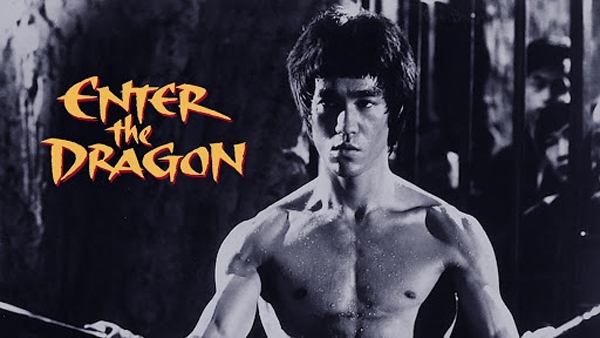
Spoiler commentary and discussion of Enter the Dragon
Burning Dragon" is a kung-fu action film produced in 1973 as a co-production between Hong Kong and the United States. The film was a worldwide hit and sparked a kung fu film boom. The film stars Hong Kong actor and martial arts master Bruce Lee. He died suddenly shortly after completing this film, making this his last work. On a fortress island off the coast of Hong Kong, a tournament is held for martial arts masters. Lee, a young Chinese man who participates in the tournament as a secret agent at the request of the British government, obtains evidence of drug trafficking on the island and confronts a powerful evil using Shaolin Kempo as his weapon.
Read Article
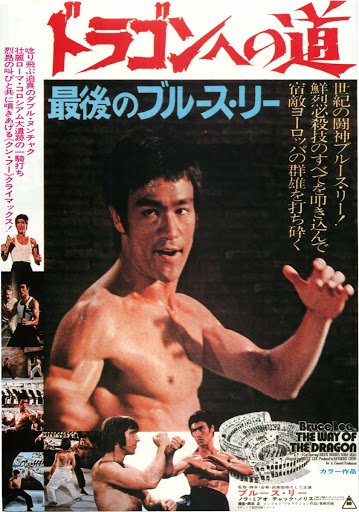
Spoiler commentary and discussion of The Road to the Dragon (Bruce Lee)
The Road to the Dragon" is a kung-fu film set in Rome, Italy, about a kung-fu master and a Chinese restaurant worker who confront a gangster's misdeeds. It is the first overseas location film directed by Bruce Lee, and in contrast to his two previous films, "Dragon Crisis" and "Dragon's Wrath", his performance in this film is often comical. The climactic confrontation scene between Bruce Lee and Chuck Norris at the Colosseum is still talked about today and has influenced many filmmakers.
Read Article
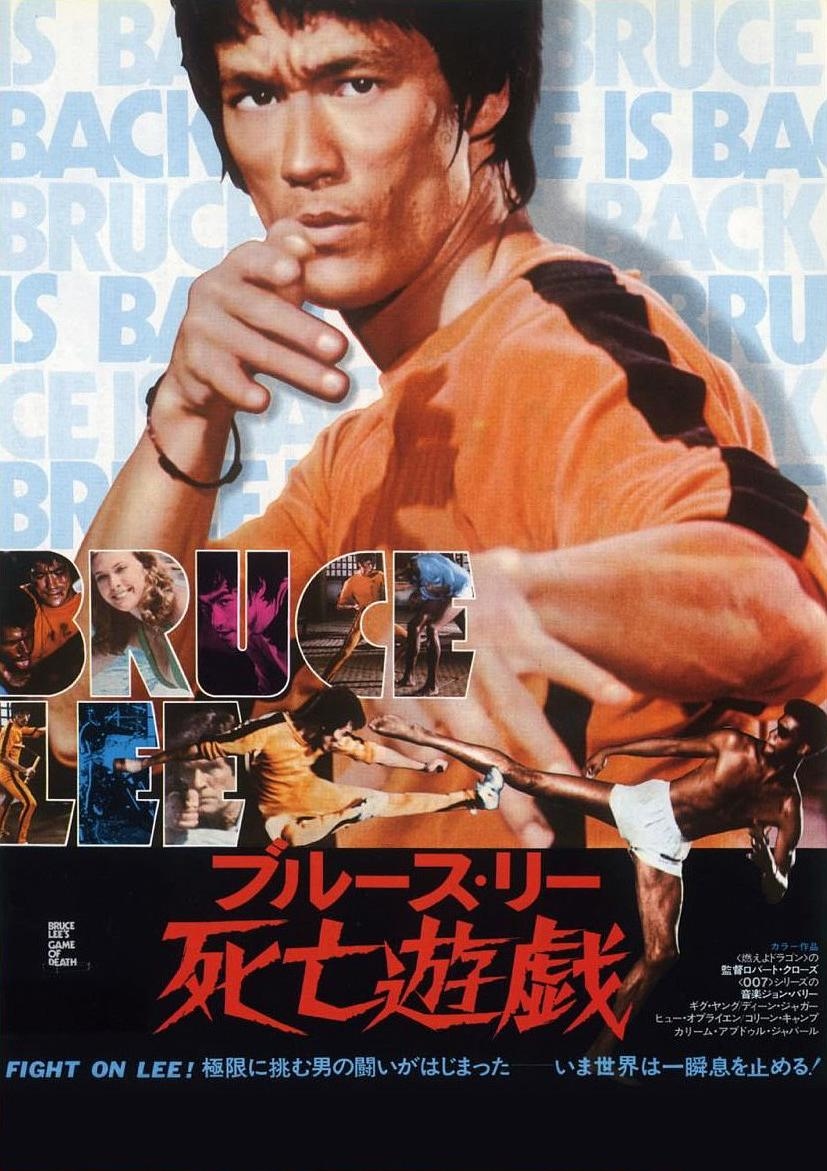
Spoiler alerts and discussion of the death play (Hong Kong movie).
Death Play" is a 1978 Hong Kong film directed by Robert Close and starring Bruce Lee. Star actor Billy Law is offered a contract by a syndicate organization, but he stubbornly refuses. One day during filming, Billy is shot and thought to have been killed by a bullet, but in fact Billy is not dead and takes the fight to the syndicate single-handedly. After shooting the action scenes in 1972, Bruce Lee passed away suddenly. A few years later, a substitute stuntman was used for additional filming, and the film was produced in 1978.
Read Article
Who is the coolest guy in the eyes of men?
We have compiled a list of the coolest men to choose from.
Read Article
Late Night Gintama⁉"Osomatsu-san" Episode 7 Parody Summary
Episode 7 is all about Totti! We've also included a parody of Totti... and this time we've put together a parody of episode 7!
Read Article
Contents
- Overview of "Dragon's Fury of Iron Fists
- Synopsis and story of "Dragon's Fury of Iron Fists"
- Major characters in "Dragon's Fury of Iron Fists
- Seibukan Figures
- Chen (played by Bruce Lee)
- Yuan (played by Nora Miao)
- Master (played by Tien Phuong)
- Fan (played by James Tien)
- Soo (played by Lee Kung)
- Chin (played by Tony Liu)
- Yen (played by Maria Yee)
- People of Nijikuchi Dojo
- Hiroshi Suzuki (played by Riki Hashimoto)
- Wu (played by Wei Ping-ao)
- Master Yoshida (played by Fong Yee)
- Suzuki's bouncer (played by Jun Katsumura)
- Other Persons
- Petrov (played by Bob Baker)
- Feng (played by Han In-chae)
- Tien (played by Wang Chun Sing)
- Chief of Police (played by Lo Wei)
- Famous quotes, lines/scenes and scenes from "Dragon's Fury
- Beautiful love scene lit by flames
- Chen is the phone repairman.
- Confrontation with Suzuki
- Shocking last scene
- Backstory, Trivia, and Small Stories/Episodes/Anecdotes from "Dragon's Fury.
- Production Episode
- About the Stage
- About Costumes
- About the rickshaw scene
- About the last scene
- What Happened After the Shooting
- Monster bird sounds and nunchucks
- Behind-the-scenes story of how the sub-cast was decided
- Stuntman Jackie Chan
- There was a mistake in the English title.
- Episodes on the release of the film in Japan
- Music for "Dragon's Fury of Iron Fist
- Theme song and insert song for "Dragon's Wrath of Iron Fist
- Theme music: Mike Remedios, Theme from "Dragon's Wrath of Iron Fist" (English version)