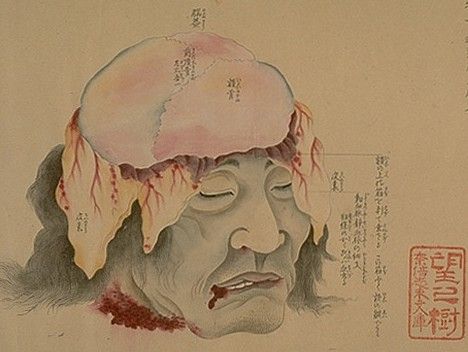
Japanese medicine is said to be among the most advanced in the world, but its origins date back to the Edo period (1603-1868), when in 1774, Sugita Gempaku translated the Dutch medical text "Kaitai Shinsho" (The New Book of Dissection), which introduced the structure of the human body to doctors throughout Japan. Until then, only a very limited number of people were able to dissect the human body and see how internal organs worked. Here is a collection of human anatomy drawings from the Edo period.
FUNUKURI", human anatomy in the Edo period
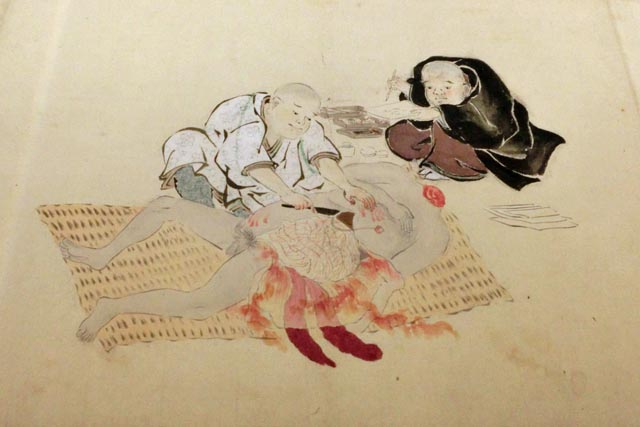
FUNUKE (FUNUKE) means dissection. Edo period,
it was decided that only the bodies of executed criminals were to be dissected.
The dissection was done at Kozukabara, the place of execution.
FUNUKE dissection was performed at Kozukahara, the place of execution.
Because it was forbidden for the general public to touch the bodies of criminals,
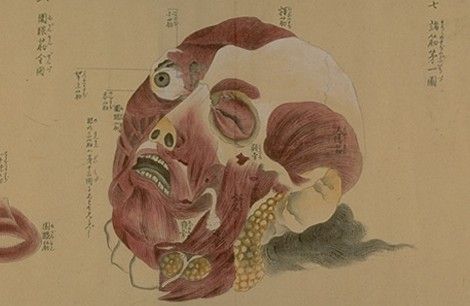
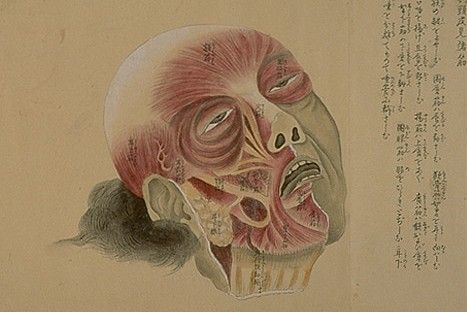
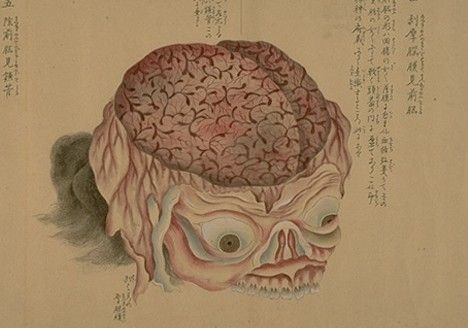
The body was dissected by specially authorized executioners, observed by doctors, and painted by painters.
doctors observed and painters made detailed sketches of the bodies.
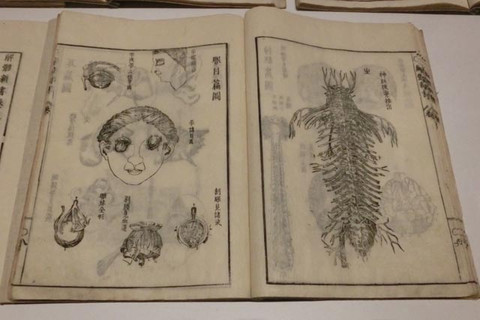
Translated from the Dutch medical book "Taher Anatomia"
Part of "The New Book of Demolition."
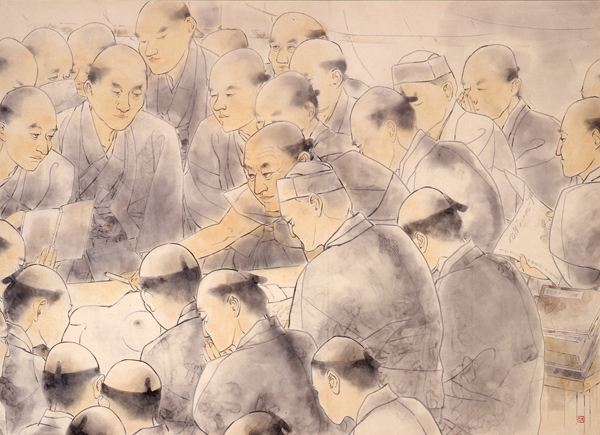
FUNUKUBU" painted by Maeda Seison, a modern Japanese painter
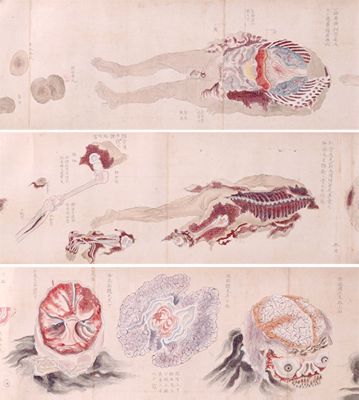
Mototoshi Koishi "Heijiro Zokuzu
The Dutch scholar Koishi Mototoshi was also in contact with Sugita Gempaku.
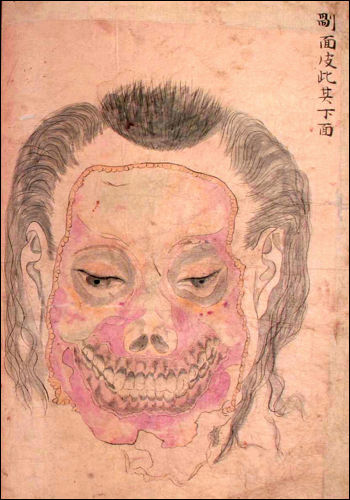
Shiyakuin Kaiyotai Zu" (1798)
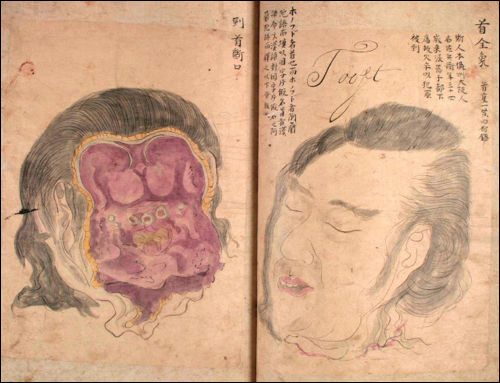
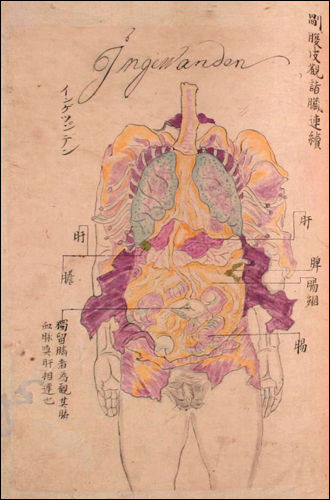
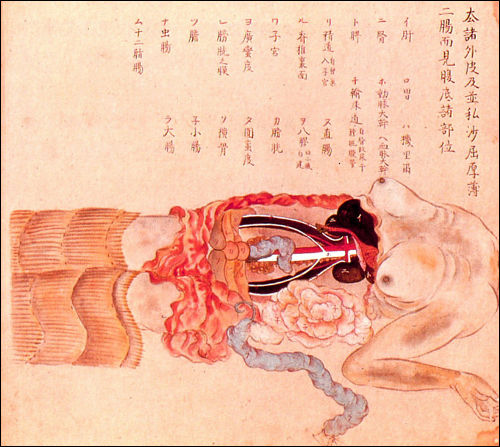
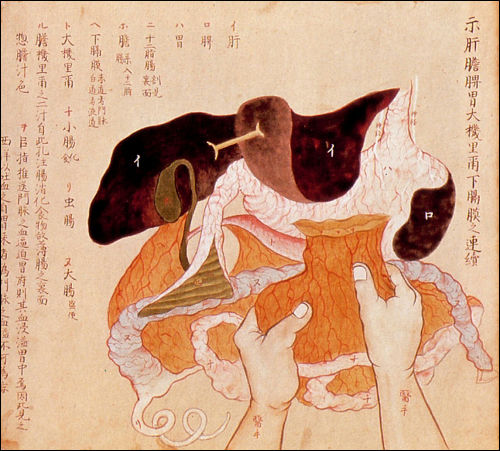
Anatomical drawing of a female death row inmate, 1800.
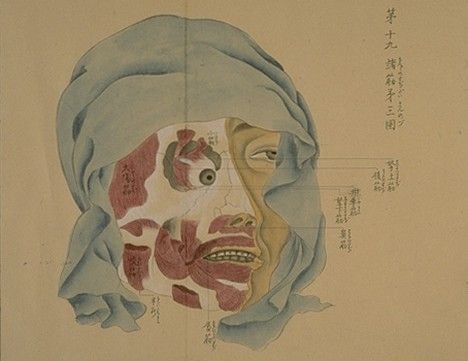
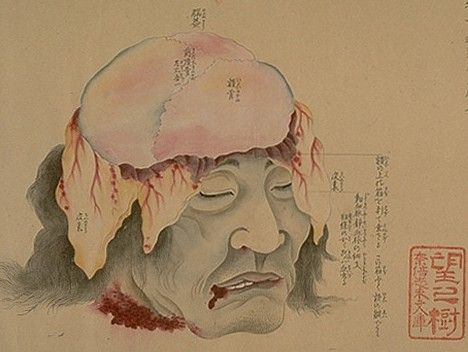
Anatomical drawings of the face and head by Neiichi Minamikogaki
Dissection may seem cruel,
But it was necessary for the development of medical science.
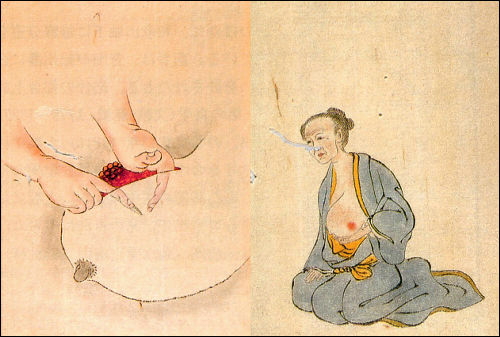
In 1809, Hanaoka Seishu succeeded in the world's first general anesthesia
breast cancer surgery under general anesthesia for the first time in the world.