

This section summarizes what "gender reassignment surgery" is for women to become men and men to become women. It introduces what kind of surgery is actually performed and what happens afterwards to those who have actually undergone the surgery.
Man to woman, woman to man. Here is a summary of gender reassignment surgery.
Gender Reassignment Surgery - Wikipedia
ja.wikipedia.org
Gender reassignment surgery refers to the operation of the internal and external genital organs in the surgical treatment that changes the form according to the gender identity of the person who suffers from gender nonconformity and gender identity disorder. Translation of "Sex Reassignment Surgery" (SRS).
Source: www.gidcenter.com
The purpose of the present invention is to provide the internal and external genital organs of a person with gender identity disorder with a form similar to the features of other genders. It is classified into Female to Male SRS (FTM SRS) and Male to Female SRS (MTF SRS).
FTM SRS includes hystero-oophorectomy, vaginal mucosal resection and closure, urethral lengthening, and phalloplasty; MTF SRS includes orchiectomy, penectomy, colostomy, clitorplasty, and vulvoplasty.
It is an irreversible operation that results in permanent loss of fertility and is based on the person's will. It does not result in new reproductive function as another sex. Many people who undergo this operation have already acquired the appearance of their own sex and live as that sex by taking sex hormones, breast augmentation, mastectomy surgery, etc. The guidelines of the Japanese Society of Psychiatry and Neurology emphasize the administration of sex hormones for a certain period before the operation and real life experience (RLE) in the new sex, and many hospitals require this as a condition.
Gender reassignment surgery can be thought of as an operation to adjust the appearance of the internal and external genital organs to conform to a person's unshakable sexual identity and to relieve the distress that physical gender places on that person's identity. The international organization, the Harry Benjamin International Gender Dysphoria Association (now the World Transgender Health Professional Association), states in its Standards for the Treatment and Care of Gender Identity Disorders (sixth edition) that "gender reassignment surgery is not experimental, research, cosmetic, or selective, and is highly effective and effective in the treatment of transsexualism or severe gender identity disorders."
From men to women
Here is a summary of gender reassignment surgery.
Gender reassignment surgery is a surgical procedure that involves both internal and external genital organs for persons with gender non-conformity or gender identity disorder. It is a surgical procedure that changes the form of a person's body according to the person's gender identity. It is a translation of "Sex Reassignment Surgery" (SRS).
The Japanese GID Society and the Japanese Society of Psychiatry and Neurology use the term "gender reassignment surgery" as their official name.

Source: livedoor.blogimg.jp
A man of dramatic change
Read more in ↓↓↓↓↓↓↓↓↓ below.
Female Hormones Dramatically Change Women from Men: Everything You Need
blog.livedoor.jp
May 31, 2014. A few months later, his body muscles contracted and he stopped taking female hormones and building up his body, which brought about an amazing change in himself. 1. This time's main character, the man. Sex-changing image. 000. 2. The man on the left side. Sex-changing image. 005. 3. He became so nervous by going to the gym!
Source: twicsy.com
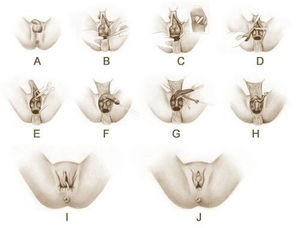
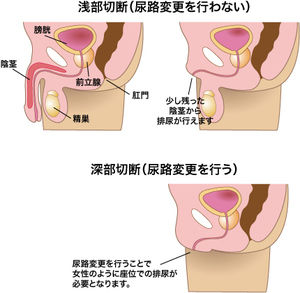
Two techniques are common in male-to-female surgery (MTF SRS):
Penoperineal skin recession
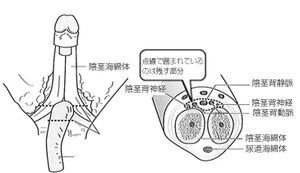
The urethra and rectum are cut to create a space between them, from which the corpus cavernosum, the penis, and the testicles are removed and the skin of the scrotum is transplanted to form the vagina. This is called colostomy. In order to retain sensation, one third of the glans penis, which is connected to the arteries, veins, and nerves, is transplanted to form the clitoris. The sensation varies greatly from person to person, and for about a year after the operation, the nerves are not connected, so there is no sensation. In order to preserve the gonads, some fluid is produced, but this is Cowper's gland fluid. It is completely different in quality and quantity from Bartholin's gland fluid, Skene's gland fluid, and cervical mucus (hymenorrhea) in women. Therefore, the weak point of this method is that there is not enough secretion for sexual intercourse. In addition, it is necessary to perform dilation (dilation) with a prosthesis (also called a stick or dilator) twice or three times a day for a long period of more than 3 months after the operation to suppress vaginal contraction. In cases where the skin of the penis and scrotum is insufficient due to atrophy of the male genitals caused by long-term female hormone administration, it has become possible in recent years to use the urethra to create a vagina. This method was devised in the 1960s by Georges Burou (de: Georges Burou), a French doctor living in Morocco, who made the method public at Stanford University School of Medicine in 1973. The sex-matching surgery performed at Johns Hopkins University Hospital in 1966 was also based on this technique with some modifications. This method has now become the mainstream worldwide, including the Kingdom of Thailand and other Asian countries. In Japan, electroepilation is used to prevent hair from growing from the newly formed vagina before surgery. Electroepilation is used to prevent hair from growing from the newly formed vagina before surgery.
Source: srs.athenaclinic.net
Colon method
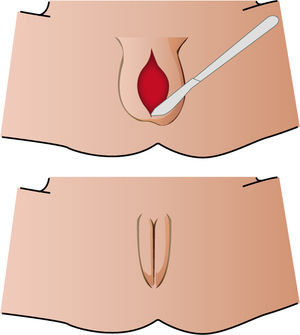
A space is made between the urethra and the rectum, the lower abdomen is opened about 15 cm, the S-shaped colon which is the anal side of the large intestine is cut off by more than 10 cm, and colostomy is performed. A technique used to emphasize sexual intercourse. The secreted intestinal fluid has an effect similar to that of Bartholin's gland fluid, but it has the disadvantage of requiring constant care with a napkin, etc. in order to continue to secrete it. However, it has the advantage of less postoperative vaginal contraction and less frequent dilation than the penile perineal skin flap method. This technique was once used mainly in the 1950s in Western countries such as Denmark and Sweden, but it is now considered a classical technique and is performed only when the penile perineal skin flap method is impossible.
The difficulty with either method is maintaining blood circulation, which, if unsuccessful, prevents blood from flowing to the skin, which can become necrotic and sloughed.
Source: srs.athenaclinic.net
From women to men

Source: ceron.jp
From female to male [Edit]
Female-to-male surgery (FTM SRS) is performed in several phases.
(1) Hystero-oophorectomy
Removal of the uterus, ovaries, and fallopian tubes.
(2) Vaginal mucosal resection / closure
The lining of the vagina is removed and the vagina is closed.
(3) Urethral lengthening
Tissues such as the anterior vaginal wall flap, the labia majora, and the skin of the vestibule are removed and transplanted to create a urinary tract, which is then extended to form the penis.
(4) Phalloplasty
There are three methods of penis formation.
Abdominal flap method
The penis is formed using flaps of the hypogastrium, Catalonian jasmine region, etc.
Clitoral phalloplasty (Metaidoioplasty)
After long-term male hormone therapy, the hypertrophied clitoris is freed from the ventral cords and rotated upward to form a minipenis. This allows the patient to urinate in an upright position and does not require a tissue donor in other parts of the body, leaving no scar. Many people prefer and choose this operation. If they are not satisfied with this minipenis, they can use the extended urethra as it is to form a full-scale penis.
Microsurgery
A forearm flap or a deltoid flap of the upper arm is removed and made into the shape of a penis, which is connected to the clitoris by microsurgery. The removed forearm is treated by stripping the epidermis of the buttock and restoring the forearm tissue, but it often does not completely return to its original state. If sexual intercourse is desired, a pocket is created inside the penis when it is formed, and a special foldable implant is inserted about a year later to complete it.
(5) Scrotum formation
A silicone prosthesis is inserted into the tissue of the labia majora to form the shape of the scrotum.
The reason why the Tsubakihime Ayana was dried out www * The current image of Hori Pro that denied quitting or being fired.
www.akb48matomemory.com
June 6, 2014. Gender: male → female (2006 -) Date of birth: July 15, 1984 (age 29 years old) Place of origin: Saitama Prefecture Blood type: O type Height: 165 cm Weight: Undisclosed Academic Background: Gyosei Gakuen High School → Department of French Literature, Faculty of Letters, Aoyama Gakuin University In 2006, she underwent gender reassignment surgery and her family register was changed to female.
Medical Care and MTF Gender-Matched Surgery Nagumo Clinic GID Center
www.gidcenter.com
Nagumo Clinic GID Center provides comprehensive medical care for gender identity disorder, including psychiatric outpatient, gender change adjudication committee meeting, hormonal therapy, facial cosmetic surgery, mammaplasty, and gender reassignment surgery.
A Little Record of Having an MtF Sex Reassignment Surgery (SRS) in Japan - Amoeba Blog
ameblo.jp
Here is a blog post by [Sato] - [A little record of having an MtF gender reassignment surgery (SRS) in Japan]. I once told the doctor who performed my SRS operation that there are some places where they prescribe hormone drugs for health insurance coverage. He said, "If I write a word on the blog, it becomes a problem.
Experience of Sex-Matched Surgery (SRS) for Slaughtering MtF Typidated Transformation
ameblo.jp
Story of Sex-Matched Surgery (SRS) in Pigs The blog of [Satsuki]. This time, I would like to talk about the hospital where I had the operation. It was actually quite difficult to get to that hospital. Because now I am in Japan and I am in Athens.
Japan [Edit]
Major Japanese universities with experience in surgery are Saitama Medical School, Okayama University, Kansai Medical University, Osaka Medical University, and Sapporo Medical University. Especially in Saitama Medical Center, where Takao Harashina was a professor of plastic surgery until 2007, the first official sex change surgery was performed, and the number of cases is large and there is a record of sex change surgery for FTM (female to male), which was technically difficult and unprecedented in Japan.
Other hospitals have also set up gender clinics staffed by specialists from various departments with a view to performing surgery. However, not all of these hospitals are actively performing surgery, so it is difficult to say that they are in a state where they can handle all of the patients who want to undergo surgery. Also, due to technical concerns, some of the people who want to undergo gender reassignment surgery are operating in the Kingdom of Thailand, where there are medical institutions and skilled doctors. In addition to the above five hospitals, there are private hospitals (mainly cosmetic surgery and obstetrics and gynecology) in Japan that actively perform surgery. Even relatively small hospitals that are not general hospitals operate under general anesthesia, so it is desirable that specialized anesthesiologists participate in the surgery in addition to a surgeon, and that the surgery be performed in a facility with facilities for hospitalization.
Outside of Japan
A Woman Turned to Her Sex, Murdered By A Burglar
