
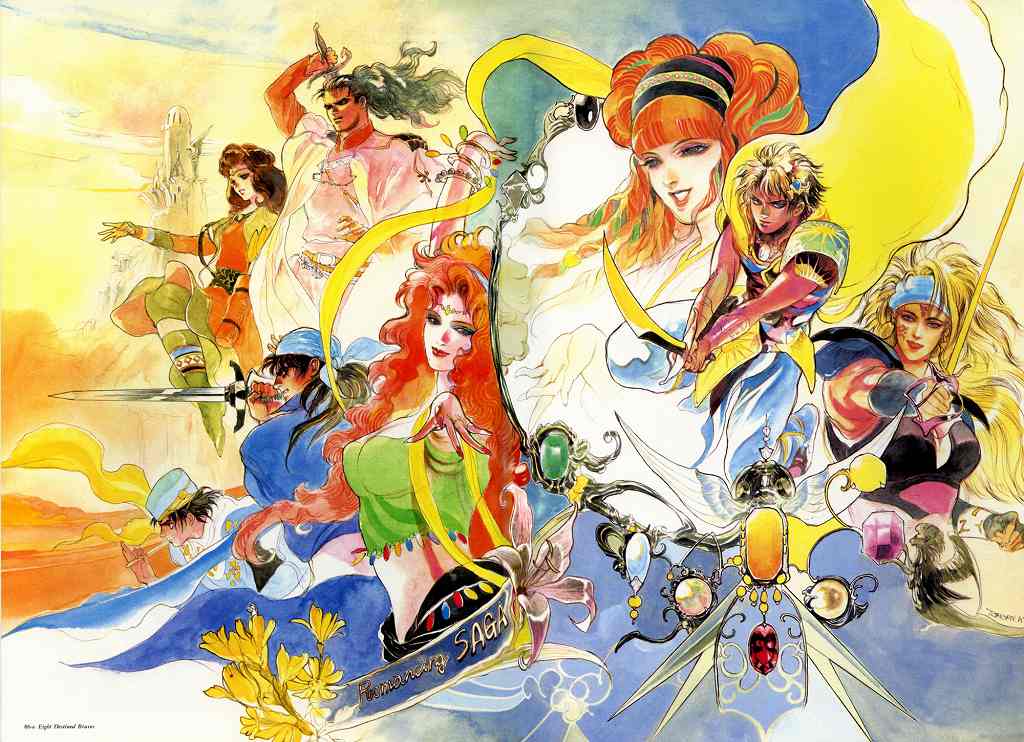
Romancing SaGa" is a role-playing game (RPG) for the Super Nintendo Entertainment System (SFC), released by the current Square Enix on January 28, 1992.
It is an ambitious work newly created by the staff of the "Sa-Ga" series for the Game Boy. The biggest selling point of the game was its use of the "free scenario system," which was still rare at the time, and allowed for a high degree of freedom. Players were free to choose one of eight main characters, each of whom had a different story to tell, to explore the world at their leisure, and fight legendary evil gods.
Number of times the technique or art is used
Techniques and jutsu have a set number of uses. The number of uses of a technique is shared by all weapons and techniques.
The number of times a technique can be used is calculated by dividing the remaining WP by the WP consumed by the technique (WP is not explicitly stated in this work).
(WP is not explicitly stated in this work.) Jutsu have a hidden parameter called "legal power (MP)," and the number of times each is used is calculated from the remaining WP and MP.
Character Growth
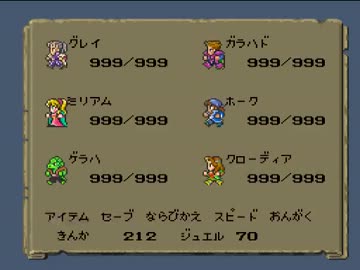
There are eight protagonists in this work. The maximum number of party members is six.
Each main character has its own events.
The older the character is in terms of initial status, the higher the ability value at the beginning of the game, but the younger the character is in age, the better the growth rate of parameters as the game progresses to the latter half of the game.
In addition, the main character chosen from among the eight can set the occupation of his or her parents.
This changes the initial ability values.
For example, if the parent is a warrior, the character's physical strength will increase, if the parent is a thief, the character's speed will increase, and if the parent is a soothsayer, the character's intelligence will increase.
The left-handed player's damage and hit rate are slightly lower than the right-handed player's, but equipping a left-handed weapon increases attack power.
free scenario system
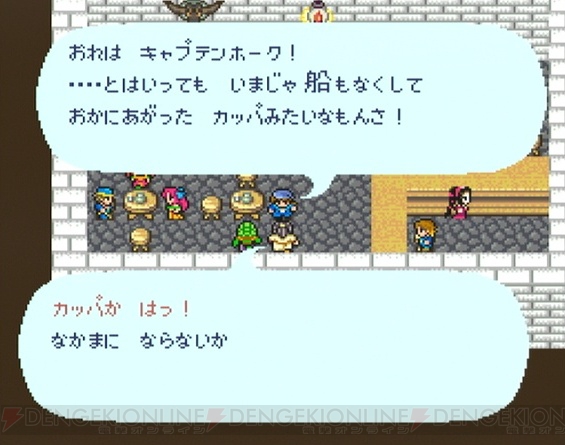
This title employs a free scenario in which the player can progress through the scenario at his or her own discretion.
Each of the eight protagonists has his or her own story, and the circumstances and companions at the start of the game differ depending on the protagonist.
The ultimate goal of defeating the last boss is the same for all protagonists, but the process leading up to that goal can be freely chosen and played by the player.
There are choices to be made during the events, and the player is free to choose which choice to make.
Depending on the choices made, the protagonist can be made to act as a good guy or a bad guy, which will affect later events.
The strength of the enemies and the occurrence and termination of events depend on the number of battles.
The more battles you fight, the stronger the enemies become, and events may be missed opportunities.
In addition to the main character of your choice, eight other main characters also appear in the game and can become your companions.
The events change depending on the protagonist, and even the same event can have different conversations.
The content of conversations and events can change depending on who is in your group, so you can play around the game without getting tired of it.
money
The currency in Mardias comes in two forms: gold coins and jewels.
Gold coins can have a maximum of 9999 coins, and if the number exceeds that, the gold coins must be exchanged for jewels.
The point is that you cannot carry that many gold coins, so the realistic idea is to keep them as jewels.
The exchange can be done automatically when the number of gold coins exceeds 9999 gold coins after selling the items you have at the store.
If you get more than 9999 gold coins at the end of a battle, the gold coins will disappear, so you need to pay attention to the amount of money you have on hand when you go on an adventure.
(military) formation
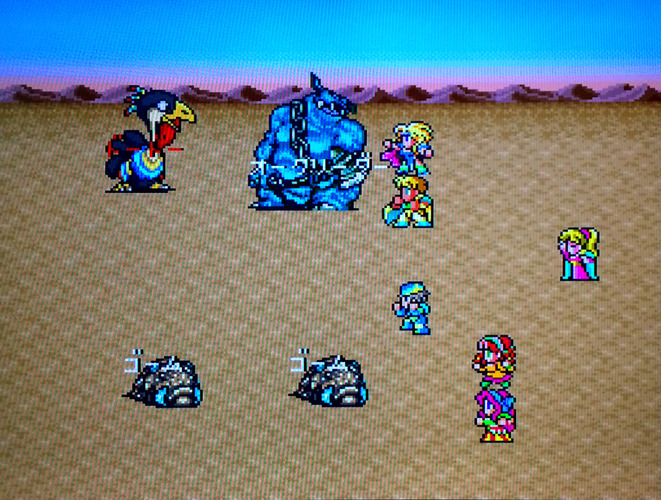
The maximum number of participants in a party is six.
Of course, it is also possible to clear a dungeon with only one player.
The battle begins when the player encounters an enemy symbol in the dungeon.
In this title, there is a formation system that allows both large and small groups of players to enjoy different tactics.
This formation refers to the way in which party members are lined up, with members arranged in 3 x 3 squares.
The first row is short-range, the second row is medium-range, and the third row is long-range, meaning that characters in the front row are subject to all attacks, while those in the third row are only subject to long-range attacks. But conversely, from the third row, they cannot attack at close range.
It is necessary to arrange the formation by considering strategies such as those that can attack as a whole and those that can attack from a distance.
If an enemy symbol strikes from behind, this formation will be reversed.
The formation will also collapse if hit from the side.
However, it is not possible to form a formation in which no one is placed in the front row.
Also, if the front row is completely wiped out due to a battle loss or other reason, the characters in the back row will automatically move to the front row.
During combat, the command "move forward" or "move backward" can be used to move one character per turn to the front or back rows, but the formation will return to its original form when the combat ends.
arms
Weapons are characterized by the weapon's level of proficiency, which increases as the weapon is used more and more, and by the ability to learn new techniques in conjunction with the increase in proficiency.
However, if a weapon is unequipped, its proficiency level is reduced to zero, and all the techniques are relearned.
Only basic techniques can be used from the beginning.
Proficiency levels increase randomly, and new techniques are learned when a player reaches the specified level of proficiency.
single-handed sword
Weapon for close range.
It is the most standard weapon and has a wide variety of techniques.
Iron sword, left-handed sword for left-handed users, etc.
two-handed sword
A close-range weapon.
Equipped in both hands, they are powerful but not suitable for long-range attacks.
Bastard swords and ice swords are available.
axe
Weapon for close range.
High power but poor hit rate.
Many techniques are available for long-range attacks.
Battle Axe and Zircon's axe are some of them.
Striking Weapons
A close-range weapon.
It inflicts damage as if it were chipping away at the enemy's defenses. So-called clubs.
There are flails and amber pestles.
spear

Related Articles
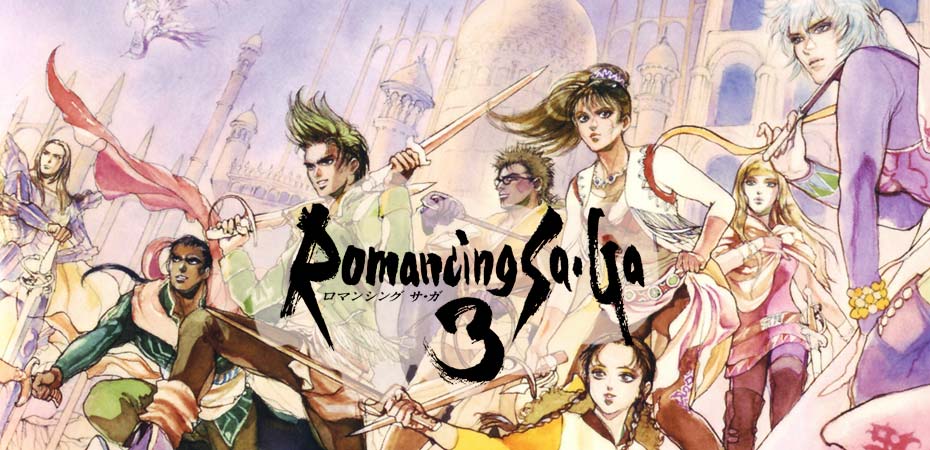
Romancing SaGa 3 (Romancing SaGa 3) Spoilers and Discussion Summary
Romancing SaGa 3" is a role-playing game software for the Super Nintendo Entertainment System (SNES) released by Square Enix in 1995. It is the sixth title in the Saga series, the third in the Romancing Saga series, and is often called the culmination of the series. In addition to the free scenarios that characterize the series, there are a variety of mini-games. Players choose one of eight main characters and embark on an adventurous journey to solve numerous mysteries brought about by the "Deadly Eclipse.
Read Article
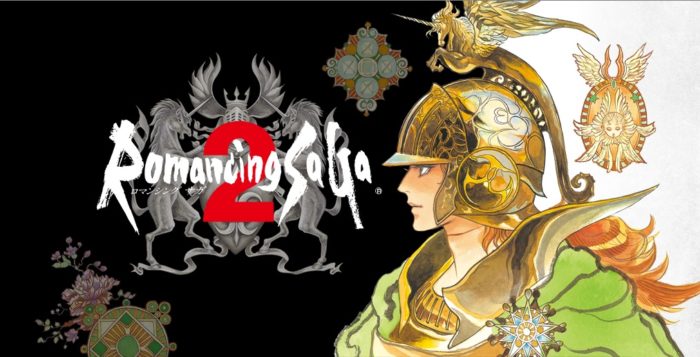
Romancing SaGa 2 (Romancing SaGa 2) Spoilers and Discussion Summary
Romancing SaGa 2" is an RPG developed by Square (at the time) for the SFC. The game is characterized by a free-play scenario rather than following a predetermined flow, and by a flash system that allows players to learn techniques regardless of their level. The player becomes the emperor of the Varennes Empire and confronts the "Seven Heroes" who once saved the world. The battle continues and spins across generations.
Read Article
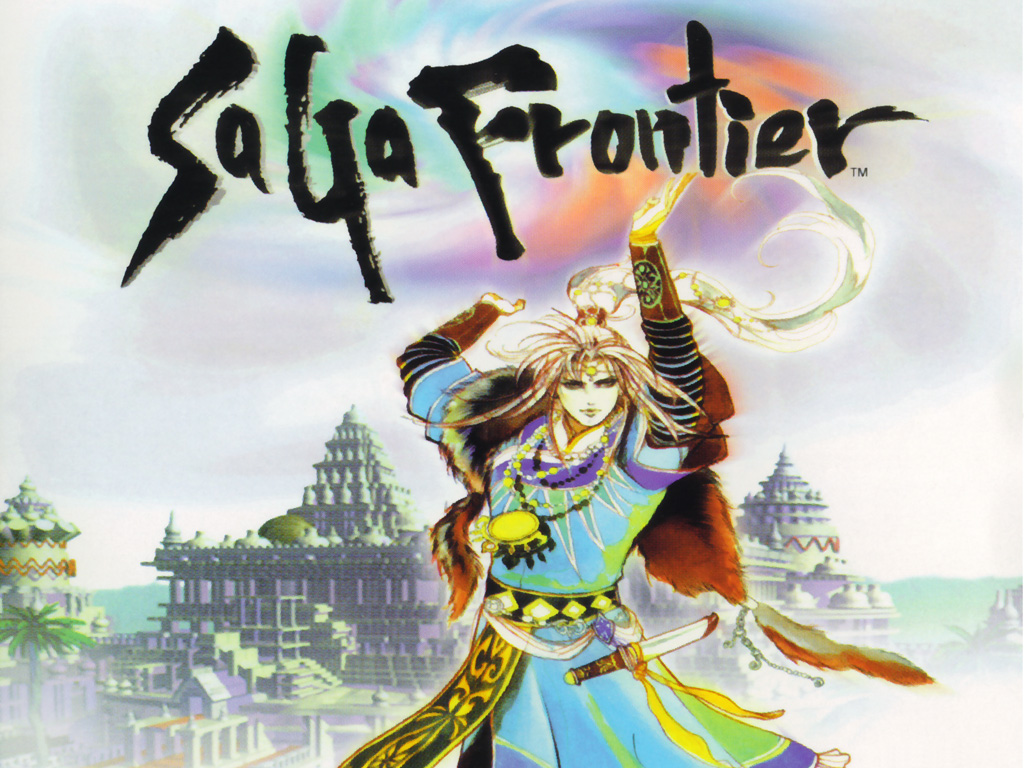
Summary of SaGa Frontier (SaGa Frontier) Spoiler Commentary and Discussion
Saga Frontier" is a PlayStation® game released by Square Enix on July 11, 1997, in the RPG genre, and is the seventh title in the Saga series. The player can choose one of seven main characters, each with a different storyline. In addition to the fantasy theme of the previous titles, this new title also incorporates science fiction elements. The "Linkage" system has also been introduced in this title. The seven protagonists weave their own stories in a number of small worlds called "regions.
Read Article
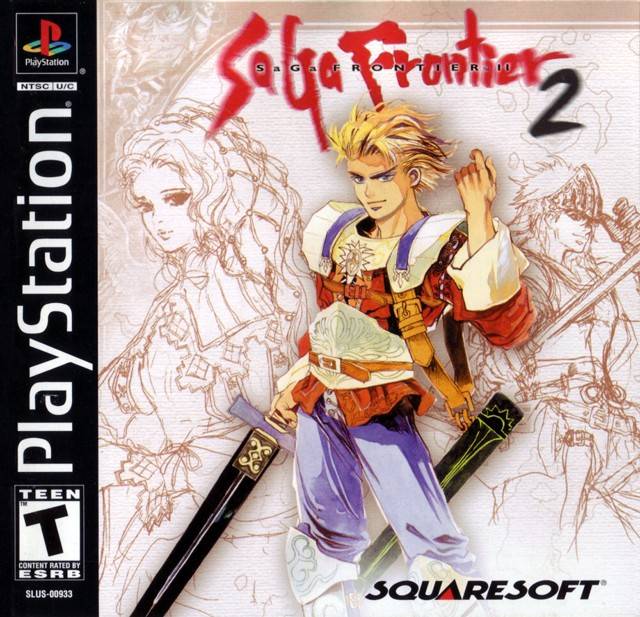
Spoilers and discussion of SaGa Frontier 2 (SaGa Frontier 2)
Saga Frontier 2" is a PlayStation® game released by Square Enix in 1999. It is the eighth title in the "Saga" series and the second in the "Saga Frontier" series. The series' characteristic free scenario is adopted in this title as the "History Choice" system, in which players follow scenarios in chronological order. Set in a world where magic has become commonplace, the story spans approximately 100 years, featuring Gustave XIII, who is unable to use magic, and William Knights and his family, who must confront the disasters that occur in the shadows of the times.
Read Article
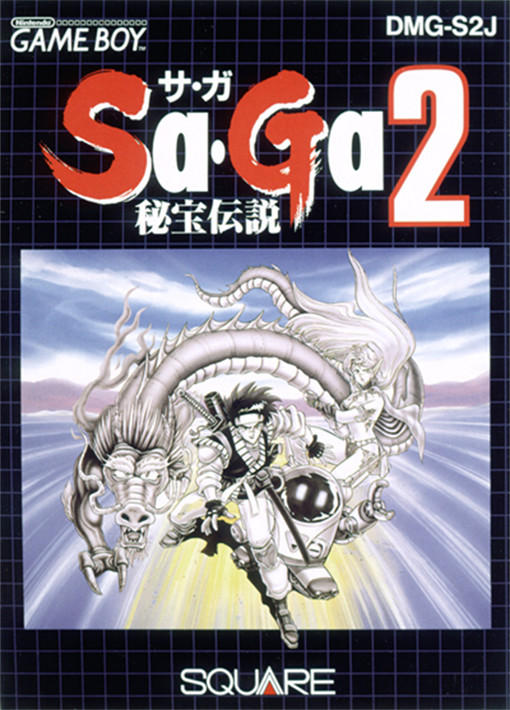
Sa-Ga2: The Legend of the Hidden Treasure (Final Fantasy Legend II) Spoiler Commentary and Discussion Summary
Sa-Ga2: The Legend of the Hidden Treasure" is a Game Boy (GB) game released by Square Enix on December 14, 1990. It is the second title in the Saga series. The basic system follows that of the previous title, "Makaikai Toushi Sa-Ga," but changes and additions have been made to the system to make it even easier to play. The "hidden treasure," a legacy of the ancient gods, is said to provide great power when obtained. The main character sets out on a journey with his friends in search of his father, who has gone missing in pursuit of the "hidden treasure.
Read Article
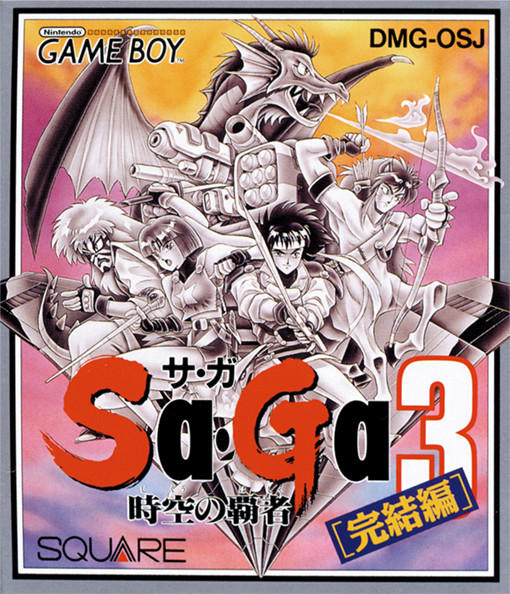
Spoiler commentary and discussion of Sa-Ga3 (Final Fantasy Legend III), the champion of time and space
Sa-Ga 3" is a Game Boy exclusive software released by Square Enix on December 13, 1991. It is the final installment of the Saga series. This title was the last in the GB series. Unlike the previous two games, the system has been changed to the orthodox one where players level up with experience, and the limitation on the number of times they can use weapons and magic has been eliminated. In this story, three young people are sent back in time to change the future, and together with their friends, fight against the gods of another dimension beyond time and space.
Read Article
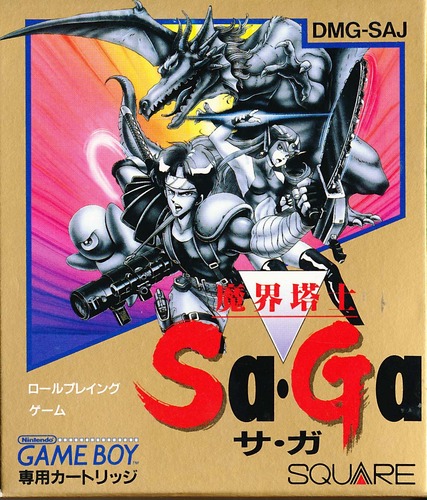
Spoiler commentary and discussion of Mage Toushi Sa-Ga (The Final Fantasy Legend)
Makai Toushi Sa-Ga" is a Game Boy (GB) exclusive software released by the current Square Enix on December 15, 1989. The genre was the first RPG, which at the time was said to be impossible for the handheld GB, and it became the company's first million-seller software. This was the memorable first title in the Saga series. It attracted attention for its novel system in which there was no concept of experience or level, and the method of growth differed depending on the type of character. The story takes place in four worlds connected by a single tower. At the top of the tower is a paradise. In search of that paradise, the protagonist sets off on an adventure to the tower.
Read Article
Romancing Saga Re-Universe (Romancing Saga RS) Spoilers and Discussion Summary
Romancing Saga Re-Universe" is an online smartphone RPG for iOS and Android jointly developed and released by Square Enix and Akatsuki. Set 300 years after "Romancing SaGa 3," eight new heroes (Polka, Liz, Zenon, Valdor, Brownie the Fairy, Xin-Du, Madeline, and Evelyn) have gathered to bring peace to the world and prevent a demon king who plans to revive the "Death Eaters" that take all new life. The charm of this game is that you can develop one style with attachment and develop tactics to fight battles.
Read Article
サガ スカーレット グレイス(SSG)のネタバレ解説・考察まとめ
『サガ スカーレット グレイス』とは、スクウェア・エニックスより2016年に発売されたPlayStation Vita用のRPGである。本作は4人の主人公を選択し、各キャラクターに割り当てられたメインシナリオや『サガシリーズ』の魅力であるフリーシナリオをプレイヤーが自由に進めることができる。それぞれのシナリオを読み解きながら、舞台となる世界や神についての真実を探るストーリーが展開されていく。
Read Article
アンリミテッド:サガ(アンサガ)のネタバレ解説・考察まとめ
『アンリミテッド:サガ』とは、スクウェア・エニックスから2002年に発売されたPlayStation 2用のRPGである。7人いる主人公から1人を選択しゲームを始めるが、選択した主人公によって異なる目的を果たすべく旅をする内容となっている。従来のシリーズとは全く異なるゲームシステムを採用しており、賛否は分かれるが理解を深めることでこのシステムが大きな魅力となってくる。
Read Article
サガ エメラルド ビヨンド(サガエメ)のネタバレ解説・考察まとめ
『サガ エメラルド ビヨンド』とはスクウェア・エニックスより2024年に発売されたRPGであり、『サガ』シリーズの1作である。『サガ』シリーズのコンソール向けゲームとしては前作『サガ スカーレットグレイス』以来となる完全新作となっており、バトルシステム面において、『サガ スカーレットグレイス』で採用された「タイムラインバトル」をさらに発展させたシステムを採用している。タイトルは本作で採用されているシステム「エメラルドビジョン」に由来する。
Read Article
![A Masterpiece] I want to play it again before I die! Super NES Game 【Recommended】.](https://renote.net/files/blobs/proxy/eyJfcmFpbHMiOnsiZGF0YSI6MTgwNzkyLCJwdXIiOiJibG9iX2lkIn19--89a512c082c743fd6aa77efd98b378b2f9c670a1/z_5fb7b0d7ec722.jpg)
A Masterpiece] I want to play it again before I die! Super NES Game 【Recommended】.
I want to play it again before I die! This is a compilation of Super Nintendo Entertainment System (SNES) game titles. There are more than 1,000 Super Nintendo Entertainment System (SNES) game titles, so we took the time to compile this list. Generally, the further back you go, the older the release.
Read Article
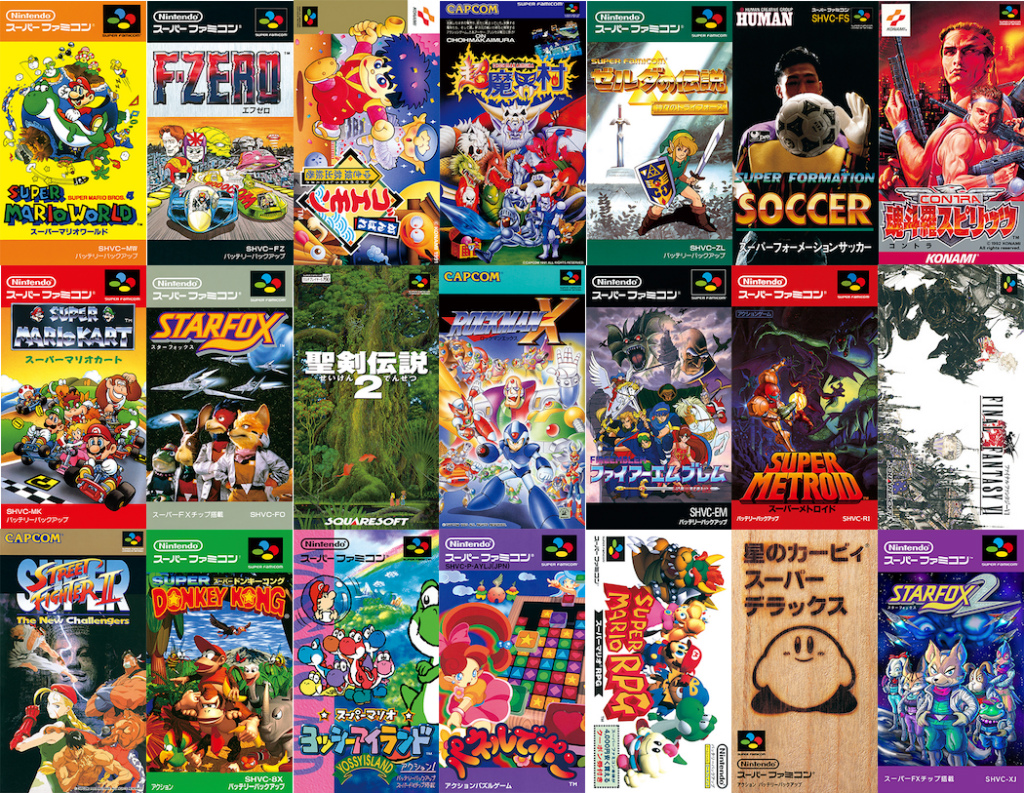
A compilation of recommended Super Nintendo Entertainment System (SNES) software classics.
We will compile a list of the most interesting and highly rated SFC classic software in the series by genre. The SNES is still colorful even if you play it now. Some of them have appeared on the Virtual Console.
Read Article
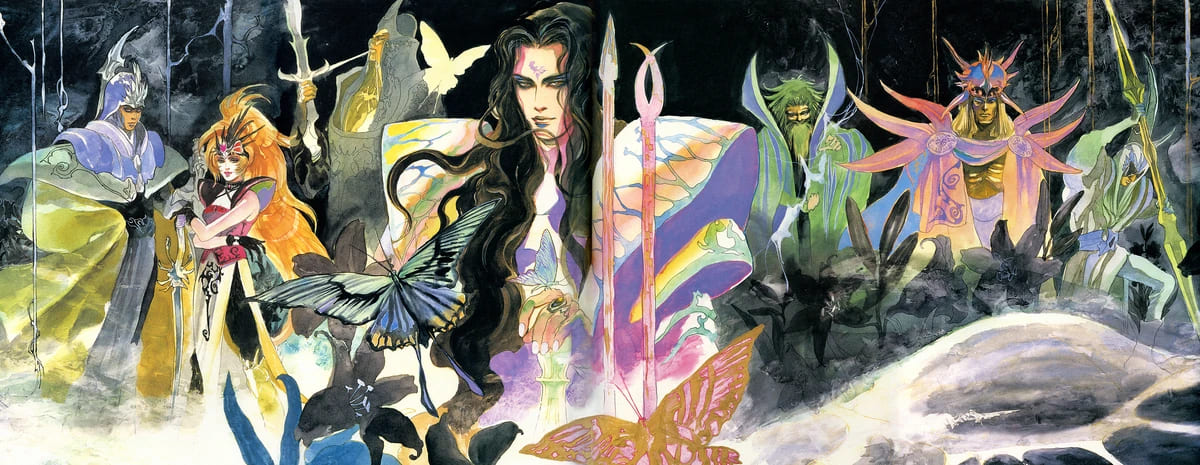
Comparison of the Seven Heroes of Romancing SaGa 2 with the Royal Shichibukai of ONE PIECE [ONE PIECE].
ONE PIECE" is a very popular manga published in Weekly Shonen Jump magazine. There are rumors that the "Seven Heroes" in Square's (now Square Enix) game "Romancing SaGa 2" are modeled after the Seven Pirates. So, I decided to compare the two in this article. Well, it seems that there are many similarities.
Read Article
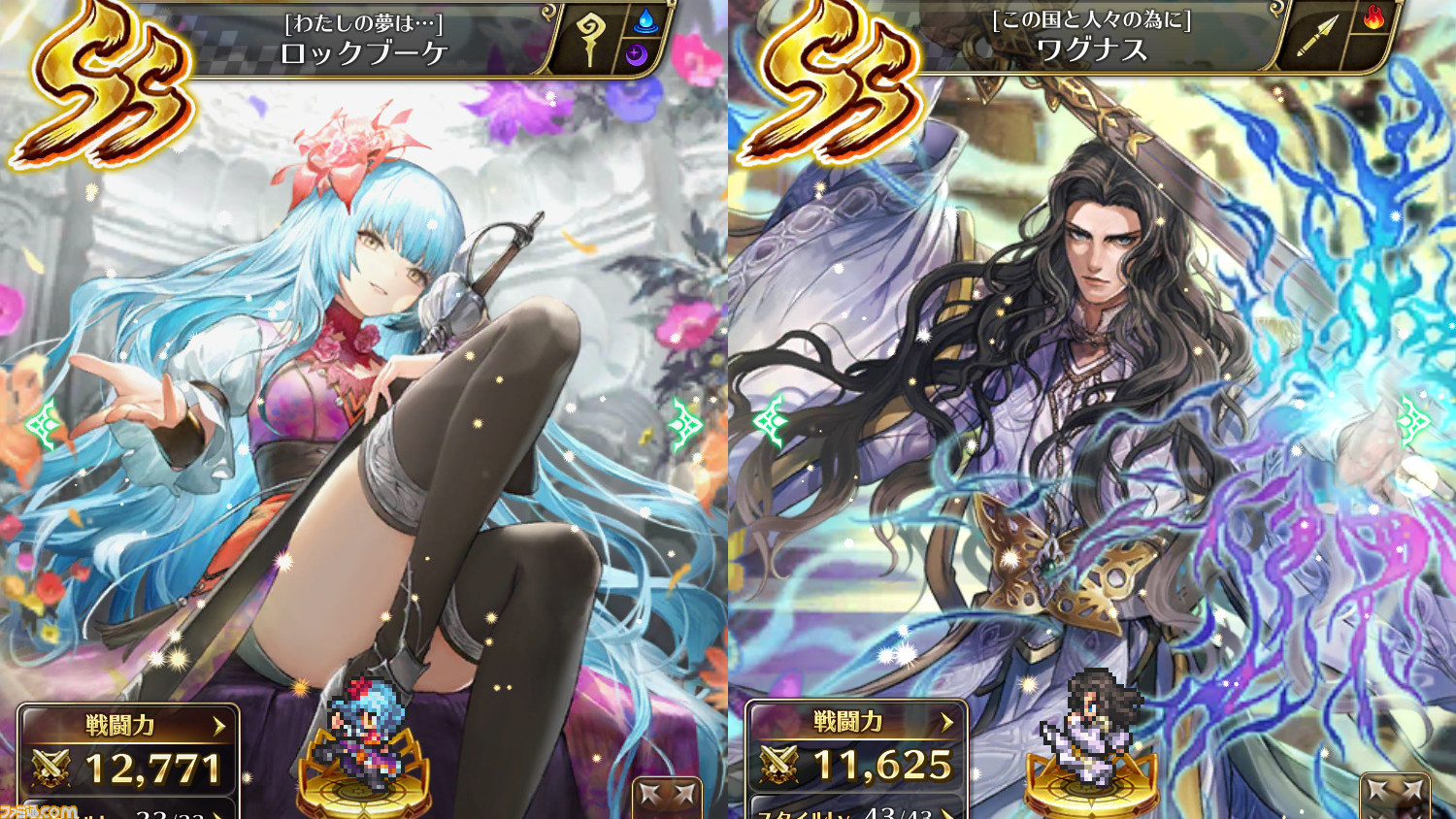
Summary of similarities between Romancing SaGa2's Seven Heroes and ONE PIECE's Royal Shichibukai [perfect match].
The "Seven Heroes" in the game "Romancing SaGa 2" and the early "Royal Shichibukai" in the manga "ONE PIECE" have much in common. Wagnus of the "Seven Heroes" and Crocodile of the "Royal Shichibukai" share the same attempt to take over a country. Noel of the "Seven Heroes" and Mihawk of the "King's Shichibukai" are similar in that they are gentlemen and masters of swords.
Read Article
Contents
- Overview of "Romancing SaGa
- The World of "Romancing SaGa
- Mardias.
- distinction stone
- Countries and islands of Mardias in Romancing SaGa
- Frontier
- Kjaraht
- Kingdom of Rosalia
- Northern Rosalia (N. Rosalia)
- Bafal Empire
- Dominions of the Knights
- Valhalland
- Alon Island
- Rigau Island
- Coral Sea
- The story of "Romancing SaGa
- overture
- Alberto, ed.
- Sif ed.
- Gray ed.
- Claudia, ed.
- Jamil ed.
- Aisha ed.
- Hawk, ed.
- Barbara, ed.
- be common
- ending
- Characters in Romancing SaGa
- protagonist
- Albert
- Sif
- Jamil
- Gray
- Hawk
- Aisha
- Claudia
- Barbara
- fellow characters
- Diana
- Daood
- Garahad, Garajad
- Myriam
- Guella=Ha
- Silven
- Brau
- Jean
- Farah
- Erman
- Neidhart
- Theodore
- Raphael
- Red Wizard (i.e. Matthew, Mark, Luke or John)
- Mardias gods
- Elore
- Nieca
- Ukkom
- Cyril
- Elith
- Amt.
- Mirsa
- Marda
- Sayva
- the three evil gods (Amanominakanushi no Kami, Takamimusuhi no Kami
- Des
- Sherah
- Saruin
- Other Characters
- Rudolf
- Maria
- Owl
- Neville
- Patrick
- Colombo
- Cornelio
- Monica
- Ahmad
- Haloon
- Butcher
- Natary
- Nizam
- Djehtimes
- Flamma
- Constanze
- Heinrich
- Gato
- the big four (i.e. four leaders in a given field)
- Minion
- Wey=Quevin
- Sarakihn
- Haolahn
- Game System of "Romancing SaGa
- Map Movement
- combat system
- parameter
- home page
- arm strength
- strength of an organization (e.g. profitability, productivity, economic clout, stability, growth potential)
- dexterity
- speed
- brains
- spirit
- love
- attraction
- charm
- Weapon Level
- Number of times the technique or art is used
- Character Growth
- free scenario system
- money
- (military) formation
- arms
- single-handed sword
- two-handed sword
- axe
- Striking Weapons
- spear
- slim sword
- bow (and arrow)
- staff and cup
- special sword
- fencing apparatus
- defensive armament
- shield
- armour
- headpiece
- forearm
- shoes
- necklace
- (finger) ring
- art
- summoning demons
- hydromancy
- windmanship
- earthcraft
- witchcraft
- sorcery
- art of chi kung fu
- sorcery
- light art
- black art
- A remake of "Romancing SaGa
- Wonder Swan Color Edition
- Romancing Saga -Minstrel Song
- Music for "Romancing SaGa
- Backstory, trivia, subplots/episodes, and anecdotes from "Romancing SaGa".
- Determination of illustrator
- bug problem
- Why Kanji is so big