
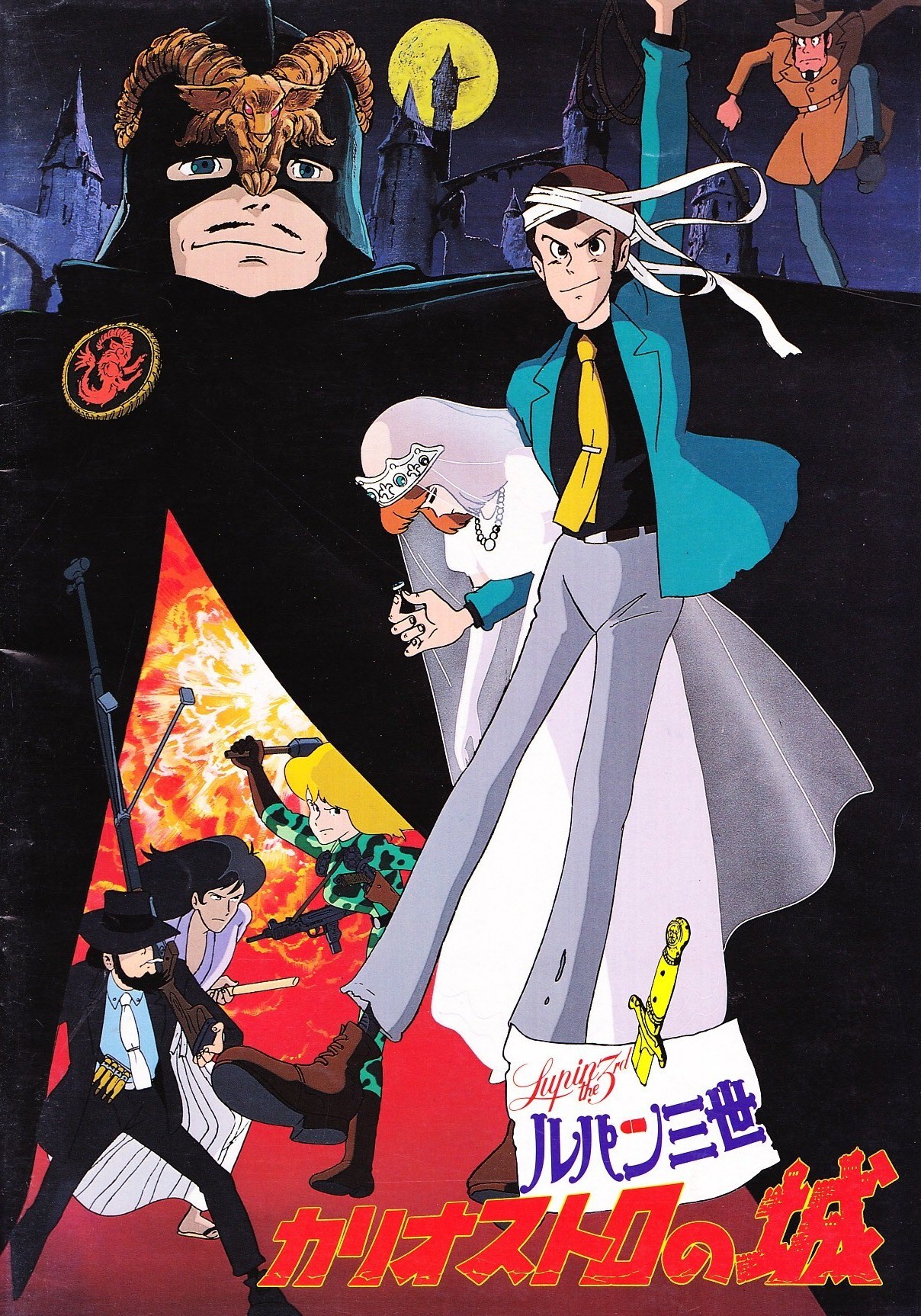
Lupin the Third: Cagliostro's Castle" is the second animated feature film adaptation of the Monkey Punch manga "Lupin the Third," released by Toho in December 1979. It is the first theatrical film directed by Hayao Miyazaki, and is a masterpiece that has become an immortal animation in the history of cinema, and is well known around the world. In the Duchy of Cagliostro, which manufactures counterfeit goat money and is said to be behind the world economy, Lupin III and his friends must save Clarice, a princess about to be made Count Cagliostro's wife, and uncover the country's secrets.
Ideas from "TV Series 1" are incorporated.
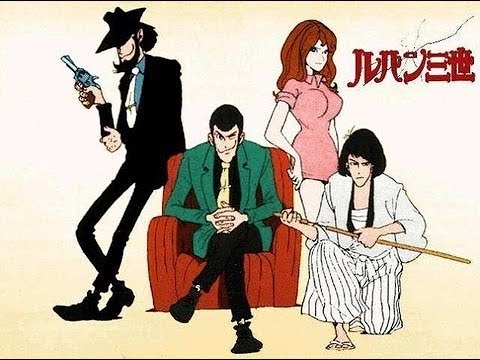
Character of "Lupin the Third TV Series 1
Originally, Hayao Miyazaki, who was in charge of directing the second half of the "First TV Series" anonymously in the "A Production Direction Group" together with the animation director Yasuo Otsuka, followed some of the ideas from the "First TV Series" for the design of characters and props and image boards in this film.
<Clothing, favorite car
Lupin wears the green jacket from the first TV series. (At the time, a new Lupin with a red jacket was broadcast in the TV series.)
Lupin and his crew's favorite car is the Fiat 500R, which appeared in the latter half of the first TV series. (The Mercedes-Benz SSK that appeared in the previous series appeared only in recollection scenes.)
All of Fujiko's means of transportation are motorcycles, and the motif is based on the scene in the ending of the first TV series in which Fujiko rides a motorcycle.
<False Money>.
The scene in which Lupin and Dimentoku scatter counterfeit bills from the car and throw them away at the beginning of the movie also appears in "TV Series 1" Episode 10 "Aim for Counterfeit Money Making! also appears in "TV Series 1" Episode 10, "Aim at Making Counterfeit Money!
<Vacuum Cleaner
In one of Lupin's recollections, a vacuum cleaner is used to suck up jewelry from a jewelry store, and a similar method of robbery is used in "TV Series 1," Episode 16, "Operation Jewelry Grab.
<Searchlight.
The scene in which Lupin, dressed in a black full-body suit with a shoulder holster containing a pistol, is chased by a searchlight is based on the image of Lupin depicted in the opening scene of the first TV series and in episode 4, "One Chance to Break Out of Jail".
<Disguised as a TV staff member
The scene in which Fujiko disguises herself as a TV reporter and breaks into a wedding ceremony is similar to the scene in "TV Series 1," episode 18, "Mark the Beauty Contest," in which Lupin and his friends disguise themselves as TV reporters and break into the venue, and the strategy is the same.
<The Grand Clock.
In the scene where the Count is crushed by the hands of the clock tower, as in "TV Series 1," episode 10, "Aim for the Counterfeit Money Maker! (TV Series 1), there is also a scene in which the hands of the Grand Clock attack an intruder. There are similarities in the scene where the clock mechanism suddenly starts moving violently and the clock tower is destroyed at the end of the scene.
Yasuo Yamada, who plays Lupin, praised the film.
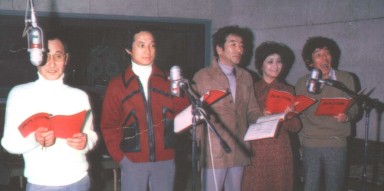
Mr. Yasuo Yamada is on the far right.
During the post recording for this film, Yasuo Yamada, who plays "Lupin III," was instructed by the director, Hayao Miyazaki, to refrain from using playful lines and to use a restrained voice like when dubbing Clint Eastwood. Yamada, on the other hand, had already established his own character, so he said, "I don't want to be told what to do now, I've already decided who Lupin is. I'm the one who decides Lupin. Just do it as usual. I'm the one who decides who Lupin is, so just do it the way you always do. At that time, the animation director, Yasuo Otsuka, was also on site, and he overheard Miyazaki saying, "He's so cocky, let him down. Yamada, who eventually finished watching the preview, was impressed by the high level of quality and said, "I apologize for being so rude to you earlier. Please say whatever you want. I will do it over a hundred times." His attitude changed completely and he bowed to Miyazaki. However, according to Kobayashi Seishi, who played the role of Dimentional and was near Yamada during recording, "I don't remember anything like that.
When Masaaki Osumi, who later directed the fifth TV special "Lupin III: Lupin Assassination Directive," gave Yamada the same instructions as Miyazaki had at the time, he happily said, "Miyazaki-san told me the same thing. Yamada, who had been dissatisfied with "TV Series 2," later evaluated the film and said, "This kind of thing is called a movie. Anyway, it is definitively interesting. The opening and the development of the story are unbelievable. The composition and the pictures are of a very high quality, I've never seen anything like it. There are gags scattered throughout the film, and it's a lot of fun. Mr. Miyazaki and Mr. Otsuka, kudos to you!
Evaluation of this work
Evaluation of the director Hayao Miyazaki
He has stated in anime magazines and mook magazines that there is a "sense of depression" about this film since its initial release.
I understand that people who have been watching my work for a long time are disappointed because this film is a big rearrangement of the "Lupin 1st Series" and other things I did during my time at Toei. You can't make a fresh and exciting work using a dirty middle-aged man. I did it thinking that I would never be able to do something like this again." (From his book "Starting Point")
He uses the example of the German army that had to retreat from Moscow in World War II as a metaphor.
I always think of it as being like Germany in the Russo-German War" (from a dialogue in "Comic Box" (May/June 1984) when "Nausicaa of the Valley of the Wind" was released).
Evaluation of the original author Monkey Punch
He spoke of the differences between the original story and the film, stating that "95% of "Lupin the Third" fans outside Japan cite the film as the reason they became fans."
"You said (in an interview after seeing the film at a preview screening), 'This is not my Lupin.' I said, 'This is a very good work by Mr. Miyazaki, wrapped in tenderness, which I could not depict. But the latter part of the film was deleted, and only the first word was taken up in a big way (laugh). My Lupin is a character with venom, a character who will not choose any means to achieve his goals, a character with desires and the filthy side of human nature. I can't portray him in such a gentle way.
I rather love this work" (interview on "Shuichi" just before the broadcast of the fourth TV series in 2015).
Recognition outside of Japan (film director Steven Spielberg)
One of the best adventure romp films ever made" at the Cannes Film Festival.
In particular, he described the car chase at the beginning of the film as "the most perfect car chase in the history of cinema.
Although there is no record of Spielberg himself saying this in interviews, etc., and the facts were unclear, Manga Entertainment, which released the North American DVD version, used Spielberg's statement on the DVD package and in the trailer included on the DVD.
Awards for Lupin III: Cagliostro's Castle
1979
Awarded the 34th Mainichi Film Contest Ohto Noburo Prize
1982 - 1984
Animage Animation Grand Prix Best One Film of All Time 1st Prize
Second half of 1980, 1981, 1985 - 1986
Animage Animation Grand Prix Best One Work of All Time 2nd Prize
2004
Kinema Junpo 85th Anniversary All Time Best Ten, 1st place in the animation category
2006.
Japan's 100 Best Media Arts, Animation category, 4th place in the expert selection, 5th place in the general selection
2010.
Kinema Junpo All-Time Best Film Heritage: Animation, 1st Prize
Theme song and insert song for "Lupin III: Cagliostro's Castle
Theme song: "Takaramono of Fire" by Bobby
The Treasure of the Flame
Lyrics: Jun Hashimoto / Composed and arranged by Yuji Ohno / Sung by Bobby
This song is sung by a female singer, Bobby, and is used as the theme song for the opening title and ending titles.
Insert song: Yuji Ohno "Samba Temperado
Samba Temperado
Composed and arranged by Yuji Ohno
This song is used in the scene where Lupin and Zenigata escape from the dungeon.
This song has been used in various arrangements in the subsequent series, and is currently one of the most popular songs in the "Lupin the Third" series.
Related video clips from "Lupin III: Cagliostro's Castle
Digitally Remastered Trailer

Related Articles
A compilation of couples from Studio Ghibli produced films! Pazoo & Sita, Howl & Sophie, and more!
This article introduces a collection of couples who appear in films produced by Studio Ghibli. From the smiling couple Sosuke and Ponyo in "Ponyo on the Cliff" to the adult romance of Marco and Gina in "Red Pig," many love scenes are depicted in Ghibli films. The article also introduces brief characteristics of the main characters.
Read Article
A compilation of handsome characters from Ghibli movies! The circumstances they each have are fascinating!
This article introduces a collection of handsome characters that have appeared in films produced by Studio Ghibli. Many attractive characters have appeared in Ghibli films, such as Haku from "Spirited Away," Pazoo from "Castle in the Sky," and Sho from "The Borrower Arrietty. Each of these characters has his or her own story, and this is what makes them so appealing. We hope you will find your favorite character.
Read Article
Ghibli Characters Ranked by Strength! A wide range of choices from forest fairies to gods!
This article presents a ranking of the strength of characters appearing in films produced by Studio Ghibli. In the article, we have selected characters from a wide range of genres, including Gyobu Oragami from "Heisei Raccoon War Ponpoko," Kaonashi from "Spirited Away," and "My Neighbor Totoro," so please be sure to check it out until the end.
Read Article
Lupin the Third: Lupin vs. the Duplicate Human (movie) spoiler alerts and discussion.
Lupin the Third: Lupin vs. the Reproduction Man" is the first theatrical film adaptation of the popular animated TV series "Lupin the Third," based on the Monkey Punch manga, released by Toho in December 1978. The title of the film at the time of its theatrical release was "Lupin the Third. The film was produced with a production period of one year and a production cost of 500 million yen, targeting an adult audience. Lupin III steals the "Philosopher's Stone," which is said to give eternal life to humans, from the pyramids in Egypt. The film depicts the fierce struggle for the "Philosopher's Stone" between Mamou, a genius scientist who manipulates clones, and Lupin and his gang.
Read Article
Lupin the Third (Lupin the Third) Spoiler Commentary and Discussion Summary
Lupin the Third" is an anime and movie based on Monkey Punch's picaresque manga. It is a work that has become a standard for Japanese people. The adventures of Lupin, Dime, and Goemon, who run around the world in pursuit of various treasures, Fujiko, who sometimes cooperates with them and sometimes betrays them, and Inspector Zenigata, who pursues them, continue to attract many people.
Read Article
Spoiler commentary and discussion of Daimon Daisuke Dimension (live-action film)
Daimon Daisuke" (live-action film) is a spin-off film of the popular manga "Lupin the Third" written by Monkey Punch. In "Lupin the Third," Daisuke Dimeji plays the main role as the "sidekick" of the main character. Starring Tetsuji Tamayama and directed by Hajime Hashimoto, the film was released on Amazon Prime Video. Daimonji arrives in Japan's muddy fish town to repair a gun, where he meets a young girl named Oto. As he takes care of her, he finds himself falling in love with her, but Adele, the boss of the Mud Fish Town, also wants to take custody of Oto, who holds the key to refining a new type of narcotic.
Read Article
Summary of cars that appeared in Lupin the Third
Lupin the Third" is a manga work written by Monkey Punch that depicts the outlandish exploits of the great thief Lupin III. Lupin and his friends frequently use cars for transportation, and the car models vary depending on the time period and circumstances. The following is a list of actual cars that appeared in the work.
Read Article
![Lupin the Third] Summary of cigarettes smoked by Dimentional.](https://renote.net/files/blobs/proxy/eyJfcmFpbHMiOnsiZGF0YSI6MTI3NTk4MSwicHVyIjoiYmxvYl9pZCJ9fQ==--cebdf329ed5ccb6c73947f6e9fd56c587504fcd7/DndHei9U4AABpb8.jpg)
Lupin the Third] Summary of cigarettes smoked by Dimentional.
Lupin the Third" is a manga work written by Monkey Punch that depicts the outlandish exploits of the great thief Lupin the Third. The majority of the characters are adults, which is very rare in Japanese anime works, and drinking and smoking scenes frequently appear in the series. Among them, Lupin's partner Daisuke Dimeji is a smoker and has various brands of cigarettes in his hand throughout the work. Here is a list of them.
Read Article
Spoiler commentary and discussion of Mirai Shonen Conan (anime)
Mirai Shonen Conan" is the first film directed by Hayao Miyazaki and based on the novel "The People Left Behind" by novelist Alexander Kay, which was broadcast by NHK from April to October 1978. It is an adventure action anime about the wild boy Conan and his friends in a world 20 years after civilization has been destroyed by a supermagnetic weapon that surpasses nuclear weapons.
Read Article
Castle in the Sky (Ghibli Movie) Spoiler Commentary and Discussion Summary
Released in 1986, this is a Studio Ghibli film. Hayao Miyazaki directed, wrote the script, and wrote the original story for this feature-length animation. Sita has a mysterious stone called the Flying Stone, and a boy named Pazoo rescues her. Dreaming of discovering Laputa, an island supposedly floating in the sky, Pazoo, who has been building an airplane, proposes to search for Laputa with Sita. Then, aerial pirates, government forces, and others intervene, aiming for the flying stone and Laputa. The fact that it is not just an adventure adventure drama has made it popular even after several decades.
Read Article
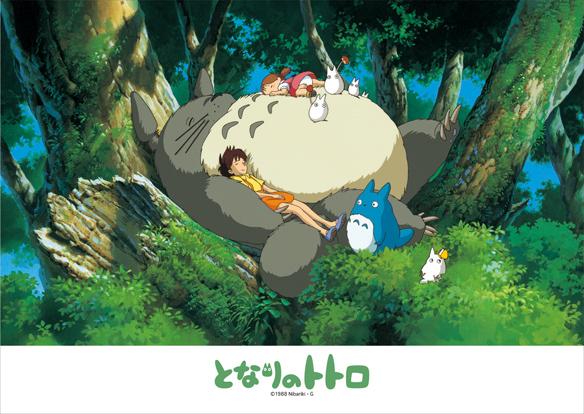
My Neighbor Totoro (Ghibli Movie) Spoilers and Discussion Summary
Released in 1988. In the 1950s, sisters Satsuki Kusakabe and Mei Kusakabe move to a lush green farm village and meet Totoro, a strange creature. Including a cat bus, this film depicts their interactions with these people, whom they only see as children, and a bit of growing up. It is also a film with refreshing depictions of nature and many dark urban legends to contradict it. An animated film written and directed by Hayao Miyazaki.
Read Article
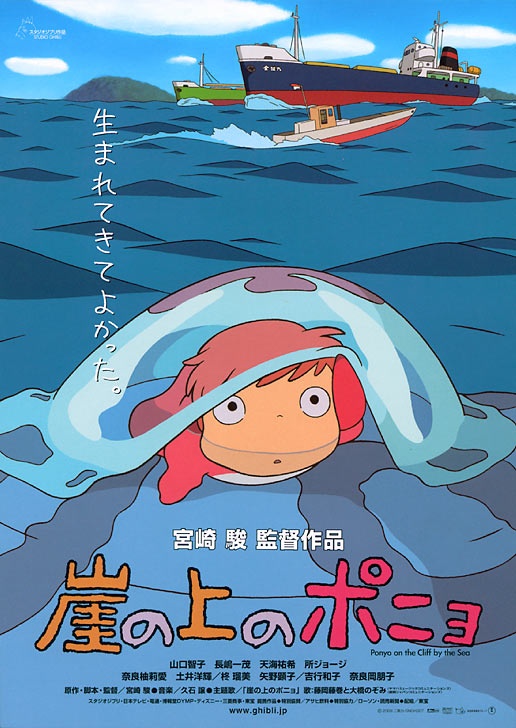
Ponyo on the Cliff (Ghibli film) Spoiler Commentary and Discussion Summary
Ponyo on the Cliff" is an animated feature film directed by Hayao Miyazaki and produced by Studio Ghibli and released in 2008. The ending theme song "Ponyo on the Cliff," sung by Fujioka Fujimaki and Nozomi Ohashi, became a hot topic, reaching No. 3 on the Oricon weekly chart. Sosuke, a five-year-old boy who lives in a house on a cliff, meets a fish girl named Ponyo in the sea. Ponyo falls in love with Sosuke and tries to become human.
Read Article
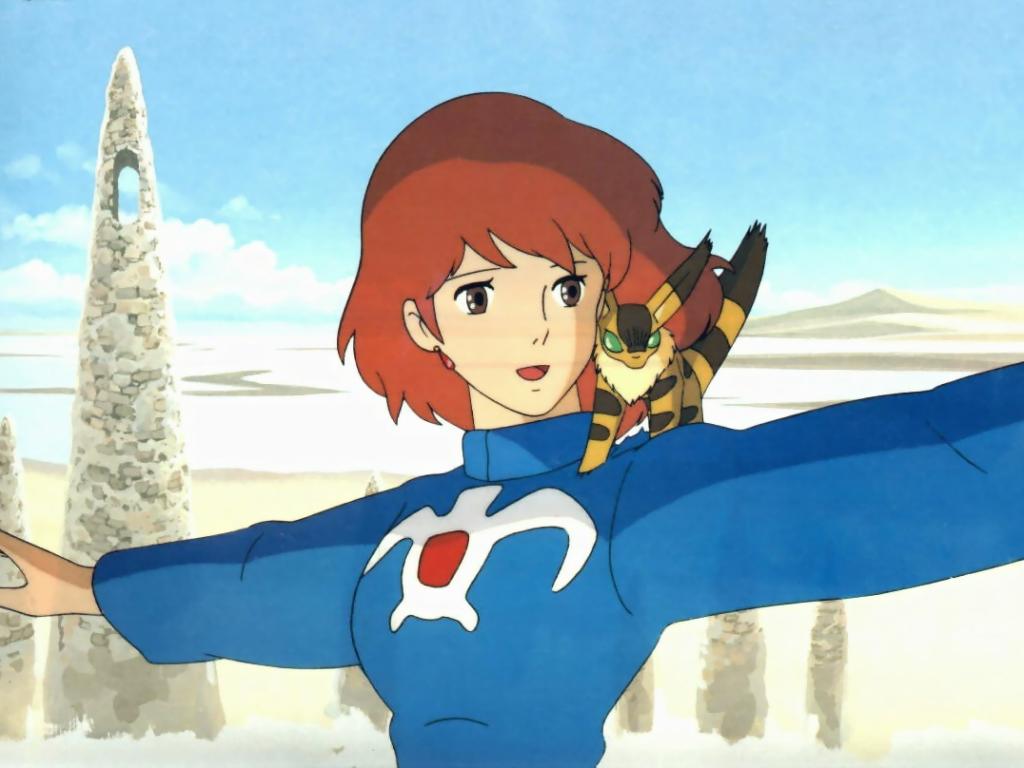
Spoiler commentary and discussion of Nausicaa of the Valley of the Wind (Ghibli film).
Nausicaä of the Valley of the Wind" is a 1984 Top Craft-produced Japanese animated film and the second animated feature film directed by Hayao Miyazaki. It is based on Miyazaki's manga of the same title, "Nausicaä of the Valley of the Wind," which was serialized in "Animage. In the far distant future, modern civilization has collapsed and the world is covered by a fungus forest called the "Sea of Decay. The film depicts the life of a young girl who survives in the remote "Valley of the Wind".
Read Article
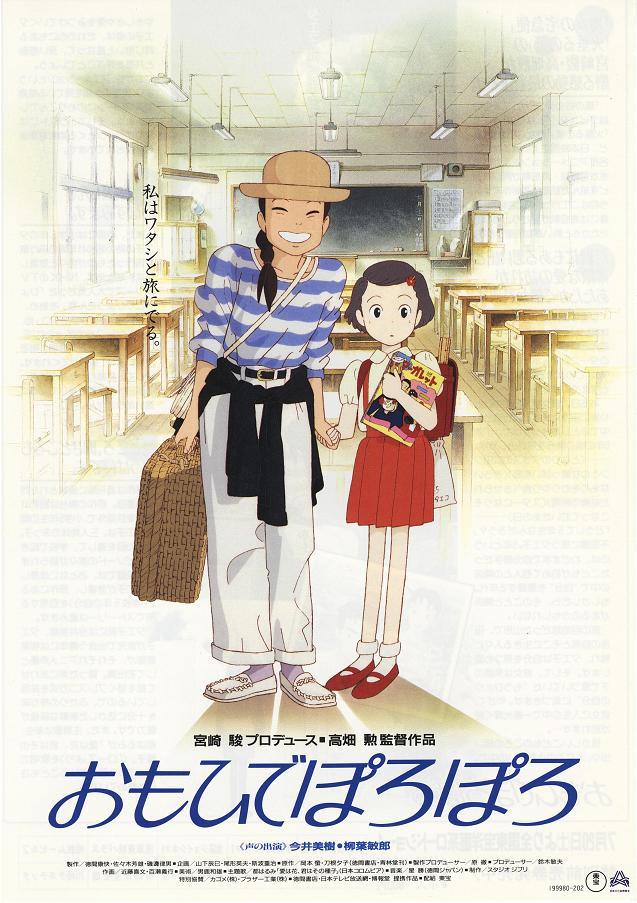
Omohide Poroporo (Ghibli Movie) Spoiler Commentary and Discussion Summary
A Studio Ghibli film released in 1991. Directed and written by Isao Takahata. Hayao Miyazaki also participated as a production producer. The film tells the story of a 27-year-old me who sets out on a journey alone, and looks back on my life up to that point with "Watashi, a fifth grader. The participation of Imai Miki and Yanagiba Toshiro as voice actors was also a hot topic at the time of the screening. The catch copy of the film is "I'm going on a journey with Watashi.
Read Article
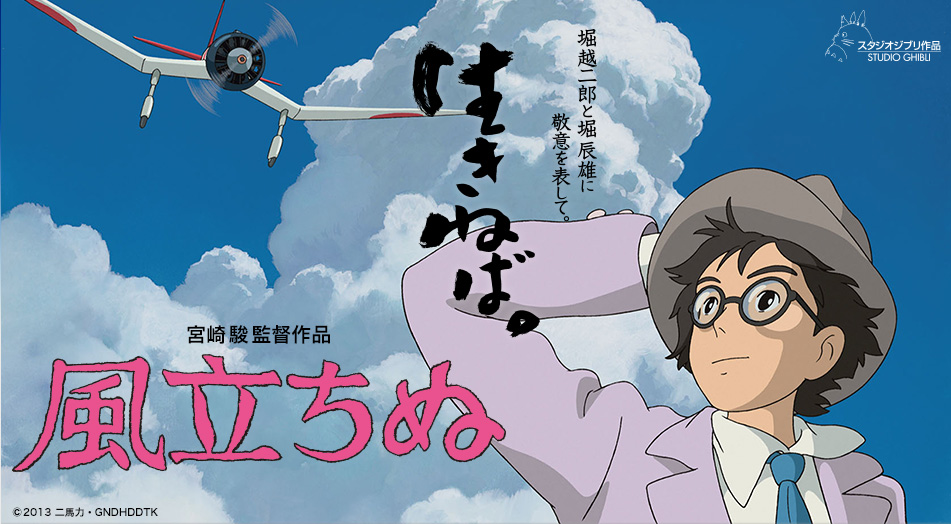
Spoiler commentary and discussion of The Wind Rises (Ghibli film).
The Wind Rises" is an animated film released by Studio Ghibli in 2013 and directed by Hayao Miyazaki. Its catchphrase is "I must live." . The main character, Jiro Horikoshi, has loved airplanes since he was a child and wanted to become an airplane pilot. However, due to a critical defect, namely his nearsightedness, he gave up his dream of becoming an airplane pilot and decided to become a designer. When he was a university student, he was struck by the Great Kanto Earthquake and fell in love with Nahoko Satomi, a girl with tuberculosis whom he met at that time. The film is a moving portrayal of a young man struggling between life and death as the Taisho and Showa eras pass by.
Read Article
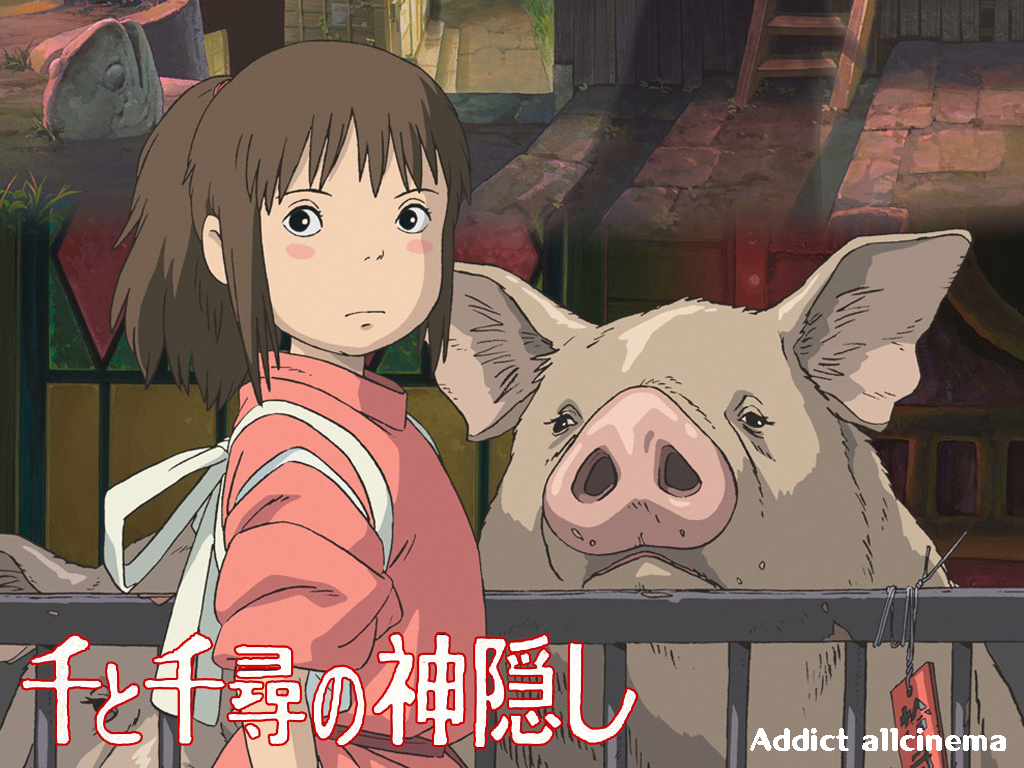
Spoiler commentary and discussion of Spirited Away (Ghibli film)
Spirited Away" is an animated feature film by Ghibli that was released in theaters in the summer of 2001. The film tells the story of a 10-year-old girl named Chihiro who wanders into the world of the gods. The film generated box-office revenues of over 30 billion yen and won an Academy Award in 2003. It is truly a masterpiece among masterpieces. It is such a masterpiece that it was voted by the BBC of the United Kingdom in 2016 as the fourth best film of the 21st century in their list of the 100 greatest films of the 21st century.
Read Article
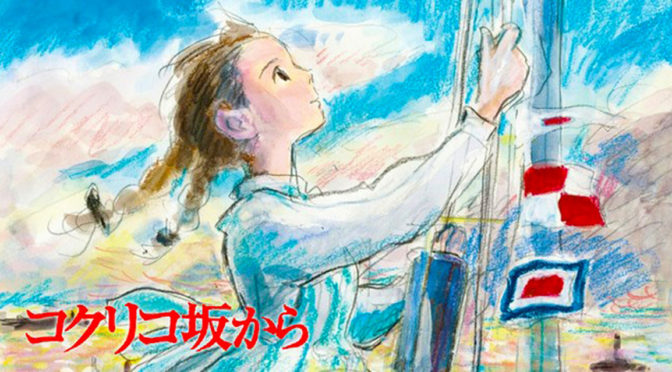
Spoiler commentary and discussion of From Up On Poppy Hill (Ghibli film).
From Up On Poppy Hill" is an animated film by Studio Ghibli released in 2011. The director is Goro Miyazaki, and the catchphrase is "Ue wo muite arukou." The film is based on the story of a high school student, Mel. Every morning, a second-year student at Konan Gakuen High School, Umi Matsuzaki, aka Mel, flies a flag in the garden. It was a signal flag for her father, who had gone off to war and never returned. One day, she noticed that she was featured in the school newspaper, "Weekly Carceratan," as the girl who flies the flag. It was an article written by Shun Kazama, a junior at the same high school. Mel begins to pay attention to Shun because of this article and gradually becomes attracted to him.
Read Article
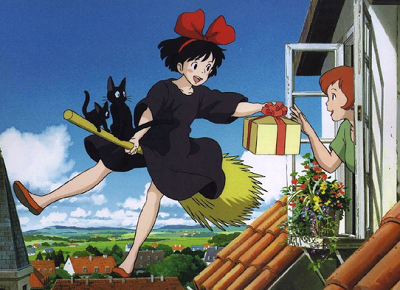
Spoiler commentary and discussion of The Witch's Delivery Service (The Witch's Home)
The Witch's Delivery Service" is an animated film produced by Studio Ghibli and released in 1989. Kiki, a 13-year-old witch, leaves her home town on a full-moon night and arrives in Koriko, a town across the sea. There, she opens "The Witch's Delivery Service" and experiences setbacks and grows up. Based on Eiko Kakuno's "The Witch's Delivery Service," the film features less fantasy than the original.
Read Article
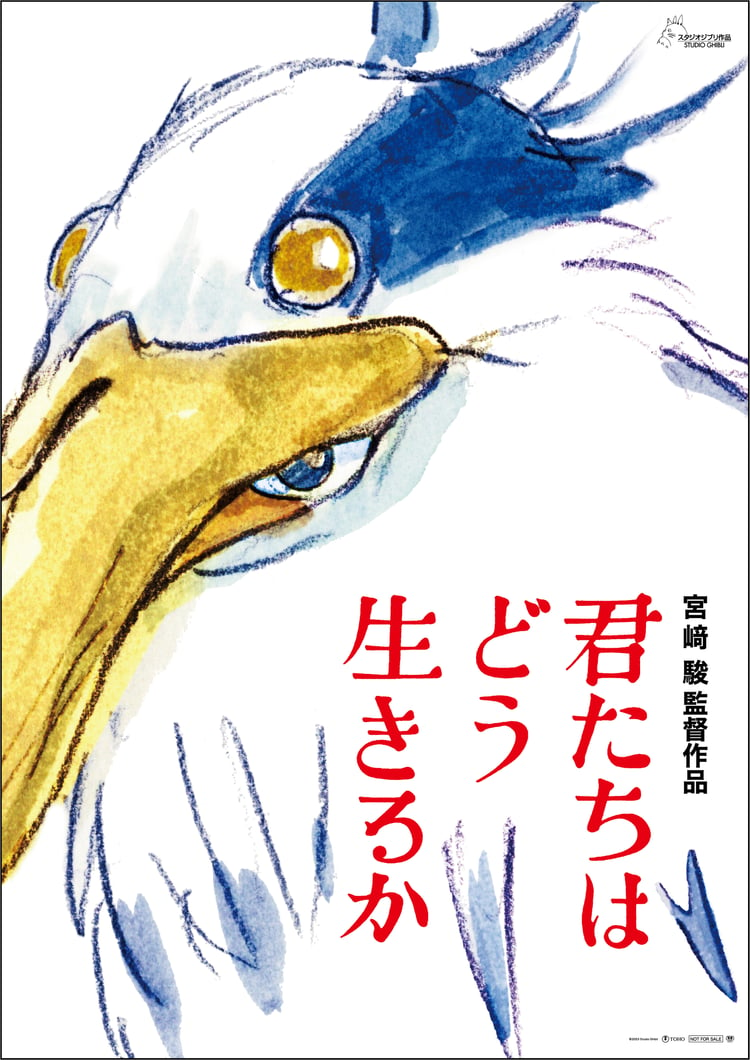
Spoiler commentary and discussion of How Do You Live (Ghibli movie)
How Do You Live?" is an animation film by Hayao Miyazaki about a boy who travels through a mysterious world to save his mother-in-law. The film, which Miyazaki made explicitly stating that "this is really the last one," became the talk of the town for its unique technique of being released with no publicity, no official website, and no information at all. As the Pacific War intensifies, Masato Maki and his father move to the suburbs, where he is reunited with his aunt Natsuko, who is to become his new mother-in-law. While the two are at a loss as to how to interact with each other, Natsuko disappears into thin air, and Maki is led on a journey to another world by a mysterious blue heron in order to bring her back.
Read Article
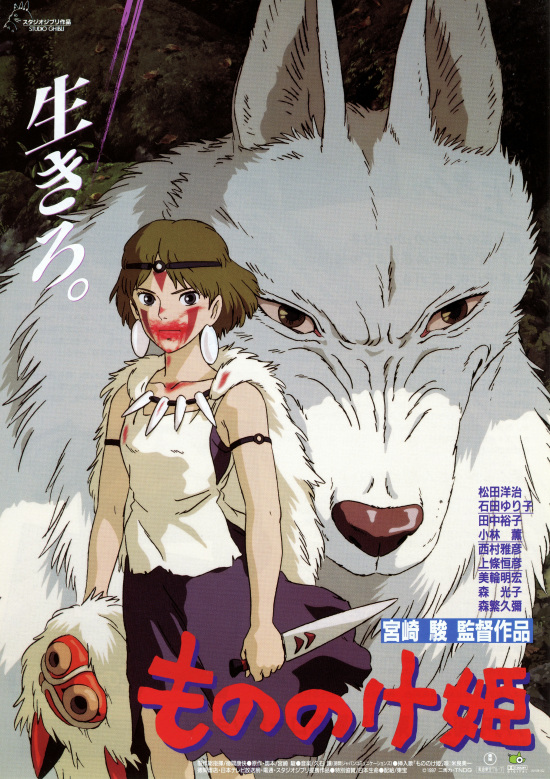
Princess Mononoke (Ghibli Movie) Spoiler Commentary and Discussion Summary
Princess Mononoke" is an animated feature film written by Hayao Miyazaki and Studio Ghibli. The film was released nationwide on July 12, 1997, with some movie theaters holding long-run screenings until early spring 1998, The film grossed 19.3 billion yen, making it the highest-grossing Japanese film of the 20th century. The film depicts the encounter between a human named Ashitaka and San, who was raised by a monster, and is an epic depiction of the conflict between man and nature.
Read Article
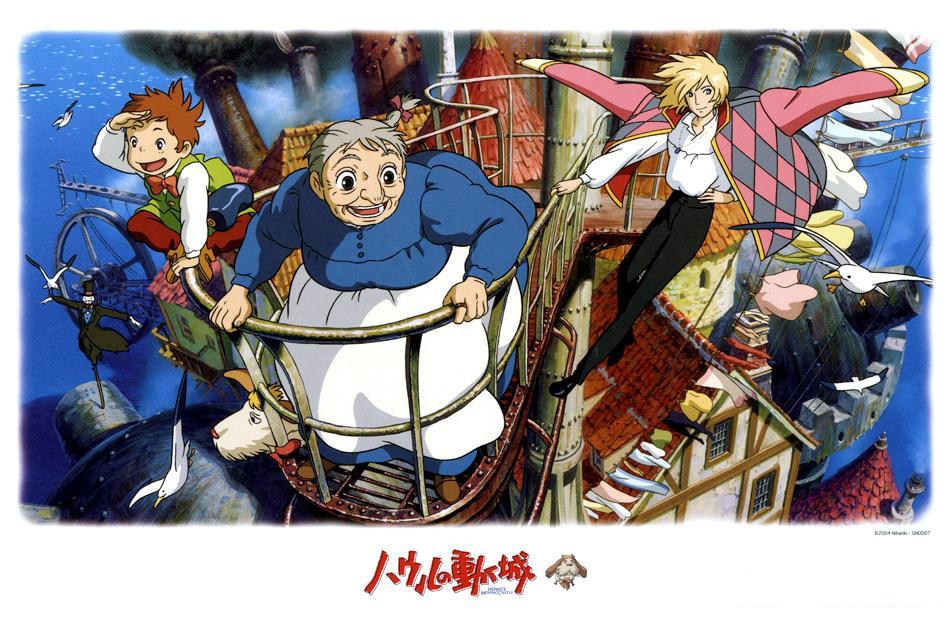
Howl's Moving Castle (Ghibli Movie) Spoiler Commentary and Discussion Summary
Howl's Moving Castle" is a Japanese animated feature film directed by Hayao Miyazaki and produced by Studio Ghibli, which was released nationwide on November 20, 2004, grossing 19.6 billion yen at the box office. It surpassed "Princess Mononoke" and became the second largest animated film produced by Studio Ghibli after "Spirited Away". The story takes place in a fictional world where magic and machines coexist. It depicts the warlike love between Sophie, a girl who was turned into an old woman by a curse, and Howl, a wizard.
Read Article
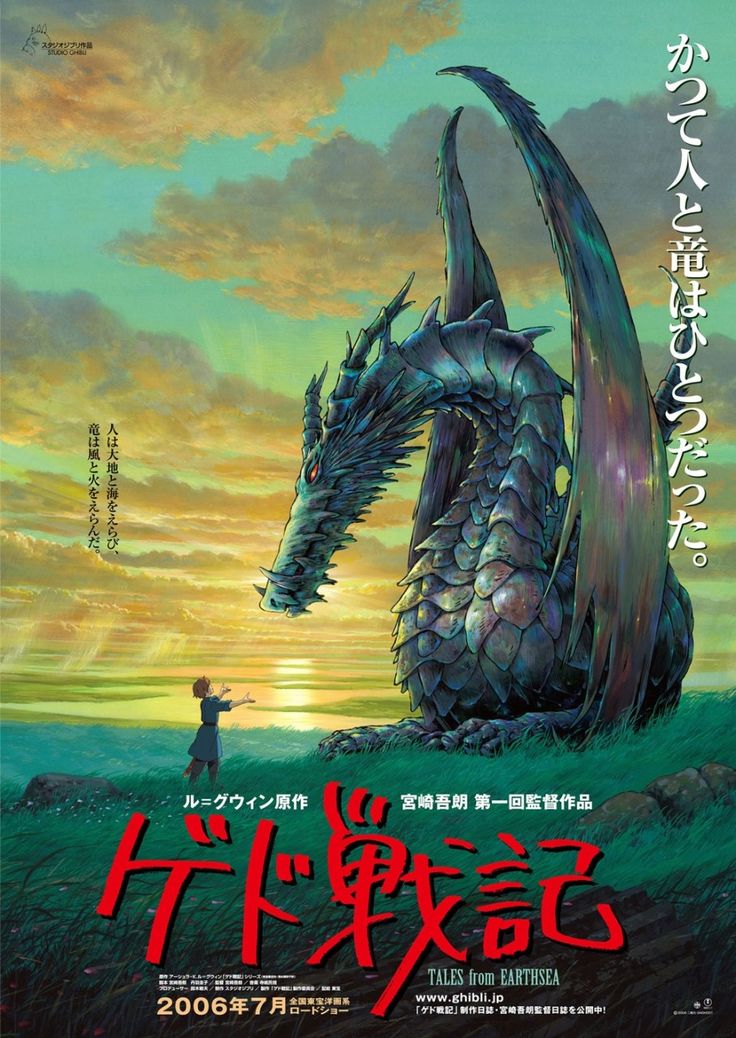
Spoiler commentary and discussion of Gedo Senki (Ghibli movie).
Released in 2006, this is a Studio Ghibli film and the first animated feature film directed by Goro Miyazaki, the son of Hayao Miyazaki. Prince Allen, who has abandoned his country and set out on a journey, and Teru, a girl with a burned face whom he meets on his journey. As the two travel, they come to understand each other better while confronting their own painful pasts. This work brings various ways of thinking about the message and the way they walk into each other's hearts and grow together.
Read Article
Summary of spoiler commentary and discussion of "Mimi wo susumeba" (ear-splitting)
Mimi wo Sumeba" is a Ghibli film released in 1995. The original author is Aoi Hiiragi. This is the first and last film directed by Yoshifumi Kondo, who supported Ghibli's films with his drawings, and Hayao Miyazaki was in charge of the script and storyboards. The story centers on the main character "Tsukishima Shizuku" and depicts her love, dreams, and worries. It is a sweet and sour coming-of-age story that everyone has experienced at least once, and it remains a popular work.
Read Article
Red Pig (Ghibli Movie) Spoilers and Discussion Summary
Red Pig" is a Japanese animated feature film produced by Studio Ghibli and directed by Hayao Miyazaki, which was released in theaters on July 18, 1992. It is set in the Adriatic Sea in Italy, which is shaken by the Great Depression. Marco, an Italian who has enchanted himself into the form of a pig, uses the alias "Porco Rosso" and engages in aerial combat as a bounty hunter against air pirates who use flying boats.
Read Article
Spoiler alerts and discussion of The Borrower Arrietty (Ghibli film).
The Borrower Arrietty" is an animated film produced by Studio Ghibli and directed by Hiromasa Yonebayashi, based on the book "The Little People Under the Floor" by Mary Norton. The film won the Japan Academy Award for Best Animated Film in 2011 with a final box-office revenue of 9.25 billion yen. The very beautiful visuals went well with the music in the film, and made the viewers engrossed in watching it. The film depicts how a dwarf, who must not be seen by humans, hides and lives in a human house while borrowing things, and the friendship and bond between the dwarf, Arrietty, and the boy, Sho, that is built in a short time.
Read Article
Spoiler commentary and discussion of Lupin III vs. Cat's Eye (anime)
Lupin III vs. Cat's Eye" is a 2023 animated film in which "Lupin III" by Monkey Punch and "Cat's Eye" by Tsukasa Hojo sometimes fight and sometimes cooperate with each other to confront a great evil. As a crossover of famous works about a thief, the film attracted attention even before its release. The three sisters of Cat's Eye, Incapacitated, Hitomi, and Ai Raise, are thieves who target only art works called the "Heinz Collection. One day, however, a painting titled "A Girl and a Bouquet," which they had recovered, is stolen from their hideout by Lupin III. A great adventure over the secret hidden in the painting begins.
Read Article
Ali Baba and the 40 Thieves (Animated Film) Spoilers and Discussion Summary
Ali Baba to 40 Thieves" (Ali Baba and the 40 Thieves) is an animated feature film by Toei Animation, released in 1971 as one of the films in the "Toei Manga Festival". It is a gag anime adaptation of "Ali Baba and the 40 Thieves" from the famous "One Thousand and One Nights. It takes place in the Ali Baba Kingdom, ruled by Ali Baba's descendant, Ali Baba the 33rd. The main character, Al-Haq, was once the leader of the 40 thieves. In order to recover the treasures of his ancestors that were once stolen by Ali Baba, he forms a band of 40 thieves with his companion, Kazir the Rat, and 38 cats.
Read Article
Gulliver's Space Odyssey (Animated Film) Spoilers and Discussion Summary
Gulliver's Space Odyssey" (Gulliver's Space Odyssey) is a theatrical animated film released in 1965 in Toei theaters. It was Toei Doga's eighth theatrical animated film and its first space science fiction film. Hayao Miyazaki, a longtime director at Studio Ghibli, also participated in the production. The main character, Ted, is a boy who has no "hope" for life. One day, Ted meets Dr. Gulliver, who is famous for his many adventures in the past. He sets off on an adventurous journey to the "Blue Planet of Hope" in space with his friends, including Mack, a stray dog, and Colonel, a soldier puppet.
Read Article
Future Boy Conan's Cooking, Eating, Food, and Drinks Summary
Conan: The Future Boy" is a 1978 animated film directed by Hayao Miyazaki. Based on the science fiction novel "The People Left Behind" by American novelist Alexander Kay, the film depicts the adventures of Conan, a wild boy who is a hero after the collapse of civilization. The film is characterized by its many memorable meal scenes, in which a variety of dishes appear depending on the scene, ranging from elaborate dishes such as cake and borscht to more rustic dishes such as dried frogs. Here is a comprehensive list of dishes, meals, food, and drinks that appear in "Mirai Shonen Conan.
Read Article
The future of death that Nausicaä invited [Manga version of Nausicaä of the Valley of the Wind (spoiler alert)].
Nausicaä of the Valley of the Wind" is the first Ghibli film and one of its best-known works. Nausicaä has both a movie version and a manga version, and the content of the movie version is the story of the first volume of the manga version's seven millstones. The manga version reveals shocking facts that were not depicted in the movie, such as why the king bugs and the bugs of the Sea of Putrefaction were born, what the Giant God Warrior was born for, and who Nausicaä and his friends are. When Nausicaä learns of these facts, she decides to take certain actions. It is a path of perdition from which there is no escape. This article explains the shocking ending and Nausicaa's decision as depicted in the manga version.
Read Article
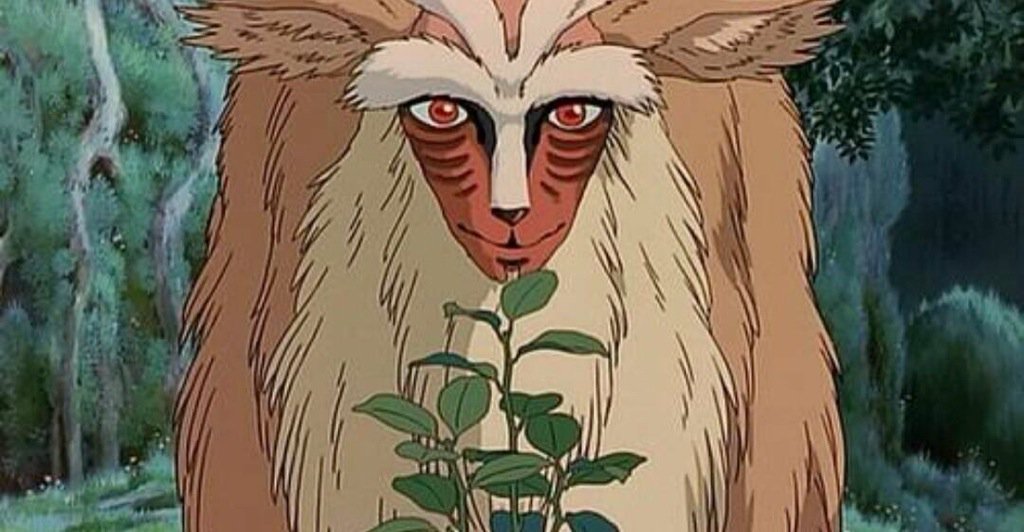
Spoiler commentary and discussion of the mystery of the Deer God in Princess Mononoke.
Princess Mononoke" is an animated feature film produced by Studio Ghibli. The film depicts the conflict between humans and the gods "Mononoke" who live in the forest. The Deer God appears at the top of the gods in the film. The story ends without fully explaining what the Deer God is, although he reveals many mysteries. The story delves into what he means to mankind and to the gods.
Read Article

Pursuing adult and avant-garde expressions, "LUPIN the Third - A Woman Named Fujiko Mine
Everyone in Japan knows the Lupin the Third series. This time we will introduce the anime series "LUPIN the Third - A Woman Named Fujiko Mine," which focuses on Fujiko Mine, a popular character among both men and women alike. The adult and avant-garde style of the production, which has never been seen in the Lupin series before, is sure to be addicting.
Read Article
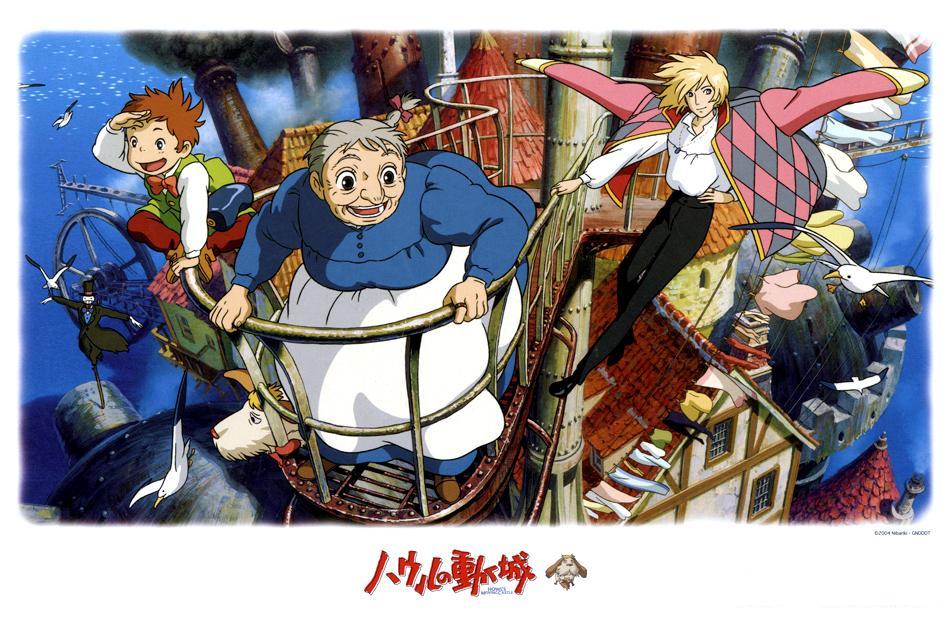
ハウルの動く城の名言・名セリフ/名シーン・名場面まとめ
『ハウルの動く城』とは、2004年公開のスタジオジブリ制作の長編アニメーション作品である。脚本・監督は宮崎駿。 帽子屋の少女・ソフィーは兵隊に絡まれていたところを魔法使いのハウルに助けられるが、魔女の呪いによって90歳の老婆に姿を変えられてしまう。店にいられなくなったソフィーは旅に出、その途中でハウルの動く城に出会うのだった。ファンタジックな世界観や美術、個性的なキャラクターが魅力の作品。ハウルとソフィーの戦火の恋がストーリーの軸となっているため、本作にはロマンチックな名言も数多く登場する。
Read Article
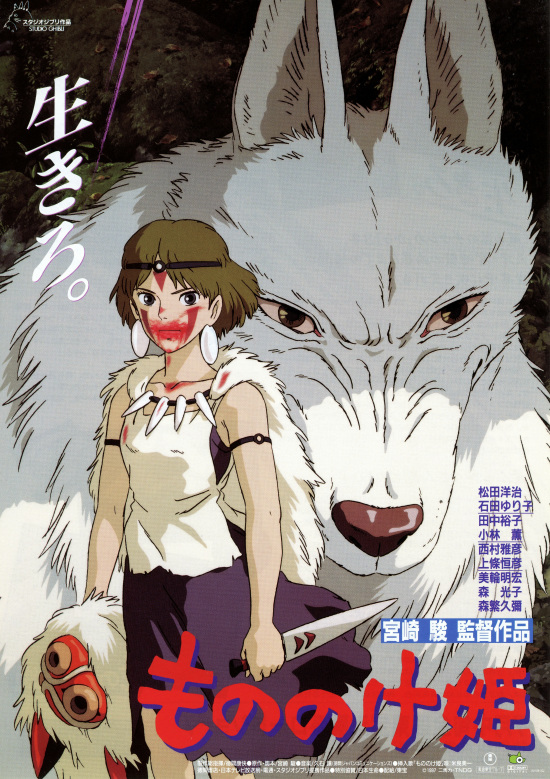
もののけ姫の名言・名セリフ/名シーン・名場面まとめ
『もののけ姫』とは、1997年公開のスタジオジブリ制作の長編アニメーション映画である。原作・脚本・監督は宮崎駿。 中世の日本を舞台に、エミシの村で暮らす少年アシタカが村を襲ってきたタタリ神から村を守ったことで、死の呪いを受けてしまう。呪いを絶つために旅立ったアシタカは、山犬に育てられた少女・サンと出会う。人間と自然の対立を描いた壮大な作品である。本作には、人やもののけそれぞれの立場や考え方を表したセリフも多く、考えさせられるような印象的な名言が数多く登場する。
Read Article
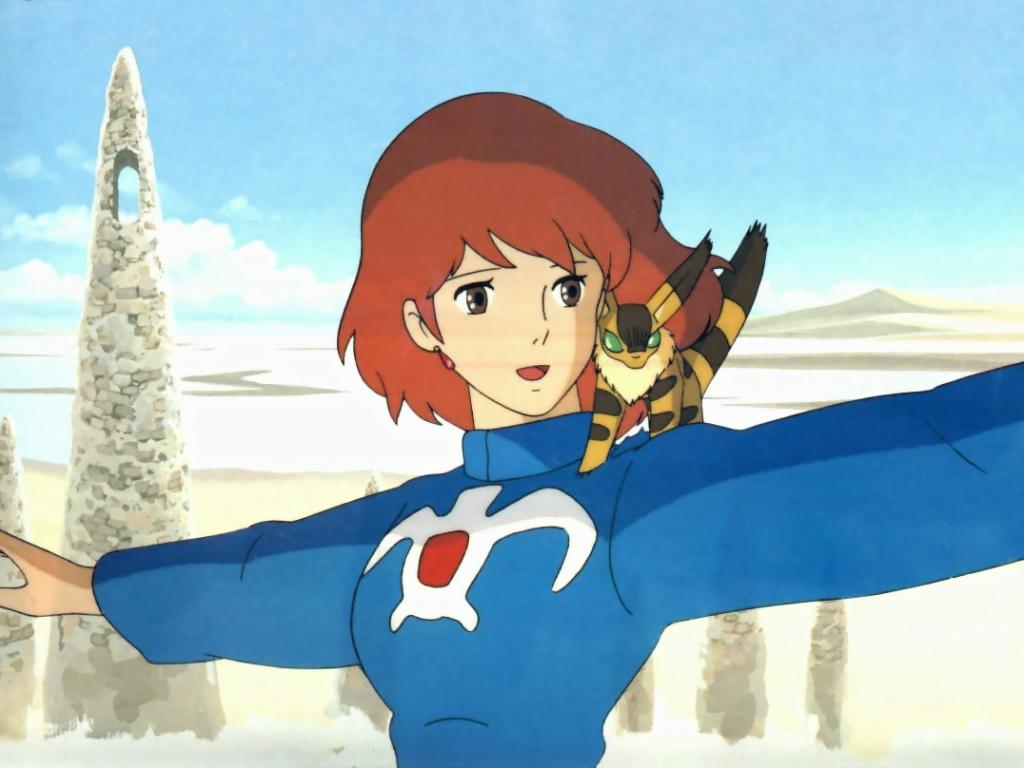
風の谷のナウシカの名言・名セリフ/名シーン・名場面まとめ
『風の谷のナウシカ』とは、1984年公開のトップクラフト制作の長編アニメーション作品である。原作・脚本・監督は宮崎駿。1982年に『アニメージュ』で連載していた宮崎の同名漫画を原作としている。宮崎駿の長編アニメーション映画としては第2作である。 「火の七日間」という最終戦争から1000年後の世界。近代文明が崩壊し、「腐海」と呼ばれる異形の菌類の森に世界は覆われていた。本作には、この世界の過酷な現状やナウシカの生き様を表した印象的なセリフが数多く登場する。
Read Article
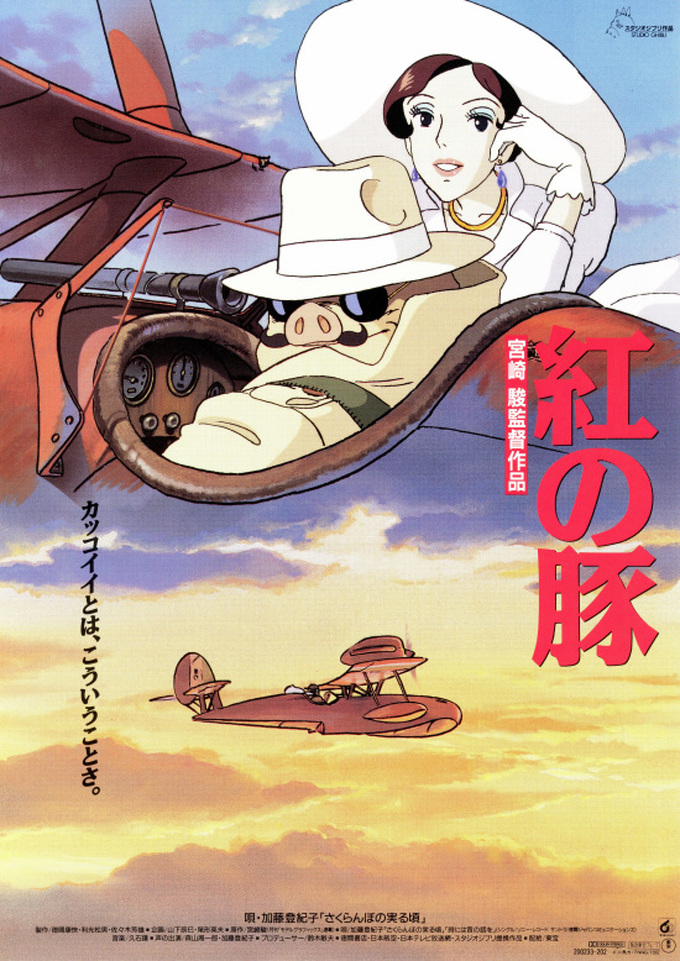
紅の豚の名言・名セリフ/名シーン・名場面まとめ
『紅の豚』とは、1992年公開のスタジオジブリ制作の長編アニメーション作品である。監督は宮﨑駿。1990年に『月刊モデルグラフィックス』で連載された『宮崎駿の雑想ノート』の『飛行艇時代』を原作としている。 世界大恐慌に揺れるイタリア・アドリア海。豚の姿になった「ポルコ・ロッソ」が、飛行艇を乗り回す空中海賊「空賊」たちを相手に賞金稼ぎとして空中戦を繰り広げる。中年男性向けを意識して制作されたため、「飛行機」や「空軍」などロマンがあり、渋い名言も多い。
Read Article
Contents
- Outline of "Lupin III: Cagliostro's Castle
- Synopsis and story of "Lupin III: Cagliostro's Castle
- Major characters in "Lupin the Third: Cagliostro's Castle
- Lupin the Third (CV: Yasuo Yamada)
- Daisuke Dimeji (CV: Kiyoshi Kobayashi)
- Ishikawa Gomon (CV: Inoue Makio)
- Fujiko Mine (CV: Eeiko Masuyama)
- Inspector Zenigata (CV: Goro Natani)
- Princess Clarice de Cagliostro (CV: Sumi Shimamoto)
- Count Graff Lazare de Cagliostro (CV: Taro Ishida)
- Jodo (CV: Ichiro Nagai)
- Gustav (CV: Tadamichi Tsuneizumi)
- Sonocho (CV: Kohei Miyauchi)
- Director General of Interpol (CV: Shozo Hirabayashi)
- Archbishop (CV: Kinzo Azusa)
- curl
- sedge (Cyperaceae spp., esp. members of genus Carex)
- Famous quotes, lines, scenes, and scenes from Lupin III: Cagliostro's Castle
- Scene of infiltrating Castle Cagliostro and reuniting with Clarice, who is being held prisoner.
- Tonight's Zanteiken will be different.
- The old saying in my family is: "Let light and shadow meet and tell the time... Let the eyes of the high goat face the sun. How can I help you?
- He stole something terrible. Your heart.
- Major vehicles and weapons appearing in "Lupin III: Cagliostro's Castle
- Supercharged Fiat 500
- autogyro (helicopter)
- Harley-Davidson WLA
- Simonoff PTRS1941
- S&W M27 .357 Magnum 4-inch
- Ruger 1900
- UZI
- Behind the Scenes, Trivia, and Small Stories/Episodes and Anecdotes of "Lupin the Third: Cagliostro's Castle
- Hayao Miyazaki was dissatisfied with the short production period.
- Adapted from Maurice Leblanc's novel "Arsène Lupin, the Phantom Thief
- Ideas from "TV Series 1" are incorporated.
- Yasuo Yamada, who plays Lupin, praised the film.
- Evaluation of this work
- Evaluation of the director Hayao Miyazaki
- Evaluation of the original author Monkey Punch
- Recognition outside of Japan (film director Steven Spielberg)
- Awards for Lupin III: Cagliostro's Castle
- Theme song and insert song for "Lupin III: Cagliostro's Castle
- Theme song: "Takaramono of Fire" by Bobby
- Insert song: Yuji Ohno "Samba Temperado
- Related video clips from "Lupin III: Cagliostro's Castle
- Digitally Remastered Trailer