
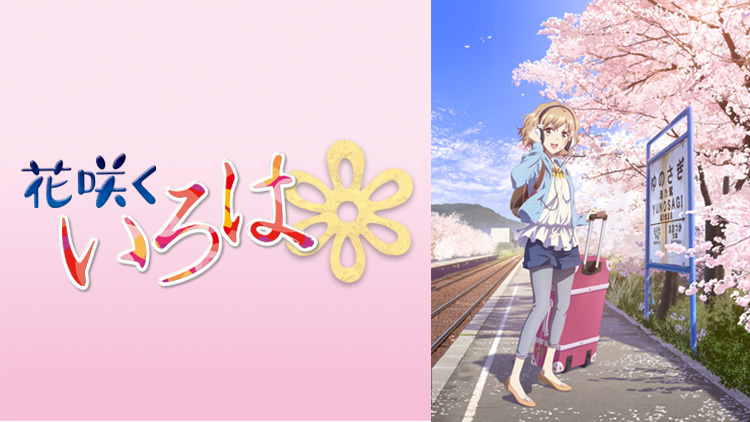
Hanasaku Iroha" is an original Japanese animated television series produced by P.A. WORKS and a media mix work based on the series. The setting is the hot spring resort town of Yunosagi, Ishikawa Prefecture. Hanasaku Iroha Matsumae works as a live-in waitress at her grandmother's onsen ryokan "Kiseso" and grows up through various experiences while being surrounded by unique employees.
Yosuke Hiwatari
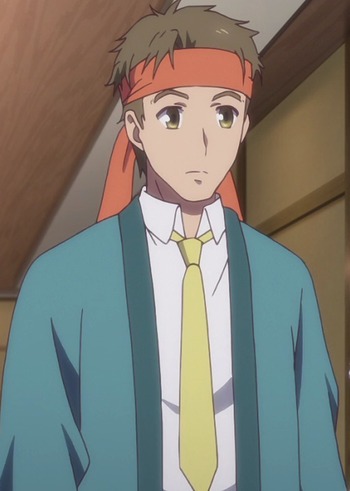
CV: Ryohei Kimura
Kimura is the son and heir of "Fukuyo," the inn where Ohana and her friends stay during their school trip to Miyazaki, and serves as the head of the innkeepers at a young age. He is a distant relative and childhood friend of Yuna, and she is his daughter-in-law. He is a distant relative and childhood friend of Yuna's, and she is his daughter-in-law. He is a young watchman at the ryokan, but instead of having a full-time matchmaker, he has installed a machine to save on labor costs, thinking that he can hire a part-time matchmaker only when necessary. However, he has a friction with the part-time waitresses because of his strict instructions and ignoring their requests for better treatment, and suddenly they all quit at once.
When Yuna asks him why he continues to work at the ryokan when there is a better job for him, he tells her that the ryokan business has its difficulties and its joys, and he ends his marriage with Yuna, who says she does not like the ryokan business.
Famous quotes, lines, scenes, and scenes from Hanasaku Iroha
Koichi: "If Ohana did what she did because she believed it was the best thing to do, she will be able to manage it. I'm sure she will continue to do so." (Episode 9)
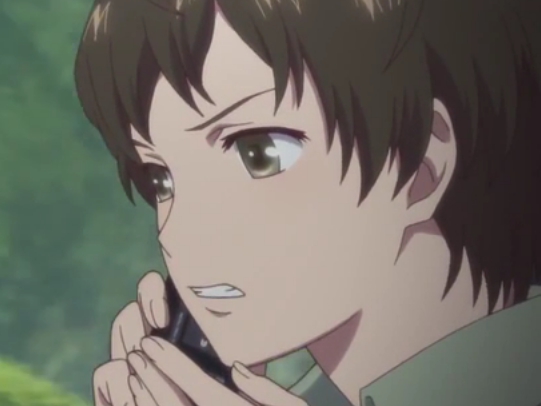
The sudden increase in guests raises suspicions that an undercover reporter is staying at the hotel to write a feature article on the hot spring resort of Yunosagi. The staff of Kisetsu-so are at a standstill in the absence of the proprietress, and at the suggestion of Takako, they try to give priority to the guests they suspect are undercover journalists. However, Ohana refutes Takako's proposal, saying that if it is Sui, she will give equal treatment to all guests.
However, the restaurant is getting busier and busier, and Ohana runs out on her own, saying that she will bring back Toru, who is away attending a friend's wedding. However, when she is unable to find Toru, she suddenly receives a call on her cell phone from Koichi, who has been sneaking into Yunosagi from Tokyo. Koichi encourages Ohana, who wonders if she is really doing the right thing, by saying, "You are not good at seeing what is going on around you.
She is not very attuned to her surroundings and tends to run off on a tangent. In the workplace, people tend to avoid people like Ohana, but there are times when people like Ohana are needed to break out of a situation. It is not easy to get Ohana to notice his feelings for him, but it shows the single-minded and sincere character of Koichi.
Satsuki said, "I have been doing this kind of work for a long time. I have brought you up in this kind of work. Do you think that a beautiful, respectable job is the only job?" (Episode 11)
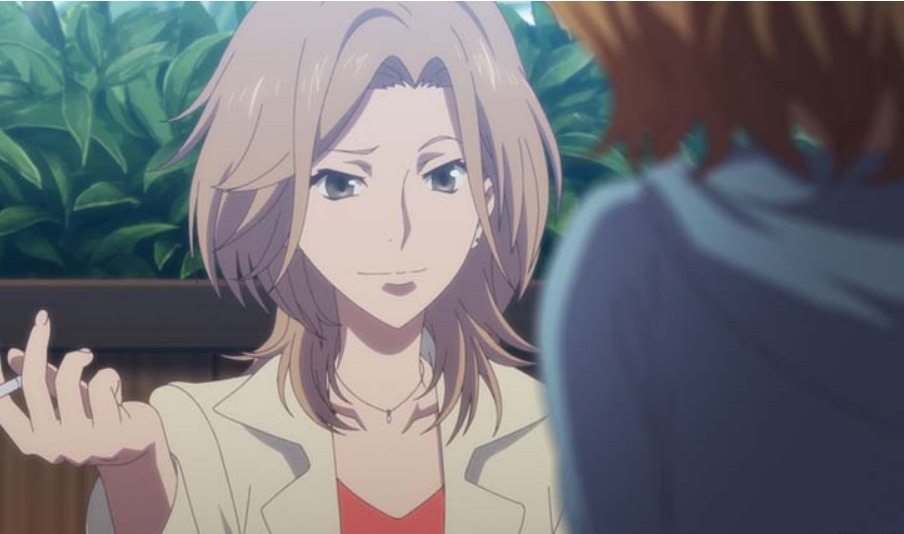
Ohana and her friends saw a ranking of ryokans in the Yunosagi hot spring resort area in a travel magazine. Kisetsu-so was given a score of 5 out of 10, with the comment that nothing had changed uniformly over the past ten years. Shocked, Ohana leaves Kisetsu-so and goes to a publishing company in Tokyo to ask who wrote such an article. It was her mother, a freelance writer, who wrote the article giving Kisetsu-so a bad score. Shocked, she asks her mother how she could write such a terrible article without seeing Kisetsu-so and how she had put up with such a terrible job. Satsuki's line to Ohana: "I don't know why I can write such a terrible article when I haven't seen Kisetsu-so.
She says that Satsuki is a "terrible" mother who is free-spirited and doesn't keep her promises to her daughter and that the job Satsuki is doing is "terrible" too. Satsuki says it may not be a "respectable job" but she doesn't deserve to be called a "terrible job" by Ohana. The scene shows that Satsuki's attitude toward her work is as serious as Sui's. Until then, she had only seen Satsuki as free-spirited and problematic as a mother.
Sui said, "Some children will find their way right away, while others will climb higher and only then will they find their way. It is okay to take a detour. It's okay to take a detour, to get lost on the wrong path. That's their privilege." (Episode 20)
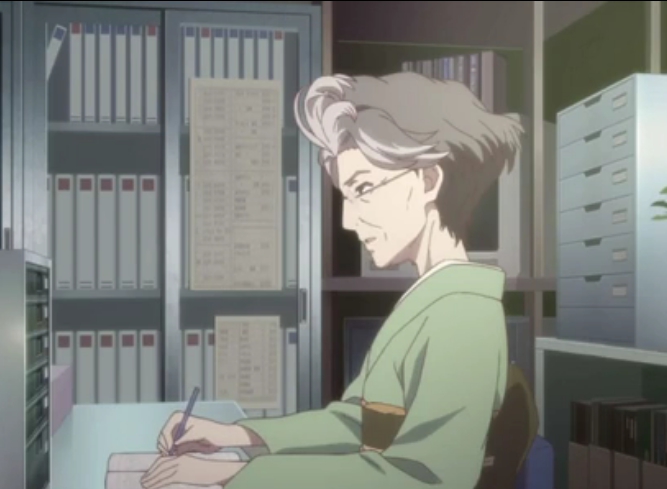
Ohana and her classmates are busy preparing for the school festival. Tamiko becomes the chief of the cooking group in Ohana's class, but she has a disagreement with a girl in her group over whether or not to make omelette rice. However, with Nako's help, they find a way to make omelette rice with the cooking utensils available in the classroom, and the two come to an understanding. Meanwhile, at Kisetsu-so, Tomoe and her friends were talking about Tamiko. Tamiko had been practicing by buying ingredients she had never used herself out of her monthly salary. Sui said to Tamiko, "She is a great girl. She decided she wanted to be an itamae (chef) from the time she was in junior high school, and she came to our house to train right after graduation.
While there are children like Tamiko who decide on a path right away and train to be an itamae at Kisetsu-so, there are others like Ohana who can see what they are aiming for only after coming to Kisetsu-so. Others, like En, wanted to be a movie director, but as a result of her sister's and mother's wish, she got a job as a banto (head watchman). Sui's dignified and unapproachable atmosphere is exuded by her kindness when she says, "Being lost or making a mistake is not a bad thing.
Sui said, "Marriage, you know, is never really alone. I will never let you be alone. That's the kind of promise." (Episode 21)
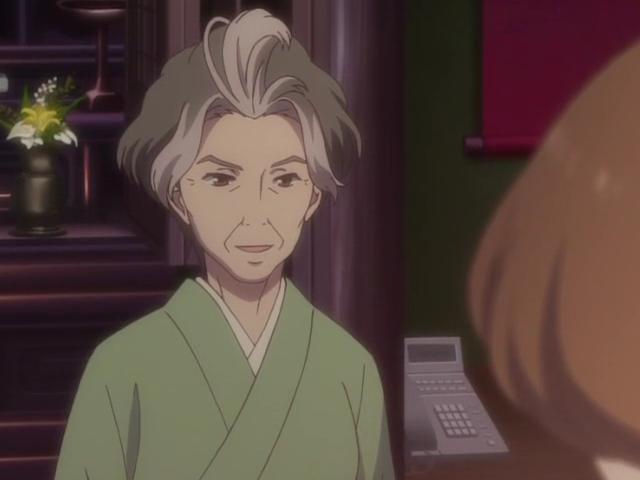
Takako, who had decided to marry En but was not happy with Sui's reaction, visited Sui's room to ask for an annulment of the marriage. Sui's line to Takako, who thought that Sui did not approve of her.
Before becoming the proprietress of Kisetsu-so, Sui worked as a waitress at another ryokan, where she met and married her husband, who worked at the same ryokan as a chef. Later, she and her husband started Kisetsu-so from scratch. Sui tells Takako that the name of the ryokan, Kisetsu-so, means "Sui will be happy" for her late husband. Sui bows to Takako and says, "I ask you to bring her joy.
When asked again, "What is the purpose of marriage?" it is difficult to give a clear answer, but this scene makes me think that it comes down to this one word from Sui. Sui herself has already lost her husband, with whom she started Kisetsu-so, and she is the proprietress of Kisetsu-so with only her hands, and she is also struggling to raise Satsuki and En. It is because Sui has gone through such hardships that her words have deep meaning.
I want to be Shikumansui" (Episode 26)
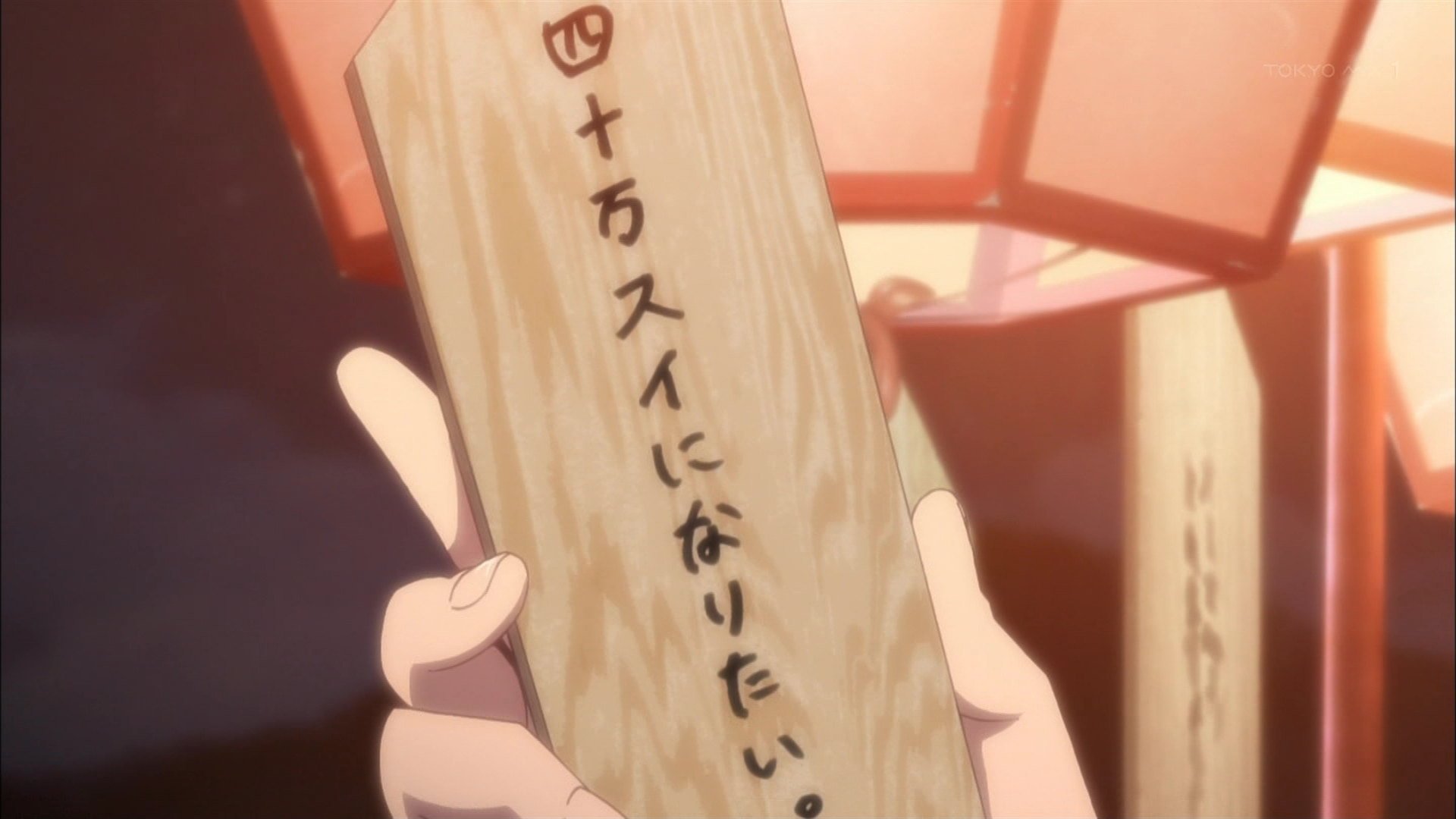
Satsuki and Sui helped Kisetsu-so staff to finish their work and went to Bonbori festival.
Satsuki and Sui find a wish of Ohana, "I want to be like Sui Shijyaman," on the "Nozomifuda," a wish list hung at the Bonbori Festival.
Her wish was to be "like the landlady, who takes pride in her work, works hard, is a little childish, and always remembers her first feelings and first dreams."
Kisetsu-soo, which she visited at the behest of her mother, who had run away in the night. Sui stands in front of Ohana not as her grandmother but as the landlady of Kisetsu-so, and treats her harshly. Her days at Kisetsu-so were not all fun and sometimes painful. Even so, she cherishes the days she spent at Kisetsu-so, and the respect she has for Sui is reflected in her wish to "become Shijumansui.
Terms for "Hanasaku Iroha
Bon Festival
In episode 11, "Howl into the Night," the word "bonbori" was inspired when Ohana Matsumae was cleaning bonbori with Yuna Wakura at the Fukuya Ryokan.
Bonboru" means to make a wish at the Bonbori Festival and to do one's best to make the wish come true. According to Ohana in episode 14, it is "a rough feeling of wanting to work hard toward a goal. Since then, it has been used in the story when she tells other characters that she also wants to work hard toward her own goals.
hobylon
It is mainly uttered by Tamiko to Ohana, who cannot read the air. The original phrase, "Die! is a word that came out after being admonished by Ohana that it is too harsh to say to others. It is an abbreviation of "out of the question" to the point of shocking.

Tags
Contents
- Outline of "Hanasaku Iroha
- The story of "Hanasaku Iroha
- Due to her mother's nighttime escape, Ohana takes a job as a live-in waitress at Kisetsu-so.
- Classmates at Korin High School
- Assessment of Kisso and Kisso Villa in a Bad Economy
- Ohana stays at a ryokan run by Yuna's daughter-in-law on a school excursion.
- Kisetsu-so receives an offer to shoot a movie.
- Cultural Festival at Korin High School
- Marriage of Kisetsu-so Banto Shijumamen En and Kawajiri Takako
- Sui's resolution and Bonbori Festival
- Characters in Hanasaku Iroha
- Ohana Matsumae
- Tamiko Tsurugi
- Nako Oshimizu
- Shijima Sui
- Satsuki Matsumae
- Yuna Wakura
- Shijimanenishi (The 40,000 Rim)
- Koichi Tanemura
- Takako Kawajiri
- Toru Miyagishi
- Tomoe Wajima
- Renji Togashi
- Denroku Sukegawa
- Taro Jiromaru
- Seiji Shijima
- Ayato Matsumae
- Shigeko Wakura
- Yosuke Hiwatari
- Famous quotes, lines, scenes, and scenes from Hanasaku Iroha
- Koichi: "If Ohana did what she did because she believed it was the best thing to do, she will be able to manage it. I'm sure she will continue to do so." (Episode 9)
- Satsuki said, "I have been doing this kind of work for a long time. I have brought you up in this kind of work. Do you think that a beautiful, respectable job is the only job?" (Episode 11)
- Sui said, "Some children will find their way right away, while others will climb higher and only then will they find their way. It is okay to take a detour. It's okay to take a detour, to get lost on the wrong path. That's their privilege." (Episode 20)
- Sui said, "Marriage, you know, is never really alone. I will never let you be alone. That's the kind of promise." (Episode 21)
- I want to be Shikumansui" (Episode 26)
- Terms for "Hanasaku Iroha
- Bon Festival
- hobylon
- Bon Festival
- Behind the Scenes, Trivia, and Small Stories/Episodes/Anecdotes of "Hanasaku Iroha
- Model of Kisetsu-so
- Yuwaku Bonbori Festival
- Theme song for "Hanasaku Iroha
- Hanasaku Iroha" Opening
- Hananoiro" / Words and music by Kimiko / Arranged and sung by nano.RIPE (Episodes 2 - 13)
- Warp of Mienkage Lyrics - Kimiko / Composed by - Jun Sasaki / Arranged and sung by - nano.RIPE (episodes 14 - 25)
- Hanasaku Iroha" ending
- Hazy" / Lyrics - Toshino Sakai / Music composed and arranged by Katsuhiko Kurosu / Sphere (Episodes 2 - 5, 7, 9 - 10, 12 - 13)
- Tsukikage to Blanco" Words & Music - Kimiko / Arrangement & Song - nano.RIPE (Insert song in episodes 6 and 9)
- Yumeji" lyrics and music - Kimiko / Arrangement and song - nano.RIPE (Episode 8, final episode)
- Cellular Kioku" Words & Music - Kimiko / Arrangement & Song - nano.RIPE (Episode 11)
- Hanasaku Iroha" lyrics by Ikuko Harada / music by Mito / arrangement and song by Clammbon (episodes 14 - 21, 23, 24)
- High Leap" Words & Music - Kimiko / Arrangement & Song - nano.RIPE (Episode 22)
- Ray of Light Lyrics - Mika Watanabe / Music composed and arranged by Shiro Hamaguchi (Episode 25)
- Insert song for "Hanasaku Iroha
- Lip Sync Lyrics - Kimiko / Composed by - Jun Sasaki / Arranged and sung by - nano.RIPE (Episode 1)
- Haru no Mukou ni Mukou Lyrics - Kenta Harada / Composed by - Shinya Tasaki / Arranged and sung by - Rey (Episodes 2, 3, 12)