
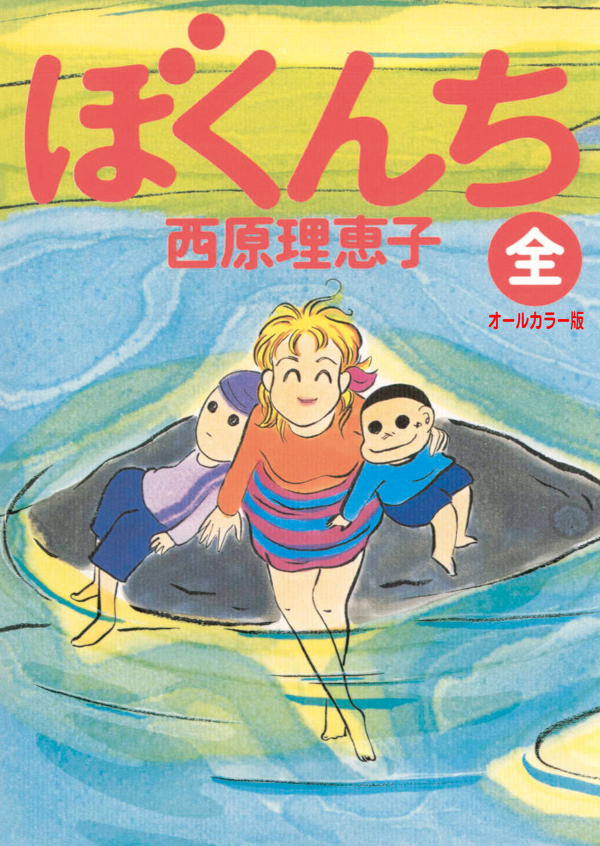
Rieko Nishihara's representative work serialized in "Big Comic Spirits" from 1995 to 1998. It won the 43rd Bungeishunju Manga Award. Set in a country town, it depicts the lives of three sisters and a brother whose mother has left them. The catchphrase is "Where is Shiawase? It was made into a movie in 2003 starring Arisa Mizuki, and was adapted for the stage in 2010 and 2016.
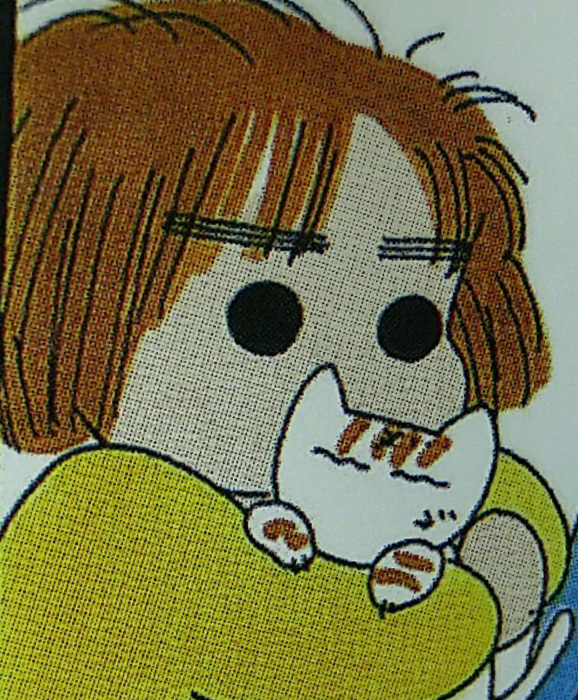
He is a childhood friend of Futa's and has a father who is helpless.
Despite being abused by her father, she could not abandon him until he died.
Nita's first love.
Saori's Dad
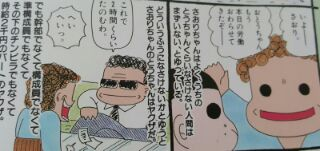
He is a no-good person who abuses Saori and works as a yakuza salesman without a regular job.
He is so no good that the whole town says, "Nobody says anything bad about a dead person, so why don't you just die quickly?
He lived by making Saori-chan sell takoyaki (octopus dumplings), but one day he started his own gang and opened a gambling den for homeless people.
They go wild when they drink alcohol or take drugs, and Saori-chan reluctantly takes care of the aftermath.
old man made of iron
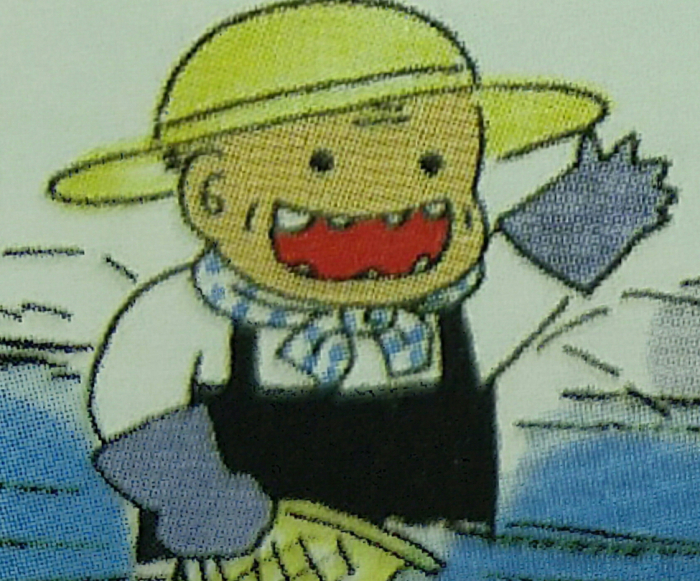
An old man who buys all kinds of hardware.
When it is cold, he drinks soy sauce to warm himself.
He used to live by the river, but his house was swept away by a flood, and he built a rather grand hut on a vacant lot, which was soon destroyed.
To get revenge, he sold the bulldozer that destroyed his house and built a new house in a different location.
He is also a bold man, tricking Ichita and Nita into helping him with his forecasting business.
Famous quotes, lines/scenes, and scenes from "Bokunchi
When you have time to cry, laugh!
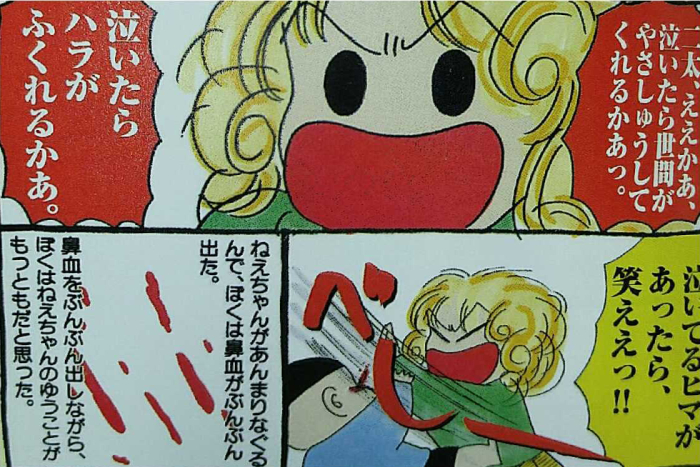
The line Kanoko says to the sulking and crying Nita as she slaps him.
The town where "Bokunchi" is located is so poor that half of the children are said to be delinquents, and it is a place where people live by stepping on the weak.
Therefore, Kanoko teaches Nita how to live without twisting and turning.
I'll just have to make do with what I can hold in both hands."
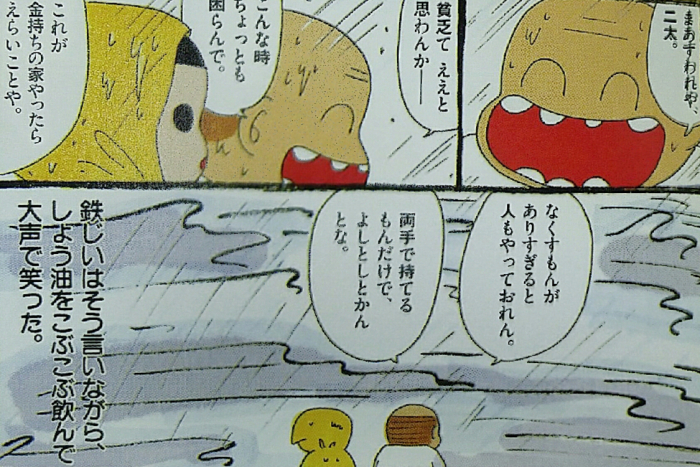
A line from Tetsuji, whose house was washed away by heavy rains.
He does not deny his poverty, but affirms it.
In Buddhism, there is a part of enlightenment called "Chisoku (knowing enough)," and Tetsuji is in that state.
Sento scene with Koichi
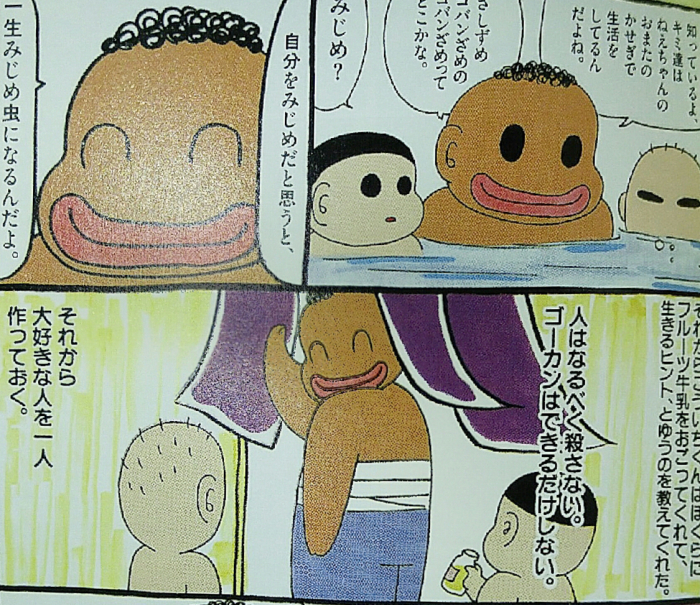
Koichi-kun loves public bathhouses and gives Ichita and Nita some tips on how to live.
These three tips are: "Don't kill people as much as possible," "Don't do gokan as much as possible," and "Have one person you love.
Koichi-kun puts these tips into practice, and as he observes, Futa grows up.
The "don't give up" is to hold it short and steady.
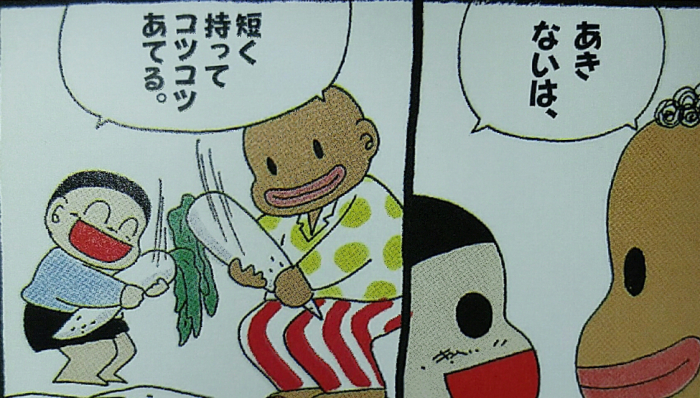
This is Koichi's creed in business.
What he does is bad, but it shows that the same "knack" is important in any business.
Perhaps this is the creed of the author, Saibara himself.
The scene where Koichi-kun spreads clams
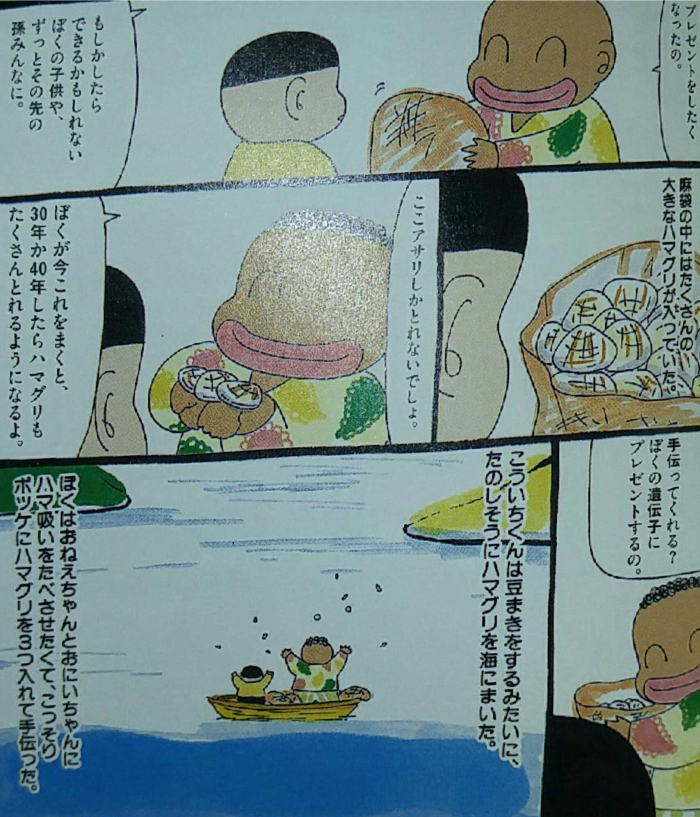
Koichi-kun, after a hard day's work, suddenly feels like giving a gift to his genes, so he and Nita scatter clams in the sea, where only clams are caught.
Nita secretly puts three clams in his pocket to feed them to Itta and Kanoko, but Koichi-kun lets them go.
This episode shows that although he has to live doing bad things because of the town, he is a kind and good person at heart.

Related Articles
A collection of images of figure skaters drawn by famous cartoonists and illustrators!
We have compiled a collection of images of figure skaters drawn by world-class illustrators, popular Japanese manga artists, and other talented creators. You can enjoy the touch of each cartoonist and illustrator. They are all fascinating works, so please check them out.
Read Article
A compilation of masterpieces of newspaper serialized manga
When you find a comic strip in a corner of the newspaper, you can't help but read it. They are deep in current events and satirical. We have compiled a list of such newspaper manga works.
Read Article
Contents
- Outline of "Bokunchi
- Synopsis and story of "Bokunchi
- Characters in "Bokunchi
- one of the six administrators of a Zen temple (in charge of accounting)
- two sheets (pieces) (of paper)
- herring roe
- Ka-chan (today's child)
- first-year high school student
- Koichi's sister
- Saori.
- Saori's Dad
- old man made of iron
- Famous quotes, lines/scenes, and scenes from "Bokunchi
- When you have time to cry, laugh!
- I'll just have to make do with what I can hold in both hands."
- Sento scene with Koichi
- The "don't give up" is to hold it short and steady.
- The scene where Koichi-kun spreads clams
- The scene where Itta decides to stand on his own.
- One cannot live alone."
- No, he's probably the best guy I've ever slept with.
- Itta's heartbreak scene
- I've seen nothing but ugly things with my own eyes for the past 50 years since I was born. That's why I want my children to see something beautiful. I'll be looking for somewhere else.
- Recollections of Kako's childhood
- The scene where Koichi has a family
- "Oh, my father didn't abandon me."
- The scene where the kanoko burns down the house
- The scene where Itta starts an oden shop.
- I laugh when I do this."
- Film version of "Bokunchi
- Differences from the original
- theme song
- GAGAGA SP "Graduation
- featured songs
- Yukari Onishi and New World "Nankibound
- KAJA&JAMMIN' "DOWN&FLY" "DON'T STOP THE MUSIC" "RUNNIN'
- Backstories, Trivia, and Small Stories/Episodes/Anecdotes from "Bokunchi
- Appeared in "BS Manga Night Talk