
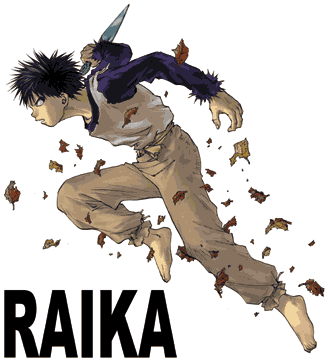
Raikai" is a Japanese manga work written by Yu Terashima and drawn by Kamui Fujiwara. It was serialized in Scola's manga magazines "Comic Burger" and "Comic Bars" from 1987 to 1997. The story takes place in the 3rd century A.D. in the country of Yamataikoku. The story depicts the activities of Laika and her friends as they fight against a diplomat from Wei, Zhang Zheng, who is plotting to take over Japan. The battle between Laika and Zhang Masa, who is trying to protect Iyo, the successor of Himiko of Yamataikoku, and Iyo to use her to take over Japan, becomes a war that involves the surrounding countries.
'The Great King of the Universe...? Is that what I wanted ......"
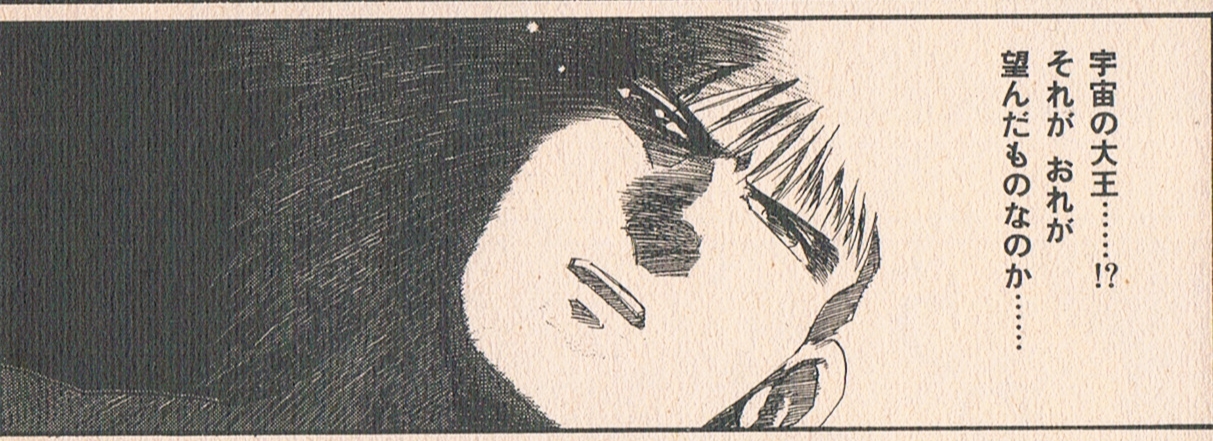
Laika refuses to become the Prince of Gounu even after completing the "Gobo no Kyo." This is the scene where she realizes that she had unconsciously harbored a greater desire. Through this experience, Laika acquired a power and spirit that exceeded the ability given to him by the true man of the Noun nation. It was a major turning point in Laika's life.
Himekiso...the land of harmony is the center of the earth and the end of the earth. It is the same as what you call an open country, isn't it? We've been thinking the same thing for some time.

Laika speaks with Himekiso alone for the first time after completing the "Gobo no Gyo. After this, Himekiso's chronic illness worsened and he passed away. This was the first and last conversation between father and son.
"I will not give Iyiyo to anyone."
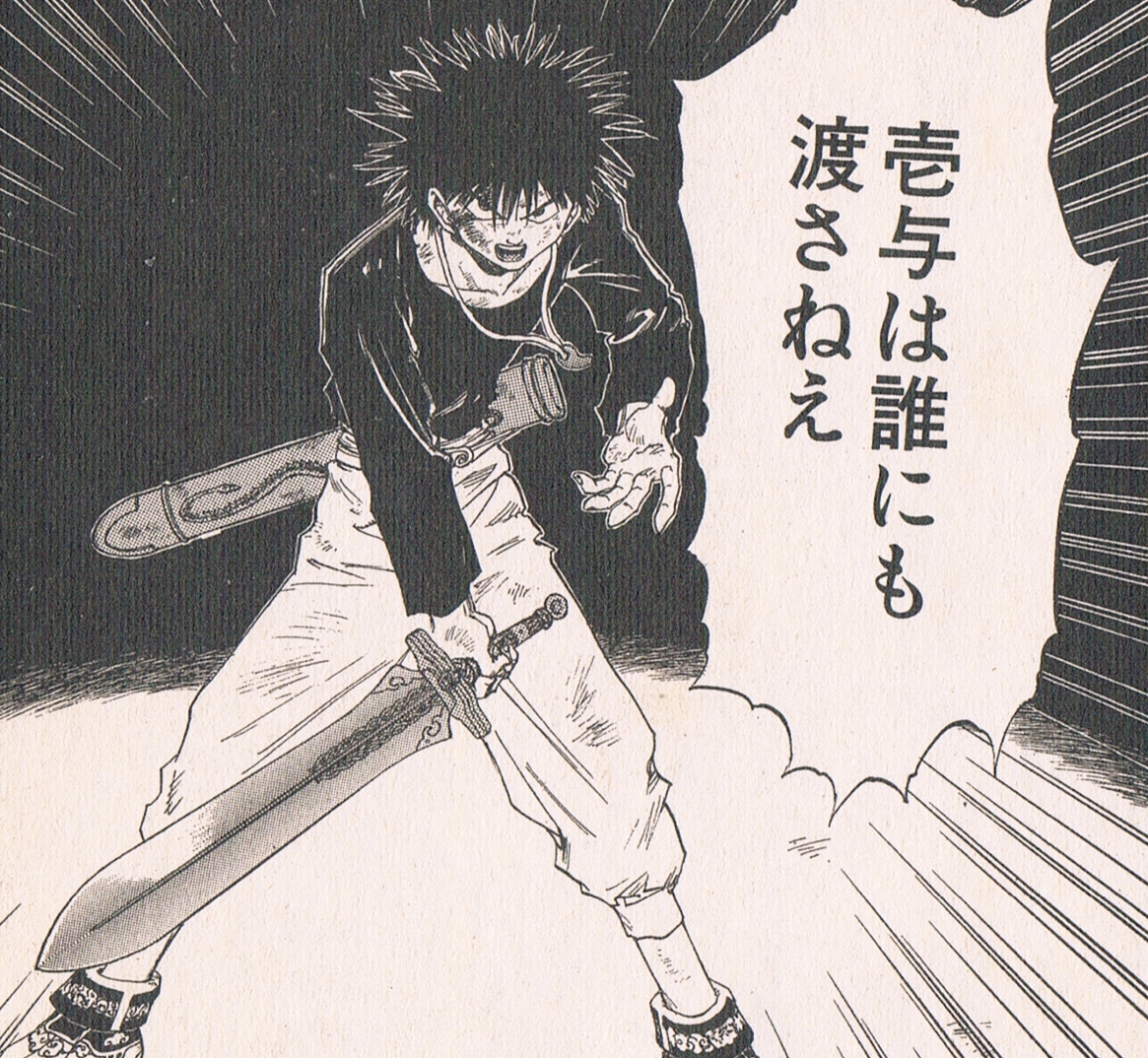
Laika and Iyiyo finally rejoin each other in the cave. Laika's true feelings are summed up in this one word.
Iyiyo... you're the reason I've come this far."
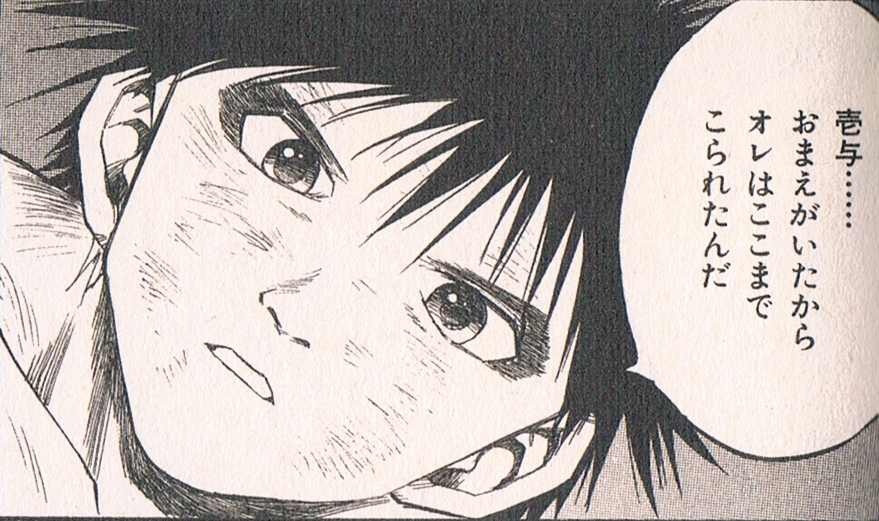
Laika and Iyo are united in order to obtain the power of the heavenly dragon. All the wounds on Laika's body were to protect Iyo. This is a famous scene that gives us a glimpse of Laika's great love for Iyo.
...and each man has his own God. The kingdom does not belong to one man in power... and you are not alone in God..."
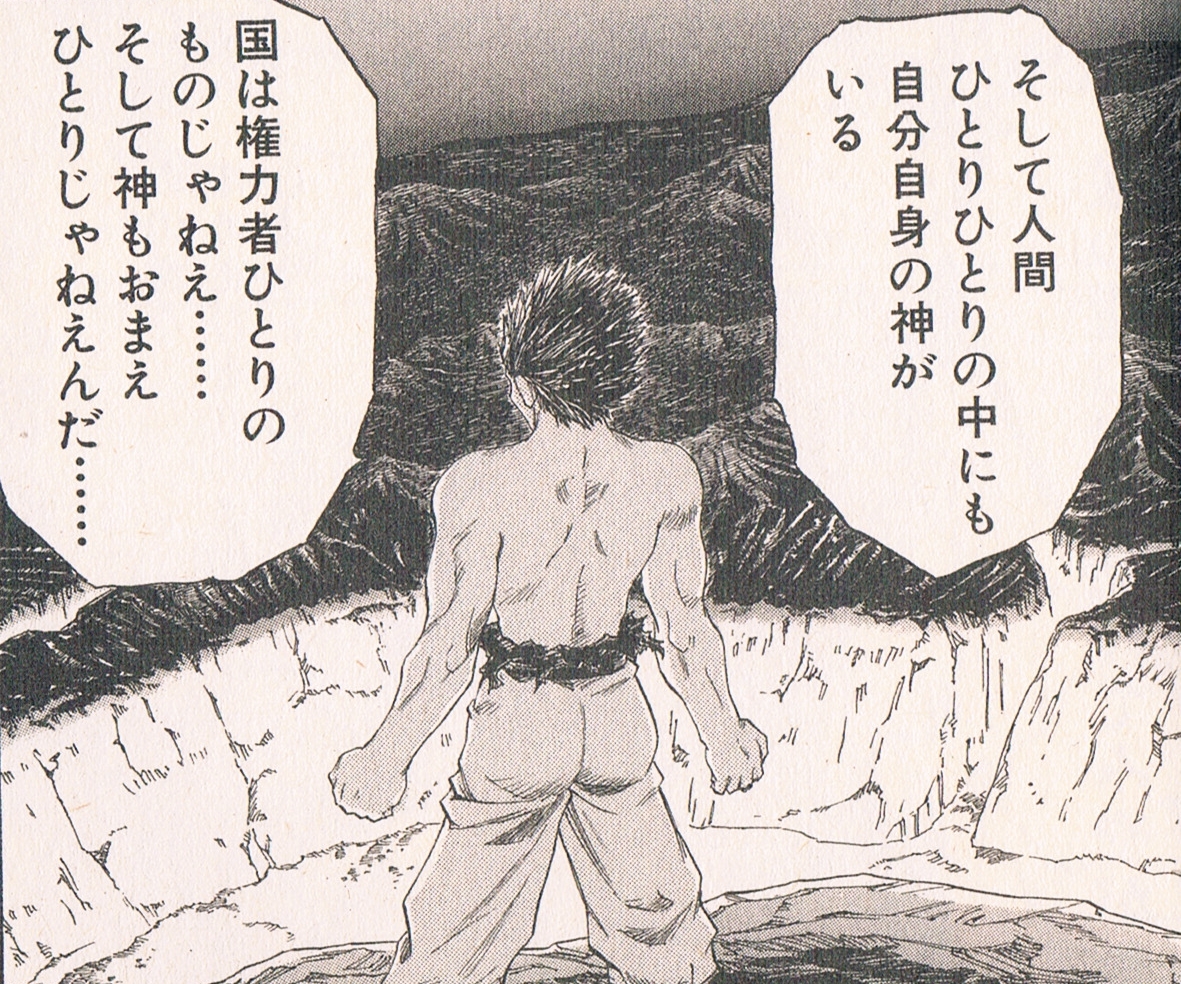
Zhang Jingzheng fell into the volcano. Laika talks to him. This is a famous line that speaks of his thoughts as the Great King of the Universe.
Backstories, trivia, and small stories/episodes/anecdotes about "The Thunder Fire
The process of adapting "Raikai" for the stage
Raika was adapted for the stage in June 2017. Regarding the impetus for the stage adaptation, Kamui Fujiwara said that he met a staff member at a bar who liked "Raika" and told him that he wanted to adapt it for the stage. He also said that "Raikai" was an unfortunate work that had been floated in the past as an anime or live-action adaptation, but all of those stories were squashed, so if there was a story, he wanted to give it shape, regardless of the medium in which it would be expressed. Kamui Fujiwara also felt that it was a cute work that he had a lot of feelings for, and he thought that this story would be good if it could be created by a staff that loves the work, so he agreed to stage the story.
Kamui Fujiwara, speaking at the launch of the revised edition of the Weekly Manga History of Japan: "Himiko's Raw Legs Were NG"
Kamui Fujiwara has been writing "Himiko" (the first issue) and "Sesshu" (the 16th issue) for "Weekly Manga Nihonshi" published by Asahi Shimbun Publications since October 2009. He also drew 450 cards of historical figures for the supplement. According to an interview with the editorial department of Asahi Shimbun Publications, a member of the editorial department, who knew Himiko appeared in "Raikai," approached Kamui Fujiwara about writing the book. Kamui Fujiwara agreed to write the book because of the project and because he thought it would be interesting to portray Himiko as a young woman, who appeared as an old woman in "Raika" and was assassinated at the beginning of the book. When the editorial staff asked the mothers for their opinions on the first drawing of Himiko by Fujiwara Kamui, they said, "Her bare feet are sticking out too much, and it's a little bit disgusting. In 2010, the second phase of "Weekly New Manga Japanese History" was published, but he did not contribute to this volume.

Contents
- Outline of "Thunder Fire
- Synopsis and story of "The Lightning Fire
- Volume 1: The History of Forfeiture
- Volume 2: The Tripartite Edition
- Volume 3: Shamaku version
- Volume 4: The Prison Cage
- Volume 5: Mojaku (Bakuya)
- Volume 6: Lai Kai, ed.
- Volume 7, Rai Ri, ed.
- Volume 8: Kenji (Sword and Seal)
- Volume 9: The Briar Thorn
- Volume 10, Genkaku, ed.
- Volume 11: Amplification (Amplification of snare)
- End Jingi ed.
- Characters and characters in "The Thunder Fire
- Kumakisan (Mt. Kumakini)
- Leica (German camera brand)
- old priest
- ottage
- Japanese sea perch (Lateolabrax japonicus, esp. referring to an adult)
- Yamataikoku
- Himiko (Japanese goddess of war)
- (in Japan) 1st note of the ancient chromatic scale (approx. D)
- Kisinohiko
- kiva (Piper methysticum)
- taki (species of reddish-brown Pacific sea bream, Pagrus major)
- Danang
- hardnose shark (Carcharhinus macloti, species of requiem shark found in the Indo-West Pacific)
- nasolabial fold
- comedian who plays a lover's part
- hinoki cypress (Chamaecyparis obtusa)
- tamaki
- Kingdom of Wei
- government by clanship
- fat greenling (Hexagrammos otakii)
- The seven members of the Gongsun clan
- yellow-edged lyretail grouper (species of fish, Epinephelus flavirostris)
- muzin
- thin
- talva
- yun (ancient Chinese plucked zither)
- sugar cane
- "Does a dog have a dog?" (classic Zen koan)
- blotched foxface (Siganus unimaculatus, species of Western Pacific rabbitfish)
- cochineal insect (Dactylopius coccus)
- phosphorus
- beauty of the night
- Other
- Izu thrush (Turdus celaenops)
- cinchona
- tricks of the ninja
- General Shinzenjutsu
- ability to dodge out of the way of an attack
- Fast Moving (*official name unknown)
- Kunaï throw (*official name unknown)
- Explosives (*official name unknown)
- Nadare-wari no jutsu
- The art of possession
- The Art of the Spring Haze (Shunka no Jutsu)
- mosquito curtain
- release internal power
- Flying Sen
- Utsusemi no Jutsu
- Shinobi incense
- Special Shinzenjutsu used by Laika
- Sword of the Dragon Flame (Ryuunohomurano)
- The sword of the thunderbolt of the Ushinraimeiken (Japanese sword)
- The art of the fire wheel (karin no jutsu)
- Kakumagae Shirin no Jutsu (The Art of the Mosquito Curtain Return Fire Ring)
- Shikorotobi Uo no Jutsu (Art of the Shikoro Flying Fish)
- Mukuusappujin (無空殺風陣)
- Lower wind sword (Oroshi gufu ken)
- Kaeshi-Yamabiko no Jutsu
- The Art of the Mist (Kirigakure no Jutsu)
- KODAMA Kagero
- Special Shinzenjutsu used by Otaji
- Tenchu toppai (Heavenly Pillar Destruction)
- Special Shinsenjutsu used by Ikiname
- The Art of Jyoshin no Jutsu (The Art of Purification)
- The Art of the Snake
- Soushin no Jutsu (The Art of Soushin)
- Dragon roll (*official name unknown)
- Toad (*official name unknown)
- The art of deep demon revival (*reading unknown)
- thought manipulation (shinen jyuso)
- Electroshock therapy (*official name unknown)
- Special Shinzenjutsu used by Yoon
- The art of hair removal
- Ten-finger dead hair needle (*reading unknown)
- Special Shinzenjutsu used by Tarva
- ESP (*official name unknown)
- Transformed into a ball shape (*official name unknown)
- A special shinzenjutsu used by Watahata
- blood spirit (as in a person's blood)
- Transformation (*official name unknown)
- Avalanche Slash Sword (Nadararaku Zanken)
- Hallucination (*official name unknown)
- Special Shinzenjutsu used by Shin
- Steel Forging
- Burning Rock Breaking
- Acupuncture (*official name unknown)
- Sengan haha (Breaking a rock in a whirlwind)
- Special Shinzenjutsu used by Muzin
- mosquito curtain
- Arm extension (*official name unknown)
- The art of spit mucous cocoon capture (*reading unknown)
- Poisonous needle (*official name unknown)
- Poisonous spider (*official name unknown)
- Famous quotes, lines/scenes, and scenes from "The Thunder Fire
- I am no longer lost!"
- 'The Great King of the Universe...? Is that what I wanted ......"
- Himekiso...the land of harmony is the center of the earth and the end of the earth. It is the same as what you call an open country, isn't it? We've been thinking the same thing for some time.
- "I will not give Iyiyo to anyone."
- Iyiyo... you're the reason I've come this far."
- ...and each man has his own God. The kingdom does not belong to one man in power... and you are not alone in God..."
- Backstories, trivia, and small stories/episodes/anecdotes about "The Thunder Fire
- The process of adapting "Raikai" for the stage
- Kamui Fujiwara, speaking at the launch of the revised edition of the Weekly Manga History of Japan: "Himiko's Raw Legs Were NG"