
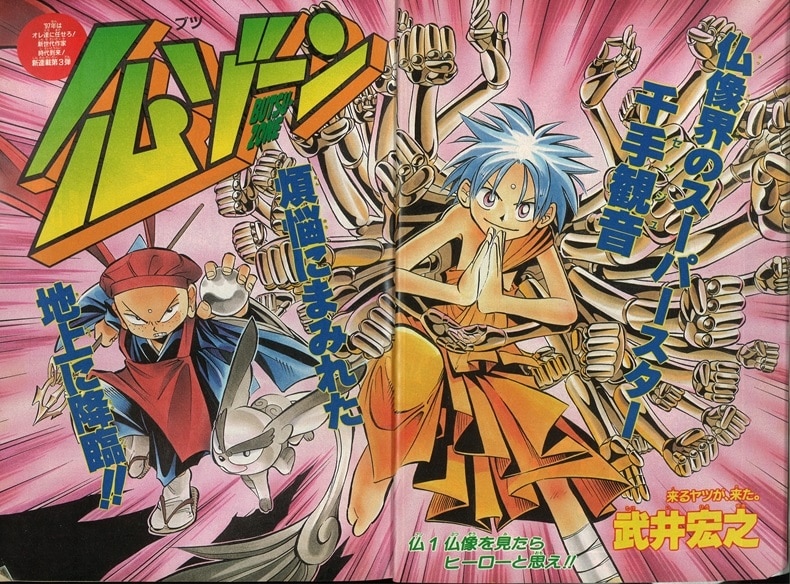
Butsuzone" is a boys' manga about Buddhism by Hiroyuki Takei and a media mix work based on it. It was serialized in Weekly Shonen Jump in 1997. Senju, a thousand-armed Avalokitesvara, possesses a Buddhist statue and descends into this world to deliver Sachi, a girl who is the reincarnation of Maitreya Bodhisattva, to India. Senju and his friends continue their journey, battling Mara, who feeds on human desires, and Ashura, who hates humans. Although there are only a few episodes, the mix of Buddhism and shōnen manga elements makes the series uniquely appealing, and even after the serialization ended, the series boasted a strong popularity.
Overview of "The Buddha Zone
Butsu Zone" is a manga work by Hiroyuki Takei. It was serialized in "Weekly Shonen Jump" from issue 12 to 31, 1997.
Japan, 1975. Sachi, a young girl living in Seigan-ji Temple, learns from Senju, a thousand-armed Avalokitesvara, that she is the reincarnation of Miroku Bosatsu (Maitreya Bodhisattva). In order to attain enlightenment and save people, Sachi sets out on a journey with Senju, Jizo (Jizo Bodhisattva), Koma (a guardian dog), and others. Along the way, they are confronted by Mara, the Buddha's enemy, who feeds on human desires, and Ashura, who hates people who are too greedy to revere the Buddha.
The story ends before Sachi arrives in India, where he is training, and it is sometimes called a "censored manga," but it is still very popular because of its unique style, which intertwines Buddhist salvation with shonen manga-like elements.
Takei's next work, "Shaman King," features the enlightened Sachi (named Sati in the story) and Senju, who has changed his name to Dainichi.
Although not adapted into an animated TV series, "Shaman King" has been used in a variety of media, including CD dramas, games, an anime shown at Jump Festa, and an anime on a special edition DVD of Takei's follow-up work, "Shaman King.
Synopsis and story of "The Buddha Zone
Departure of "Miroku
The year is 1975. Sachi, a young girl living in Seigan-ji Temple in Japan, hears from Senju, the Thousand-Armed Avalokitesvara, who appears from the temple's Thousand-Armed Avalokitesvara statue, that she is Miroku, a reincarnation of Miroku Bodhisattva. Miroku's role is to save all sentient beings. Senju was entrusted by Dainichi Nyorai Buddha with the mission of sending Sachi back to India, the birthplace of Buddhism, and descended from the land of the Buddha to this world. For the purpose of his activities in this world, the Buddha possessed by the Buddha image is called the "Buddha Zone.
The Buddha-zone, by joining their palms together, wear armors and protective gear called "ten-robe" (armor). Sachi was annoyed that Senju, who claimed to be a thousand-armed Kannon, had only two arms, but Senju deployed his thousand-armed heavenly garment with 40 arms in front of the yakuza who were trying to reclaim the land of Seigan-ji Temple. Senju strikes the yakuza with a technique called "Senju Punch," but his goal is not to eliminate them, but to save them before they commit the sin of going to hell.
Under the escort of Senju, the Buddha who "saves them all," Sachi leaves the Seiganji Temple to become Miroku. On the way, he meets Koma, a guardian dog, and Jizo, a Jizo Bodhisattva, and together they set out for India.
The Ordeal of Senju
Senju and his group attempted to go to India on a treasure ship with the Seven Gods of Good Fortune, allies of the Buddha, but the Seven Gods of Good Fortune had already been defeated by Mara, the enemy of the Buddha, who feeds on human desires. Not only that, but Ashura, who was once saved by the Buddha and supposed to have become a Buddha, also stands in the way of Senju and his friends as an enemy. Ashura, a former Indian demigod and expert in combat, efficiently channels energy called chakra into his heavenly robe and skillfully manipulates it to attack them.
Senju and his team return to Japan to train. During a hand-to-hand combat with Jizo, Senju's heavenly robe is damaged. The statue that possessed it was old and had been overworked by the battle. Jizo suggests that they go to Mount Osorezan in Aomori. Itako, the Buddhist priest who created the possessed statue of Senju. Senju and her friends are visited by Batou, the Bato Kannon (Goddess of Mercy), who is called the "Angry Kannon. Known as the "Kannon of Anger," Batou is far more capable in battle than Senju, and he claims that he will escort Miroku-sama in place of Senju.
Senju once tried to return to the Buddhist land with his damaged robe, but the bond that had already developed between him and Sachi made him want to protect her. Senju, together with Jizo and Sachi, set out for Aomori, declaring to Batou, "When the robe is repaired, we will play a game, and the winner will take Miroku-sama to India.
There, Senju meets Anna Kyoyama, an itako (a Japanese weasel), who summons Junkei, the Buddhist priest who carved the image of Senju possessed by Miroku. With her heavenly robe repaired and strengthened by Junkei, Senju challenges Batou to a fight. Senju fought as well as Battou with his "Inga Oho," a technique in which he receives an attack with one of his 20 arms, multiplies the chakra of the attacker's arm, and then counters with his other arm.
Batou said he had dared to fight Senju in order to blackmail him, and he reiterated his intention to join Miroku's escort.
Senju and his friends were happy to have a reliable ally, but then the Tenryu Hachibushu, led by Ashura, appeared. Ashura turned against Senju and the others because he "hates human beings," and the other members of the eight, who are former demigods, also seemed to follow his lead.
The Battle of Asherah
Originally Indian demi-gods, the eight members of the Hachibeshu were also powerful in heavenly garments, but Batou succeeds in defeating more than half of them. Still caught by surprise, Batou is crucified. Ashura asks Senju, "When a loved one is taken from you, can you forgive the one who took her from you?" and kills Koma, hurting Batou.
Ashura had been deprived of the woman he loved in the past. He says that although he was saved by Shakyamuni, the more he respected Shakyamuni, the more he could not forgive those who were addicted to greed. Batou discovers that Ashura's true intention is to be saved.
Battou is defeated, and Jizo's plan to have a heart-to-heart with Ashura using a suicide bombing technique fails. Senju, however, is in tears as he takes up the stance of retribution against Ashura, who has saved his life by using Batou's corpse as a shield. Ashura attacks, saying that even the merciful Senju could not win against hatred, but Senju does not fire a counter shot.
Senju's purpose was to save Ashrah by accepting his hatred. Senju falls down, saying that he did so not only because he is the Buddha who saves everyone, but also because he wants to see Ashula's "kind face of concern for others.
In her dream, Senju sees the sadness and hatred of Ashera. Miroku appears before Senju's eyes and, like the Buddha, assumes the pose of "Heaven Above, Heaven Below, and Self Beloved," cleansing him of his hatred and sorrow for Ashura. When he awoke, Senju was at the Saiganji Temple.
Anna told Senju that Sachi had been nursing him throughout his collapse, and that the reformed Ashura had fought off Mara with the Tenryu Hachibushu.
Jizo, Batou, and Koma are defeated by Ashura, but their souls have only returned to the land of the Buddha, and they are possessed by a new statue of Buddha, which they send back to India with Senju.
Characters and characters from "The Buddha Zone
key people
Senju / Senju Kannon
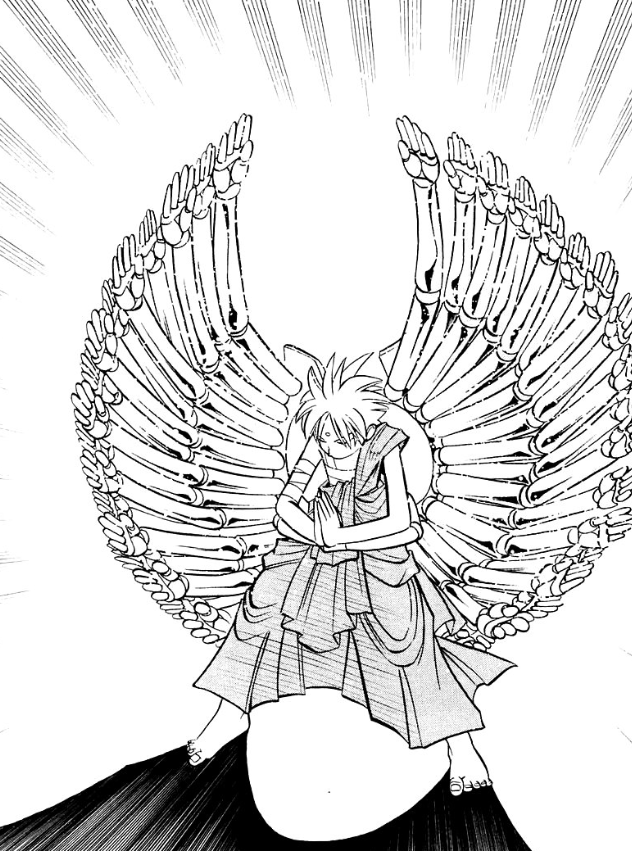
He possesses the statue of the Thousand-Armed Avalokitesvara Bodhisattva, which was enshrined as the principal image of Saiganji Temple, and descends to this world. He is responsible for sending Miroku back to India. His character is pure and straightforward, with the gentleness of a Buddha of mercy. On the other hand, he is a Buddha, but he is not familiar with Buddha masters or Maitreya Bodhisattva, the successor to Buddha Shakyamuni, and he is a natural idiot. (When he was asked to guard Miroku, he asked, "What is Miroku?)
His heavenly robe has 40 arms. He can see through the movement of bullets and grab them all, but he is unable to handle chakra well and has no arms to handle a superior opponent such as Ashura.
His tenkor was once damaged due to assassins and a series of fights with Ashura. At Jizo's suggestion, he went to Aomori and called the Buddhist priest who had created the statue of Senju possessed by Anna the weasel, and had it remade. The new Tengoromo was clear and refreshing to wear, with chakra reaching all the arms. As the official name "Thousand-Armed and Thousand-Eyed Avalokitesvara Bodhisattva" implies, every palm was equipped with a sensor to analyze the movement of flying weapons and other objects. This enables more precise and accurate movements. During the battle with Batou, he defended himself against all attacks with only three arms.
He looks like a boy in his early teens, but he also has the appearance of Osen, the sister of the Buddhist priest who created Senju (the statue Senju is possessed by).
Jizo says that Senju's possessed statue is made of wood and floats in hot water.
His main technique is the "Senju Punch," a 40-arm barrage. He also has a technique called "causal retribution," in which he receives an opponent's attack with his left arm, absorbs the chakra, and counters with his right arm. Depending on the opponent's attack, this technique can have the power to shatter mountains, but when he took this stance against Ashura, his goal was to catch all of Ashura's hatred and suffering, so he did not counter and fell down.
He is a Buddha who "saves without exception," and even when he fights, he focuses on salvation, such as saving the yakuza who were trying to raise the Saiganji temple from hell for the crime of killing. During his fall, he wanders into Ashura's spiritual world and catches a glimpse of Ashura's suffering. He recognizes the person who appeared to him as the enlightened Miroku and wakes up.
Sachi Nishigishi / Miroku
Source: chansoku.com
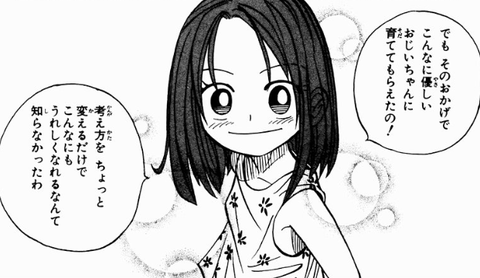
Daughter of Seiganji Temple. As a baby, she was abandoned near the temple bell. She is the reincarnation of Miroku (Maitreya Bodhisattva), a savior who attains enlightenment and saves sentient beings. According to tradition, Maitreya Bodhisattva will attain enlightenment and descend to this world 5.6 billion years after the Buddha's death, but in "Buddha Zone," years are counted as thoughts, or people's feelings. The world population reached 5.6 billion (as of 1975), which marked the birth of Sachi, who was to become Miroku.
He is not a Buddha Zone, but a flesh-and-blood human being. He is called "Satchan" by Senge, but is called "Miroku-sama" by the other Buddhas, who use honorific titles. This is because Maitreya is the successor of Sakyamuni Buddha. Except for the fate she bears, she is an ordinary girl, but during her journey with Senju and others, she becomes enlightened and awakens to her mission to save sentient beings.
She has been nursing Senju since she collapsed during the battle with Asura.
He also appears as Miroku in Takei's later work, "Shaman King. His name at that time was Sati.
coma
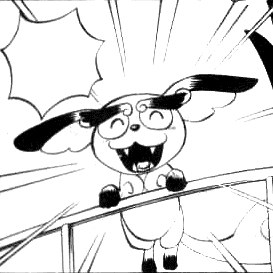
A guardian dog that was Senju's pet in the Buddhist lands. It followed Senju to this world. It was captured by the Tenryu Happenshu and cut into pieces by Asura.
In the last episode, he is with Jizo and Batou, watching over Senju and the others in the Buddhist land, and joins Senju and the others in their journey once again.
Gizo
Source: chansoku.com
He also appears in the reading version.
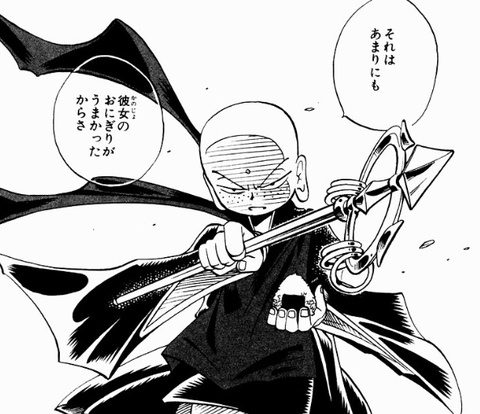
He has a typical "Jizo" appearance, dressed as a small monk and holding a tin cane. According to the lore, he is a benevolent Jizo Bodhisattva, but Jizo himself is cool and gives merciless attacks to his enemies. He has been waiting in this world for Miroku to appear after Shakyamuni Buddha's death (death). Whenever he needs to obtain food on his travels, he dresses up as a "Jizo-sama" on the side of the road and receives offerings. He has been in this world since before Sachi's birth (there is a "Jizo faith" in which Jizo Bodhisattva saves sentient beings until Maitreya Bodhisattva descends).
He specializes in making seals and in seal beams that shatter the doubts of sentient beings with the teachings of the Buddha.
Jizo's robe is an iron-clad armor that protects his entire body. When worn, it resembles a Jizo seen on the street, and Sachi and Senju have said that it is "just like that" and "just like Jizo himself" (Jizo apparently does not want to "show it" too much). As Jizo himself described, he is "even stonier than I am." He is very good in terms of defense, easily breaking swords, but because his entire body is covered with heavy steel armor, he lacks mobility and cannot keep up with Ashura's movements.
He was prepared to fight with Ashura, so he used a technique called "Ayatsuri Jizo," in which he manipulated countless Jizo, causing Ashura to blow himself up, but because Ashura used Batou's body as a shield, he was not killed in the heart. Although he is "dead," his soul has only returned to the land of the Buddha, and he reappears in the final episode to accompany Senju and his friends on their journey.
He appears with Sachi, Senju, Tenryu Hachibe-shu, and others in the "Shaman King" anime bonus. Wearing the sensor-embedded Jizo Tengoromo, he fights against Ashura and the others. However, this was the fantasy of "Shaman King" protagonist Yo Asakura, who was told by the film's heroine Anna, "Jizo can't possibly move.
Batou / Bato Kannon

Related Articles
SHAMAN KING Spoilers and Discussion Summary
Shaman King" is a manga by Hiroyuki Takei serialized in Weekly Shonen Jump from 1998 to 2004. Although the series was once cancelled, a complete edition with approximately 380 pages of new illustrations was released to complete the story. Asakura Yoh is a "shaman," a boy who can communicate with spirits and fight them. Asakura aspires to become the "Shaman King," the pinnacle of shamans, and participates in the "Shaman Fight," which is held once every 500 years.
Read Article
Great Spirits (Shaman King) in-depth description and discussion summary
The Great Spirits are the aggregate of all the souls in the world in "Shaman King," and are the most powerful spirits that can be possessed only by the Shaman King. They have no specific form or personality, but are made up of all souls and their memories. After their physical death, these souls return to the Great Spirits to await the time when they will be born again on earth. Within Great Spirits, countless souls form communes in different cultural spheres, some called hell, some heaven.
Read Article
Spoiler commentary and discussion of BIKKURI-MEN (BIKKURI-MEN)
Bikkuri Men" is an original TV animation set in "Japan in 2025, when the "Bikkuriman sticker" boom is making a comeback. The characters are based on the "Bikkuriman stickers" that once dominated the world, and the characters are modeled on the "Bikkuriman" characters. The catch copy is "This is the Bikkuriman of Reiwa. In Japan, "Bikkuriman stickers" were even more popular than the big boom of the Showa period (1926-1989). Yamato, a high school student, visits a convenience store that is rumored to have many popular stickers, where he gets involved in a dispute between collectors over the stickers.
Read Article
Summary of Shaman King's Oversoul and Special Moves
Shaman King" is a manga by Hiroyuki Takei and an anime based on it. An ordinary junior high school student, Manta Oyamada, is transferred to the class of a mysterious boy, Yoha Asakura. He is a "Shaman," a psychic who can communicate with spirits, and has come to Tokyo to participate in the "Shaman Fight," a battle held once every 500 years to decide the king of Shamans. Shamans fight using a method called "oversoul," in which each shaman possesses and materializes an object with his or her own "mochirei" (spirit of possession). Ip grows and acquires various skills together with his Mochirei, Amidamaru.
Read Article
Summary of Shaman King's Holding Spirit
Shaman King" is a manga by Hiroyuki Takei and an anime based on it. An ordinary junior high school student, Manta Oyamada, is transferred to the class of a mysterious boy, Yoha Asakura. He is a "Shaman," a psychic who can communicate with spirits, and has come to Tokyo to participate in the "Shaman Fight," a battle held once every 500 years to decide the king of Shamans. Ip took the legendary samurai Amidamaru as his "Mochirei" and challenged him to a shaman's fight. Every shaman has his own "mochirei," or spirit, and fights by possessing and materializing an object with his spirit.
Read Article
A compilation of the best quotes, lines/scenes, and scenes from Shaman King
Shaman King" is a work by Hiroyuki Takei serialized in Weekly Shonen Jump from 1998 to 2004. The series was once censored, but a complete edition was released, with approximately 380 pages of new drawings added to complete the story. The story is about a boy shaman, Yo Asakura, who participates in the "Shaman Fight," a battle to determine the "Shaman King," the top of all shamans, and grows through encounters and battles with various people.
Read Article
I wish it could have been animated... a regrettable censored manga.
There are times when a manga you liked is discontinued due to lack of popularity or "adult circumstances. We have gathered together a list of censored manga that we wish had been made into anime, regardless of the magazine.
Read Article
A compilation of manga artists who love JoJo's Bizarre Adventure
The unique dialogue, the concept of "ability battles," the unique characters, and other aspects of JoJo's Bizarre Adventure are endlessly fascinating. It seems that many manga artists have been influenced by Jojo's Bizarre Adventure. Here is a list of manga artists who have been influenced by Jojo's Bizarre Adventure.
Read Article
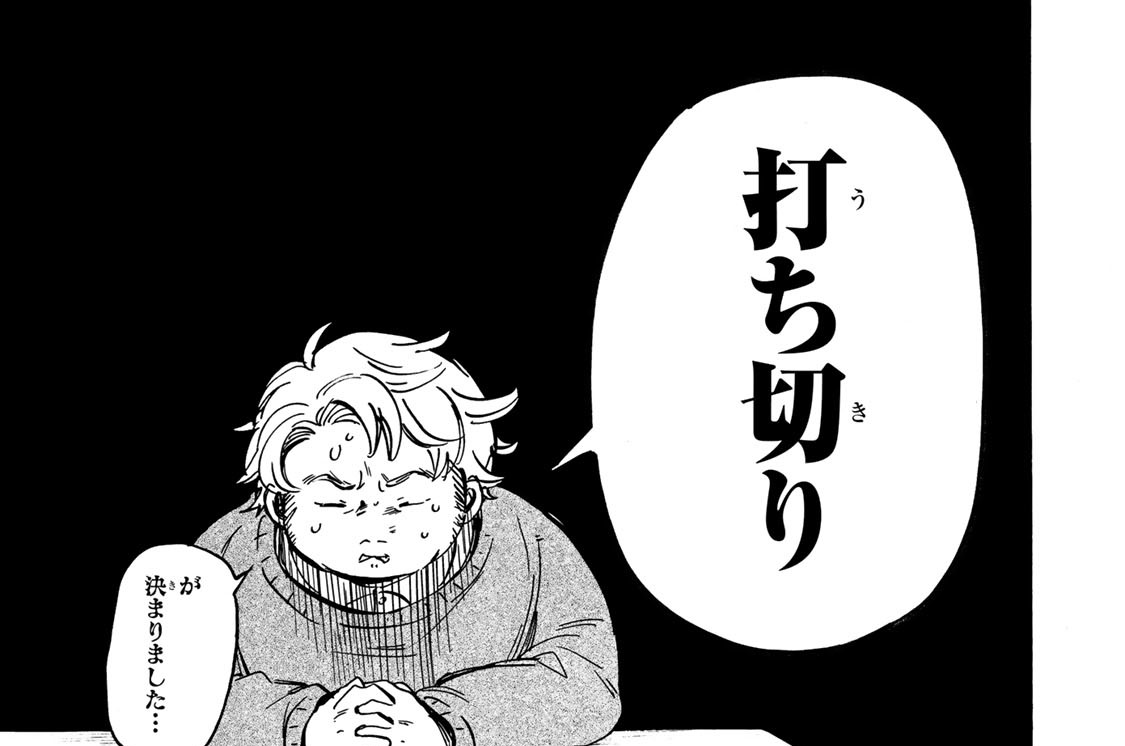
This is the end! Summary of the last episode and final page of censored manga [Shaman King, etc.].
Whenever there is a new serialization of a manga, there are naturally manga that are discontinued. There are various reasons for this, such as the popularity of the work itself, the artist's reasons, magazine discontinuation, etc. Here we have compiled a list of the final episodes and pages of manga that were abruptly censored.
Read Article
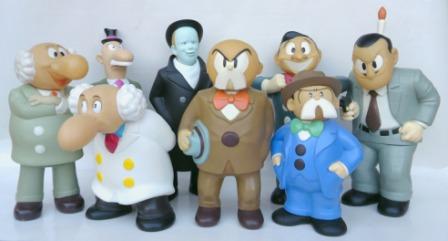
[I might have seen this character somewhere!] Summary of manga with star system
When you are reading manga, you get excited when you see a character you care about in a different work by the same author, don't you? We have compiled a list of works in which the "star system" is used.
Read Article
Tags
Contents
- Overview of "The Buddha Zone
- Synopsis and story of "The Buddha Zone
- Departure of "Miroku
- The Ordeal of Senju
- The Battle of Asherah
- Characters and characters from "The Buddha Zone
- key people
- Senju / Senju Kannon
- Sachi Nishigishi / Miroku
- coma
- Gizo
- Batou / Bato Kannon
- ashula
- Anna Osoreyama (Anna Kyoyama, Anna Kyoyama)
- Buddhist country
- Dainichi Nyorai
- Fudo / Fudo Myoo
- Aizen / Aizen Myoo
- Basu Sennin
- Seven Deities of Good Fortune
- eight legions of celestial dragons (mahjong)
- Kubanda / Dove Reclining Tea
- Kendatsuba / gandharva
- Carla / Karura
- Hibakara / 畢婆迦羅
- Shakara / Shakara
- Gobujo / Gobujo
- Kinnara
- Mara, French zoid
- Tenma Hajun
- Mara Batou
- Nio (smell)
- Seven Deities of Good Fortune
- dakinis
- gongen (2-stringed Japanese musical instrument played with a bow)
- Other
- grandpa
- Mike Minoura
- Junkei (pure wisdom)
- pollution
- Terms in "The French Zone
- Buddha
- Buddhist land
- French zone
- Mara
- The world of greed
- Buddha Zoid
- Heavenly garment (Armor)
- Mount Osorezan
- India
- Saiganji Temple
- Famous quotes, lines/scenes and scenes from "The Buddha Zone
- Senge: "The bottom line is that it depends on how you think."
- Statue of the Thousand-Armed Avalokitesvara Bodhisattva carved by Junhui
- Ashera: "The more I respect Shaka-sama, the more I hate myself for not letting go of my hatred for him."
- Backstories, trivia, and small stories/episodes and anecdotes from "The Buddha Zone
- Rumors about why "The Buddha Zone" was censored
- Connection to "The Shaman King"
- Enlightened Sachi
- Successor to Anna Osorezan
- Anime with Jizo