
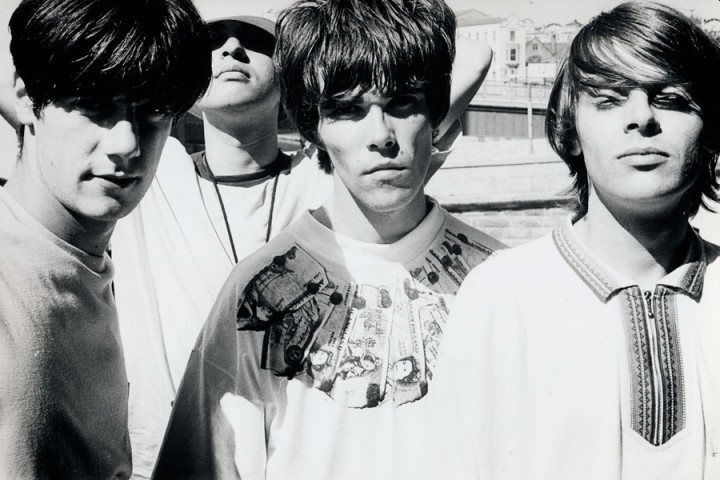
The Stone Roses were an English rock band formed in Manchester in 1983. The band broke up in 1996, but reformed in 2011.
The Stone Roses Overview
Formation (1983-84)
Ian Brown and John Squire, who were friends at school, formed a band called The Patrol in 1980, influenced by The Clash. They played live and made demo tapes, but gradually the members lost interest in their activities, and Ian sold his instruments to buy a scooter. In the meantime, John continued to practice and began working with bassist Gary Mani Mounfield in another band called The Waterfront. 1983, when the member who had been on vocals left the band, John approached Ian, and Ian joined The Waterfront as a vocalist. He joined The Waterfront.
In late 1983, the band went on hiatus, but one of the members decided to start a new band with Ian and John. While rehearsing without a band name, John came up with the name "The Stone Roses" one day. There are various theories about the origin of the band's name, such as that the band was originally called something similar to "The English Roses" or The Rolling Stones, but the truth is not known. Around this time, Leni joined the band as a drummer.
In October 1984, the band played its first live concert in London under the name "The Stone Roses" as support for Pete Townsend. The gig was seen by many journalists, and the band soon began to attract attention, including requests for management and booking gigs.
Early tours and releases (1985-88)
In 1985, the band began sessions for the production of their debut single and debut album. During the sessions, the band recorded "So Young/Tell Me," which would become their debut single with both A-sides.
In June of that year, Garner, who had joined the band as bassist, left the band. He was replaced by Gary Mani Mounfield, who had been the bassist in his previous band, The Waterfront. In later years, Ian said that Mani's addition gave the band a groove that they had never had before.
In October 1988, the single "Elephant Stone" was released under the production of Peter Hook of the British band New Order. Around the same time, they signed with the Silver Tone label, and then began recording their first album with producer John Leckie, who was introduced by Jeff Travis of Rough Trade Records.
Debut album and success (1989-91)
The band recorded their first album at a studio in London between 1988 and 1989. The first single, "Elephant Stone," did not receive much attention, but the follow-up single, "Made of Stone," received more media recognition and radio airplay. The first album, "The Stone Roses," was released in May 1989. It was greeted with positive reviews from the media and reached #32 on the UK Albums Chart.
The band's appearance on the BBC's "The Late Show" in 1989 raised the band's profile, for better or worse. Ian was upset when the power went out while the band was playing a song on the show and they were forced to stop playing. Ian was so angry that the power went out while they were playing a song and they had to stop. This was the band's first TV appearance.
Later that year, the band released the double A-side single "Fools Gold/What the World Is Waiting For," which reached No. 8 on the U.K. singles chart. Fools Gold" was initially intended as a B-side because it was not a pop song, but it quickly became the band's signature tune. This double A-side single was the first to reach the Top 10.
The band went on to sweep the British music magazine NME's Band of the Year, Best New Band, Single of the Year (Fools Gold), and Album of the Year (debut album) awards that year. Chris didn't seem to think much of the album, saying it was too small, too clean, and too put together.
The Stone Roses' outdoor concert at Spike Island in May 1990, which drew 27,000 people, has become legendary and has been described as the Woodstock Festival of this generation. It reached No. 4 in the U.K. Singles Chart. However, the band, distrustful of their label Silvertone's poor pay, despite the sales, wanted to leave the label, but the label refused due to contractual rules. This issue went to court, but in 1991, the band was finally able to terminate the contract, signed a new contract with Gefin Records, and began work on their second album.
Second Coming and Dissolution (1992-96)
A court case with Silvertone kept the band away from the local Manchester club scene, and they traveled around Europe until mid-1993, when they began work on their second album. A combination of Ian and John becoming fathers and the deaths of several people close to the band made it difficult to make a new album. The times were shifting from the "Madchester" they had created to the "Britpop" boom.
The band released their second album "Second Coming" in December 1994. The second album was produced under John's leadership, and its musical style was influenced by blues and heavy rock. The song "Love Spreads" reached #2 on the UK Singles Chart. The change in sound of Second Coming was controversial, with music journalist Simon Reynolds stating that the Stone Roses had become a completely different band from their previous work.
In March 1995, about two weeks before the promotional tour for the second album, drummer Leni left the band due to friction with Ian. A replacement drummer was brought in, and at the same time a keyboardist was brought in to provide live support. The band cancelled a series of concerts until around December of that year. One of the most famous was the cancellation of their appearance at the 1995 Glastonbury Festival.
In April 1996, John, the band's main man, announced his departure from the band due to a rift in their relationship and musical sensibilities. Aziz Ibrahim of Simply Red was brought in as touring guitarist and the tour continued. John's departure, however, was a huge blow to the band, and the quality dropped so low that when the band appeared at the Reading Festival, the audience booed Ian's singing because he was too tone deaf. By this time, the music press continued to criticize the band, and eventually Ian and Mani decided to break up the band.
Post-dissolution (1997-2010)
Ian, John, and Mani enjoyed a certain amount of success after the Stone Roses disbanded. John released two solo albums while working with the band The Seahorses, which he had formed before the breakup, and in a 2007 interview, he revealed that he also works as a painter. Ian has released six solo albums and a best-of album. Mani joined the Scottish band Primal Scream as bassist in 1996. Mani remained an official member of Primal Scream until the Stone Roses reunion. Leni formed a band called The Love in 1999 after the Stone Roses disbanded, but they played only a few gigs and did not do anything noteworthy.
Rumors of a band reunion surfaced several times between the breakup and the actual reunion.
A 20th anniversary edition of the band's debut album "The Stone Roses" was released in August 2009. The remastering was done by then-producers John Leckie and Ian Brown. This anniversary edition included the previously unreleased song "Pearl Bastard".
Reunion (2011-2017)
In the spring of 2011, Mani's mother passed away, and Ian and John met at the funeral and had a conversation for the first time in about 15 years since the breakup. This was the catalyst for the reunion.
In October of the same year, John, Ian, Leni, and Mani, the members at the time of the breakup, gathered for a press conference. On that occasion, they revealed that they had plans to reunite the Stone Roses and produce a world tour and a new album. The following year, on June 29, 30, and July 1, they held a reunion concert in their hometown of Manchester, attracting 220,000 people over three days. In July of the same year, the band visited Japan and performed as the headliner at Fuji Rock Festival 2012.
The band did not release any new songs, only live performances, but in May 2016, a new song "All for One" was uploaded to Youtube. The following month, a new song, "Beautiful Thing," was uploaded. It had been 22 years since the release of their second album in 1994.
Members of The Stone Roses
Ian Brown
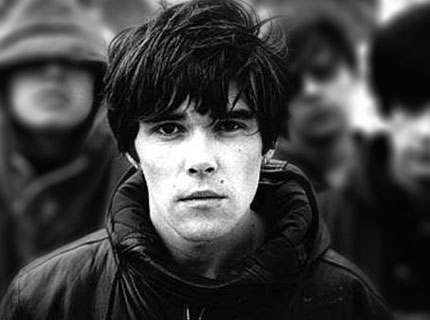
Source: static.spin.com
Born in February 1963, he is an English musician. He is best known as the lead singer of the band The Stone Roses.
Since the breakup of the Stone Roses, he has released six solo albums and has performed in 45 countries.
He also participated in the Stone Roses reunion in 2011, while continuing his solo career.
He is best known for his cameo appearance in the film "Harry Potter and the Prisoner of Azkaban.
John Squire
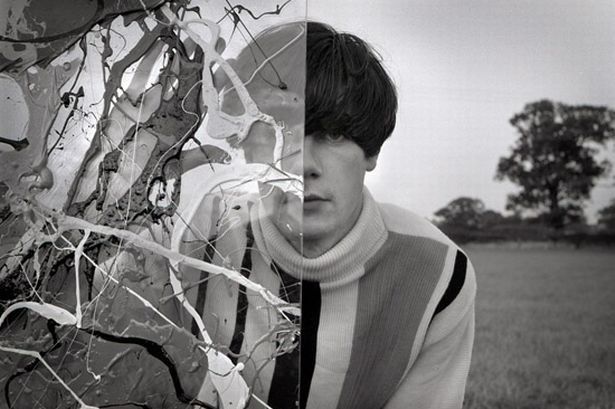
Source: s-media-cache-ak0.pinimg.com
Born in England in December 1962, he is a musician and guitarist.
He is best known as the guitarist of the Stone Roses, and after leaving the band, he formed a band called The Seahorses, which released two albums. He is the guitarist for the British band The Smiths.
He has been considerably influenced by Johnny Marr, guitarist of the English band The Smiths, in terms of guitar playing, melody, and tone
Mani
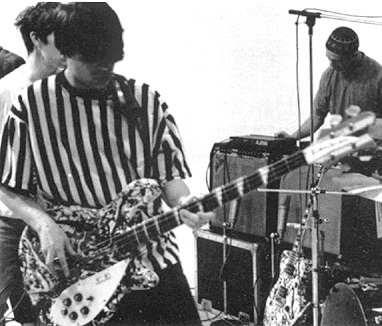
Source: www.rickresource.com
Born in England in 1962, he is a bassist. He is best known as a member of the bands The Stone Roses and Primal Scream.
When the Stone Roses debuted, he was seen using a Rickenbacker 4005, a guitar-based instrument painted by the painter Jackson Pollock.
After the Stone Roses broke up, he joined Primal Scream as bassist. He also considered joining Jesus and the Merry Chain and Oasis.
Reni

Contents
- The Stone Roses Overview
- Formation (1983-84)
- Early tours and releases (1985-88)
- Debut album and success (1989-91)
- Second Coming and Dissolution (1992-96)
- Post-dissolution (1997-2010)
- Reunion (2011-2017)
- Members of The Stone Roses
- Ian Brown
- John Squire
- Mani
- Reni
- Original Albums
- The Stone Roses
- Second Coming
- Representative songs of The Stone Roses
- I Wanna Be Adored
- She Bangs the Drums
- Waterfall
- Made of Stone
- I Am the Resurrection
- Elephant Stone
- Fools Gold
- Ten Storey Love Song
- Begging You
- Love Spreads
- The Stone Roses backstory, trivia, small stories/episodes, anecdotes
- Origin of Sally in Oasis' Don't Look Back In Anger